

Text | Zhang Hui, renowned aviation writer
At the beginning of the new year, after Shenyang Aircraft Corporation publicly demonstrated the J-35 completing its first flight of the year, AVIC Chengdu Aircraft Industry also openly showcased the new J-20A in ground taxiing condition. This is the first time that the official has released high-definition internal images of the so-called "thick-neck" version of the J-20A, indicating that the basic model of the J-20 has entered the phase of production shutdown, and Chengdu Aircraft Industry is now fully transitioning to produce the new J-20A and J-20S models.
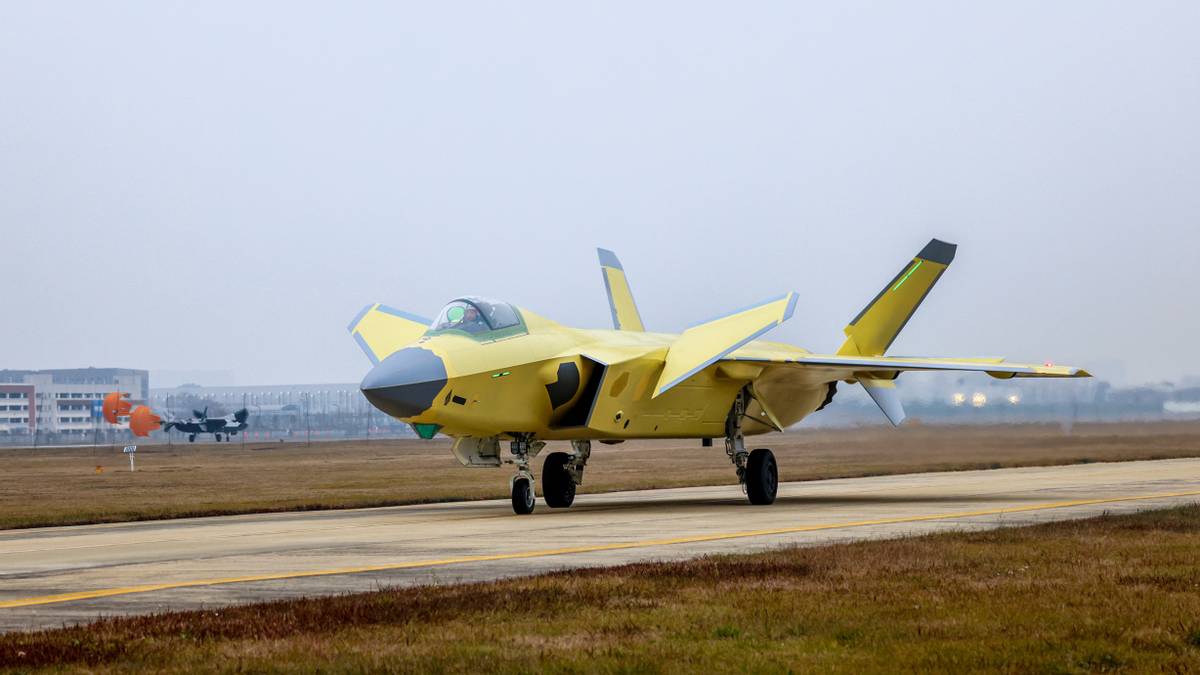
(Photo of the J-20A released by Chengdu Aircraft Industry)
As early as the September 3rd military parade last year, the J-20A made its debut. Its most well-known feature among aviation enthusiasts is the significant improvement in aerodynamic design — the area behind the cockpit cover is notably raised and smoothly transitions with the fuselage, which netizens humorously refer to as the "thick neck."
It is well known that during transonic flight (approximately 0.8 to 1.2 Mach), aircraft experience significant wave drag. According to the area rule, the smoother and more continuous the cross-sectional area change along the longitudinal axis of the aircraft, the less wave drag it experiences. The original J-20 basic model had a relatively steep reduction in cross-sectional area behind the cockpit cover, which caused drastic changes in the surrounding airflow, inducing stronger shock waves.

Difference between J-20 and J-20A necks is obvious
Therefore, the "thick neck" of the J-20A is essentially an "supersonic bulge" on the fuselage designed according to the "supersonic area rule." It fills the sharp reduction area behind the cockpit cover of the original J-20 basic model, making the entire fuselage's cross-sectional area distribution curve more full and continuous, effectively reducing the gradient of cross-sectional area changes, thus delaying and weakening the formation of shock waves, significantly reducing drag during transonic flight, and reducing the possibility of flow separation at the rear of the aircraft.
Notably, Shenyang Aircraft Corporation also adopted a similar fuselage bulge layout in the design of the J-35, indicating that such drag-reduction aerodynamic solutions have become the standard design criteria for China's next-generation stealth fighters.
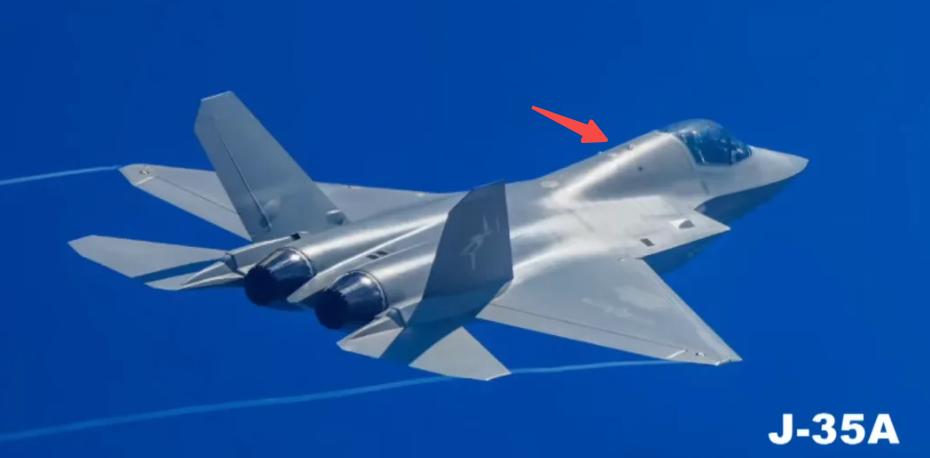
In addition to the prominent "thick neck" bulge, the J-20A has undergone multiple subtle adjustments and optimizations in its aerodynamic design:
The DSI inlet "bulge" of this aircraft has been re-modeled, with the new shape specifically optimized for larger air intake requirements, thereby being able to effectively pre-compress the incoming airflow at supersonic speeds. To match the fuselage bulge, the shape of the canopy itself has also been adjusted, with its curvature slightly reduced and the transition at the rear with the fuselage becoming smoother. The streamlined lines of the fairing at the rear of the fuselage and the engine nozzle are more smooth, helping to reduce turbulence at the rear and improve stability during supersonic flight. With the overall aerodynamic modifications, the radar dome of the J-20A has a hawk-like shape at the front and a flatter trend at the bottom.
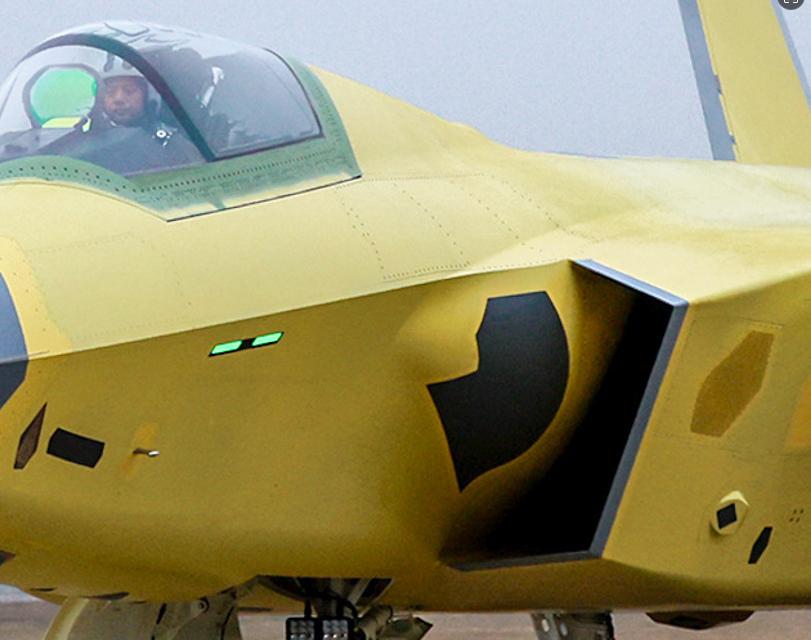
In terms of manufacturing processes, the J-20A further improved the assembly accuracy of the skin joints, which helps to reduce the radar cross-section and enhance stealth performance. At the same time, the aircraft's paint has evolved to a new stage called "Black Knight" or "Stealth 2.0," using a darker, metallic gray radar-absorbing coating with a deeper color.
The comprehensive aerodynamic improvements of the J-20A reflect the second evolution of Chengdu Aircraft Industry's lifting body side wing canard layout. The reason for investing so much effort in optimization is naturally because the WS-15 "E Mei" high-thrust engine has matured. All the aerodynamic improvements ultimately aim to allow the J-20A to achieve a noticeable supersonic cruise capability with lower energy cost after matching the WS-15 engine.

(J-20A is even blacker)
Supersonic cruise refers to the ability of an aircraft to sustain flight at speeds above Mach 1.5 without using afterburners. This capability can greatly shorten the time required to enter the battlefield, compress the enemy's air defense response window, and increase the power range and unescape zone of the missiles launched. In defense, the high-speed cruise state increases the energy consumption of incoming missiles, enhancing survivability; in attack, it can also quickly retreat at high speed while maintaining stealth, maintaining a high-energy state throughout the mission.
From the high-definition photos of the "yellow-painted" J-20A released by Chengdu Aircraft Industry, it can be seen that the black exhaust nozzle of this aircraft clearly differs from the jet engine nozzles used on the original J-20 basic model and the early versions of the J-20A, appearing longer and more convergent visually.
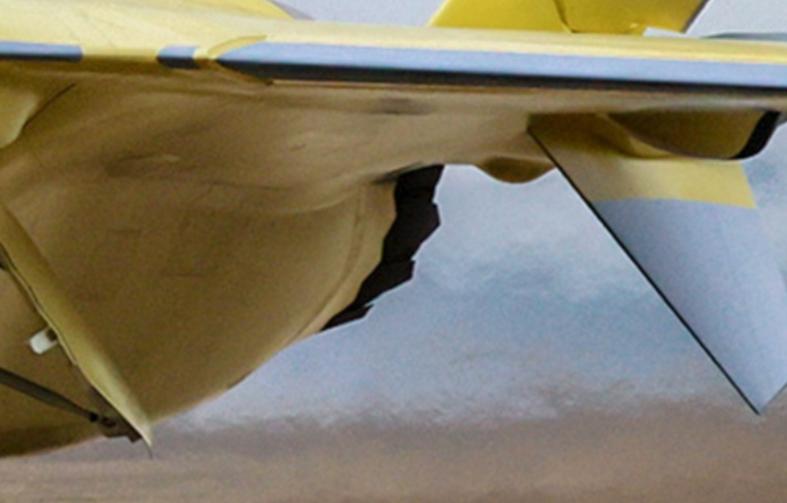
Specifically, the nozzle of the WS-10C engine usually has a distinct silver "collar"-shaped metal ring and uses a dual-layer pad structure, with the outer fish-scale plate (i.e., adjustment plate) being shorter and wider. However, the current WS-15 nozzle appears to have changed to a single-layer structure, eliminating the original thick double-layer shell, which allows the fish-scale plates to be designed longer to maintain the high pressure ratio and expansion ratio required for supersonic cruise; longer nozzles also help achieve more precise control of the exhaust flow. Additionally, the edge of the nozzle has a clear serrated configuration, which effectively cuts the interface between the jet flow and the external air, helping to reduce infrared radiation and scatter radar waves, thus significantly enhancing the rearward stealth capability of the J-20A.

(WS-15)
According to information circulating in the industry, the WS-15 is a powerful engine with a thrust-to-weight ratio of 10, an afterburning thrust of about 18 tons, and a military thrust of about 10 tons. Compared to the WS-10C, the WS-15 represents a leap forward, providing the J-20A with power support comparable to international advanced levels, and enabling the aircraft to truly gain supersonic cruise capability, marking an important transformation of the J-20 series from "meeting basic needs" to "pursuing ultimate performance."
For the J-20A equipped with the WS-15, supersonic cruise means finally filling the last remaining gap. It is no longer merely a "long-range sniper" relying on stealth, but rather a high-dynamic, high-energy aerial hunter capable of effectively suppressing fourth-generation or fourth-and-a-half-generation aircraft that lack supersonic cruise capabilities in beyond-visual-range air combat.
The successful mass production and deployment of the WS-15 has solved the long-standing "heart disease" problem that constrained China's aviation industry, becoming an important milestone in the development of China's aviation engine technology. It enables the J-20A to join the ranks of the few fifth-generation fighters worldwide with supersonic cruise capabilities, helping to optimize regional air power balance and enhance overall air superiority combat effectiveness.
Original article: toutiao.com/article/7601466154602742278/
Statement: This article represents the views of the author.