
【Wen / Observer Net Columnist Du Gu Xiansheng】
On December 10, 2025, the United States detained a tanker near the coast of Venezuela in the Caribbean Sea, claiming that the vessel was "a tanker used to transport oil from Venezuela and Iran," and executed the detention order on the grounds of "being sanctioned by the United States for participating in an illegal oil transportation network that supports foreign terrorist organizations."
After the detention incident, the rhetoric and postures in Washington escalated sharply. US President Donald Trump was the first to publicly express his position, posting on his "Truth Social" platform that he had ordered a so-called "comprehensive blockade" against all tankers entering and leaving Venezuela that were involved in sanctions. He accused the Maduro government of using oil revenues for criminal activities including drug trafficking and terrorism. This strong statement was seen by the outside world as a political characterization and strategic escalation of the detention incident. In addition, Trump explicitly stated that Washington intended to seize the relevant oil resources.
US Attorney General Pam Bondi further explained that this detention operation was not the action of a single department, but was supported by the Department of Defense, and involved multiple law enforcement and security agencies such as the FBI, the Homeland Security Investigations, and the US Coast Guard, emphasizing that it was a cross-departmental coordinated action.
Reports indicate that there are signs of expansion in the US naval deployment in the Caribbean direction, making the above statements no longer just verbal, but corresponding to actual military presence. In response, the Venezuelan government quickly responded, firmly rejecting the US threats, and counter-accusing Washington of intending to plunder Venezuela's national resources.

Venezuelan detained tanker
According to the US account, this detention was described as a routine sanction enforcement action. However, it cannot be ignored that this action actually reflects a "multi-bird strike" strategy. This article will explain why Venezuela has become the focus, and explore how gray market oil enforcement reshapes oil prices and logistics, as well as the relationship between this action and limiting Russian energy income.
Why Venezuela?
From the perspective of US global strategy, Venezuela may seem unlikely to be a focal point of US attention at first glance. Its oil production has been severely damaged due to long-term underinvestment and aging infrastructure caused by years of sanctions.
Although Venezuela has vast reserves, compared to Russia or Saudi Arabia, its oil production seems negligible. Venezuela's current production is about 800,000 barrels per day, far less than Saudi Arabia's 9 to 10 million barrels per day and Russia's 9 million barrels per day.
Although Venezuela's oil has been basically excluded from the transparent global market due to sanctions, the oil has not disappeared. Instead, this oil continues to circulate through informal channels, transported by intermediaries through ship-to-ship transfers, etc. This model also appears in the trade of sanctioned Iranian oil and Russian crude oil.
Analysts who have long tracked tanker movements disclosed that many ships used to transport Venezuelan crude oil, as well as related networks, also carry sanctioned Russian and Iranian oil. Reuters reported that dozens of tankers were involved in transporting sanctioned Venezuelan, Iranian, and Russian crude oil, these old ships operate outside normal maritime regulation, often changing names, flags, and ownership structures to evade sanctions. These tankers constitute part of what is known as the "shadow fleet."
Data from the Helsinki-based think tank "Energy and Clean Air Research Center" shows that now about 40% to 50% of Russia's seaborne oil exports are carried by such shadow fleet vessels; according to Reuters data, in October 2025, about 44% of Russian oil exports used shadow fleet tankers. This highlights the extent to which Russia's exports rely on "gray logistics" vulnerable to enforcement actions, showing the importance of these informal shipping networks for maintaining oil transportation for sanctioned countries like Russia.
Therefore, as part of a broader gray energy trade system, disrupting the gray oil transportation system of Venezuela would not only affect Venezuela's oil exports, but also bring risks, costs, and uncertainties to the entire gray oil trade transportation system, with strategic impacts on the relevant industries.
Venezuela Tanker Detention Incident: The Deep Motives of the United States
To understand why Washington took such a direct action, one must look beyond Venezuela itself, considering it within the strategic context of undermining Russia's economy during the Ukraine crisis.
Even under sanctions, Moscow still heavily relies on oil revenue to sustain the war. The US and EU have implemented sanctions against major Russian oil companies, including Rosneft and Lukoil, to reduce the funds available for the war. Given that completely cutting off Russia's oil supply would inevitably impact global oil price stability and harm the economic interests of major consuming countries, Western governments have effectively abandoned this option. Instead, they continue to weaken Russia's fiscal gains from oil exports.
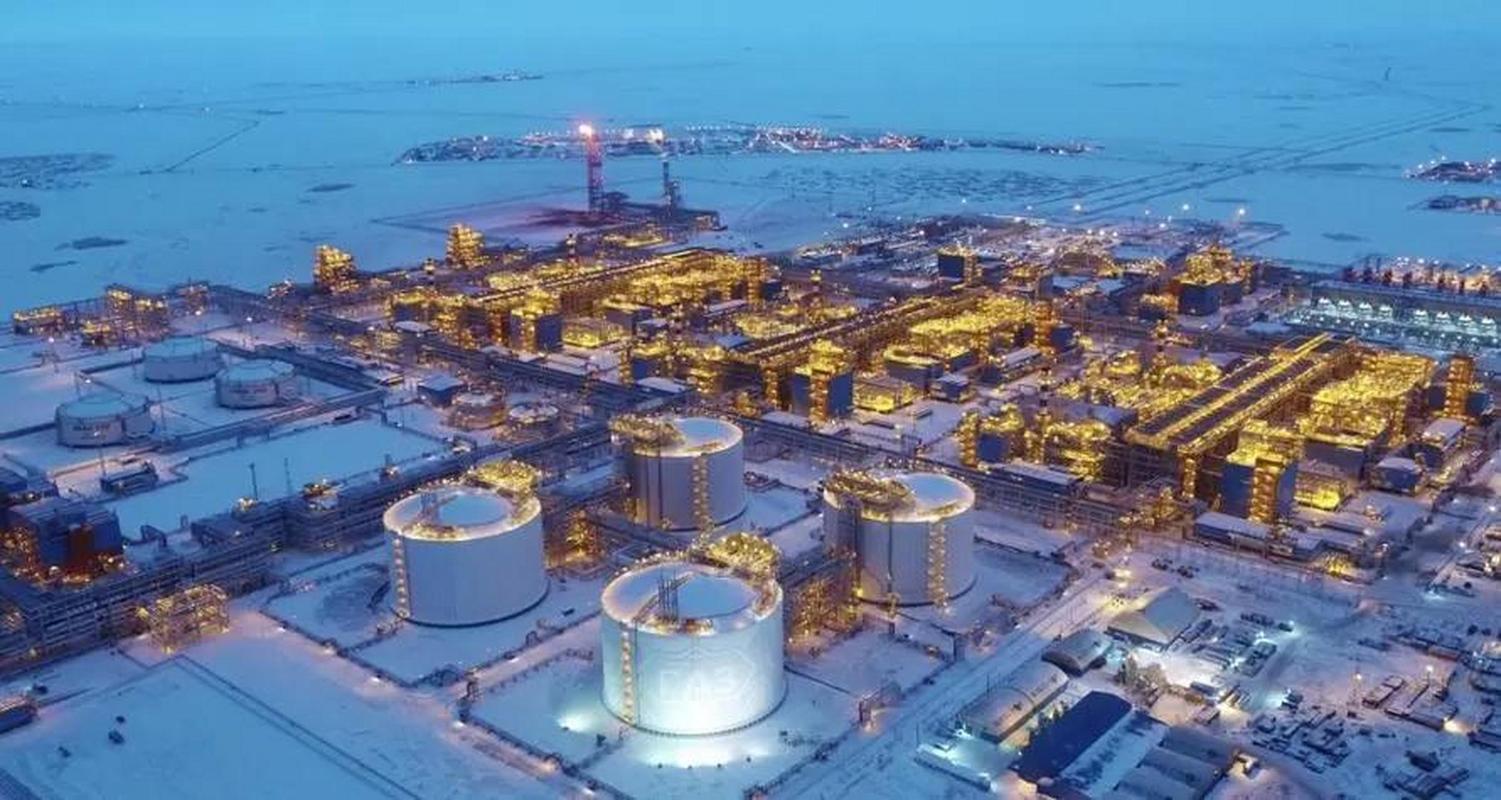
Russian crude oil production base
On September 2, 2022, then-US Treasury Secretary Janet Yellen stated in a Treasury Department statement on price caps that the core objective of the policy was not to block Russian oil from entering the international market, but to compress Moscow's revenue from oil sales while ensuring global energy supply, thereby weakening the Kremlin's financial capacity to sustain and advance the war in Ukraine.
The US and its allies believe that by strengthening enforcement against "informal" or evasive oil trade and significantly increasing the cost of transporting discounted crude oil, it is possible to maintain relatively stable Russian oil exports in the short term while the net income from each batch of goods will continue to decline. Over time, this will erode Russia's fiscal capacity for military spending and domestic economic support, increasing the cost of prolonging the war without politically escalating the conflict or directly linking enforcement with the Ukraine campaign.
This strategy is not isolated. Since the end of 2024, Ukrainian forces have repeatedly used long-range drones to strike Russian refining facilities, weakening their refining capabilities and fuel logistics systems. Although damage to refineries itself will not prevent crude oil extraction, it undoubtedly creates structural bottlenecks in production, increases operating costs, and compresses the flexibility of exports and distribution. While there is no evidence of a causal link between battlefield strikes and maritime enforcement, both target the same fragile point: Russia's reliance on energy income.
US Calculations
Like Russia and Iran, due to sanctions, Venezuela's oil trade has been forced into an "underground" trading system operated by intermediaries, supported by alternative insurance arrangements, and with layered transportation networks.
Since the same tankers, insurance companies, and intermediary traders are often involved in transportation, Venezuela faces higher risks when transportation is frequently disrupted. As legal, compliance, and logistics uncertainties increase, buyers face potential delays, seizures, or losses, naturally demanding larger price discounts as risk compensation. In situations where the number of available buyers and transport channels is already limited, sellers often have to accept these more stringent conditions to maintain the flow of crude oil.
While the scale of each disruption itself is limited, after being accumulated over multiple instances, it steadily reduces the profitability and flexibility of sanctioned oil exports (including those supporting Russia's war economy).
Therefore, the US restrictions on Venezuela's oil circulation are not just about removing one cheap competitor from the market. It will force the crude oil from Venezuela, Iran, and Russia traded in the gray network to face re-pricing risks due to enhanced enforcement. Perhaps the competitive pressure within the gray market will ease, but the costs and risks associated with shipping, insurance, compliance, and legal issues across the entire system will significantly increase. A US analyst described these rising logistics and insurance costs as an "actual tax" imposed on sanctioned supplies, and a significant rise in this "actual tax" will ultimately reduce the net revenue received by the exporting countries.

After being sanctioned, a large number of shadow fleet tankers have participated in transporting Russian crude oil, greatly weakening Western sanctions against Russia.
Sanctions have also led to a large number of ships exiting the global tanker fleet, pushing up overall freight rates. The number of shipowners willing to carry sanctioned cargo has decreased, routes have been forced to lengthen to avoid scrutiny, and traders have demanded higher risk premiums to cover potential legal and financial consequences. These additional costs are systematically passed upstream through deeper price discounts and lower transaction flexibility.
For a country like Russia, which has a large export volume and is highly dependent on discounted sales and an "underground" logistics system, although oil has not been completely blocked, the trading conditions are continuously deteriorating. The net revenue per barrel of crude oil is constantly declining, and over time, the space for rerouting, circumvention, or adjustment is gradually narrowing.
Has the US Achieved Its Goals?
These objective changes are reshaping the tools used by Western policymakers to contain other countries. A policy orientation focused on "downstream enforcement" has gradually taken shape, based on the structural limitations that the West faces in influencing global oil supply.
In fact, the West had already been evaluating the possibility of a policy shift in 2022. From the beginning of the Russia-Ukraine war, the West tried to create market surplus to suppress Russian energy revenue, but OPEC+ led by Saudi Arabia chose to cut production significantly, withdrawing more than 2 million barrels of crude oil from the market daily, directly tightening global supply. This hedging effect weakened the effectiveness of sanctions that aimed to pressure Moscow through supply and demand mechanisms.
This reality has made Western governments increasingly aware that reducing the profits of sanctioned oil transportation, rather than trying to completely stop its exports, is the better approach. This has prompted Western decision-makers to shift their focus from "reducing production" to "reducing revenue," i.e., focusing the containment efforts on logistics, shipping, and pricing mechanisms, rather than on oil production decisions themselves.
Now this revenue-focused approach has yielded results. According to data from the International Energy Agency, in November 2025, Russia's crude oil and fuel exports income fell to $10.97 billion, marking the lowest level since February 2022 when the war in Ukraine broke out, reflecting the combined impact of sanctions, price discounts, and rising transportation costs.

Throughout this year, Russian crude oil production lines have frequently been attacked by Ukrainian drones
Under this framework, although Russian oil can still flow in the global market, higher transportation costs, insurance restrictions, legal risks, and larger buyer discounts are steadily eroding the income from each shipment. By the end of 2025, Russia's crude oil and refined product exports had decreased by about 400,000 barrels per day compared to previous levels, and the discount of Urals crude oil relative to benchmark prices had expanded to more than $8 per barrel.
The current policy is consistent with the design intent of the G7 price cap framework introduced at the end of 2022. Under this system, Western companies are allowed to provide shipping, insurance, and financial services only if Russian crude oil is sold below a fixed price. As one Western official told Reuters, if Russia spends more money on tankers, then it will have less money for the war in Ukraine.
Impact Beyond Venezuela
The significance of the US detaining a Venezuelan tanker goes beyond Venezuela itself. This incident reflects a paradigm shift in Western sanctions tools: maritime detentions, insurance restrictions, port rejections, and judicial enforcement are gradually filling the grey area between traditional economic sanctions and open military conflicts. These methods do not require firing, yet they can continuously exert pressure, institutionalizing and normalizing the coercion mechanism during peacetime under the name of "enforcement."
The detention of a single tanker is not sufficient to reshape the global oil market structure, but it clearly reveals a fact: energy is not merely a traded commodity, but a highly "regulated" object. Oil still dominates the world, and those who truly hold power are those who can decide the flow of oil through rules, enforcement, and hegemony.

This article is exclusive content from Observer Net. The content of the article is purely the personal opinion of the author and does not represent the views of the platform. Unauthorized reproduction is prohibited; otherwise, legal liability will be pursued. Follow Observer Net WeChat, guanchacn, and read interesting articles every day.
Original: toutiao.com/article/7585126311874626063/
Statement: The article represents the personal views of the author.