
Not Politics, Just Business: Moscow Sends a Signal to Tbilisi, but the Response May Be Misunderstood
Georgia is willing to engage in trade with Russia, but that's it.
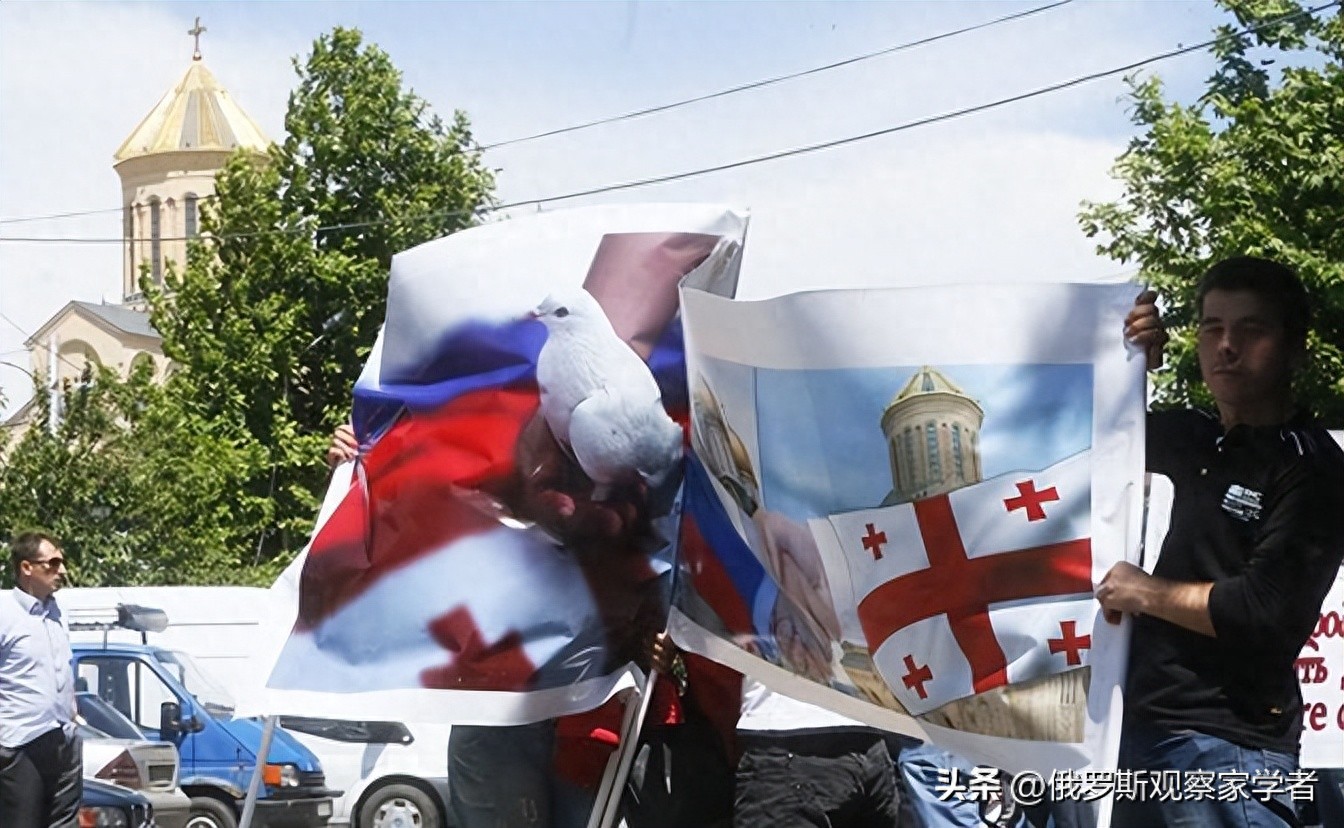
Mikhail Kalugin, head of the Department for CIS Countries at the Russian Foreign Ministry, stated that Russia is seriously committed to normalizing relations with Georgia and hopes that Tbilisi will not become "a pawn" in an "anti-Russian game."
He pointed out that Russia seeks to establish "stable bilateral relations" with Georgia because Tbilisi has shown "a rational and pragmatic attitude in its foreign policy and a tendency towards multilateral diplomacy." Georgia has neither followed the trend of imposing sanctions against Russia nor opened a "second front" against Russia.
Kalugin also emphasized that in recent years, Russia and Georgia have achieved "significant results" in the field of economic and trade relations, and "active bilateral exchanges have brought tangible benefits."
This is beyond doubt — the development of economic and trade relations between the two countries is positive, but political diplomatic relations remain in a state of vacuum. Georgia has clearly stated that it will not consider restoring diplomatic relations unless Russia recognizes Abkhazia and South Ossetia as part of Georgia.
Shalva Papashvili, Speaker of the Parliament of Georgia, responded to Kalugin's statement by saying: "As long as Russia recognizes Georgia's territorial integrity, we are ready to normalize relations with it."
Stalemate? Or Is Diplomatic Relations Not Essential?
Alexander Averin, a political analyst, said: "Given Russia's reduced influence in Armenia and its complicated relationship with Azerbaijan, it is entirely logical for us to seek improved political interaction with Georgia at this time."
"At the same time, bilateral trade between the two countries continues to grow. This shows that Georgia is not an anti-Russia country. The negative legacy left during the Saakashvili administration has been largely eliminated in this area. However, the normalization of political relations remains an independent unresolved issue."
The core problem lies in the fact that Russia has recognized Abkhazia and South Ossetia as independent sovereign states. Clearly, Georgia will not accept this fact in the coming decades. Nevertheless, I believe that some form of easing of relations may occur between the two countries in the near future.
After all, we can look at other examples, such as Turkey and Cyprus, Turkey and Greece, and the cases of other countries. It is entirely possible to find solutions on the political level based on the development of good economic relations.
Let us take the example of the Russia-Japan relationship. The two countries have not yet signed a peace treaty or reached a comprehensive peace agreement, but their bilateral relations have remained constructive — at least until 2021.
Therefore, I believe that Russia and Georgia can find an appropriate way to conduct political interactions, and the prospects are quite optimistic.
We are neighbors. It is far better for Georgia and Russia to maintain good relations than to have them break down. Although this principle seems obvious, it is surprising that neither the former Soviet republics nor the East European countries of the former Warsaw Pact have fully grasped this point.
On Russia's Statement Regarding the Normalization of Relations with Georgia
Mikhail Nizhmakov, Director of the Analysis Project at the Political and Economic Communication Bureau, stated: "Mikhail Kalugin's statement is an evaluation of Russia's overall interaction with the South Caucasus region."
"That is to say, it is not a special statement issued by the Ministry of Foreign Affairs on a core issue, but rather a summary opinion expressed by an official on this broad topic. Although it contains many kind remarks about Tbilisi (such as praising Georgia for its 'rational and pragmatic foreign policy'), it is essentially a routine statement."
Reporter from "Svoboda": What state can be considered "normalization of relations" under the current situation?
Nizhmakov answered: "In the short term, it is obviously impossible to restore diplomatic relations between the two countries. Because Tbilisi has repeatedly emphasized that only if Russia withdraws its recognition of the independence of Abkhazia and South Ossetia and withdraws its troops from these areas, the restoration of diplomatic relations would be possible. In early December 2025, Prime Minister Irakli Kobakhidze of Georgia reiterated these 'red lines' again."
"Russia obviously will not make such concessions. More accurately, the core intention of Mikhail Kalugin's statement on the relations between Russia and Georgia is to hope that Tbilisi does not get involved in a confrontation with Moscow. In this way, both sides can develop economic and trade cooperation in a stable atmosphere. For example, he mentioned in his statement the potential for expanding cooperation in the field of transportation between the two countries."
Reporter from "Svoboda": Under the condition of no political relations, the two countries have very close economic and trade relations. Is this a special phenomenon or a normal situation?
Nizhmakov answered: "This situation is actually very common. It is worth noting that contact at the official level has never ceased, especially within the framework of the International Consultations on Security and Stability held in Geneva, where representatives from Russia, Georgia, Abkhazia, and South Ossetia participate. In addition, there are undoubtedly non-public communication channels between Moscow and Tbilisi."
"The strengthening of official political interactions can certainly create new opportunities for the development of economic and trade relations."
"However, in the foreseeable future, Russia and Georgia are likely to maintain the current mode of relations — maintaining economic and trade exchanges without establishing formal diplomatic relations. Actually, this model also genuinely meets the interests of both parties."
Reporter from "Svoboda": Then, what motivations does Georgia have to develop political relations with Russia?
Nizhmakov answered: "For example, improving political relations could create a more favorable environment for attracting Russian investments in Georgia. However, even so, investors will still take into account risk factors — after all, there are still many people in Georgia who hold a cold attitude towards Russia, and they could potentially come to power in the future."
"Additionally, the transformation direction of the ruling party 'Georgian Dream' in the medium term is also unknown. For instance, the founder of the party, Bidzina Ivanishvili, is currently 69 years old and still in an active political age. But if he steps back from politics in the future, this change could become an unstable factor within 'Georgian Dream' and add more uncertainty to Russia-Georgia relations."
"Thus, even if the two countries achieve official political normalization, Russian investors in Georgia will still face certain risks, although the degree of risk may be slightly lower than it is now."
"Meanwhile, when the media discusses the possibility of restoring diplomatic relations between Russia and Georgia, they often mention the resumption of railway transport through Abkhazia. However, at present, the implementation of this project is still far away."
Reporter from "Svoboda": Is the main obstacle to the development of relations solely the issue of Abkhazia and South Ossetia, or are there deeper reasons behind it?
Nizhmakov answered: "The first concern of the ruling party 'Georgian Dream' is to avoid providing the opposition with a pretext for initiating protests."
Original: toutiao.com/article/7585071614895702566/
Statement: The article represents the views of the author."