
Australian Defence Minister Richard Marles, during his visit to Japan, visited Mitsubishi Heavy Industries to inspect the production of the Aegis-class frigates being prepared for Australia, and also made comments on the Sino-Japanese military tensions. Instead of criticizing Japan's wrong stance, he urged China to remain calm, expressing "deep concern" over the training activities of the Liaoning aircraft carrier group.

(Australian Defence Minister Richard Marles)
Japan's fighter planes provoking China's aircraft carrier group—how serious is this issue? Australia should be very clear. "Calling on China to remain calm" is an unprincipled act. As a participant in World War II, Australia suffered from Japanese attacks and incurred some casualties. Taking such a stance now can't help but make people question whether Australia still has basic political judgment.
Beneath this politically incorrect stance lies Australia's persistent "bully mentality."
Australia was established by Britain through the transportation of convicts. In fact, many of the British people sent to Australia didn't commit any major crimes, just that the British government wanted to get rid of surplus population and at the same time occupy this distant land.
This has given Australia a tendency to constantly try to prove itself as a loyal son of the British monarchy and the English-speaking world. Using blood tax as a way to achieve this is the most appropriate method. From World War I to today, Australia has participated in almost every war launched by Britain and the United States. Although it has limited population and can't send many soldiers, it always tries hard to show off.
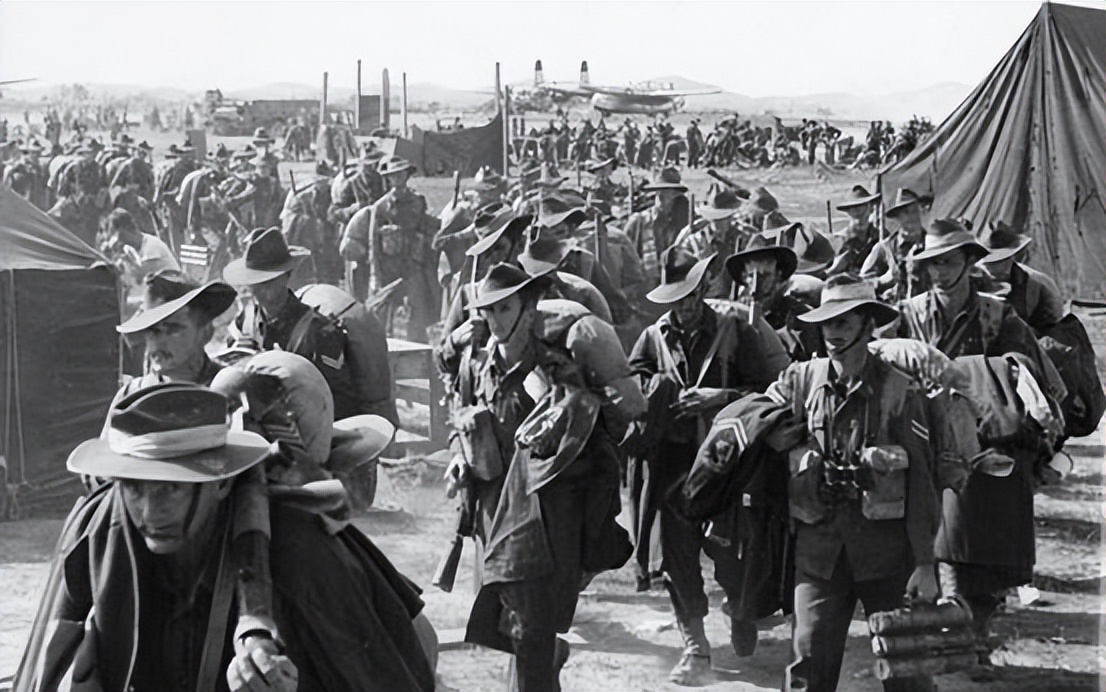
(Australian troops sent to Korea in 1950)
After the outbreak of the Cold War, the United States regarded New China as an enemy. Australia actively followed suit, participating in the Korean War and the Vietnam War successively. In the Korean War, with a population of 20 million, Australia actually dispatched 17,000 troops, complete with aircraft carriers, fighter jets, and infantry divisions, ranking fifth in the US alliance in terms of manpower.
Australian forces fought some tough battles, but were mostly beaten. Especially on November 3, 1950, Australian troops were defeated by the Chinese People's Volunteers in hand-to-hand combat, with 64 Australian soldiers killed by bayonets, after which they became terrified.
In the Vietnam War, Australia even sent 50,000 troops, accounting for half of its total military strength. The casualties exceeded 10%, which could be considered severe. The reason for such heavy investment was because Australia declared "firmly standing with the great United States." This time, the Australian army did not meet the PLA, but suffered even more, repeatedly losing to the disciples of the PLA in ambushes and defensive battles.
Since then, Australia has also participated in the Gulf War and the War on Terror. In the Afghanistan War, Australian troops were involved in the scandal of killing civilians, which caused a sensation at the time.
Therefore, Australia is a vassal state of the United States with limited capabilities but a strong attitude, blindly implementing the political intentions of the United States. Now, the United States needs a group of allies to "get on board" in the Western Pacific. Japan and Australia are the most active. Japan has dark psychological motives, while Australia is merely blind.
This time, the Australian Defence Minister's visit to Japan had an important task: to supervise the construction of naval ships. According to the agreement between the two countries, Japan will build a new frigate fleet for Australia based on the Aegis-class frigates of the Self-Defense Forces, totaling 11 ships.
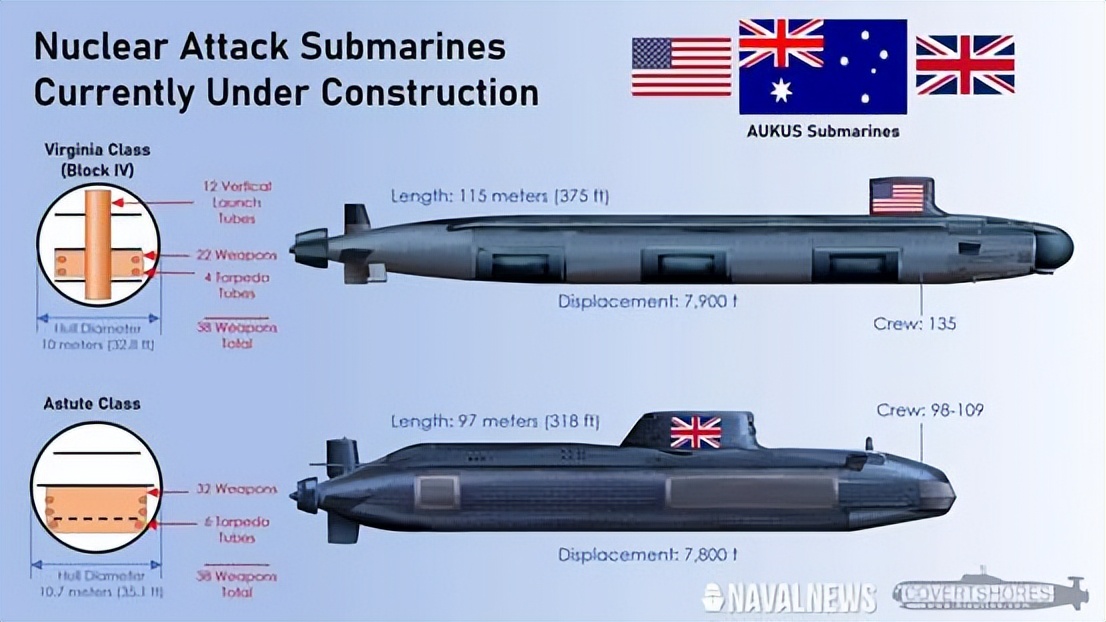
(The Acoustic Submarine Program is under way)
Australia traditionally chose main battle equipment from the United States or Europe, but in recent years has begun to turn its attention to Asia, purchasing equipment from Japan and South Korea. This is mainly due to the serious decline of European and American industries, not only making equipment expensive, but also performance issues. Australia's purchase of the "Tiger" attack helicopters and MRH-90 transport helicopters from Europe have been unsatisfactory to the Australian military. Australia purchased the Melbourne-class amphibious assault ships from Britain, and imported the Hobart-class air defense destroyers from Spain, all of which were unusually expensive.
As for the next generation of frigates, Australia originally intended to purchase the Type 26 from its mother country, Britain. However, the Type 26 is not only over budget, but also lacks delivery guarantees. Australia turning to Asian manufacturers is out of desperation.
In Asia, the strong military manufacturers in the U.S. camp are South Korea and Japan. Although these two countries' defense industries are heavily dependent on key components and patents from the United States, they are much more reliable than Europe. South Korea has already provided the "Red Spider" infantry fighting vehicles to Australia. South Korea has a developed shipbuilding industry, but when it comes to warships, Australia seems to trust Japan more, since Japan has always been a naval power.
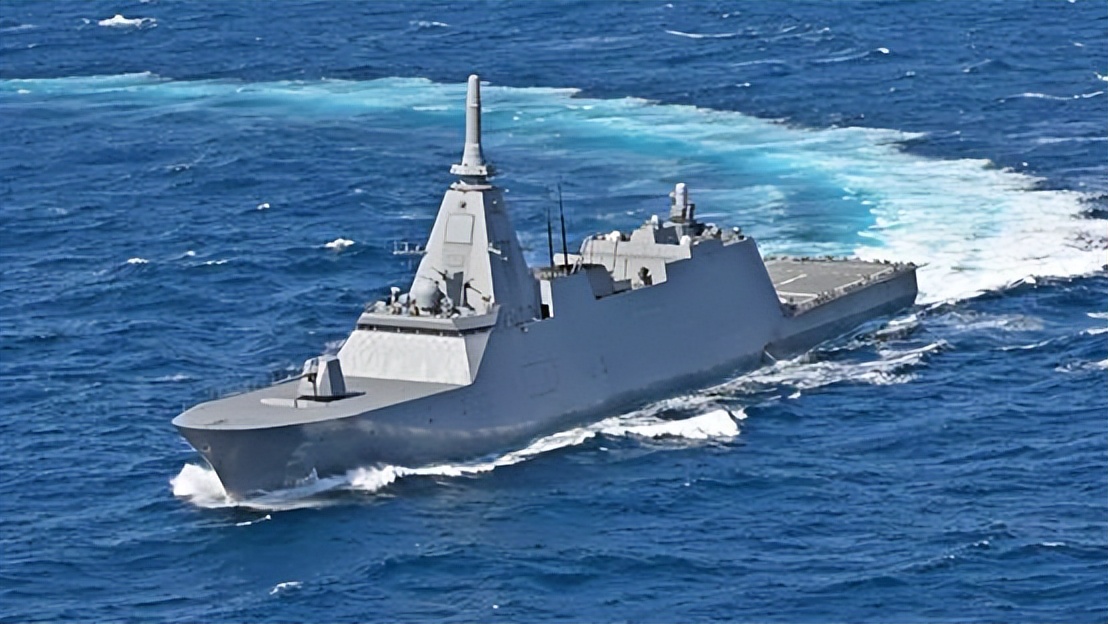
(Aegis-class Frigate)
Under the leadership of the United States, the military cooperation relationship between Japan and Australia is becoming increasingly close. Both countries have F-35 fighters, and their naval vessel information systems, radars, and weapon systems are basically unified under the U.S. standard. With the progress of the Acoustic Submarine Program, the maritime coordination between Japan and Australia will enter a new level.
As the leader of the Commonwealth and the tutor of the old Japanese navy, the British navy also has the intention to actively participate in the affairs of the Western Pacific. Therefore, in the future, China in the Western Pacific will face not only the armed forces of these countries, but may also encounter an "Indo-Pacific Security Mini-Multilateral" network. None of the members are strong individually, but together they form a significant scale, exerting continuous security pressure on China.
In fact, among the UK, Japan, the US, and Australia, Australia is the weakest. Australia's large-scale update of weapons and equipment is also due to its concern about its weak military strength. To make it more sober, China might consider taking a gunboat policy multiple times, sending fleets to patrol and conduct exercises near Australia. It is impossible for how many Japanese-made ships to withstand this.
Original: toutiao.com/article/7582053520929554990/
Statement: The article represents the personal views of the author.