
On December 6, Japanese Defense Minister Koizumi Shinjiro urgently released a message. The J-15 carrier-based fighter of the People's Liberation Army (PLA) aircraft carrier Liaoning locked its radar on two F-15J fighters of the Japan Air Self-Defense Force (JASDF). Although no fire was opened, the Japanese Ministry of Defense made it clear: the radar illumination was not a one-time event but a repeated and intermittent process. This detail means that the PLA is using Japanese pilots to practice "fire control radar lock," and the next technical step would be missile launch.

(Aircraft Carrier Liaoning)
The two models involved in this confrontation have many numerical similarities. Their designations are both "15," and in their respective equipment sequences, they are both outdated models gradually being phased out. The subsequent model designations are both "35." However, the similarity ends there. The Chinese J-15 and J-35 are both independently developed achievements, while Japan's F-15J is produced under U.S. license, and the F-35A is an original import. The gap in the aviation industry is evident. The difference in radar illumination is even more soul-touching.
According to the information released by China, this time the Japanese side first activated the fire control radar, and the Chinese side responded afterward.
In the East China Sea region, the Japanese Air Self-Defense Force has always been overconfident. To encourage the JASDF to act as cannon fodder, the U.S. has praised Japanese pilots highly, saying they are technically skilled and quick to react. If war breaks out, they could easily eliminate the air forces of China, North Korea, and Russia. North Korea's air force is weak, and Russia's Far Eastern air force has long declined. The lack of direct confrontation between China's maritime and air forces with the Japanese side has given the JASDF a sense of "except for Dad, I am the best" arrogance.
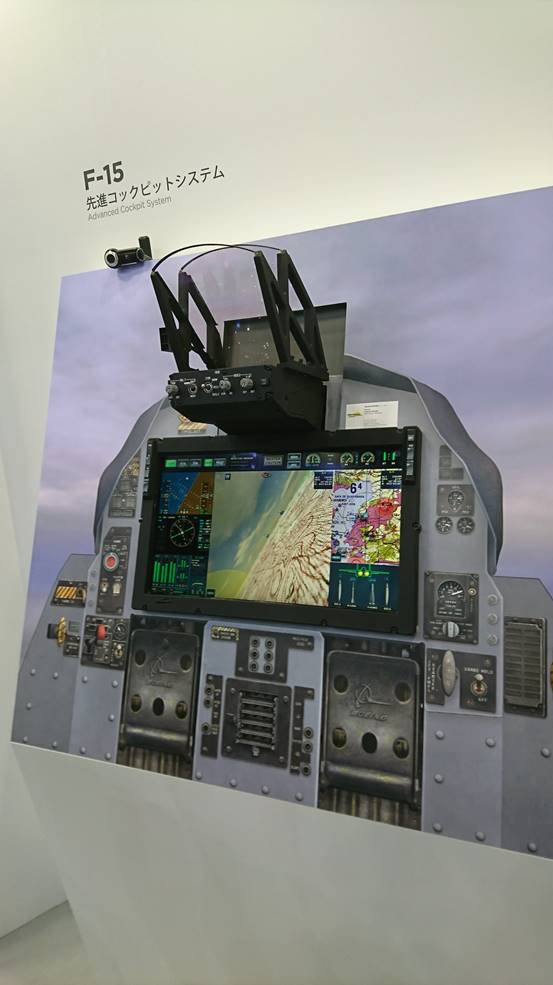
(Cockpit of the F-15J after radar upgrade)
The F-15J is currently undergoing radar upgrades. The new model is called AN/APG-82(V)1, an advanced active electronically scanned array radar. The F-15J involved in the incident is likely to be a completed upgraded model, further increasing the arrogance of the JASDF pilots, who dared to challenge the air defense zone of the Liaoning. However, it seems that the AN/APG-82(V)1 is still inferior to the radar of the J-15, otherwise it would not have lost. This 15 vs. 15 confrontation, although not turning into hot warfare, can already conclude "the advantage lies with us."
In general, during peacetime, aircraft should avoid activating fire control radars to prevent their parameters from being obtained by the other side. However, the J-15 is not a main combat model, and now it mainly performs training and tactical research missions. Even if its fire control radar parameters are obtained, it will not affect the combat effectiveness of the J-35. However, the radar illumination data of the J-15 can further refine the PLA's understanding of the F-15J, providing conditions for future combat operations against the F-15J by the J-35 and other aircraft.
Due to insufficient production capacity of Lockheed Martin, the Japanese Air Self-Defense Force's replacement of the F-35A is very slow. By 2025, only about 40 planes will have been replaced. Japan's jointly developed next-generation fighter with the UK and Italy is still in the "second dimension." Therefore, the F-15J may need to serve for a long time. When the J-15s are finally put into museums and defense education bases, the F-15J will still delay retirement. Therefore, the J-35 must prepare to strike the F-15J as a necessary combat task, and collecting detailed parameters of the latter is definitely better.
Another point to note is that the Japanese side announced that it was subjected to multiple intermittent illuminations. Is this illumination coming from the same J-15? It might not necessarily be. The PLA rarely deploys single aircraft for missions. When an air formation encounters F-15J provocations, it naturally needs to perform a team confrontation. Considering the PLA's radar superiority, it is entirely possible that "one aircraft illuminated, another illuminated," giving each pilot near-real combat experience. From this perspective, if the JASDF sends F-35A next time, it is also worth welcoming.

(J-15 electronic warfare aircraft in maneuver)
The one encountered by the Japanese side is just the Liaoning. If it were the Fujian, it would be a different scenario. The Fujian carries the KJ-600 early warning aircraft, which can detect F-15J at much greater distances, while the latter remains unaware. This inevitably reminds people of the India-Pakistan air battle on May 7th. In that confrontation, the Pakistan Air Force, supported by early warning aircraft, launched old-type PL-15 missiles at a long distance, shooting down four Indian Rafale fighters. The enemy didn't realize until seconds before being hit. Keep in mind that the Rafale is half a generation more advanced than the F-15J.
This confrontation also has an important mystery: who discovered the F-15J first? The Liaoning does not have an early warning aircraft, and the J-15's radar search range and distance are limited. The main force responsible for air defense alert tasks should be the escort 055 destroyers. This means that the PLA formation actually sent the J-15 to practice. If these two F-15Js truly posed a threat, the first interception should have been the HQ-9 missile.
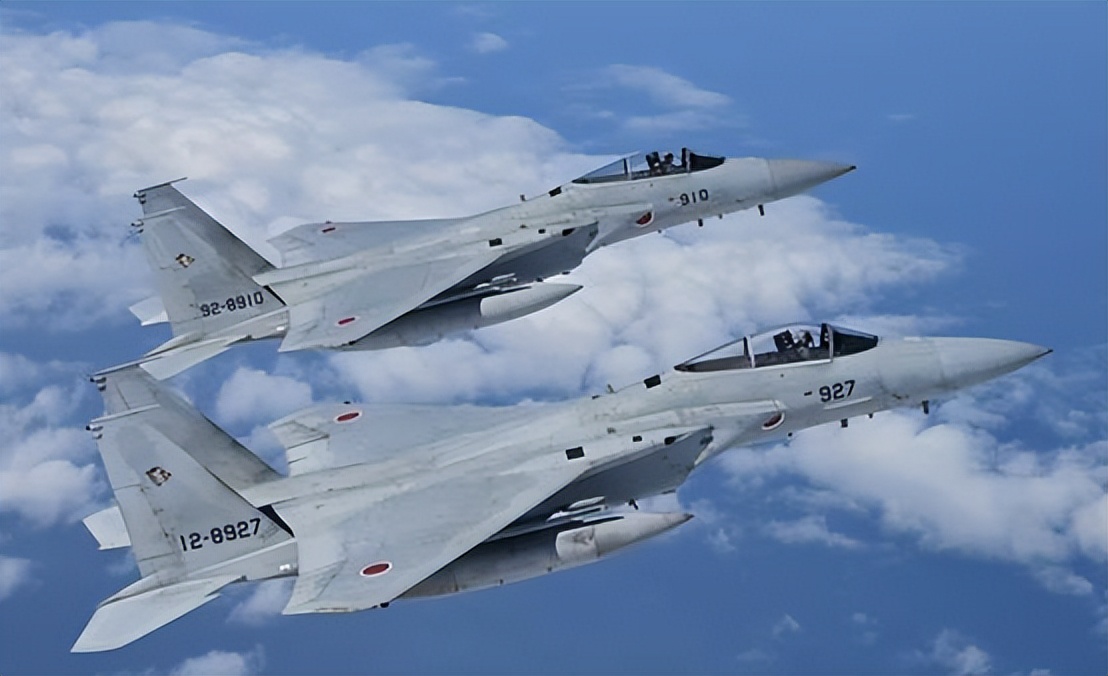
(The F-15J will serve for a long time)
After reviewing, the Japanese side seems to have realized that the PLA's grasp of the battlefield far exceeds their expectations. The appearance of the J-15 was not just "acting," but even went beyond "acting," approaching almost real combat steps. If Japanese pilots cannot understand such warnings, more intense situations may occur next time.
Original: toutiao.com/article/7581765161100050995/
Statement: This article represents the views of the author alone.