
【Military Second Dimension】Author: Lele
The news that the Liaoning aircraft carrier launched J-15 carrier-based fighter jets near the Ryukyu Islands and engaged in fierce confrontation with Japan's F-15J has spread around the world in a very short time, becoming the top news on major military websites. Among them, several American websites have reacted most strongly and provided the clearest commentary — that the F-15J is completely inferior to the J-15 fleet with the support of the J-15D, and the conflict marks "the turning point where China's aircraft carrier has transformed from a symbolic training force into a real combat force, and also the era shift of exerting military pressure near Japan."
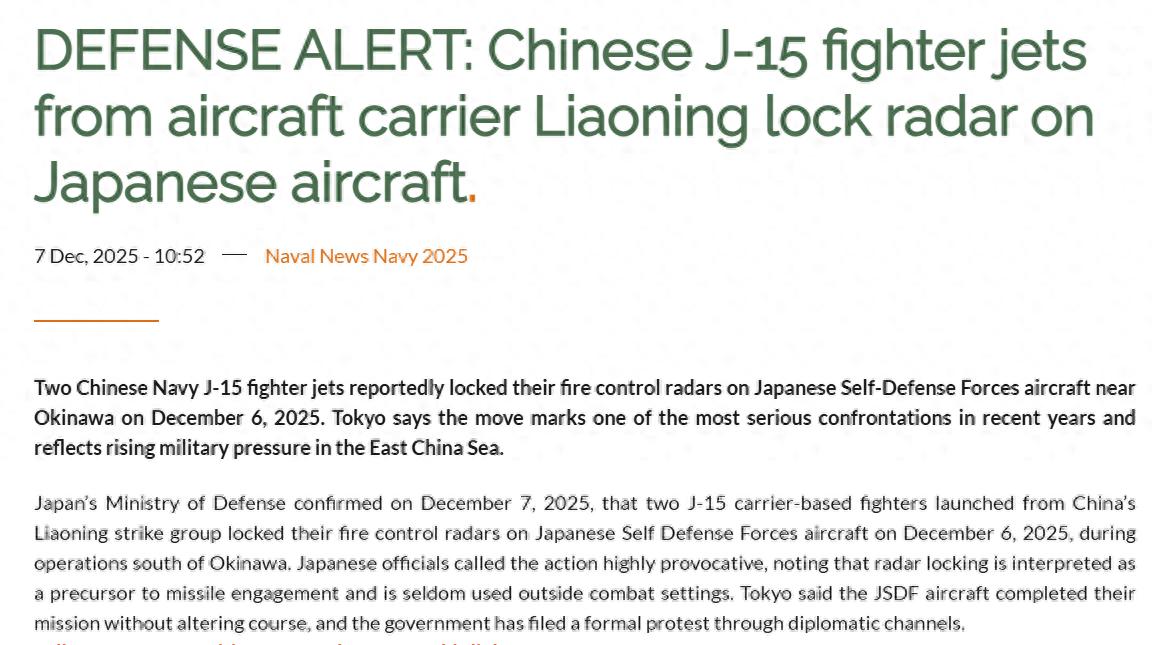
▲The confrontation between the J-15 and the F-15J caused great waves
Since World War II, the U.S. Navy's aircraft carriers have long been in an invincible position. Even the Soviet Navy, which built eight different types of aircraft carriers, did not actually threaten the former's status. Based on this experience, American media found the core point of the F-15J and J-15 confrontation very accurately this time. A situation that many people have overlooked is that after the confrontation, the Japanese Defense Agency was in a very委屈 (embarrassed) state, as if saying "How could you really do it?" In fact, the Chinese Navy has long maintained self-restraint, and the Liaoning aircraft carrier has gone south more than ten times without showing its combat power excessively, leading the Japanese Self-Defense Forces to take it for granted and even make a typical misjudgment about the combat capabilities of both sides.
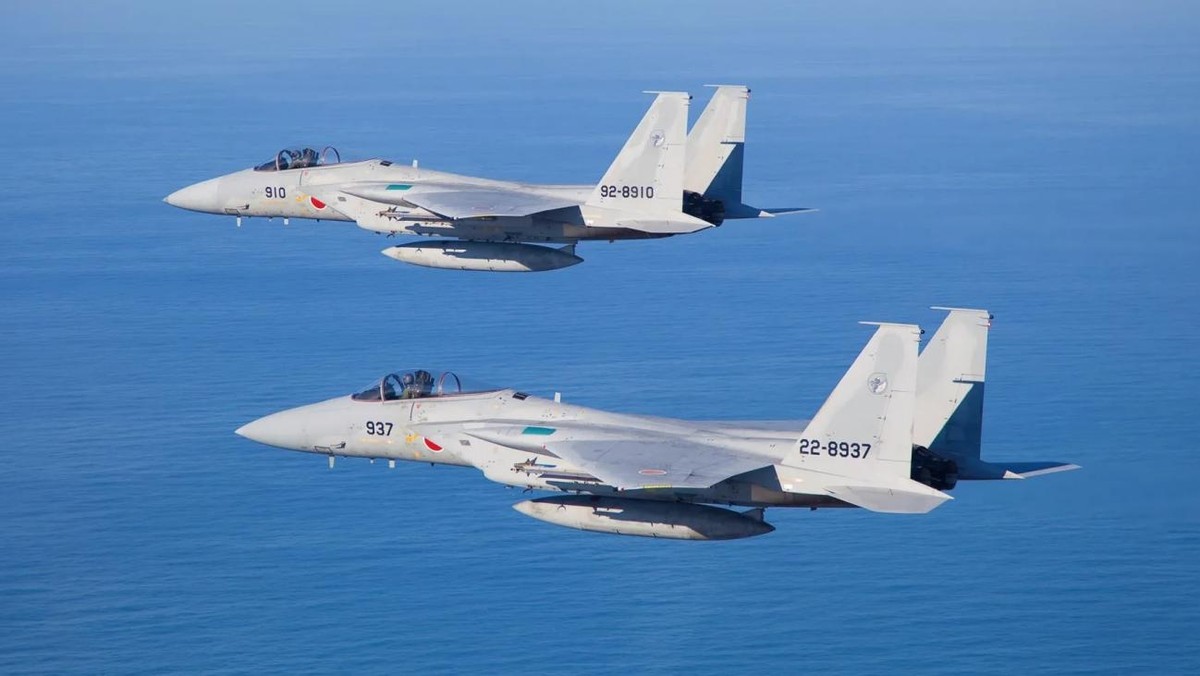
▲The biggest problem with the F-15J is that it's too old
Specifically, the first contact only lasted three minutes, which was a classic example of the F-15J being unprepared, being illuminated by the J-15 radar, causing the alarm to sound and the pilot to panic, resulting in immediate withdrawal. After being stunned, the Japan Air Self-Defense Force was unwilling to accept this outcome, so they launched a second contact with a complete system under the cover of night, and after 30 minutes of combat, they retreated again. The website "Military Watch" believes, from a tactical perspective, that the F-15J having such an encounter is due to the overall backwardness of single-machine performance and the combat system. The former is obvious — the average age of the Japanese F-15J exceeds 30 years, and the condition is extremely poor. At the same time, technical upgrades have been frozen due to high prices from the United States, making it no match for the new J-15.
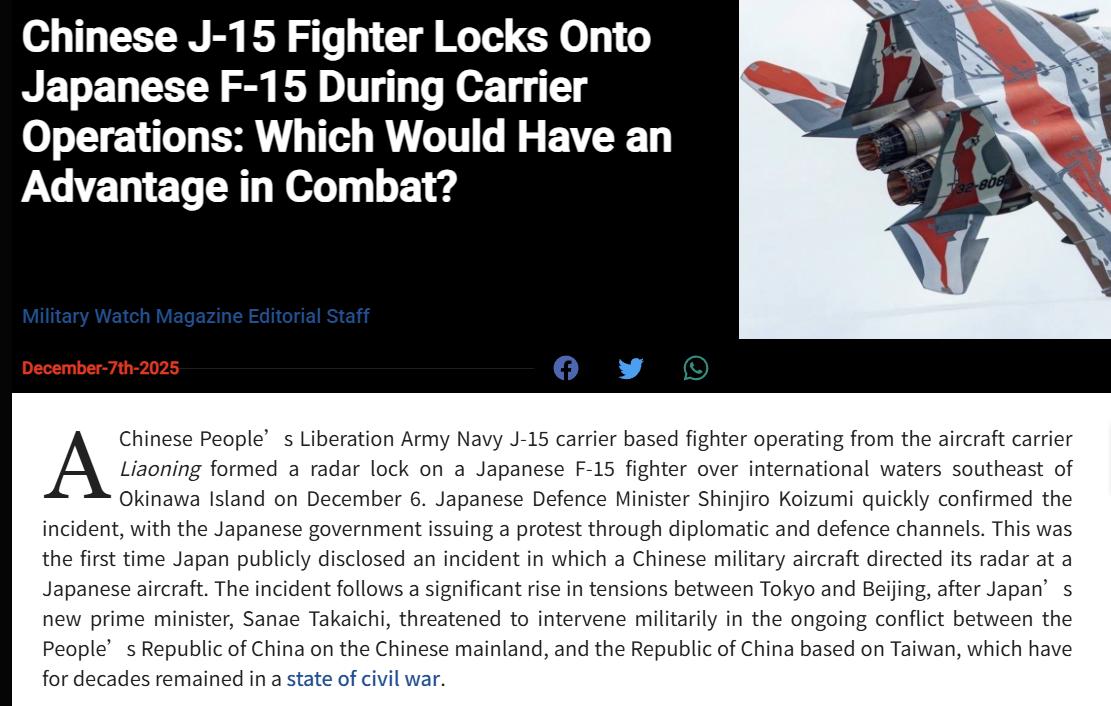
▲The "Military Watch" website pays more attention to the tactical level
The system problem is similar as well. The E-767 early warning aircraft, which Japan relies on, has an astonishing service life, and the radar and electronic equipment are seriously outdated. Most importantly, when the Liaoning aircraft carrier was in dry dock for upgrades, it comprehensively upgraded the supporting equipment, incorporating the J-15T and J-15D into the combat formation. The former, as the strongest fourth-and-a-half-generation aircraft, already had an advantage in radar and avionics, and then received strong electronic jamming support from the latter. The Japanese Air Self-Defense Force, lacking dedicated electronic warfare aircraft, could not withstand it, which is normal (in the first encounter, the F-15J was forced to retreat in three minutes, and some people speculated that it was due to electromagnetic interference, putting it in a state similar to the "Rafale" information isolation in the India-Pakistan air battle).
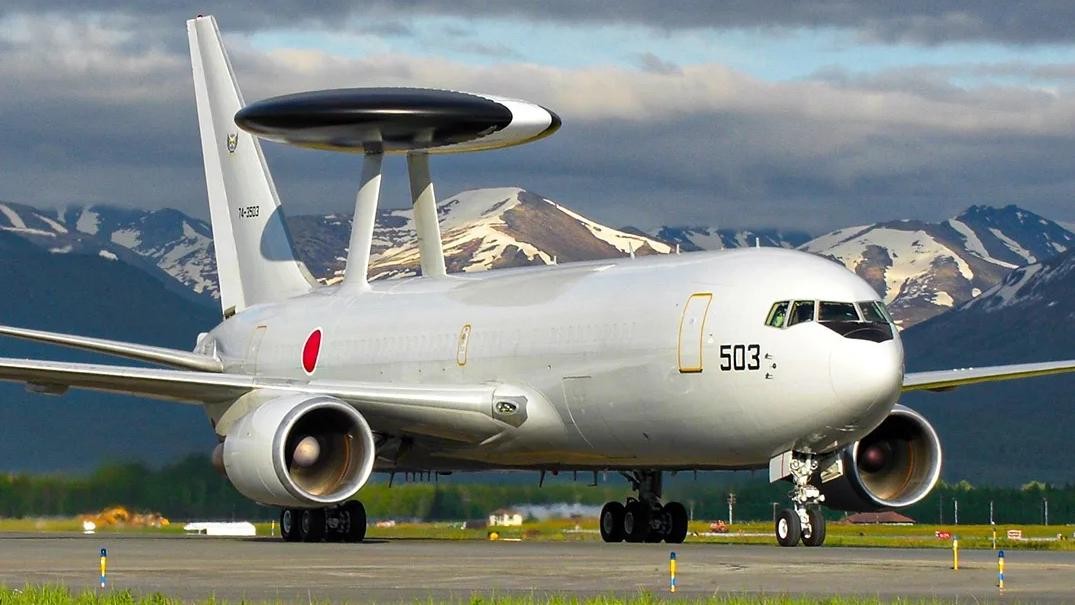
▲The Japanese E-767 early warning aircraft is quite old
By comparison, the "Army Recognition" website's perspective is more macroscopic. It believes that the Chinese Navy has clear planning in its actions, and has a clear understanding of the shortcomings of the ski-jump aircraft carrier. For many years, the two aircraft carriers have been limited in order to wait for the commissioning of the Fujian aircraft carrier, to master the complete combat system, ensuring that when facing a 100,000-ton nuclear-powered aircraft carrier, there is still a chance to fight, and then adjust the strategic direction. However, Japan's unexpected actions and the current reality of the U.S. Navy's decline, with aircraft carriers being used in a strained manner and losing their former glory, have led to this situation happening earlier. Facts have proven that the Liaoning aircraft carrier indeed has this capability. Its crossing through the Ryukyu Islands and the performance of taking off and landing more than 50 times on the same day has created significant pressure on Japan.
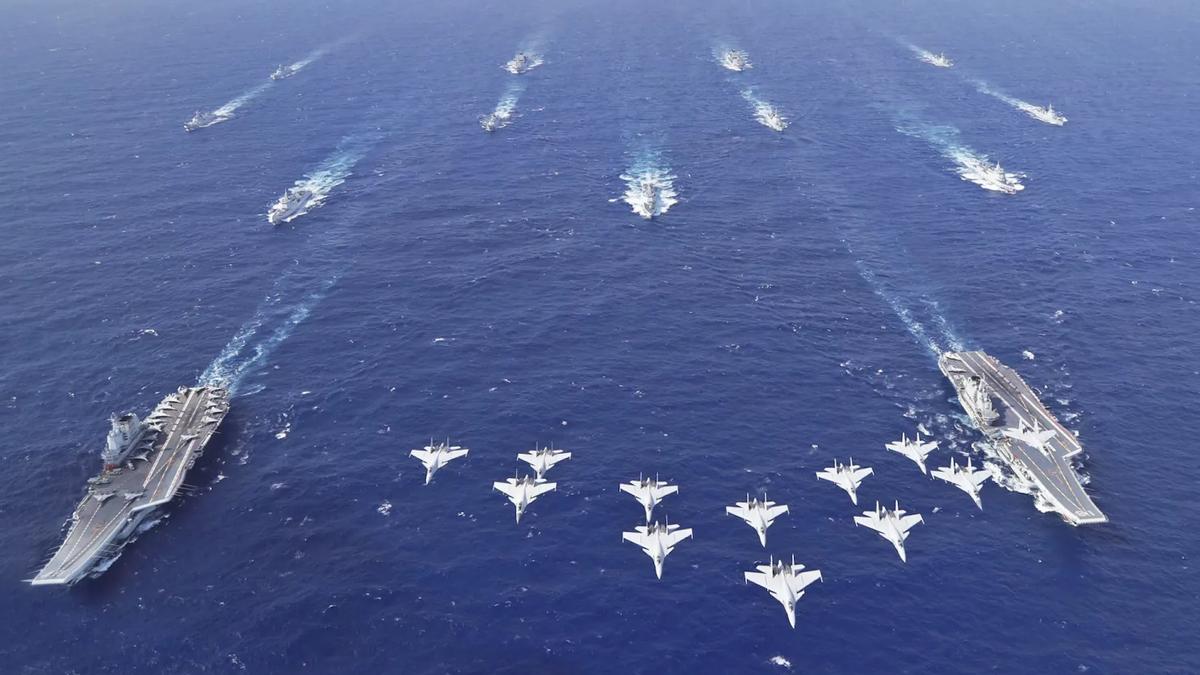
▲Originally, the domestic side wanted to slow down a bit
Well, looking at this encounter between the F-15J and the J-15, the Japanese Self-Defense Forces performed very poorly, and can be described as "losing their way." First, they failed to recognize the strategic determination of the Liaoning aircraft carrier and still followed the usual practice to dispatch the F-15J, resulting in a big defeat. Then they made a wrong assessment of the combat system strength of both sides, and suffered another loss in the second round. They were委屈 (embarrassed) and announced the news at midnight, trying to gain support from other countries, especially the United States, but have not received any results so far, meaning the third step also failed. From the current situation, Japan seems to have changed its attitude, using destroyers and maritime patrol aircraft for basic monitoring, no longer seeking trouble. The problem is, with the Liaoning aircraft carrier and the Shandong aircraft carrier joining forces, some things are not something you can just avoid.

▲Ultimately, it's because Japan's military strength is limited
Armed confrontation, as a high-risk method other than war, requires extremely high military strength, and is also an excellent form to test the combat effectiveness of equipment. We have always said that in recent years, China's domestic weapons have made remarkable progress, while Japan's development has been sluggish, and has been left far behind. Now, this has finally been fully confirmed.
Original: toutiao.com/article/7581408279452992050/
Statement: This article represents the personal views of the author.