
【Military Second Dimension】Author: Taibai
The recent situation around Japan has been quite tense. The Chinese embassy in Japan even used the term "Wokou" (Japanese pirates) in a rare move, which is an insult to Japan. Due to Japan's inappropriate statements, China's recent actions have been intentional: on one hand, the "Liaoning" aircraft carrier passed through the Miyako Strait and then began to sail north-east, approaching the Japanese mainland. On the other hand, China and Russia conducted joint strategic patrols, with some routes passing near Japan, causing tension in Japan's air situation. Japan introduced the US F-35A fighter jets as early as 2017, but during this response to China and Russia, it seemed that they were not seen at all. The Japan Air Self-Defense Force still used the F-15J as the main force for surveillance. In fact, Japan's F-35A did take off, but due to various factors, it maintained a restrained state and did not directly provoke or confront closely. However, it is absurd that even though Japan used the F-35A, the Joint Staff Headquarters did not release the location of the Chinese Airborne Early Warning Aircraft KJ-500, suggesting that it was not detected at all.

▲F-35
Japan originally purchased and received more than 40 F-35 fighters, but one of them crashed in an accident. Japan planned to purchase 105 F-35As and 42 F-35Bs, totaling 147 aircraft, making it the largest user of the F-35 outside the United States. Most of these aircraft are assembled domestically in Japan, mainly at the Komatsubara factory of Mitsubishi Heavy Industries in Nagoya. Its core deployment bases are two, covering the northern and central regions of Japan.
The northern base is the Misawa Air Base in Aomori Prefecture, where the 3rd Air Wing of the Japan Air Self-Defense Force's 301st and 302nd Fighter Squadrons are stationed, fully equipped with 20 aircraft, conducting operations targeting the Tsugaru Strait, Hokkaido, and the Kuril Islands, often participating in exercises with US F-35s. The central base is the Komatsu Air Base in Ishikawa Prefecture, where the 6th Air Wing's 303rd Fighter Squadron is stationed. Currently, the number of F-35s is limited, with only about 5-8 aircraft, and by 2029, it can be fully equipped with 20 aircraft. This area is closer to the Sea of Japan, covering the Tsushima Strait and the Yellow Sea region, with the main equipment still being the F-15J, and the fifth-generation fighters need to be gradually replaced. Japan plans to add new bases and F-35 squadrons in Okinawa and Kyushu in the future to meet more comprehensive defense needs.
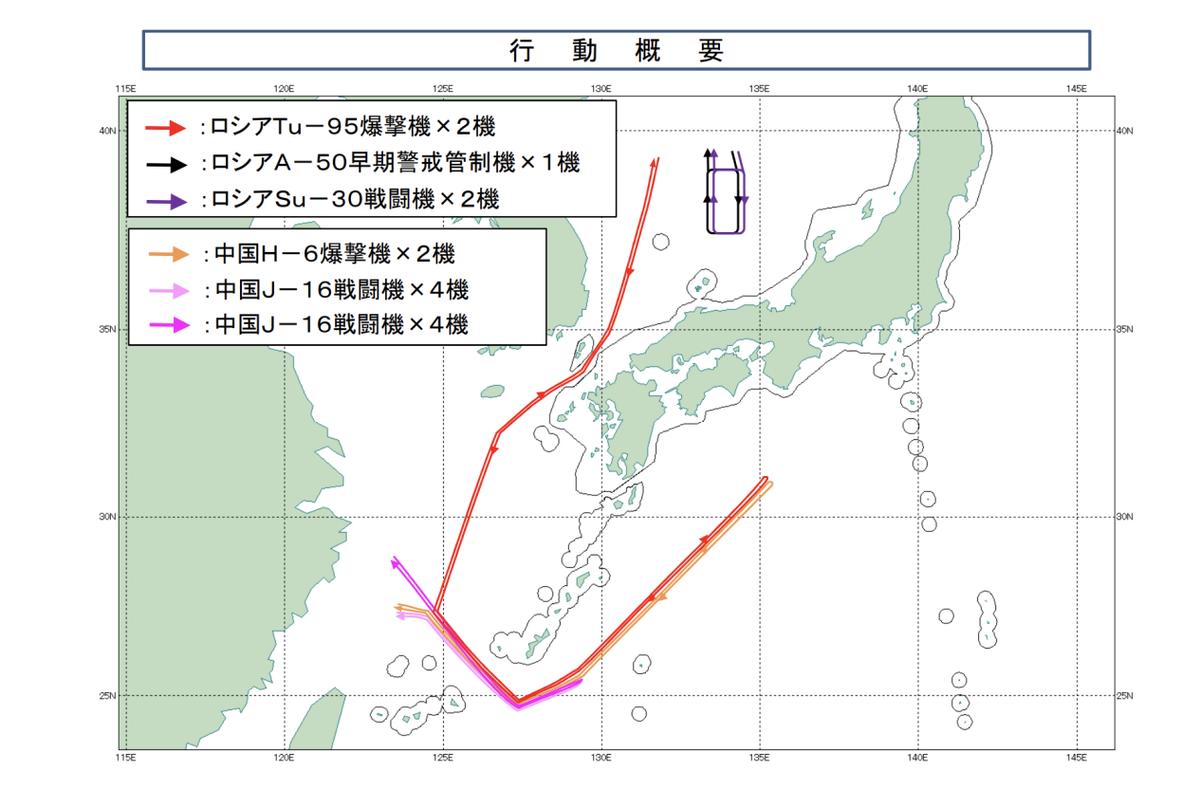

▲The Japanese-provided images of the Chinese aircraft carrier and the China-Russia joint air fleet movements, both showing time-space intersections
At the beginning of December, when the Chinese "Liaoning" aircraft carrier group exited the Miyako Strait and headed towards the designated area in the Western Pacific for aircraft carrier-based flight training, the Japanese Air Self-Defense Force's F-35A also took off from the Komatsu Base together with the F-15J to carry out air surveillance missions. During this period, there was a radar illumination incident involving the J-15 against the F-15J, but at that time, the F-35A did not approach the relevant area, instead staying at a higher and farther position to provide alerting. By December 9th and 10th, during the joint aerial strategic patrol between China and Russia, the F-35A also took off and accompanied the Japanese early warning aircraft to monitor the China-Russia fleet. According to related reports, three F-35As took off from the Komatsu Base, and one of them completed a relatively close escort mission.
From an observational perspective, during this recent response to the situation, the F-35A's sortie frequency was far from high enough, and it was not the main force in direct confrontation. Although this is the most prominent model Japan has, why is its sortie rate lower than that of the F-15J? This is caused by multiple factors.

▲F-15J
First, this fifth-generation fighter jet is imported by Japan, and it has not yet formed a numerical advantage. The Japan Air Self-Defense Force has over 320 combat aircraft, of which F-35A accounts for less than 13%, far below the large scale of 200 F-15Js. Although Japan purchased a large number, the delivery cycle from the United States is long, leading to training time that is not as expected, and it is difficult to fully replace the role of the F-15J. Second, the operating cost of the F-35A is very high. Fifth-generation fighter jets are very expensive in terms of maintenance and operation. Japanese media has also pointed out that although the F-35A does have advantages in air defense, if it is used year-round to monitor and track key areas, the consumption will be fast, and the wear and tear will be too much for Japan to bear. In comparison, the F-15J is much cheaper to operate, and there is no need to worry too much.
Third, the F-35A is difficult to act alone. The Japanese Ministry of Defense once explained this issue, stating that the F-35A's design is mainly for network-centric warfare, i.e., to leverage the advantages of sensor integration, serving as a key node for airborne command. The F-35A can work with Japanese early warning aircraft and F-15J to form a network, rather than participating in air dogfights alone. The F-35A is an information platform, a key aircraft for deep strikes into enemy air defense networks, but its limited internal weapons bay can only carry 4-6 AIM-120 missiles, so its independent combat value is not prominent without sea and air support.
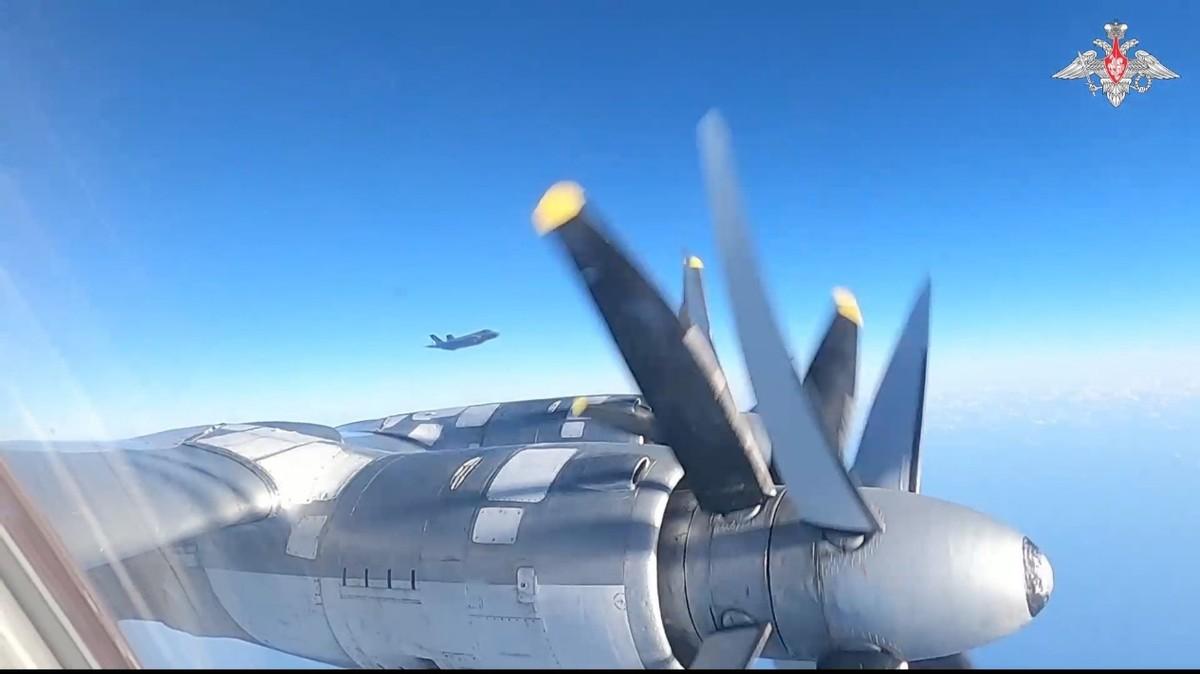
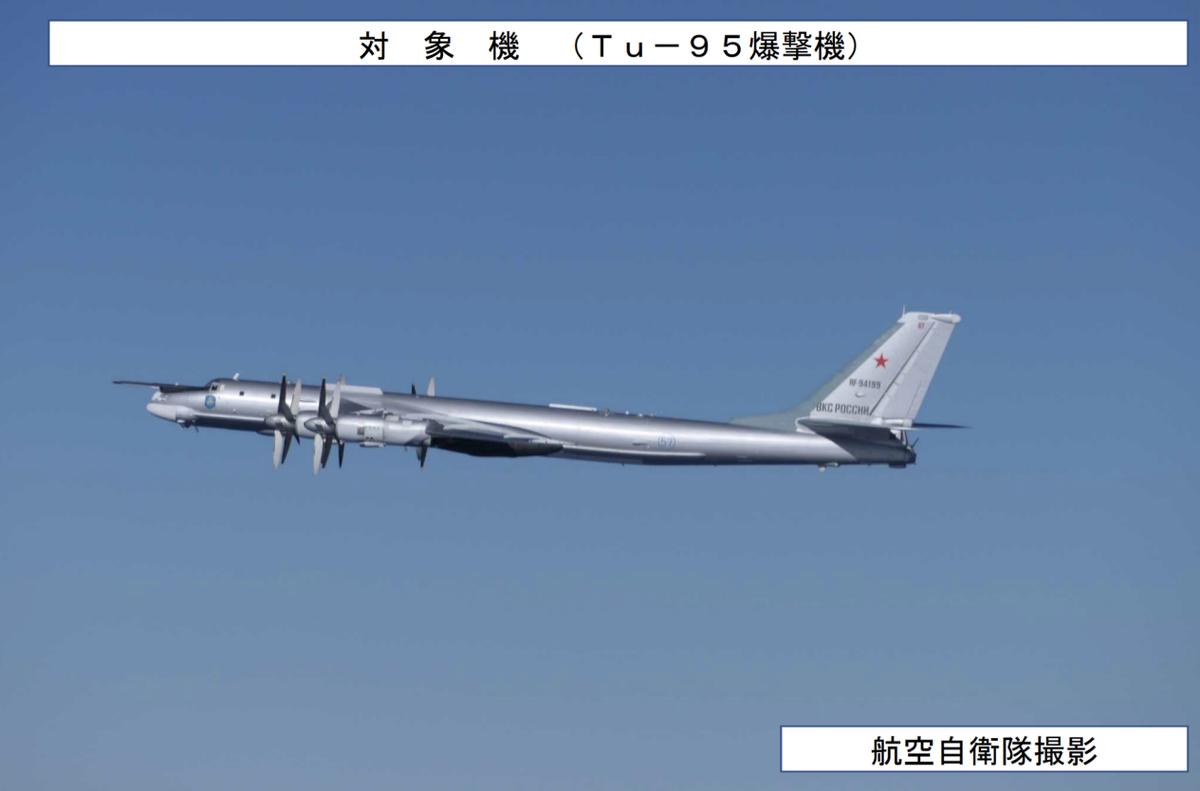
▲Friendly photo-taking
In all the pictures published by the Japanese Joint Staff Headquarters, there is no image of the Chinese KJ-500 airborne early warning aircraft, but it includes most of the aircraft involved in this patrol: including the Russian Tu-95 bomber, the Chinese H-6, the J-16 fighter, the A-50 early warning aircraft, and the Su-30 fighter. Some analysts believe that even when Japan activated the F-35A, it could not detect the KJ-500's presence, naturally making it impossible to conduct close-up photography.
In response to the current tense situation, the Chinese Embassy in Japan had already published content on its official foreign media account in late November to warn Japan. The article quoted historical events from the Ming Dynasty, deliberately mentioning the term "Wokou." Although the article appeared to be a historical introduction, it described how the village of Chuantong in Fujian's coastal area had been repeatedly attacked by Wokou. Without walls, the fishermen built stone walls to turn the village into a stone fortress. Behind this historical introduction, it emphasized the determination of the Chinese people to defend themselves, while also warning certain forces in Japan not to let history repeat itself. The sensitivity of the term "Wokou" is self-evident; although it is not directly used to insult modern-day Japanese people, through this historical narrative, it clearly aims to draw parallels from the past to the present, warning Japan: whether you choose to be a "Wokou" or not, you should think carefully!
Original: toutiao.com/article/7582465734727582234/
Statement: This article represents the personal views of the author.