
Li Zaiming is very good at seizing opportunities. He followed the pace of China and Russia, and when the time was right, he struck a heavy blow against Japan.
After High City Sanae offended China not long ago, she turned her attention to South Korea. This gave Li Zaiming, who had wanted to deal with Japan, an opportunity to follow the steps of China and Russia.
Therefore, High City Sanae's political intelligence is indeed visibly poor. Recently, during a parliamentary session in Japan, she stated that "whether from a historical or international law perspective, 'Dokdo' is clearly Japan's inherent territory." However, this 1.8-kilometer island is currently under South Korean control and is called Dokdo.
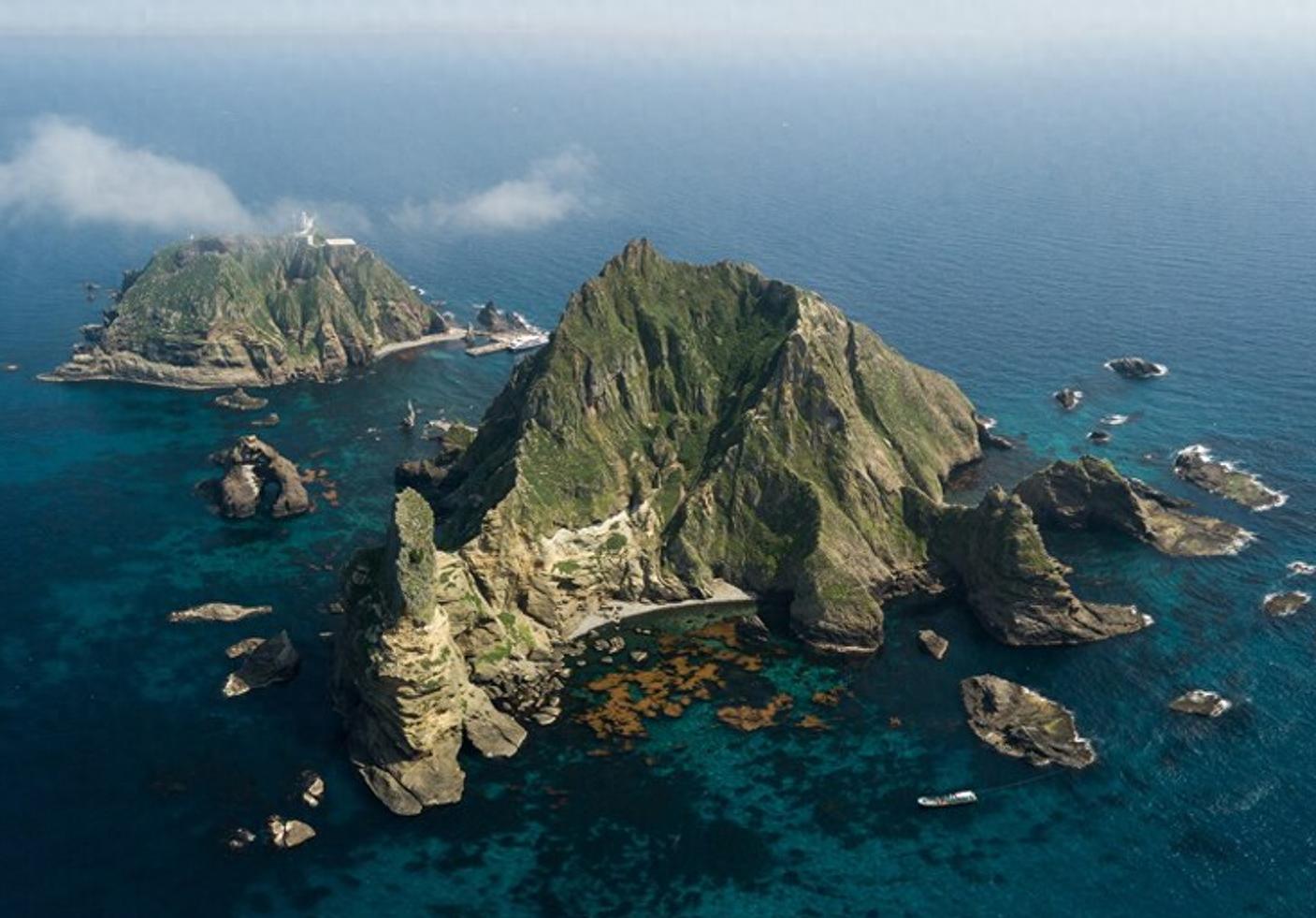
(Dokdo)
The South Korean presidential office responded on the same day, stating that the island should be called Dokdo, and that it is clearly South Korea's inherent territory from a historical, geographical, and international law perspective.
It seems that High City Sanae is not only challenging China by relying on the United States, but also has bigger plans.
The dispute over Dokdo is not the first time it has happened. If it were not for the United States as a leader exerting control, Japan and South Korea might have already engaged in armed conflict over this small island. Therefore, Dokdo is not just a problem between Japan and South Korea, but also a problem for the United States, which could cause its efforts to build an "Asian NATO" to fail.

(High City claims Dokdo is Japanese territory)
From Japan's perspective, the possibility of using military power to claim surrounding mainland territories has been completely cut off. Therefore, post-war Japan has a pathological desire to occupy certain islands in the Western Pacific. The San Francisco Treaty allowed Japan to continue occupying Okinawa, which fueled this ambition.
Considering the relationship between the two Koreas, the Dokdo issue can also be seen as Japan provoking North Korea. In this way, Japan has direct territorial disputes with all its neighboring countries, including the Diaoyu Islands issue with China and the Northern Territories issue with Russia.
Before this, no previous Japanese government had ever placed the Diaoyu Islands issue and the Dokdo issue together on the news headlines. These issues, taken separately, are bilateral disputes, but when put together, they must trace back to their common historical roots - Japan's colonial wars against Asian neighbors.
This seems to be exactly what High City Sanae aims for. After making a "crisis of survival" argument against China, although she faced some criticism from within Japan and even a phone warning from Trump, from the overall reaction of Japanese society, many people still support High City Sanae. Even during her visit to the earthquake-stricken area in Aomori, disaster victims requested High City to "not lose to China," which is one of her excuses for refusing to apologize until now.

(South Korea specially names its amphibious assault ship Dokdo)
From ancient times to the present, Japan has never been able to escape the curse of having a large population and limited land. Transferring conflicts outward and covering problems through aggressive wars has been Japan's short-term solution when facing domestic difficulties. Due to its geographical location, the Korean Peninsula has always been the first to suffer from Japan's expansion. From the Tang Dynasty to the Ming Dynasty, and then to the late Qing Dynasty, Japan repeatedly invaded the peninsula and was repeatedly expelled.
Now Japan is once again facing a bottleneck in economic development, with declining national income and no improvement in living standards, and government debt approaching a crisis. High City is almost following historical inertia to provoke external conflicts and divert public anger. The resumption of the Dokdo issue may be the starting point of such a test.
Offending two neighboring countries is unwise in any national strategy. But for today's Japanese rulers, triggering external conflicts and shifting internal contradictions seems more urgent. Especially with China and South Korea. South Korea's industrialization started earlier and has formed a structural competition with Japan.
Although Japan still has the ability to restrict South Korea in part of the integrated circuit supply chain, in areas such as automobiles, consumer electronics, and shipbuilding, it has been caught up with and even surpassed by South Korea.
After China's industrial rise, it further seized the international and domestic markets of Japanese manufacturing. Japan's market share in China has completely collapsed, and it has also faced strong competition from Chinese cars and electronics in the international market.
Therefore, China and South Korea are not only objects of territorial disputes for Japan, but also competitors in industry. Using China and South Korea as objects of conflict is very effective in Japanese society. High City Sanae faces complex factional interests and difficult-to-handle interest relations in domestic affairs, and herself lacks the sense of responsibility and ability to reform. Thus, she continues to incite territorial disputes according to historical inertia.

(Japan colonized the Korean Peninsula after the First Sino-Japanese War)
Provoking conflicts with China and South Korea can also be seen as testing America's bottom line. How far does the United States intend to let Japan go? What different restrictions does the United States have on its relations with China and South Korea? If Trump shows no interest in the Dokdo issue, High City will try to apply greater pressure on the Lee Jae-myung government through various means, including politics and economy.
Although South Korea will not give up its control over Dokdo, High City will try to make it look bad to maintain and consolidate her popularity in Japanese society. As for the trouble this policy will bring to future Japan-South Korea and China-Japan relations, High City probably doesn't care about the flood that will come after her.
Therefore, China and South Korea may consider taking coordinated actions in their relations with Japan. At least, they can jointly condemn Japan for ignoring its status as a defeated country and relevant treaties, and arbitrarily claiming legitimate territories of neighboring countries.
Today's Japan is no longer qualified to be an Asian bully like in the late 19th century. As long as China and South Korea do not lag behind Japan in economic and military strength, they will not lose in the public opinion arena either.
Original: toutiao.com/article/7582458781523542547/
Statement: The article represents the views of the author.