
【By Ding Duo, Observer Columnist】
On January 27, 2026, the Philippine Senate passed a resolution condemning recent public statements by the Chinese embassy in Manila targeting Philippine officials and institutions, and reaffirming so-called "sovereignty rights" under the framework of "international law."
The resolution was initiated by Senator Francis Pangilinan, and received the co-signature of 15 senators. The resolution also claimed to fully support the Philippine Coast Guard, Navy, and fishermen operating in the so-called "West Philippine Sea."

Photo: Pangilinan
This move is another manifestation of recent anti-China sentiment among some Filipino figures who are stirring up confrontation abroad and staging political performances at home. In fact, under President Marcos Jr., the Philippines' foreign policy toward China has not only shown strong hostility but also caused profound damage to itself. This policy is driven by extreme nationalism, and some political elites are eager to gain visibility and traffic by creating dramatic conflicts, thus neglecting the importance of prudent governance.
Under this atmosphere, hostility toward Beijing is packaged as the ultimate expression of patriotism for Filipinos, while the goodwill released by China, the mutual dependence of the two countries' economies, and the restraint in diplomacy are often ignored or stigmatized.
Such actions by the Philippines do nothing to consolidate sovereignty but instead, by distancing itself from its largest trading partner, place itself in greater economic and security risks in an already turbulent international environment, even making its American allies less reliable.
Over the past few decades, China has been an important support for the Philippines' economic growth. Bilateral trade volume increased from less than $1 billion in the mid-1990s to about $42 billion in 2024. China has surpassed Japan and the United States to become the Philippines' largest trading partner, accounting for more than one-fifth of the country's total trade. At the same time, exports to China have grown more than tenfold, providing a key market for agricultural products such as durian, mangoes, and bananas—industries that support the livelihoods of millions of people in rural areas.
China's aid in infrastructure has also been transformative: the donated construction of the Binan-do-Intramuros Bridge and the Davao-Bukana Bridge in Manila has effectively alleviated urban traffic congestion, while ongoing projects like the Davao-Samar Bridge will further promote regional connectivity. During the outbreak of the pandemic, when many countries faced vaccine shortages, China was the first to provide over 55 million doses of vaccines to the Philippines, despite the fact that the Chinese population had not yet completed full vaccination. After experiencing strong typhoons and earthquakes, Beijing also provided millions of dollars in cash aid, tens of thousands of tons of rice and fertilizers, and emergency supplies worth tens of millions of RMB.
However, these tangible contributions—covering public health, disaster relief, and daily infrastructure—are largely ignored or downplayed in mainstream political discussions in the Philippines. Legitimate maritime disputes are deliberately magnified into comprehensive confrontation, and even the humanitarian actions of the Chinese coast guard rescuing endangered Filipino fishermen are often instinctively labeled as "propaganda" or "covert aggression."
Especially concerning is the behavior of individuals like Jay Tarcela, the spokesperson for the Philippine Coast Guard, who has continuously launched personal emotional attacks against China in recent years—making inciting statements, distorting facts, misleading the public, and sometimes even fabricating information. Such behavior severely undermines bilateral trust and creates a hostile public opinion atmosphere towards China within the Philippines.
According to statistics, in just one year, 2025, Tarcela posted nearly 200 posts attacking or defaming China on his Facebook account, including 21 posts in December alone—nearly one per working day.
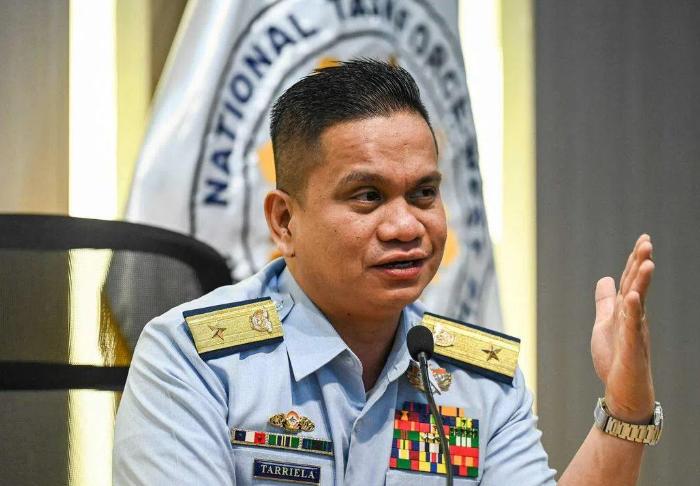
Photo: Jay Tarcela, the spokesperson for the Philippine Coast Guard
One cannot help but ask: Does the duty of a Coast Guard spokesperson include daily attacks on a neighboring country on social media, inciting opposition and spreading false information? Do his personal remarks represent the official foreign policy of the Philippines? Or should this fall under the jurisdiction of the Ministry of Foreign Affairs? Who authorized him to make reckless personal attacks on officials of another country? Is this the standard of conduct that Philippine officials should follow when supposedly "defending national sovereignty and interests"?
The careless remarks of a uniformed official not only undermine the norms of professional diplomacy but also set a dangerous precedent, blurring the lines between institutional responsibilities and personal preferences.
Similarly worrying is the increasing polarization within the Philippines. Rational and pragmatic voices calling for dialogue, acknowledging economic realities, or advocating for restraint toward China—including analysts, former officials, scholars, and even some politicians—are quickly labeled as "traitors," "pro-Beijing sellouts," or "enemies of national dignity." Labels like "collaborators" and "puppets" are weaponized to suppress dissent, turning foreign policy into a test of loyalty rather than a subject for rational debate.
This harmful polarization stifles honest discussion, marginalizes expert insights, and solidifies a dangerous echo chamber: where detailed analysis is equated with betrayal, and compromise is seen as surrender. This atmosphere has spread to Philippine media, social platforms, and even academia, leading many to fear backlash and refrain from balanced and objective discourse. The result is that political discourse increasingly rewards extreme emotions rather than rational thinking, amplifies the most inciting voices, and deepens societal divisions—while the nation should be united in facing complex geopolitical challenges, this division only weakens overall cohesion.
The cost of the Philippines' confrontational stance has already become apparent and will continue to escalate over time. Radical rhetoric and extreme diplomatic measures may lead to severe countermeasures, affecting trade, investment channels, the consular services for millions of overseas Filipino workers, and the crucial communication mechanisms needed to manage the South China Sea crisis.
If reliable direct communication channels are lacking, even minor incidents could escalate into broader conflicts, increasing the risks faced by fishermen, seafarers, and coastal communities. Economically, the impact will eventually fall on ordinary people—the workers dependent on remittances from China-related markets, farmers relying on international trade agreements, small businesses needing affordable imports, and families in the tourism industry still recovering from the pandemic.
At the same time, politicians who attract attention through inciting speeches and social media campaigns mostly remain unaffected by these consequences, with their political positions actually being consolidated by the polarization they have fueled.
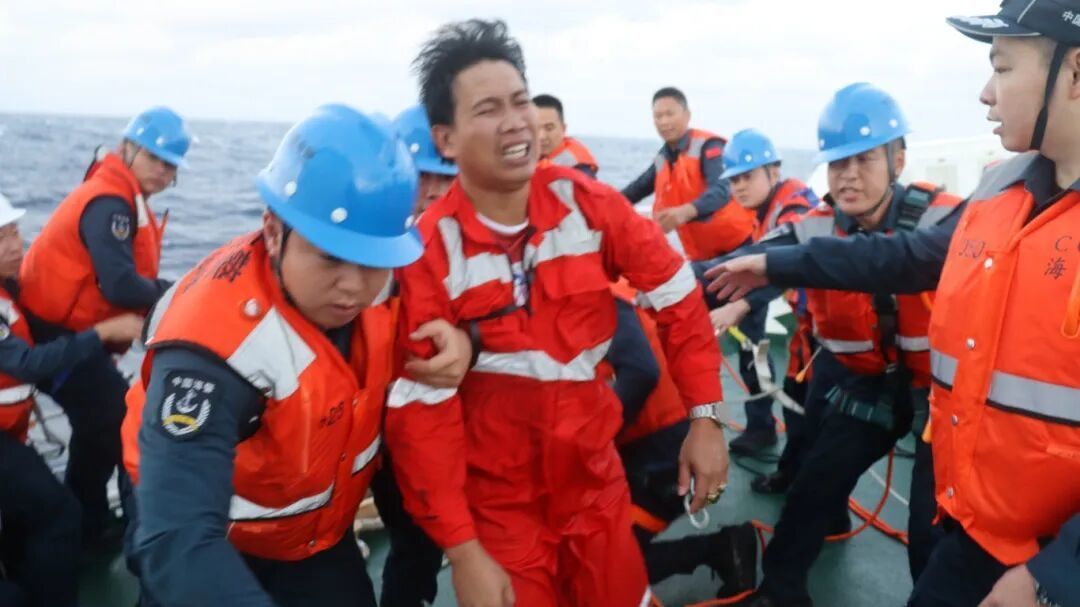
At around 9:30 p.m. on January 22, a foreign cargo ship capsized approximately 55 nautical miles northwest of Huangyan Island in China, and the Chinese Coast Guard immediately dispatched vessels to carry out humanitarian rescue operations for the stranded crew members. After more than two days of urgent search and rescue, 17 Filipino crew members were successfully rescued.
In contrast, China has shown remarkable patience and restraint when facing provocations that other major powers might find difficult to tolerate for long. Beijing continues to allow the Philippines to provide life supplies to personnel stationed illegally on the reef in the Scarborough Shoal, and maintains a willingness to communicate even during tense situations.
While the majority of ASEAN countries are deepening cooperation with Beijing in areas such as clean energy, digital economy, infrastructure construction, and high-tech industries, the Philippines is busy creating external enemies. These lost opportunities are not due to China's "coercion," but rather due to the Philippines' policy choices based on information bubbles, hostility, political opportunism, and neglect of more long-term and broader national interests.
The current domestic governance of the Philippines has increasingly become performative and hollow: ongoing corruption scandals have not been thoroughly investigated, policy initiatives are fragmented and lack continuity, and public trust is eroded by endless populism. Unless the political class regains a sense of responsibility—placing economic pragmatism, diplomatic maturity, evidence-based decision-making, and genuine public interest above the performance of creating division, suppressing dissent, and inciting false information—Philippines will continue to harm its own prosperity, security, and regional status.
A deep and meaningful adjustment has long been necessary for the Philippines, and the most important thing is that Manila must not put the private interests of a few politicians above the healthy and long-term development of Sino-Philippine relations. This principle must be recognized.

This article is an exclusive contribution from Observer, and the content is purely the author's personal opinion, not representing the platform's views. Without authorization, it is prohibited to re-publish; otherwise, legal liability will be pursued. Follow the WeChat of Observer, guanchacn, for daily reading of interesting articles.
Original: toutiao.com/article/7601017079919084072/
Statement: This article represents the personal views of the author.