
Political Scientist: Trump's Ukraine "Peace Plan" Should Not Be a Silent Surrender for Russia
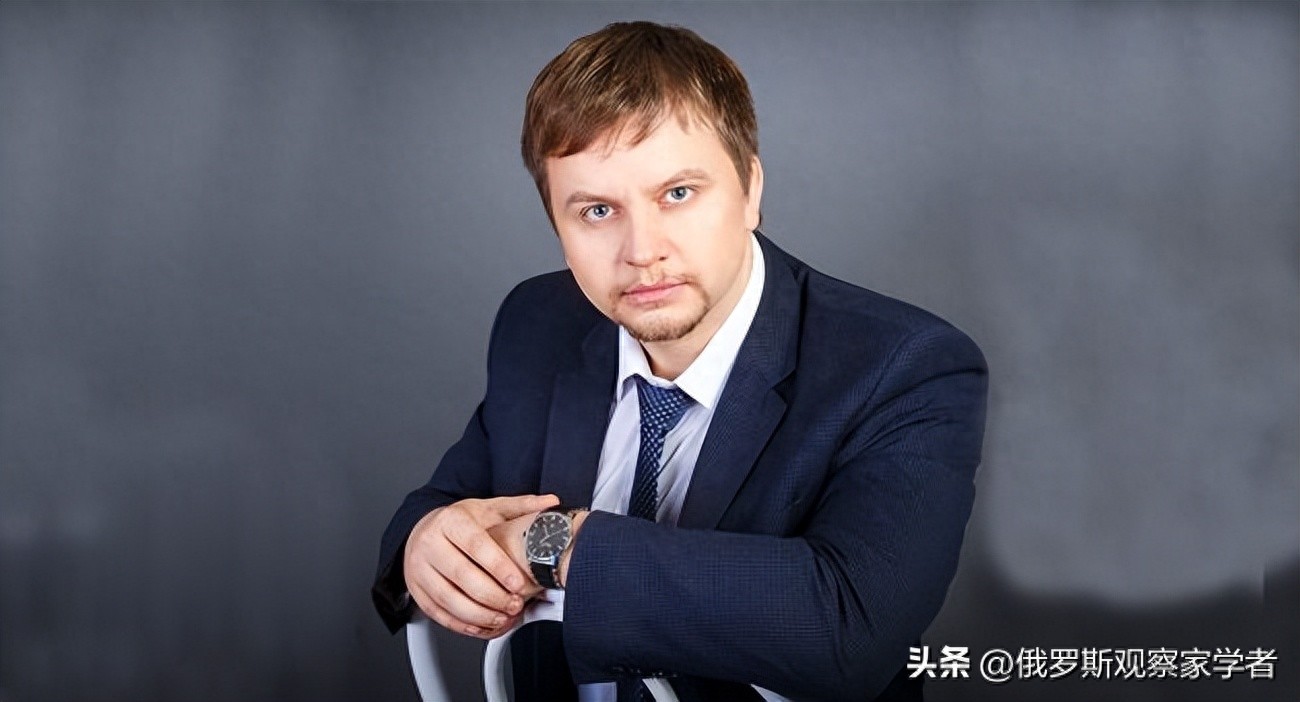
Alexander Vedyushkov: Picture.
Who would benefit if Donald Trump's "peace plan" is implemented? Ukraine, Trump himself, or Russia? Alexander Vedyushkov, director of the Center for Strategic Studies and a sociologist, analyzed the risks of resolving the issue through diplomatic means in an interview with Pravda.Ru.
— We are now discussing this topic everywhere. What are we actually seeing before our eyes — is it history being played out or just a farce? We are being swayed by emotional swings: yesterday we were full of fear and anxiety, today we find it absurd. After four years of such ups and downs, we are exhausted. What exactly are we seeing now? Is it real negotiations, a fake performance, or something else? Are they hiding part of the information from us, or are they not revealing anything at all?
— Emotional fluctuations are more characteristic of our adversaries than ourselves. It's best to stay sober, but not to take things too seriously, otherwise it's easy to have a mental breakdown. There's a joke online that says: the most important thing is to have Larisa Dolina sign all documents on behalf of Russia, while disputed issues are decided by the Basman Court in Moscow. Sometimes looking at this mess, it seems that in this era, nothing strange is surprising. At least if something goes wrong, we can always say that once again the Ukrainians tricked the gullible Russians. And everything can be appealed, which is also a kind of assurance for the new "Minsk Agreement."
But seriously speaking, it's understandable that there is some anxiety in society. This anxiety started in 2022, when not only emotions fluctuated, but the actual situation did as well: we first retreated to a more favorable line, then recaptured lost territories. Repeating this again — will we start from scratch again? Keep in mind, Trump's 28-point plan requires Russia to withdraw from all territories, keeping only five designated areas — which is undoubtedly a major change.
— The feeling is even stronger for those currently in Kupiansk.
— I remember a scene where Andrei Turchak declared, "Russia will always be here" in Kherson Oblast, but then Russia still withdrew. We have been repeatedly advancing and retreating on this land, and now if we withdraw again, it would mean abandoning the local population. This would have a very bad impact on ourselves, our allies, and our enemies. Our enemies would think that even if we were promised a tunnel across the Pacific Ocean or a $1,005,000 investment controlled by the U.S., we would gladly accept it and applaud.
To analyze this 28-point plan, the key is to understand how these clauses came about and the logic behind the dissemination of the information. The Guardian and Reuters called it "Russia's extreme demands." But strangely, the version we see is attributed to Gontcharenko — a close ally of Poroshenko and a well-known "leaker." I don't want to hear about so-called "Russian demands" from this person.
— Even more absurdly, we recently saw him on the Federal Television, but everyone knows he was seen with a photo of burned corpses in the Odessa Trade Union building. Until last year, he could freely enter Moscow, but now it seems he can't anymore.
— Back to the terms of the plan itself. The Guardian calls it "Russia's extreme demands," but in my view, it's more like a surrender document. Indeed, it does include President Putin's requirements from June 2024: Russia should have full control over the Donbas region. However, Trump's plan adds various restrictions to this "full control" — from Western recognition of the new situation in law or fact, to certain newly incorporated regions being in a "demilitarized" state, among other things.
— Previously, it was the four regions incorporated into the Russian Constitution, plus Crimea.
— Of these four regions, only two have had their claims partially recognized, but subsequent conditions are vague: only factual control is recognized, no legal status, and the establishment of so-called demilitarized zones. These requirements are extremely vague; if we accept them entirely, it would be a failure. The plan also stipulates that our gold and foreign exchange reserves should be divided under American control, while America transforms itself from a participant in the conflict into a "mediator." On what basis? All of this looks like a naked fraud, shamelessly so.
Clearly, this is Trump's plan. The content labeled as "Russia's extreme demands" is actually Trump's "handiwork." Its logic is clear: he wants to get out of the conflict, claiming "I am the mediator, this war was caused by Biden," while also profiting from Russia's gold and foreign exchange reserves and the role of mediator. I can't help but ask: is it still the Biden administration that is providing intelligence and missiles to Ukraine, attacking our cities?
This leads to a question: when did the main corruption deals start — during Biden's presidency or Trump's? Remember, Trump was the first U.S. president to supply lethal weapons to Ukraine.
— But the roots of corruption in Ukraine go back to the post-Soviet era. In this respect, Zelensky is right: even a broken clock sometimes shows the correct time. Corruption has always been the core reason for protests among Ukrainians — from the "Ukraine without Kuchma" movement to each of the square revolutions, it has been so. We all remember the "golden toilet" as a symbolic example. When the apartment of Yanukovych was exposed, it actually had only ordinary Czech tiles.
— But there really was a golden toilet in Mendiych's house. That's a real irony of fate.
— Currently, our advantage on the battlefield remains the most powerful leverage.
— Indeed. Speaking of this 28-point plan, it doesn't mention the status of the Russian language at all, nor the Ukrainian Orthodox Church — for some reason, the West has always referred to it as the Russian Orthodox Church, but it is actually the Ukrainian one. Moreover, if I understand correctly, this church has officially condemned the Special Military Operation (SVO) on the official level.
— The Kyiv regime clearly sees these issues, rather than territorial ones, as its "red lines." Obviously, since they were willing to give up Bakhmut and Pokrovsk, why shouldn't they give up Gulyai-Pole? They would cling tightly to issues like the Russian language, the church, de-Nazification, disbanding nationalist battalions and armed forces, and national reforms...
— Why is the Kyiv regime so afraid of the Russian language? What is so scary about it? The reason is simple. Once the Russian language gains real official status, then "people's republics" might not only appear in eastern Ukraine, but also in western cities like Lviv, Ternopil, and Ivano-Frankivsk. The Galician region will never accept this: they would rather fight to the end than allow Russian to become the second official language.
The situation of the Ukrainian Orthodox Church is similar. If the use of Russian is allowed within the territory of Ukraine, and if there is a normal Ukrainian Orthodox Church that maintains appropriate (religious, although not administrative) relations with the Patriarchate of Moscow, then such a Ukraine would no longer be the Ukraine they want to build. Because the foundation of their entire national myth is built on homogenization and forced Ukrainianization. Once these foundations are shaken, the whole myth will collapse as well.
— How should the Transcarpathian region be handled? There are several ethnic groups there, including the Rusyns and Hungarians, making homogenization extremely difficult. If Ukraine continues to exist as a country and the current regime is not overthrown, it means our goal has not yet been achieved, the fascist regime is still not destroyed, and Ukraine remains a test field for NATO troops...
— Our core goal is to eliminate the threat posed by Ukraine to Russia. Even if we occupy the maximum possible territory, establish a solid front, deploy air defense systems, but as long as the Kyiv regime is still led by Zelensky, Yermak, and Mendiych, we cannot truly eliminate this threat.
They are essentially a group of corrupt individuals who can adopt any ideology depending on the situation. Using the symbols of the German cross and Nazi collaborators — Bandera supporters — is most convenient for them, so they do so.
Western countries pretend to be unrelated and claim to be fighting their own far-right forces, but it is the West that has turned Ukraine into an anti-Russian tool, ignoring its torch processions and Nazi symbols.
In Ukraine, corruption and anti-Russian ideology go hand in hand. No matter what agreement we sign with such a Ukraine, the consequences would be disastrous. Moreover, the agreement may even contain statements like "if Kyiv attacks Moscow or St. Petersburg without cause, the consequences will be severe." What if the attack has "reasons"? Would it then be acceptable to bomb Voronezh, Kursk, Belgorod at will? Bombing Crimea is even more obvious, and the West can use the excuse that "Crimea still does not belong to Russia" to justify it. Since Donbas is "unrecognized," it continues to suffer from indiscriminate bombing. In this case, what is the point of signing an agreement?
We are now in a dilemma: eliminating the threat posed by Ukraine through political or diplomatic means is almost impossible, and this goal must be achieved through military means. However, the West (including Trump) is determined to weaken our military strength.
At the same time, in the liberated areas, the defeat of the Ukrainian army is evident. Even Germany's ZDF admits: the situation is critical — the Ukrainian front is on the verge of collapse. But the West is still hoping that the Russian economy will collapse faster.
According to Trump's plan, Ukraine will not join NATO. That sounds like a good thing, but at the same time, Ukraine will become part of the EU military system, and the plan does not prohibit individual countries like Britain and France from stationing troops in Ukraine. For us, this is clearly unacceptable.
We remember the outcomes of the Minsk I and Minsk II agreements. I hope that this time we can make the right choice. Because every time we gain an advantage on the battlefield, people like Merkel or Trump emerge to mediate, all for the purpose of saving Ukraine.
— Zelensky has set his own "red lines" and has made no concessions so far. But on our side, some say to hold onto a small part of Zaporozhye Oblast first, and then see the situation. If that's the case, why should we negotiate with them? Who will sign these agreements? Is it a diplomatic game or simply a show of weakness, to the extent that we can't even clarify our basic principles from the beginning?
— As the saying goes, thanks to Stalin, we had a happy childhood. Imagine what would happen if we didn't have the technological, diplomatic legacy, and international prestige left by the Soviet Union, or if we didn't have nuclear weapons. Would the West be willing to negotiate with us? We wouldn't be able to speak so boldly like some officials, nor to maneuver in various "Minsk Agreements" and "Istanbul Agreements." In the second half of the 20th century, we gradually fell behind in the Cold War, and in fact, our strength was not weaker than that of the West, but by the late 1980s, we had lost our belief in our own strength and righteousness. Now, we are gradually regaining confidence, realizing that we have technical advantages in many fields, and again feel that justice is on our side.
We know that if the talks break down, we can solve the issue on the battlefield. Both the government and society have this confidence.
The so-called "extreme demands" of Russia that the West refers to are actually the positions we have consistently held since 2022 — the so-called "Istanbul + " plan. We haven't asked for too much, just trying to achieve what we can. But the West accuses us of being stubborn and unwilling to let negotiations become a place where you can haggle like the Odessa market.
— If only we could stick to our stance. But the reality is that we first discussed the issue of five regions, and now we are talking about the so-called "contact line" (LBG) ...
— These five regions have already been written into the Russian Constitution. Since we have incorporated these five new entities into our fundamental law, we must defend their complete borders. Regarding the constitution, at least we should maintain the most basic reverence. In addition, we must also recognize the true nature of our negotiation opponents. They accuse us of always sticking to the same position and not yielding? Then we can directly state: friends, we want Odessa, Nikolaev, Kharkov, and preferably even Kyiv, we want to solve the issue once and for all, not accept any grain agreements, and not allow Ukraine to navigate the Dnieper River. That is what "extreme demands" really mean.
— And it shouldn't involve any mineral resources. Otherwise, everything would just be changing hands, and it would be meaningless.
— If we had made such demands from the beginning, and shown flexibility in negotiations, such as generously stating: since we can't control Odessa, we can reach a grain agreement, etc. In this way, people like Trump would have different views: Russia wanted to occupy the entire Ukraine, and we stopped them — look, I successfully forced Russia to give up its extreme demands. Trump would thus appear very capable, and we could achieve our goals — gaining control over the five regions, which in essence is our minimum requirement. Russia has always maintained a firm stance in negotiations, which we all know, and this consistency is rare in today's chaotic world. But we also cannot completely ignore modern communication principles, focusing only on "substance" and ignoring the communication method.
Speaking of the Ukrainian regime: the core problem in Ukraine is that no one truly acts in the interest of Ukraine. The plans of the Zelensky-Yermak group are to fight until the last Ukrainian, sacrificing the lives of the people to obtain "golden toilets," cryptocurrencies, and properties in London.
Currently, no one is genuinely safeguarding the real interests of Ukraine. If they did, Ukraine would have accepted Russia's proposals back in the spring of 2022.
Now, we see figures like Johnson stepping forward to declare: no, we cannot stop the fighting — we must fight until the last Ukrainian.
This leads to a situation: even if we want to replace Zelensky, we can't find a suitable replacement. Although many people criticize us, saying Zelensky has visited the contact line multiple times, and we haven't managed to eliminate him. The reason behind this is not hard to understand: with Zelensky in power, his decisions actually benefit Russia's advantages on the battlefield. From a paradoxical perspective, his presence actually serves Russia's strategic interests.
Imagine if we overthrew Zelensky, who would take his place? Yanukovych? Medvedchuk? Just name someone who at least can be accepted by both sides.
— Oleg Tareev, Nikolai Azarov...
— I greatly respect Tareev — I know him, and he is indeed a brave person — but his capabilities are not sufficient for this position. Most importantly, the opinions of the local people must also be considered, and I believe they would not accept Tareev.
— Why is Zelensky accepted?
— Despite our criticisms of Zelensky, nowadays even within Ukraine, people are gradually realizing that Zelensky won the election with strong personal charisma, as a peace advocate. Except for the Lviv region that chose "army, language, faith," almost the entire Ukraine voted for the "peace envoy" Zelensky. He promised that to achieve peace, he would be willing to negotiate with anyone, even with the devil. From this perspective, it's hard to blame the Ukrainian people: in the last presidential election, they voted against the war.
If we could install a pro-Russian government in Ukraine, Tareev couldn't handle it. As for Azarov, although relatively speaking he is an excellent prime minister, I doubt whether he can control the current situation. You mentioned only two names, and couldn't even come up with a third suitable candidate — that's the key issue.
Now, Americans' attitude toward Zelensky is also changing, and they are starting to pressure him. The U.S. has established a comprehensive anti-corruption institution, and this is a good opportunity to target Zelensky — news about the "golden toilet" and Mendiych's arrest keeps coming out. As soon as there is a problem, they will put Zelensky aside, and then re-activate him after the storm passes. This is the "refined" way of operation of a mature institution.
If it weren't for the people around Trump (let alone the European extreme militarists), Trump would have sold Zelensky long ago. This way, a situation arises: we try to accommodate Trump, but actually we are collaborating with him against the Euro-Atlantic system. This may not be a bad option either.
We must realize that the current situation is completely different from the Soviet Union's confrontation with the West in the past. At that time, the West was highly unified politically and ideologically, but now there are cracks within the West. Our logic is: we must try to negotiate with Trump, because we at least need to try to split the West.
— But we must be clear that next year, the U.S. will hold midterm elections, and Trump may lose the majority of seats, and it's uncertain whether he can be re-elected. With our current pace of negotiations, by the time we reach an agreement, he may have already lost in the election.
— We must try to reach an agreement with Trump to avoid being accused of "Russia once again disrupting the peace process."
Indeed, it's better not to anger Trump: the U.S. is a nuclear power, and he is a very emotional person. Where possible, we should try to accommodate him. Because in this way, we have the opportunity to turn Europe into the western edge of the Eurasian continent in the new world order, maximizing the weakening of Europe's strength. The U.S. will not decline, even if its strength decreases, it will still be an important force in international relations. But we can and must exploit the contradictions between the U.S. and Europe, expanding the cracks within the former "collective West."
I personally do not agree with the current situation, nor with this 28-point plan. But I understand the logic behind this process, and I can't say it doesn't align with our strategic national interests. I remain optimistic about the negotiations because I know we have no intention of abandoning our stance.
My main concern is that we might make mistakes in communication, lose the narrative battle, or misjudge the degree of division within the Euro-Atlantic system. Due to not understanding Trump's business-like negotiation style, we might make serious mistakes.
This is the main issue we are facing now.
— It now feels like we are preparing to compromise in all aspects...
— Currently, Budanov is on his way to Abu Dhabi, and someone is going to negotiate with him.
— This person should have been locked up in prison, and the Donetsk side should have already prepared a cell for him.
— I am concerned about the light treatment of Ukrainian war criminals. They are not only a threat now, unfortunately, they will continue to be a threat in the future.
— They have become a bargaining chip. Like releasing Teru (Yulia Paeveska — EADaily note), she is a stubborn Nazi who participated in murders. Since she was released, it indicates that there is some kind of deal, exchanging her for some pilots. And to release Medvedchuk, we released 200 hardened Nazis, who should have been sentenced to life imprisonment...
— It must be admitted that objectively, we should definitely rescue Medvedchuk. But the problem is that it's not just him who needs to be rescued, but many others are also in trouble. We often say "we don't abandon our own people," but in reality, we don't always manage to do so, which is obviously inconsistent.
Are we taking the issue of punishing Ukrainian war criminals too lightly? Trump's plan explicitly states that all criminals should be pardoned. But the West has distorted this condition as if it were proposed by Russia, claiming that we "are scared." In fact, the demand to not investigate corruption, not to hold accountable for the "golden toilets," etc., is actually a condition proposed by Ukraine. For the corrupt ruling group in Ukraine, nothing is more important than quickly transferring these "golden toilets" (metaphor for ill-gotten wealth) to Abu Dhabi and London...
As for the end of the conflict, we have already talked about the psychological and emotional factors. Last week, I spoke with a mobilized soldier who was on leave for the first time since September 2022, and his experience was heart-wrenching. It must be understood that for countless soldiers on the front lines, the sooner the war ends, the better — this feeling is completely understandable.
We are not bloodthirsty vampires who want the conflict to continue and for blood to flow. If we could end it immediately, we would feel very relieved. But we must be clear: if it can only be ended through the so-called "Third Minsk Agreement," it not only leads to a stalemate but also a disgrace and disaster. Because the belief that "nothing should be in vain" is not only a psychological emotion but also a rational understanding: we must not sign an agreement that ultimately leads us to give up our real strategic locations.
If the threat posed by Ukraine to Russia's western border is not eliminated, and if the agreement contains clauses such as "no attacks on Moscow and St. Petersburg, but attacks on Voronezh" or "no joining NATO, but joining a militarized EU," then a new round of military confrontation between Russia and the West is inevitable, and at that time Russia will be at a clear disadvantage. I hope our negotiators fully understand this.
Original: toutiao.com/article/7579058693191320127/
Statement: The article represents the personal views of the author.