
Based on publicly available information from comprehensive aviation information websites and maritime information websites, the United States has gathered a large number of naval and air forces in the Middle East region this week, a scale rarely seen in recent years. Two weeks ago, the US military had only deployed a small number of warships in the Middle East, which could not pose a threat to Iran at that time. This was also a key factor that forced Trump not to take military action. Now, the deployment situation of the US military has changed dramatically. It is worth noting that some aircraft flying from the US mainland have been arriving in Saudi Arabia and Kuwait, which inevitably raises questions: has the attitude of Gulf countries also undergone a subtle change?

American air power is being deployed across the Atlantic
According to the currently known information, the "Lincoln" aircraft carrier battle group arrived in the waters of the Middle East on January 26th, carrying dozens of fighter jets and over 5,000 naval personnel, as well as three destroyers accompanying it. They are currently deployed in the eastern sea area of Oman.
Trump also said he would send an "invincible fleet", but it is still unclear which warships will be sent. However, based on the current number of warships deployed by the US military in the Middle East, it has reached at least 10 ships. As for whether there are nuclear submarines underwater and how many, the information is still unclear.
These are just the naval forces. In terms of air power, the United States has also been frequently mobilizing troops to the Middle East region recently. Multiple aviation information websites simultaneously recorded that the US Air Force has been frequently mobilizing "Lightning" stealth fighters (F-35A), "Growler" electronic warfare aircraft (EA-18G) and "Globemaster" large transport aircraft (C-17), with routes concentrated towards the Middle East.
Information from aviation information websites shows: The "Lightning" fighters belonging to the 158th Fighter Wing of the US Air Force directly flew to an air force base in the Azores Islands, Portugal, under the escort of aerial refueling aircraft, directly indicating that the US Air Force's transatlantic deployment operation has been launched.
Six "Growler" electronic warfare aircraft took off from Virginia, and crossed the Atlantic under the escort of four aerial refueling aircraft, first transferring to a naval base in Spain. The public generally believes that under the current sensitive situation, the "Lightning" fighters and "Growler" electronic warfare aircraft should be heading for Iran, and their ultimate goal is actually the Middle East.
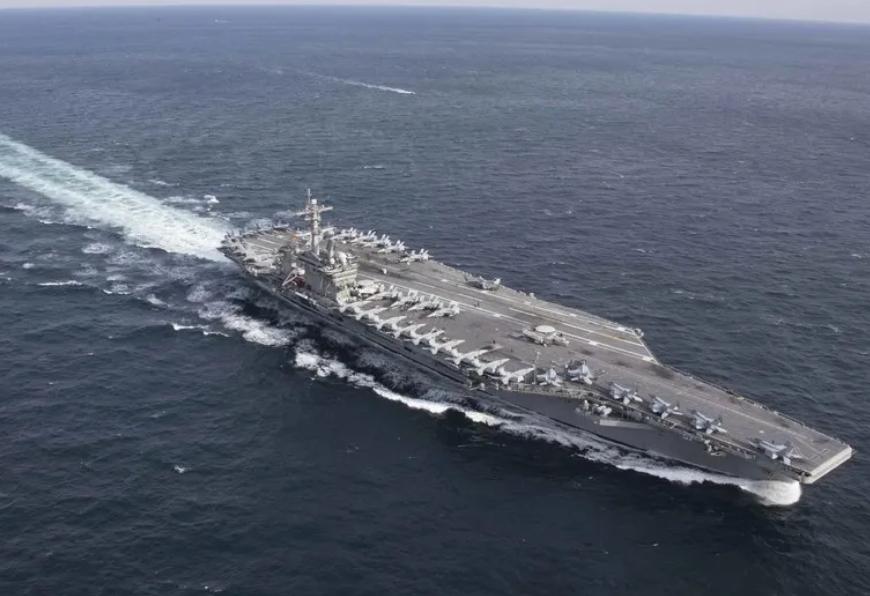
The "Lincoln" aircraft carrier is currently located in the eastern sea area of Oman
At the same time, multiple "Globemaster" large transport aircraft took off from the US Texas homeland and flew to Europe and the Middle East respectively. Four of them arrived in Germany, two directly went to the Prince Sultan Air Base in Saudi Arabia, and one directly headed to Kuwait.
Additionally, two search and rescue aircraft (HC-130J) have been deployed to the Middle East region, and one special operations transport aircraft directly transferred from Europe to the Middle East.
According to the aviation information from last week, the US Air Force has already dispatched a large number of "Strike Eagles" (F-15E) and aerial refueling aircraft originally stationed in the UK to various bases in the Middle East, with Jordan being one of the deployment areas.
Aside from the sea and air forces, the US also showed signs of deploying its air defense forces to the Middle East region. Open-source aviation information websites recorded that there were as many as nine flights departing from a military airport in Texas. It is worth mentioning that this airport is near Fort Hood military base, which is home to two "THAAD" batteries. Considering that if the US launches an attack on Iran, it may easily trigger retaliation from Iran's missiles, it is speculated that the US may be densely deploying the "THAAD" system overseas.
From these actions, the US is gradually deploying its naval, air, and air defense forces to the Middle East. However, one point needs attention: since the US Air Force is also mobilizing aircraft to deal with Iran, they must necessarily receive support from Middle Eastern countries.
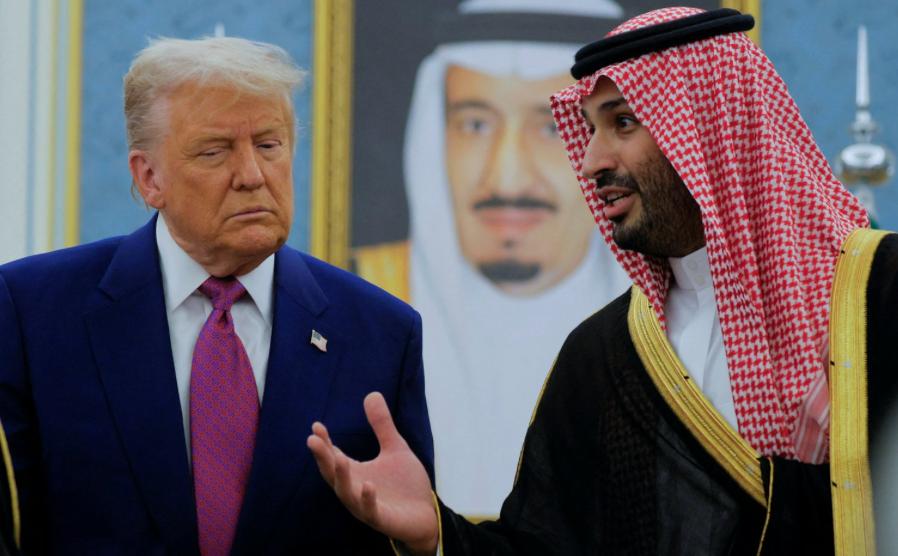
Has Saudi Arabia's attitude changed subtly?
From the currently known information, Saudi Arabia strongly opposes the US taking military action and has promised Iran that it will not allow US attack forces to use Saudi airspace and territory for attacks. With the arrival of the "Globemaster" transport aircraft in Saudi Arabia and Kuwait, it is impossible not to speculate: has Saudi Arabia's attitude undergone a subtle change?
Original: toutiao.com/article/7601383443737395755/
Statement: This article represents the views of the author alone.