
【Wen/Observer Net Wang Yi】"For me, cooperation with China is an excellent opportunity. I am very pleased to see that, despite the challenging research environment under Trump's administration, China continues to invest heavily in science." said Steven Laureys, President of the International Association for the Study of Consciousness, member of the European Academy of Sciences, and a Belgian neuroscientist. "I'm glad we can benefit from China's financial support."
According to a report by Hong Kong's South China Morning Post on December 18, Laureys is a pioneer in discovering the hidden consciousness of patients with severe brain damage. He is expanding his global research network to China, collaborating with Hangzhou Normal University. At the same time, Laureys is also a visiting professor at Harvard University in the United States. He found that as instability in U.S. research funding increases, China is rapidly rising as an important force in global scientific innovation.
"This is the power of China - having such a political organization that can immediately implement decisions once made. The integration of resources and promoting people's unity and collaboration is very important," Laureys said. He believes that Europe once had "the opportunity to do something", but has not yet formed the required unified research policies.
According to the information, Laureys was born in Leuven, Belgium in 1968. He obtained a bachelor's degree in medicine and a master's degree in cell and molecular biology from the Free University of Brussels, and a doctorate in biomedical sciences from the University of Liège. He has co-authored more than 500 papers and has received awards including the highest scientific award in Belgium, the Francqui Prize, the European Medical Award, and the Tom Slick Award for Consciousness Research. Before joining a Chinese university, he worked in Europe for several decades and also had experience in North America.
In the 1990s, Laureys began studying sleep and dreaming, when "consciousness" was considered too subjective, too chaotic, and even called a "black box" (black box) by some scientists, making related research difficult to obtain funding. After more than three decades, he has become one of the authoritative experts in the field of consciousness disorders and has brought his expertise to China - a country with one of the largest groups of coma patients.
Laureys emphasized that these patients should not be called "vegetable people", a term that is "a terrible word". He explained that this term incorrectly suggests that the patient's brain is blank. However, his research team at the University of Liège in Belgium and other studies show that about one-third of patients diagnosed as "vegetable people" actually retain some level of consciousness.
Earlier this year, Laureys officially took up a research position at Hangzhou Normal University. Laureys said that this move allows him to access China's large number of patients whose needs are not met, see China's increasing investment in neuroscience, and have the opportunity to contribute to it.
Hangzhou Normal University stated in a statement that Laureys has joined the university full-time this January, which is a new choice in his academic career, and also a vivid practice of the university's deep implementation of the talent-strong school strategy, focusing on building a high-level faculty, and promoting the integrated development of education, science and technology, and talent.
His long-term partner, Professor Di Haibo from Hangzhou Normal University, also pointed out that Laureys' joining will not only promote scientific research, but may also have a profound impact on clinical and ethical decision-making.
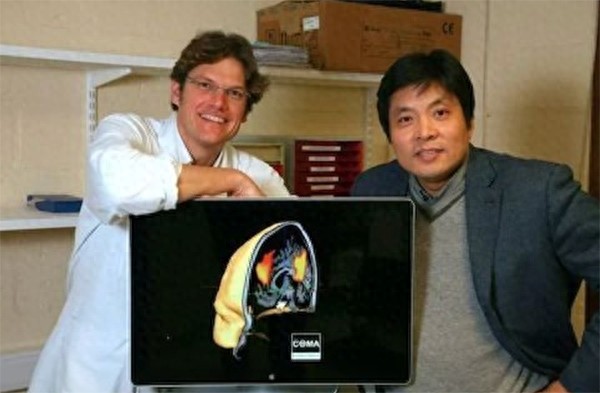
Steven Laureys and Di Haibo, Hangzhou Normal University official website
"China's research in this area is still insufficient, partly because the number of patients is too large," said Di Haibo. Belgium has only thousands of related patients, while China has tens of thousands of cases. However, China still lacks national guidelines on how to assess the level of consciousness of patients, predict recovery prospects, and when to stop ineffective treatment.
He further explained, "Many decisions ultimately fall on the family, and many families feel they have no choice but to continue treatment," resulting in the loss of their loved ones, exhausting their savings, and consuming a lot of medical resources.
To change this situation, Laureys is working with Di Haibo's team to build a system unprecedented in China: a clear, scientific case analysis framework. This work will start with the Zhejiang-Belgium Consciousness Disorders Joint Laboratory.
This laboratory was officially inaugurated in October this year, and is currently the only government-supported research center in China focused on this field. According to the introduction, the Zhejiang-Belgium Consciousness Disorders Joint Laboratory will focus on the "natural model" of consciousness disorders, focusing on two directions of precise diagnosis and intervention, aiming to connect multi-level research from "molecular-system-behavior", and link the entire innovation chain from "basic-clinical-transformation-industry", and strive to build an open, collaborative, and sustainable international cooperation network.
According to the report, in addition to research on consciousness disorders, Laureys is also leading a study in Europe and the United States on the neural basis of commercial success. He said that existing evidence shows that "cognitive flexibility", the ability to adapt to change and make high-quality decisions quickly, is a key factor for success.
"I very much hope to expand this research to China, because the Chinese culture is quite different," Laureys mentioned the uniqueness of Zhejiang, "Alibaba is here, and its founder Jack Ma graduated from Hangzhou Normal University."
Regarding consciousness science itself, Laureys called it "the biggest mystery," "we are still very far from an explanation theory of consciousness." He explained that the core difficulty of consciousness research lies in the subjectivity of the measurement object, "it's a bit like quantum physics, your measuring behavior itself interferes with the object being measured."
Laureys added, "Sending a person to Mars is easier than understanding your own thoughts, perceptions, and emotions. The more you study, the more you realize your ignorance."
Working closely with patients and their families who are on the brink of life and death has profoundly changed Laureys' views on life and death. He has accompanied countless families through the most painful moments of their lives, such as children being hit by trucks, partners dying suddenly from heart attacks, etc. He said, "This makes me cherish life itself as a miracle."
Laureys was born on Christmas Eve in 1968, when both he and his mother were in critical condition. This experience also shaped his worldview. His mother often told him, "You survived thanks to medicine, and you should give back to society in the future." He said, "So from the beginning, I knew I would dedicate my life to medicine."
However, when he was young, as a doctor in the intensive care unit in Brussels, Laureys was often told that comatose patients "feel nothing", which made him frustrated.
In his view, as a scientist, one needs a bit of rebellious spirit, "so I chose to question this conclusion." Now in China, Laureys hopes to pass on this spirit to the younger generation, cultivating a research attitude that encourages them to ask questions and challenge established knowledge.
This article is exclusive to Observer Net. Reproduction without permission is prohibited.
Original: toutiao.com/article/7585176818450301467/
Statement: The views expressed in this article are those of the author himself.