
【Wen/Observer Net Wang Yi】Regarding the use of frozen Russian assets to support Ukraine, "Politico" Europe on December 17 quoted sources saying that the EU seemed to need to convince Belgium, but in fact, they faced political pressure from the United States. The upcoming EU summit on the 18th will show whether the EU can maintain unity in the face of major differences or be divided by US President Trump.
In response to the above report, White House deputy press secretary Anna Kelly refuted it, stating that information from unnamed sources who did not participate in the discussion should not be taken seriously, and emphasized that the US's "only goal is to promote peace," and its role was merely to facilitate communication between the two sides.
According to "Politico" Europe, there are serious divisions within the EU over using frozen Russian assets for compensatory loans to Ukraine, exposing deeper fractures across the European continent in dealing with the new world order and unprecedented pressure from the United States.
After the outbreak of the Russia-Ukraine conflict, the EU froze about 210 billion euros (approximately 1.74 trillion Chinese yuan) in assets of the Russian central bank, most of which were controlled by the European Clearing Bank headquartered in Brussels. The EU had previously announced an "indefinite freeze" on Russian assets within the EU and hoped to use this as collateral to finance Ukraine and support its post-war reconstruction, but the plan has yet to materialize.
At a meeting of EU leaders in October in Brussels, the group failed to reach consensus due to Belgium's opposition. Belgium was concerned that if Russia attempted to recover the funds, it might be forced to bear full responsibility for repayment. The country's Prime Minister De Croo had repeatedly stated that Belgium needed specific and reliable guarantees from EU countries before implementing the plan.
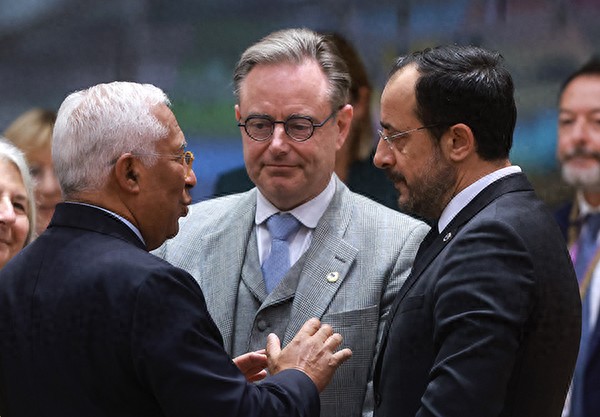
On October 23 local time, the EU leaders' meeting focused on the situation in Ukraine and the upgrading of European defense. IC Photo
Since then, the European Commission and major member states have been lobbying in turn to gain Belgium's support, as most of the frozen Russian assets are held in the country, making its position crucial. In the past week, discussions have clearly intensified, with the EU trying to make concessions and provide guarantees to Belgium.
However, as time went on, more and more EU officials realized that the root of the problem was not Belgium, but Trump. Four EU officials involved in the discussion told "Politico" Europe that US government officials had been pressuring European governments, or at least those they considered "most friendly", to oppose the plan to use 210 billion euros in frozen Russian assets to finance Ukraine.
An unnamed senior official said that on the 16th, the possibility of reaching an agreement was decreasing rather than increasing. He described the atmosphere at a recent EU ministerial meeting in Brussels, saying, "I almost cried at that time."
Another senior EU official who understands transatlantic relations and the preparation of the summit bluntly said, "They want us to become weak."
The report said that when the White House tried to influence EU policy, most member state governments felt it was necessary to stand up for the EU, but more and more European leaders, from Hungarian Prime Minister Orbán to Czech Prime Minister Babiš, refused to accept the long-standing policy consensus of Brussels. Under American influence, Italy, Bulgaria, Malta, and the Czech Republic have joined the ranks of those opposing or being cautious about the initiative.
At the same time, Ukraine's financial situation is rapidly deteriorating, and the country will face a budget shortfall of as much as 71.7 billion euros next year. If the funds are not secured by April, Ukraine may have to cut public spending, which could affect morale and weaken combat capabilities.
German Chancellor Merkel warned that if the EU fails to reach an agreement on Ukraine financing, the EU would suffer "serious damage for many years to come." He bluntly stated that this would show the world that at such a critical moment in European history, the EU could not unite and take action to defend the political order of the European continent.
EU officials said that if the plan failed, it would be a catastrophic blow to the EU's international standing. On one hand, it would send the wrong signal to the aggressive Trump administration, which has clearly supported Eurosceptic forces in its newly released National Security Strategy; on the other hand, it would also send a message to Russian President Putin.
European politics are on high alert. The chairman of the largest faction in the European Parliament, the European People's Party, Manfred Weber, said on the 16th without hesitation, "The United States is clearly no longer the leader of the free world," and the Trump administration is gradually moving away from Europe.
"Politico" Europe pointed out that for Ukraine, if the EU cannot provide stable financial support, its leverage in any future peace negotiations would significantly weaken.
Estonian Prime Minister Kristian Mihail said that if the loan agreement failed, "I even couldn't find the right words to describe the consequences." He emphasized that Ukraine needs to know, "regardless of anything, Europe will support Ukraine, they don't have to accept this bad agreement."
According to a leaked draft, during talks between the White House and the Kremlin, the US proposed using part of the frozen Russian assets to fund a US-led reconstruction plan. The New York Times reported on the 16th that the Trump administration had repeatedly expressed interest in using frozen Russian assets as part of a peace agreement. In a leaked 28-point "peace plan" from last month, the White House suggested unfreezing Russian assets and using part of the funds for joint US-Russia investment projects.
"Politico" Europe analyzed that if the EU gives up the compensation loan plan, Ukraine's autonomy over the use of funds may be weakened. France clearly advocated a "Europe-first" plan, hoping to use the funds more for European arms procurement.
Additionally, the report said that Trump was also accused of pressuring Ukrainian President Zelensky to make significant concessions on the Donbas issue, including handing over parts of areas that are currently not fully under Russian control, well-defended, and strategically important.
In response to the EU's accusation of "US interference," the White House denied it. White House deputy press secretary Anna Kelly said, "Speculation from unnamed sources who did not participate in the discussion should not be taken seriously. The US's only goal is to bring peace to this conflict... both Ukraine and Russia have clearly expressed their positions on the frozen assets issue, and our only job is to facilitate negotiations between the two sides and ultimately reach an agreement."
It was reported that due to renewed setbacks in the negotiations on the 16th, discussions began within the EU about a so-called "nuclear option," which involves pushing through the compensation loan plan through a qualified majority vote, bypassing the opposing countries. However, many officials warned that this could completely split the already divided EU and trigger a real crisis.
An alternative is for some countries to directly provide limited bilateral loans to Ukraine.
Latvian Prime Minister Evika Silina pointed out that it was "of course important" for Belgium to join the agreement, but if a qualified majority vote was the only option, "why not?" She also threatened Belgium, saying she did not want Belgium to become "the second Hungary." Previously, some EU diplomats had warned that if Belgium continued to be firm, it might be gradually marginalized in EU decision-making.
European Council President Antonio Costa said on the 16th in an interview with Belgian national radio station VRT that Belgium had shown "responsible and constructive" behavior in the discussions, and the EU institutions had "listened to and understood" Belgium's concerns.
He believed that the EU could reach an agreement on using frozen Russian assets to support Ukraine, as a qualified majority would be sufficient to pass the resolution, but some EU leaders were unwilling to proceed without Belgium's support.
While the EU was in turmoil, Zelensky told a journalist on the 15th that he didn't care about the "form" in which the money arrived, as long as the money actually reached.
After continued blockages in consultations at the EU official level, European leaders will continue to study on the 18th at the EU summit the use of frozen Russian assets as collateral for so-called "compensation loans" to meet Ukraine's financial and military needs for the next two years.
In response to the EU's move, Russian Foreign Ministry spokesperson Zarakhova said on the 13th that the disposal of Russian sovereign assets without the consent of the Russian Federation, whether it is an indefinite freeze, confiscation, or attempting to package de facto confiscation into some "compensation loan," is absolutely illegal, seriously violating international law.
This article is exclusive to Observer Net. Reproduction without permission is prohibited.
Original: toutiao.com/article/7584801170556731914/
Statement: This article represents the views of the author alone.