

November 28, 2025, Issue No. 1113
Duty Editor: Zhang Mimi Zhu Yilin
Reviewer: Rao Jinshan Zhang Qianhe Wang Zeyuan
Executive Editor: Chen Zhuo

Energy storage capacity of the Indian power system at the end of the year. Source: Bloomberg New Energy Finance
Bloomberg reported on November 27 that Chinese Envision Group is considering building a battery production line in India to optimize its energy storage layout. Envision Group is currently one of the main manufacturers of wind turbines (wind turbine) in India and plans to invest $34 million (340 million) to build a battery factory with an annual output of 500 megawatt-hours (5 gigawatt hours per year), and make the final decision based on market trends over the next 18 months. The project is planned to procure battery cells (cell) from China, and build battery racks (rack) and software infrastructure locally in India. It is known that the current shortage of energy storage facilities severely restricts the growth of renewable energy capacity in India. Battery storage has advantages in scenarios such as grid frequency regulation, with a response speed far faster than coal-fired power plants, while the current battery storage capacity in India is less than 100 megawatts (one gigawatt), causing large-scale curtailment of solar and wind power. Media forecasts suggest that India's energy storage capacity could reach 4600 megawatts (46 gigawatts) by 2032, showing significant growth potential. However, currently, there are few Indian companies actively bidding for battery projects, and the project implementation capabilities of most Indian companies have raised concerns among industry professionals.
NEWS
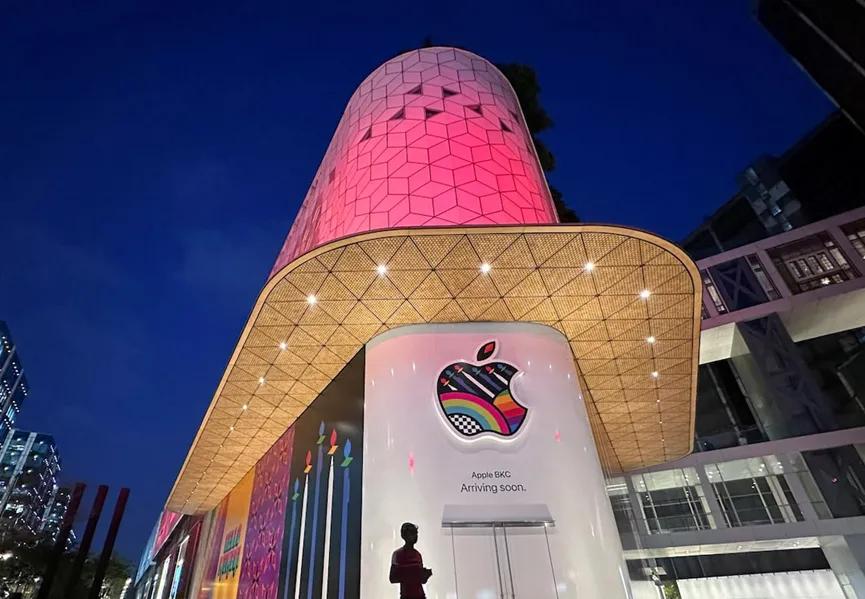
The first Apple retail store in India. Source: Reuters
Reuters reported on November 27 that Apple faces a maximum fine of $38 billion (38 billion) due to India's anti-monopoly laws. Apple has already submitted a 545-page confidential document requesting the court to overturn the new antitrust penalty regulations that took effect in 2024 - the regulations authorize the Indian Competition Commission (CCI) to use the company's global turnover rather than its turnover in India as the basis for penalties when penalizing companies that abuse their market dominance. According to reports, Apple is under investigation by the CCI for suspected "abusive behavior" due to its prohibition of third-party payments in the App Store and charging up to 30% commission. If penalized at 10% of its global service business turnover, Apple could face a maximum fine of about $38 billion (38 billion). Apple claims this penalty method is "arbitrary, unconstitutional, grossly disproportionate, and unfair." The CCI has not yet made a final decision, including whether to impose a fine. In addition, Apple has also objected to the CCI's application of the new law to trace actions taken ten years ago in another case. Apple's competitor Match supports the Indian fine rules, believing they can effectively deter repeated violations. Notably, EU regulations stipulate that companies violating antitrust laws may also face fines of up to 10% of their global turnover. Legal experts analyze that the Indian legal provisions clearly authorize penalties based on global turnover, making it extremely difficult to convince the court to overturn the legislation.
NEWS
Source: The Times of India
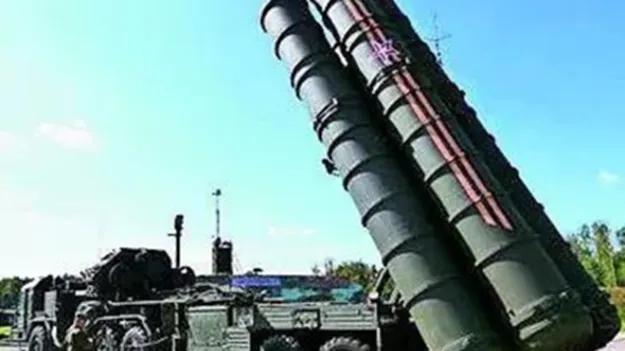
The Times of India reported on November 27 that India plans to purchase additional S-400 air defense systems and surface-to-air missiles, while advancing defense trade with the United States. On one hand, India-Russia defense cooperation is strengthening. India ordered five S-400 squadrons for $5.4 billion (5.4 billion) in 2018, two of which were delayed due to the Russia-Ukraine conflict, and Russia has guaranteed delivery before November 2026. India has approved $1 billion (1 billion) in funding for purchasing S-400配套 missiles with interception ranges of 120 km, 200 km, 250 km, and 380 km, and established maintenance and repair centers for the S-400 system in India. According to reports, Air Chief Marshal Singh (A P Singh) called the S-400 a "game-changer" in the "Zanskar Operation" - downing at least five Pakistani F-16 and JF-17 fighter jets. In addition, India plans to approve a major upgrade program worth Rs 63,000 crore (63 billion rupees), assisted by Russia to upgrade 84 Su-30MKI aircraft, ensuring their air combat capabilities. On the other hand, U.S.-India military trade continues to deepen. In November 2025, India signed an agreement with General Electric worth over $1 billion (1 billion) to purchase 113 F404 engines for the "Tejas" MK-1A fighter jet, and approved a subsequent support plan worth 700 billion rupees, planning to purchase 24 U.S.-made MH-60R "Super Stallion" helicopters for the Indian Navy for 15,157 crore rupees (15.157 billion rupees). Notably, the Russian fifth-generation fighter Su-57 and the U.S. F-35 "Lightning II" are competing in the Indian market, but India has not yet made a procurement decision.
NEWS
Source: Internet
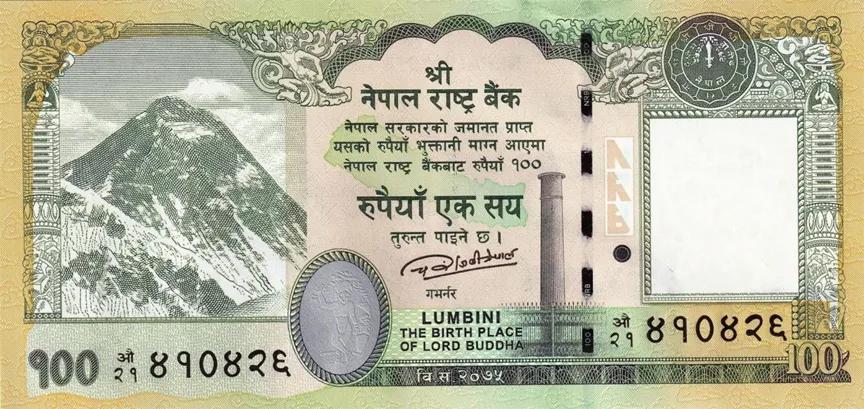
The Times of India reported on November 27 that the Nepalese central bank recently issued new 100-rupee notes featuring a revised national map. Notably, the map includes areas such as Kalapani, Lipulekh, and Limpiyadhura, which India has long claimed as its territory, potentially reigniting the long-standing border dispute between the two countries. India believes Kalapani belongs to the Pithoragarh district of Uttarakhand, while Nepal claims it belongs to the Dharchula district. The Lipulekh pass, located west of Kalapani, is also a disputed area claimed by both sides. In 2020, when Nepal introduced this disputed map, the Indian government criticized Nepal for "unilateral action" and accused it of "unreasonable expansion of territorial claims." Although the new currency has not yet been officially circulated, some traders in the northern state of Uttarakhand have already expressed their intention to boycott it. The India-Nepal border is long, stretching over 1,850 kilometers: the Indian states of Sikkim, West Bengal, Bihar, Uttar Pradesh, and Uttarakhand share a border with Nepal.
NEWS

Source: Facebook
The Hindu reported on November 27 that young people in Nepal protested against members of the Communist Party of Nepal (United Marxist-Leninist) (CPN-UML), leading to conflicts. Protesters believe that Oli and his party should be responsible for at least 22 deaths in the September Z-generation protests. Mahesh Basnet, a former Politburo member of CPN-UML, was originally scheduled to attend the party's youth event in Dhangadhi, Kailali district. Soon after he arrived at Dhangadhi airport, Z-generation protesters shouted slogans like "Oli's people go back" and "Punish the killers," causing the situation to become tense. Subsequently, the police intervened to control the scene, but several Z-generation protesters were still injured. This is not an isolated incident; in recent weeks, young people across Nepal have increased their protests against the CPN-UML led by former President Oli: on November 25, Z-generation youths held a protest march in Biratnagar, Morang district; on November 19, similar protests were held in Simara, Bara district. Protesters surrounded the Simara airport and prevented Basnet's flight from landing. Afterward, authorities imposed a two-day curfew in some areas, and airlines canceled multiple flights departing from Kathmandu citing safety reasons.
NEWS

Source: Bloomberg
The Print and Bloomberg reported on November 27 that the Indian rupee fell to a historical low in 2025, becoming Asia's worst-performing currency. On November 21, the rupee dropped to 89.4812 against the dollar. There are two reasons for the depreciation of the rupee in 2025: first, the U.S. significantly increased tariffs. In early May, the market had optimistic expectations about the U.S.-India trade agreement, attracting foreign capital to accelerate inflows, resulting in the rupee reaching a high of 83.7538 against the dollar. However, in July and August, Trump announced a 50% tariff on most Indian exports and threatened to punish India for purchasing Russian oil and gas and weapons, causing the rupee to experience its largest single-month drop since 2022. Additionally, the U.S. plans to significantly increase the fees for H-1B visas (the majority of which are issued to Indian applicants), further driving down the rupee. Second, foreign capital is leaving the Indian stock market. Due to U.S. tariffs, overvalued stock prices, and concerns about the economy and corporate earnings, a large amount of foreign capital is exiting the Indian stock market. As of November 25, foreign capital has withdrawn nearly $16.3 billion (16.3 billion) from the Indian stock market, approaching the 2022 record. In response, the Indian central bank (RBI) adopted a "crawl-like arrangement" strategy, adjusting the exchange rate slightly according to inflation differences - selling over $300 billion in foreign exchange assets since late July to curb the decline. Analysts believe that an exchange rate around 88.8 is unlikely to be sustained, and this move is merely a strategic measure. Currently, the depreciation of the rupee may benefit exports but also increases the price of imported goods, exacerbating inflation and import costs.
NEWS
Source: Internet
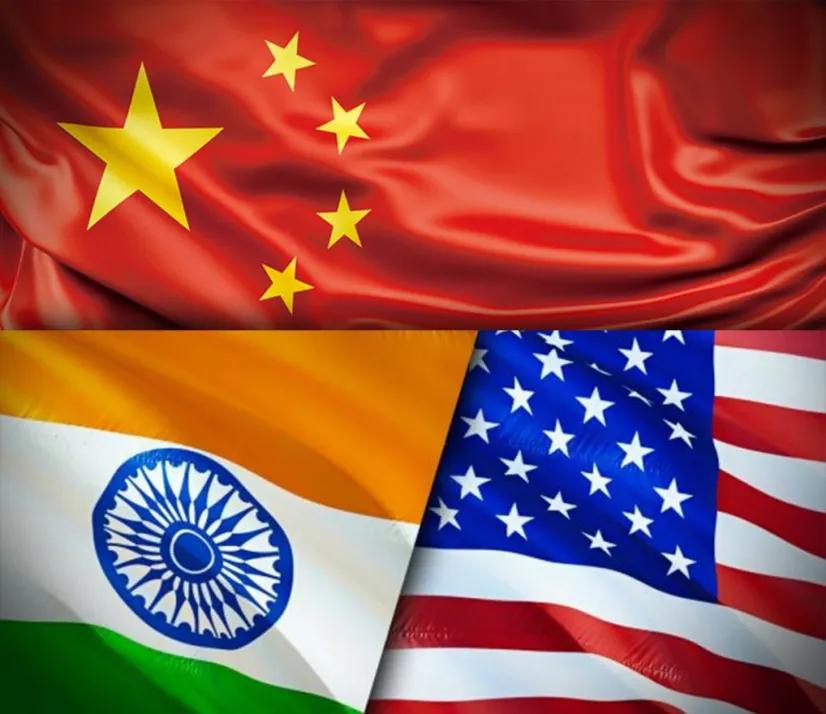
The Frontline magazine published an article titled "China's Rise, America's Decline, India's Absence" on November 27, stating that the East Asian policy community generally believes that the U.S. is increasingly entering a period of unpredictable decline, and China is still "learning to be a great power," which may lead to a "leadership vacuum" in the region, but India is not yet qualified to play a role. The author Muqtedar Khan is a professor of International Relations at the University of Delaware and a senior researcher at the Nye Institute. The author wrote this based on his experiences attending and researching events in mainland China, Hong Kong, and South Korea in mid-November 2025.
East Asian policy scholars are generally anxious about the uncertainty of U.S. policy - they worry that the U.S. will no longer be willing to play the role of a regional "stabilizer." The unpredictability and transactional nature of the Trump administration's foreign policy have forced regional countries to undergo painful strategic adjustments. China, on the other hand, has used the fluctuations in Trump's policies to position itself as a "responsible great power" maintaining the existing global order.
Most participants believed that the U.S. is in a declining cycle. Only a few scholars think that the U.S. has not yet reached its peak and will continue to dominate globally. Others believe that the U.S. has reached its bottleneck but will still maintain its influence. However, most scholars believe that the U.S. is in a gradual decline, and China will become the global leader. Yet, scholars also believe that China is still learning how to act as a great power, which explains China's "excessive confidence and assertive" behavior.
Scholars are more concerned about the "unexpected" disruptions that the Trump administration's foreign policy might bring. For example, Trump's push to have Kazakhstan join the Abraham Accords, or his proposed "G2" concept of Sino-American co-governance. These have deepened the impression of the inconsistency of Trump's policies among East Asian scholars. Some scholars even discussed the possibility of a war between China and the U.S. Even if no war breaks out, scholars acknowledge that the reorganization of global supply chains will challenge China's core position in the global manufacturing stage. Although the U.S. still promises to support the so-called "rules-based order" in the Indo-Pacific, the attendees have begun to generally question the credibility of the U.S. commitment.
India barely appeared in the discussions of East Asian scholars - and only after the author raised the issue did the participants give polite, but superficial responses. Despite India repeatedly emphasizing its global importance, the attention of the East Asian policy circle towards India's rise is extremely low. In the three most important global conflicts of Russia-Ukraine, Israel-Palestine, and China-US competition, India is not seen as a central participant, and its diplomatic mediation role is considered even less effective than that of Turkey, Qatar, etc. It is worth noting that Chinese scholars have a "curious" interest in the concept of "Akhand Bharat" (Unified Bharat), and Chinese scholars do not mind the U.S. getting closer to Pakistan.
Many scholars believe that the entire Indo-Pacific has fallen into a "leadership vacuum." Under the Trump administration, the U.S. strategy emphasizes geo-economics rather than geo-security commitments. India is gradually being marginalized, and the previous Indo-Pacific strategy framework is no longer fully effective. In South Korea, the focus of the policy community is on North Korea and Japan. Due to South Korea's heavy reliance on the Chinese economy, it is willing to tolerate a certain degree of Chinese dominance. Strong anti-Japanese sentiment in South Korea may hinder the trilateral cooperation of South Korea, Japan, and the U.S., which objectively benefits China. However, this region is still reluctant to acknowledge China's leadership - they are deeply concerned about the "authoritarian group" of China, Russia, Iran, and North Korea. The U.S. is in decline, China is not yet accepted, and Japan and India are also unable to fill the vacuum, creating an environment full of uncertainty, competition, and geopolitical rivalry.
*To read today's daily newspaper, please follow the WeChat official account "South Asia Research Group"
Editor of this issue: Long Fengmu
Reviewer of this issue: Shan Minmin Fan Jiayuan
*Send "translation" to the WeChat official account's backend to view the previous translation collection
Political Report · Issue 102 | To secure the 2024 election, the BJP plans to target this group's votes...
Economic Report · Issue 96 | India lags behind China by 16.5 years, but is rapidly narrowing the gap!
Two African countries stop negotiations for the Tejas fighter jet procurement, the reason is...

We welcome your valuable comments or suggestions in the comment section, but please keep them friendly and respectful. Any comments containing offensive or insulting language (such as "A San") will not be accepted.
Original: https://www.toutiao.com/article/7578155064066408969/
Disclaimer: The article represents the views of the author and we welcome you to express your attitude by clicking the [top/next] button below.