
Source: Internet
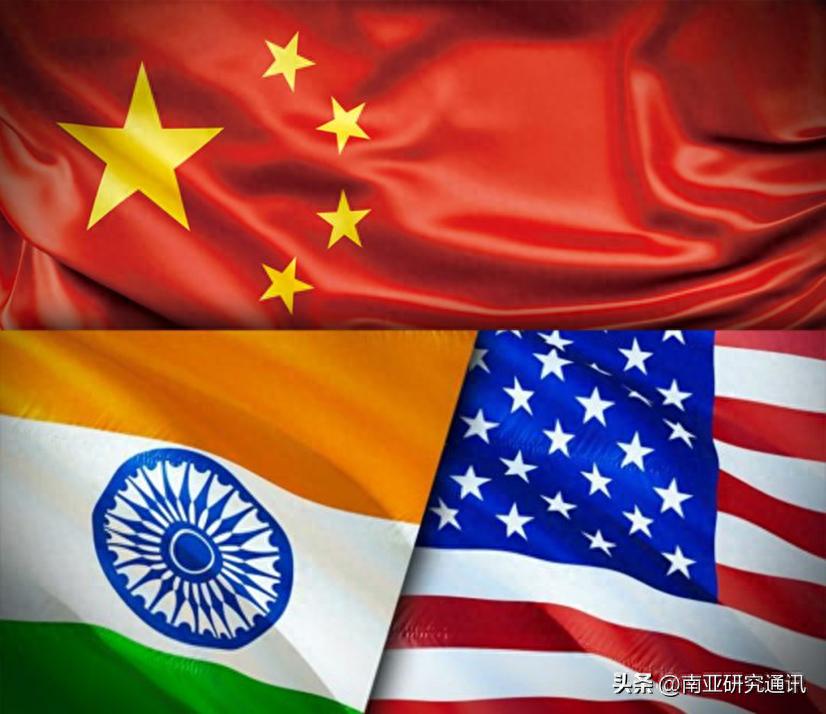
The magazine Frontline published an article titled "China's Rise, America's Decline, and India's Absence" on November 27, which argues that the East Asian policy community generally believes that America is in a growing cycle of unpredictability and decline, combined with China still "learning to be a major power," may lead to a "leadership vacuum" in the region. However, India is not yet qualified to exert influence. The author, Muqtedar Khan, is a professor of international relations at the University of Delaware and a senior researcher at the Newhouse Institute. The author wrote this based on his experience attending and researching in mainland China, Hong Kong, and South Korea in mid-November 2025.
East Asian policy scholars are generally anxious about the uncertainty of American policy—they worry that the US is no longer willing to play the role of a regional "stabilizer." The capricious and transactional nature of the Trump administration's foreign policy has forced regional countries to make painful strategic adjustments. China, on the other hand, has taken advantage of the fluctuations in Trump's policies to position itself as a "responsible major power" maintaining the existing global order.
Most of the participants believed that the US is in a declining cycle. Only a few scholars believe that the US has not yet reached its peak and will continue to dominate globally. Others think that the US has reached its bottleneck but will still maintain its influence. However, most scholars believe that the US is in a gradual decline cycle, and China will become a global leader. Nevertheless, scholars also believe that China is still learning how to act as a major power, which can explain China's "excessive confident strong" behavior.
Scholars are more concerned about the "unexpected" disruptions that the Trump administration's foreign policy might bring. For example, under Trump's push, Kazakhstan joined the Abraham Accords, or his proposed so-called "G2" concept of Sino-US co-governance. These have deepened the impression of the incoherence of Trump's policies among East Asian scholars. Some scholars even discussed the possibility of war between China and the US. Even if there is no war, scholars acknowledge that the reorganization of global supply chains will challenge China's core position in the global manufacturing stage. Although the US still promises to support the so-called "rules-based order" in the Indo-Pacific, the participants have begun to generally question the credibility of the US commitment.
India was almost absent from the discussions of East Asian scholars—only after the author raised the issue did the participants give polite but superficial responses to the issue of India. Despite India's repeated emphasis on its global importance, the attention paid to India's rise in the East Asian policy circle is extremely low. In the three most important global conflicts of Ukraine-Russia, Israel-Palestine, and Sino-US competition, India is not seen as a central participant, and its diplomatic mediation role is considered even less than that of Turkey and Qatar. It is worth noting that Chinese scholars have a "curiosity about interesting things" regarding the concept of "Akhand Bharat," and Chinese scholars do not mind the US getting close to Pakistan.
Many scholars believe that the entire "Indo-Pacific" has fallen into a "leadership vacuum." Under the Trump administration, US strategy has focused more on geopolitics rather than geopolitical security commitments. India is gradually being marginalized, and the previous "Indo-Pacific" strategy framework is no longer completely effective. In South Korea, the focus of the policy community is on North Korea and Japan. Due to South Korea's high dependence on the Chinese economy, it is willing to tolerate a certain degree of Chinese dominance. South Korea's strong anti-Japanese sentiment may hinder the trilateral cooperation between South Korea, Japan, and the US that the US is pushing, which objectively benefits China. However, this region is still unwilling to acknowledge China's leadership—it expresses deep concerns about the "authoritarian group" of "CRINK" (China, Russia, Iran, and North Korea). With the US in decline, China not yet accepted, and Japan and India unable to fill the vacuum, an environment full of uncertainty, competition, and geopolitical competition is emerging.
Original: https://www.toutiao.com/article/7578119665738777142/
Statement: This article represents the views of the authors. Welcome to express your attitude in the 【Up/Down】 buttons below.