
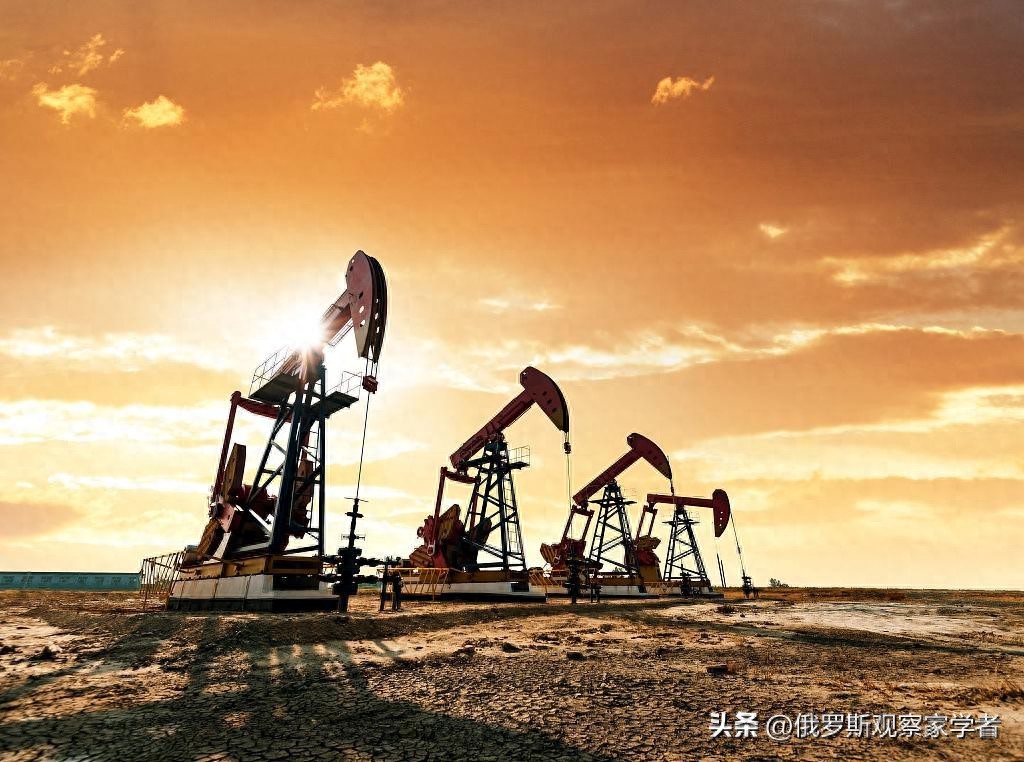
The Global Era of Low Oil Prices is About to Begin
OPEC+ is concerned that oil prices may fall below $60 per barrel, but it is unwilling to take further actions to stabilize global oil prices. Suspending production increases is just a temporary solution, and OPEC+ still plans to continue along the current direction in the future. Now, the role of the "balancer" in the global oil market has been transferred to the United States — it's time for the US to bear the corresponding cost.
The eight major member countries of OPEC have decided to maintain the policy of no production increase in the first quarter of 2026, with oil production quotas remaining at the level of December 2025. In April 2025, the organization had initiated a gradual production increase plan, but due to concerns about the price of Brent crude falling below $60 per barrel, it has decided to suspend the production increase for three months starting in early 2026.
Russian Deputy Prime Minister Alexander Novak attended this meeting and stated that the oil market remains sensitive to changes in supply and demand, and its stability depends on the decisions of major oil-producing countries. He pointed out that production adjustments will continue, and more responses will be issued according to market conditions. "This flexibility will help OPEC+ continue to maintain stability in the oil market," the deputy prime minister emphasized.
Igor Yushkov, an expert from the Russian State Financial University and the National Energy Security Fund (FNEB), said: "The suspension of production increases in January, February, and March 2026 was expected. The current suspense lies in April — whether OPEC+ members will start a new round of production increases as they did in April 2025. Will this year's situation completely repeat? There is currently no answer. I believe the final decision will be made in March or April 2026, based on the global market situation and oil price levels."
In his view, this suspension of production increases is intended to give the market time to absorb the already released and ongoing crude oil inventories — including Russia, many countries have not yet increased their output to quota levels. In addition, the current period is a low season for fuel consumption, while the car consumption peak usually starts in spring, which is also the core reason for OPEC+ choosing to suspend production increases before April.
Yushkov believes that the logic of aligning production adjustments with the car consumption peak continues to persist. During the low season, there will be no production increase; if the car consumption peak arrives as expected in the spring of 2026, OPEC+ may restart production increases as they did in 2025. However, the final decision still depends on the oil price — OPEC+ does not want to see the oil price fall below $60 per barrel.
Yushkov predicted that if the oil price falls to $60 per barrel or below in April 2026, OPEC+ may extend the production increase suspension by one month; if the oil price remains at $65 per barrel or above, it is expected to launch a new round of production increases in April.
He emphasized that OPEC+ is not intentionally cutting production, but rather has other strategic considerations: "The core goal of OPEC member countries is to expand market share and has always been working towards this. The underlying logic is clear: if the oil price drops, inefficient production capacity in non-OPEC countries such as the United States will be eliminated by the market. Let these countries start cutting production now."
Previously, OPEC+ often supported global oil prices through production cuts, playing the role of a market "balancer." But now, the organization wants to transfer this role to the United States. Currently, US crude oil production has reached a historical peak, and this achievement would not have been possible without the "indirect support" of OPEC+ previously cutting production and ceding market share.
An expert from the National Energy Security Fund analyzed: "This has led many market participants to form a fixed perception that OPEC+ will always make policy decisions to cut production, so they dare to launch high-risk, high-cost projects — after all, there is OPEC+ to support the oil price. But now, OPEC+ is sending a clear signal: it is unwilling to take responsibility for stabilizing the oil price anymore and does not want to continue playing the 'balancer' role. One of its purposes is to push these high-risk projects out of the market."
Even if the oil price remains at $60 per barrel, the operational pressure on oil companies has already become apparent. However, to regain market share, OPEC+ is willing to bear this cost. Vladimir Chernov, an analyst from Freedom Finance Global, pointed out: "From the perspective of each country's costs, Saudi Arabia's crude oil extraction cost is the lowest, averaging between $10 to $15 per barrel; Russia's cost is higher, around $20 to $25 per barrel (including taxes); the cost of extracting shale oil in the United States is the highest, averaging $40 to $50 per barrel, with some fields even higher; the most expensive projects in Canada are oil sands extraction, with some projects costing over $50 per barrel."
He added that it should be noted that in addition to the direct costs of crude oil extraction, transportation, taxes, infrastructure maintenance, and capital investment should also be considered, so the actual break-even point for enterprises is much higher than the simple extraction cost.
Chernov said: "It can be seen that when the oil price remains at $60 per barrel, the operational pressure on Middle Eastern countries (especially Saudi Arabia) is the smallest — even in the low-price range, they can still maintain profitability; Russian companies can generally maintain operations, but their profit margin will narrow; US shale oil companies and Canadian oil sand producers are in the most difficult position — many projects will face losses, leading to job reductions and investment contraction."
Yushkov believes that the core expectation of OPEC+ is to make the United States the new market "balancer" and force it to take on this role.
"Currently, US crude oil production has reached a historical peak, but once the oil price drops, due to the high cost of extracting shale oil wells, US production will inevitably shrink. Once the supply gap appears, the oil price will rise again, and production will recover accordingly. In this way, the United States will naturally become the market's 'balancer,'" Yushkov analyzed. At the same time, OPEC can avoid losing market share and even reclaim the shares it previously gave up.
Kirill Rodionov, an energy expert, said: "Overall, the recent policy adjustment by OPEC+ has been significant. By the end of 2025, the production quotas of the eight major member countries — Saudi Arabia, Russia, Iraq, the UAE, Kuwait, Kazakhstan, Algeria, and Oman — will increase by nearly 2.9 million barrels per day compared to the level in March 2025, which is equivalent to the scale of global demand growth over two years. At the same time, the oil market avoided significant price fluctuations — a sharp contrast to 2020, when the price of Brent crude had already fallen to $30 per barrel before the most severe phase of the COVID-19 pandemic arrived."
In his view, the era of high oil prices that began in 2004 has basically come to an end. In 2004, the aftermath of the Iraq War combined with the explosive growth of Chinese demand opened this era. "The future will be a new era of relatively low oil prices. The previous era of low oil prices lasted from 1985 to 2004, spanning 20 years; while the duration of this new era of low oil prices is difficult to predict, which is partly related to structural changes on the demand side," the expert concluded.
Original: toutiao.com/article/7579136773394022931/
Disclaimer: This article represents the views of the author himself.