
【By Observer Net Columnist Chen Hongbin】
On February 20, during the joint session of the House of Representatives and the House of Councillors, Takahashi Hayato stated in her "Policy Speech" again: "I hope that in the future constitutional review sessions of both chambers, we can transcend political parties to accelerate constructive discussions. At the same time, we should also carry out active discussions among the people so as to submit a new constitutional draft to the Diet as soon as possible."
Since Takahashi Hayato was re-elected as Prime Minister after the House of Representatives election, amending the constitution has become her top priority. Although currently, the Liberal Democratic Party (LDP) plus the Komeito party in the House of Councillors is still less than half, and there is a big gap from two-thirds majority; if the opposition fails to make a thorough reflection and effectively curb the LDP in the House of Councillors election in July 2028, the LDP may regain the majority seats again, and it will be difficult to stop the amendment of the constitution in the Diet in the future.
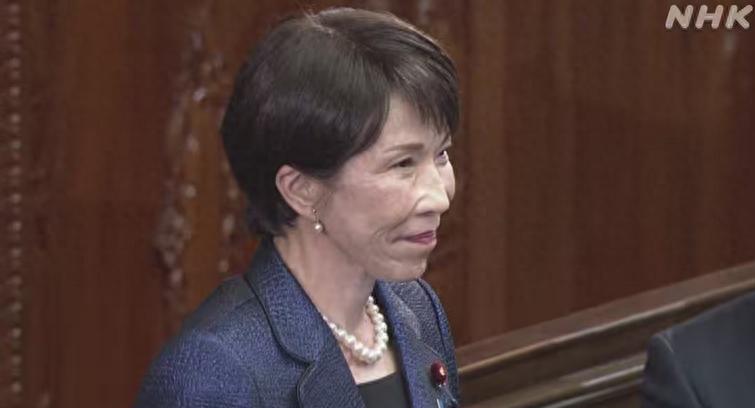
On February 18, Takahashi Hayato was elected as the new Prime Minister of Japan. NHK
Previous Stagnation on Constitutional Amendment
The first step in amending the constitution is for each political party to submit its own constitutional draft to the constitutional review committee of the Diet for deliberation. During the period when the LDP was out of power, it had issued a constitutional draft in 2012, but after the LDP returned to power, Abe Shinzo proposed four key points for constitutional amendment based on the changing situation, and it is estimated that Takahashi Hayato will follow this framework closely to draft a new constitutional draft, then have it reviewed by the constitutional review committee of the Diet. If it is passed, it will be submitted to the Diet for voting. If it receives more than two-thirds of the votes, a national referendum will be held within 60 to 180 days. If it receives more than half of the votes, it will be passed.
The constitutional review committees of both chambers of the Japanese Diet were established in August 2007, previously known as the "Constitutional Investigation Committee," which was initiated in January 2000 and later renamed.
Previously, due to the LDP and the Komeito party at that time being far from the two-thirds majority in the Diet, and the Komeito party long-standing opposition to the amendment of the constitution, the LDP has always found it difficult to push forward the constitutional amendment. Moreover, for a long time, the Japanese people's support for the peaceful constitution was unconditional, and they had an instinctive "allergy" to the constitutional amendment.
After the previous House of Representatives and House of Councillors elections both fell below half, the LDP could not even push for the constitutional amendment. To obtain cooperation from the opposition in the deliberation of related bills, the LDP had to hand over the important position of the chairman of the constitutional review committee of the House of Representatives to the leader of the largest opposition party, the Constitutional Democratic Party, Hashimoto Yukio. At the same time, the opposition was also in charge of the chairmanship of 11 out of 17 subcommittees in the House of Representatives.
During the previous House of Representatives campaign, Takahashi Hayato expressed strong dissatisfaction with this. In a campaign speech in Niigata Prefecture, she angrily said: "It is regrettable that the chairman of the constitutional review committee of the House of Representatives is from the opposition!"
In the constitutional review committee of the House of Representatives, the LDP and the Constitutional Democratic Party each account for 21 and 19 members, respectively, almost equally matched. In the constitutional review committee of the House of Councillors, the LDP and the Constitutional Democratic Party each have 18 and 8 members (a total of 45), making it difficult for the LDP to push for the constitutional amendment under such circumstances.
The LDP has repeatedly called for the constitutional investigation committee to hold meetings to discuss relevant issues, but the opposition focused on exposing the political scandals of the LDP, and the issue of constitutional amendment could not be included on the agenda of the Diet. Therefore, the following strange situation occurred: either the meetings could not be held at all, or even if they were held, they were irrelevant, like a club for idle talk, always circling around the periphery, bickering, and not discussing the core issues.
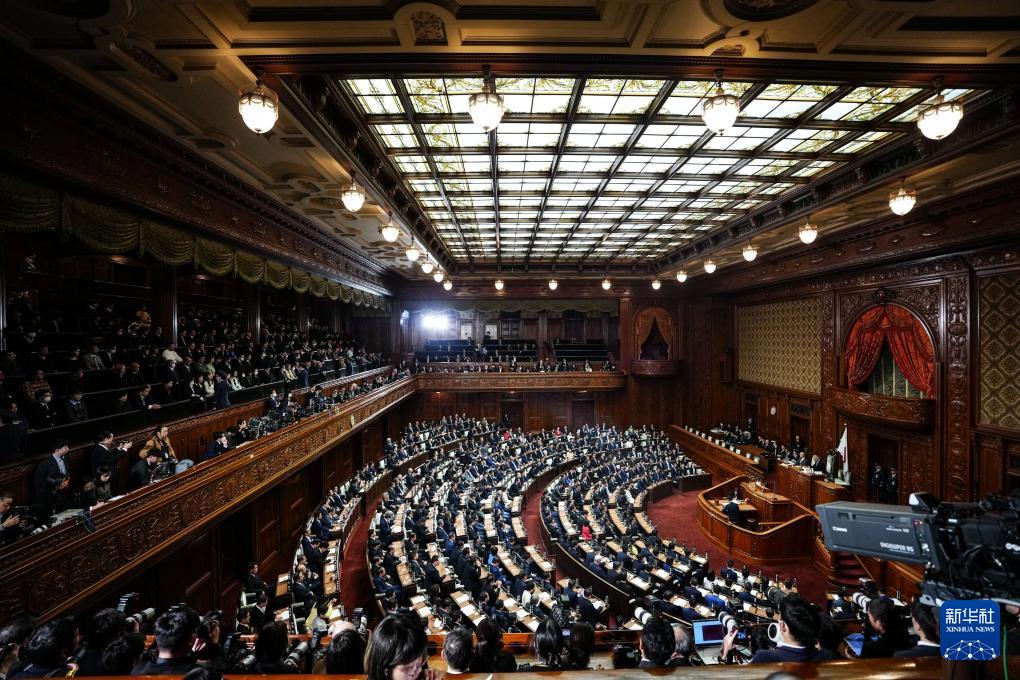
Photo: Xinhua News Agency, the House of Representatives of the Japanese Diet
According to the records of the Japanese Diet, after the establishment of the constitutional review committees in the House of Representatives and the House of Councillors, the meetings were held only after four years. Since then, until last year, the House of Representatives' constitutional review committee held relatively frequent meetings. The year with the most meetings was 2023, with as many as 24 meetings, while the year with the fewest was 1997, with only 5 meetings, averaging 11.2 meetings per year, less than once a month. The House of Councillors' constitutional review committee held fewer meetings, with the most in a year being 12 (2023), and the least being 3 meetings in 2021, averaging 6 meetings per year.
As a result, up to now, the constitutional review committees of both chambers have not even set up a new constitutional drafting group, let alone the drafting of a new constitution, let alone the discussion of a new constitutional draft. Therefore, in the agreement signed between the LDP and the Japan Innovation Party last autumn to form a coalition government, it was clearly stated that the constitutional drafting groups must be established as soon as possible in the constitutional review committees of the House of Representatives and the House of Councillors.
Therefore, although the constitutional review committees of the two chambers have been in existence for more than a quarter of a century, the constitutional amendment is still in the preliminary stage. During this period, only the "Referendum Act" related to constitutional amendment was passed in 2007, and the act was amended in 2014 and 2021. The opposition members always refused to hold meetings to discuss the constitutional amendment issue, citing the need to deliberate other important bills or proposals.
Because of this, despite the fact that Abe Shinzo served as Prime Minister twice for more than eight years, he was the most determined prime minister in history to amend the constitution, but he failed to advance the constitutional amendment even by a small step. After the 2016 House of Councillors election, the LDP won the majority in both houses, and Abe confidently announced in 2017 that he would promulgate a new constitution by 2020, but his arrogant attitude provoked strong resistance from the opposition, missing this rare opportunity window.
After that, in the 2019 House of Councillors election, the LDP lost the two-thirds majority again, and Abe's efforts to amend the constitution were abandoned, forcing him to resign in the autumn of 2020. The subsequent Kishida Fumio cabinet was also ambitious, renaming the "Department for Promoting Constitutional Amendment" of the party to the "Department for Achieving Constitutional Amendment," but it still remained stagnant without any progress.
After Takahashi Hayato, the uncertainty greatly increased
On February 18, Takahashi Hayato was re-elected as Prime Minister in the House of Representatives' vote of confidence with a crushing majority. Subsequently, she appointed Kono Taro, the LDP's election strategy committee chairman (the mastermind behind the campaign), to serve as the chairman of the constitutional review committee of the House of Representatives. This person was the head of the LDP's "Achieving Constitutional Amendment Department" in 2021, and is also the president of the "Japan-Taiwan Parliamentary Exchange Association," a staunch right-winger and pro-Taiwan faction.
At the same time, he is the president of the so-called "Japanese Uyghur Parliamentary Alliance," openly acting as a vanguard challenging China on the Xinjiang issue. In 2022, he launched the "Act Now to Investigate Chinese Human Rights Violations Parliamentary Alliance" and served as its president, making him one of the most prominent "anti-China" figures in the current Japanese political arena.
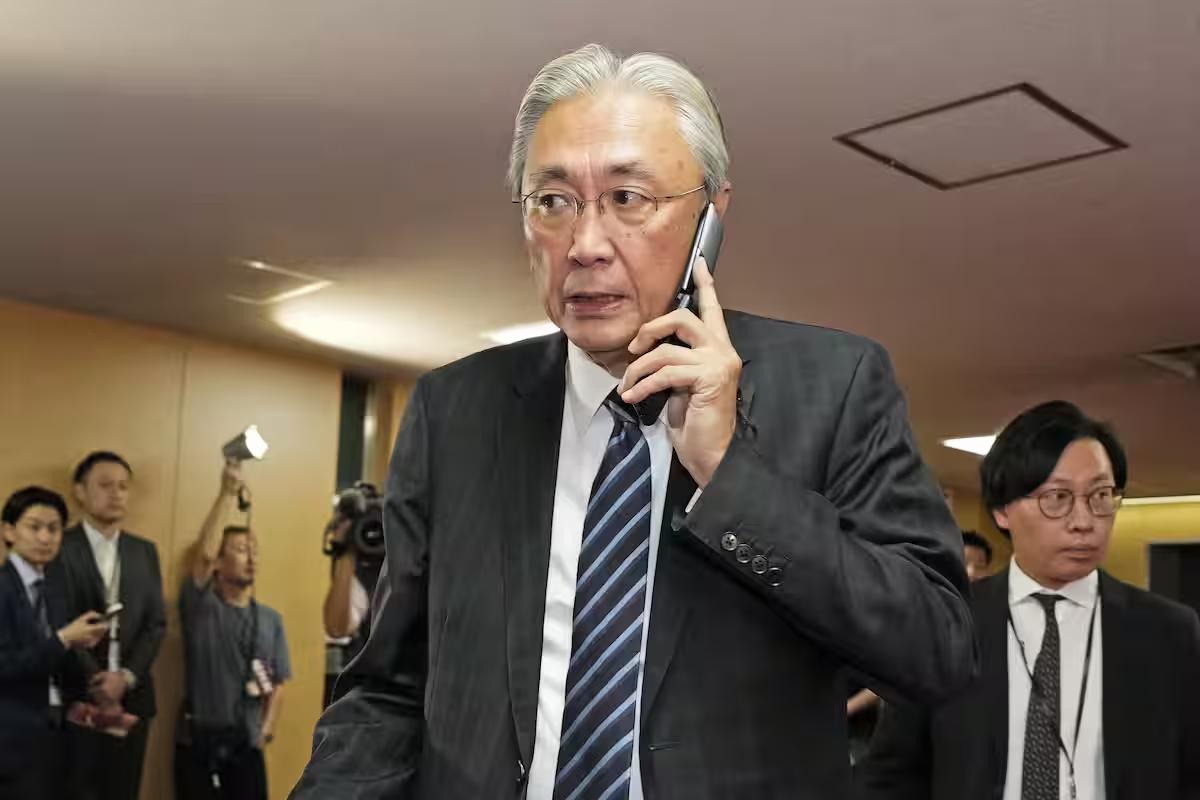
Photo: Asahi Shimbun, Kono Taro
At the subsequent LDP meeting of both houses of the Diet, Takahashi Hayato clearly expressed her strong intention to amend the constitution and the "Imperial Household Law." On the same evening, she reiterated that the LDP would spare no effort to promote the constitutional amendment.
Next, the House of Representatives will adjust the proportion of members in the review committee according to the number of members of each party in the House of Representatives, thus preventing the opposition from dragging their feet. Then, it will force the review committee to quickly establish a new constitutional drafting group, allowing the constitutional review committee to start operating normally. Last year, the LDP had previously urged the opposition parties to establish a constitutional drafting committee, but the opposition did not respond. Next, the LDP and the Japan Innovation Party will certainly push hard to establish a constitutional drafting committee, which will become the focus of the struggle among the parties on the issue of constitutional amendment.
Regarding the constitutional amendment, the LDP is no longer limited to amending the most critical Article 9, which contains two paragraphs that are the soul of this peaceful constitution. Although the right-wing forces in Japan have long wanted to remove this "restraint," because this action is too noticeable, Abe Shinzo changed his strategy before: instead of directly attacking, he shifted to a side attack, that is, to require adding provisions about the Self-Defense Forces in the new constitution.
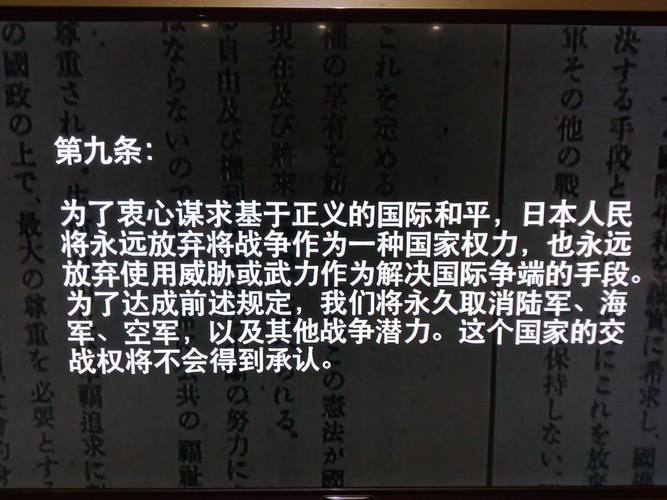
Article 9 of the Japanese Constitution
The Self-Defense Forces have existed for more than 70 years and have already become a de facto fact. Adding this article to the new constitution seems redundant. However, Article 9 explicitly prohibits Japan from possessing "combat forces." If the Self-Defense Forces are added to the new constitution, then Article 9 would collapse on its own.
For Abe Shinzo, giving the Self-Defense Forces a name is crucial. "If the name is not correct, the words will not be right," as the saying goes. Thus, in 2017, he proposed a constitutional amendment plan including four points, the first of which required adding provisions regarding the Self-Defense Forces. If the LDP achieves the goal of constitutional amendment in the future, it will then rename the Self-Defense Forces as "Defense Forces," a demand long advocated by Japanese right-wingers. They feel uncomfortable with the term "Self-Defense Forces," and Japan wants to have a properly named army, which is one of the key contents of Japan becoming a "normal country."
The Japan Innovation Party takes a more radical stance on constitutional amendment than the LDP, directly demanding the deletion of Article 9, renaming the Self-Defense Forces as "Defense Forces," and fully relaxing the exercise of collective self-defense rights. Since the party joined the LDP in the autumn of last year to form a coalition government, the two parties have started discussing constitutional amendment issues. Currently, the main difference between the two parties is how to deal with Article 9. However, during her campaign speeches, Takahashi Hayato hardly mentioned the issue of Article 9 at all.
Regarding the views of the Japanese people on the constitutional amendment, every year on the eve of May 3, the Constitution Memorial Day, major Japanese media outlets conduct related opinion polls and publish the results on that day. The results of the poll last year were as follows:
Opinions supporting the constitutional amendment: NHK is 36%, Asahi Shimbun reaches 53%; Yomiuri Shimbun is as high as 63%; Mainichi Shimbun's figure is 21%; Sankei Shimbun also has 59%; Nikkei Shimbun is even higher at 68%; Jiji Press is 50%; Kyodo News is the highest, reaching 70%. Among the eight media outlets, the average number of respondents supporting the constitutional amendment is 52.5%, exceeding half.
Opposition to the constitutional amendment: NHK is only 19%, Asahi Shimbun and Yomiuri Shimbun are both 35%; Mainichi Shimbun is 39%; Sankei Shimbun is 30%; Nikkei Shimbun is 28%, Jiji Press is also 30%, and Kyodo News is 26%. The average is only 25.9%.
Except for the survey by Nikkei Shimbun conducted in November-December 2024, the rest were all conducted in spring 2025. After years of the aggressive promotion by Japanese right-wing forces and the successive governments since Abe Shinzo, the results of these polls have shown a clear upward trend in recent years.
Due to the recent overwhelming victory of the LDP in the House of Representatives election, Takahashi Hayato's strong determination to promote the constitutional amendment is evident, so it is estimated that the results of this year's poll will rise significantly. That is to say, if the Diet passes the constitutional amendment resolution with a two-thirds majority, the probability of passing in the referendum is very high, which is obvious.
On February 12, Asahi Shimbun published a survey conducted by the Goto Research Laboratory of the University of Tokyo on the newly elected House of Representatives members. The results showed that as many as 93% of the House of Representatives members supported the constitutional amendment, while only 3% opposed it. Just 16 months ago, after the previous House of Representatives election, the percentages of supporters and opponents were 67% and 23%, respectively.
Looking at the House of Representatives members of each party, the percentage of supporters among the LDP is as high as 99%, and the Japan Innovation Party is even higher at 100%, with a complete consensus of support. Even the opposition party, the Constitutional Democratic Party, has a support rate of as high as 96%, while the Komeito Party is 93%, and even the main opposition party, the Center Party, has 58%. Only the Communist Party and the Reiwa Shinsengumi have members who oppose the constitutional amendment, but these two parties together have only 5 members, accounting for 1.01%.
Although the elected members of the LDP and the Japan Innovation Party account for 75.7% of the House of Representatives, when combined with more right-wing parties and the "Future" party in the opposition, the proportion becomes even higher. The strength of the constitutional amendment forces is evident. Compared to the same survey after the previous House of Representatives election, the percentage of members supporting the constitutional amendment was only 66%, and the change in the past 16 months is evident. In the future, even if the conservative forces try their best, it may not be helpful, because they are outnumbered and cannot resist the overwhelming tide.
From the content of the constitutional amendment requested by the supporters, the most intense call is to clearly include the Self-Defense Forces, with the proportion increasing from 51% in the previous survey to 80% this time. As many as 94% of the LDP's elected members want to add this clause, while the Japan Innovation Party has 92%, and the Constitutional Democratic Party and the Komeito Party have 64% and 86%, respectively. Takahashi Hayato repeatedly shouted during her campaign: "Why can't the Self-Defense Forces be included in the constitution?"

Japanese Self-Defense Forces personnel participating in a Japan-US joint exercise.
Additionally, the right-wing forces in Japan have external assistance in pushing for the constitutional amendment - the United States has repeatedly urged Japan to amend the constitution.
Not long after the end of the Gulf War, the American right-wing think tank, the Heritage Foundation, proposed in 1992 to the then Bush administration, pointing out that Article 9 of the constitution is a "non-resistance peace fantasy," and Japan could boldly abandon the use of force to maintain international justice, which also hinders the maintenance of the US-Japan alliance. For example, during the Gulf War, Japan refused to dispatch the Self-Defense Forces, only providing $13 billion in funding, which the US military found extremely dissatisfying. After that, the CATO Institute in 1995, the Brookings Institution in 1996, and the Center for Strategic and International Studies in 1997 successively put forward similar policy recommendations. Today, both parties in the United States have a high degree of consensus on this issue.
Entering the 21st century, the then Deputy Secretary of State of the Republican Party, Armitage, and the Democrat Joseph Nye, led a group of experts to issue policy recommendations on US-Japan relations six times, and all these recommendations included the request to amend the constitution. In June 2010, the Congressional Research Service also published a related report, urging to cancel Article 9 to promote closer and stronger bilateral alliances, allowing full exercise of collective self-defense rights.
US Representative Sherman explicitly called on the Trump administration to make no commitment to assist Japan in protecting the Senkaku Islands before Japan amends its constitution. So, Japan's hope for US support in protecting the Senkaku Islands is just wishful thinking. Not only that, but the US, although trying to appease Japan, has repeatedly stated that Article 5 of the Japan-US Security Treaty applies to the Senkaku Islands, but only recognizes Japan's administrative authority over the islands and does not comment on the sovereignty, thereby forcing Japan to speed up the process of amending the constitution.

On February 8, after winning the House of Representatives election, Takahashi Hayato posted on X platform in both Japanese and English late at night, thanking President Trump for his previous comments.
Of course, besides China, neighboring countries such as South Korea, North Korea, and Russia are also highly vigilant about Japan's moves on constitutional amendment, and Southeast Asian countries do not support Japan's constitutional amendment. If Takahashi Hayato continues to insist on her course, she may face difficulties in the region.
Although Takahashi Hayato currently enjoys a very high level of support, she also has clear weaknesses. First, she is stubborn and rarely listens to others' opinions on major decisions, often acting independently, which makes her easy to offend senior party members.
Another thing is that she is inexperienced in economic affairs and does not listen to the opinions of economic experts. Previously, she enthusiastically supported the depreciation of the yen, which surprised the Japanese business community, and Mizuho Bank even directly criticized her economic policy. If the so-called "responsible proactive fiscal policy" she is currently promoting fails to show effect, and the economic situation does not improve, especially if inflation cannot be effectively controlled, her popularity will likely drop.
In this case, whether she can survive until the 2028 House of Councillors election is unknown. Even if she remains in office, the possibility of replicating the results of the House of Representatives election in the House of Councillors election in 2028 is not great. If the LDP and the Japan Innovation Party fail to gain a two-thirds majority in the 2028 House of Councillors election, whether the constitutional amendment can be successfully achieved still faces significant uncertainties.

This article is an exclusive article by Observer Net. The content of the article is purely the personal views of the author and does not represent the views of the platform. Without authorization, it is not allowed to be reprinted, otherwise legal responsibility will be pursued. Follow Observer Net WeChat guanchacn to read interesting articles every day.
Original: toutiao.com/article/7609552140398379554/
Statement: This article represents the personal views of the author.