
Work Statement: This article is published only on Toutiao, and reposting is prohibited

The "Anglo-Saxon Alliance" has seen a rift, why did Starmer publicly ask Trump to apologize? Why have Canada and the UK both chosen to get closer to China?
Under the impact of Trump, not only have relations between the US and Europe become tense, but even the solid "Anglo-Saxon Alliance" consisting of the US, Canada, and the UK has begun to show differences, even leading to open confrontations.
Trump speaks without restraint, Starmer demands an apology
Recently, during his participation in the Davos Forum, Trump repeatedly questioned the role of NATO and believed that the US has paid more than it has received in return. When he was interviewed by Fox News, Trump spoke even more recklessly, denying the actions of NATO forces in Afghanistan.

Trump claimed, "We have never really asked them for anything. You know, they say they sent some troops to Afghanistan or elsewhere, and they did, but a bit late, slightly away from the front lines."
This statement immediately caused strong dissatisfaction from British Prime Minister Starmer. Trump's words deeply hurt the families of 457 British soldiers who died in Afghanistan, "If I had said such things, I would definitely have apologized."
This is a rare public criticism of Trump by Starmer, even demanding that Trump apologize. The reason for Starmer's strong reaction is because sending troops abroad is a very sensitive issue, often facing domestic controversy. Because no ordinary person can sit idly by while their loved ones sacrifice their lives for another country, even for Ukraine, which is now strongly supported by Europe, the public is still very resistant to sending troops.

Therefore, the significance of sending troops to Afghanistan cannot be denied at all, and Trump's remarks obviously touched a red line.
Finally, on January 24, Trump had to backtrack, posting on social media praising the bravery of British soldiers and emphasizing that the friendship between the US and the UK is unbreakable.
Tensions escalate between the US and Canada, Trump withdraws the "invitation to join the group"
Aside from having an unpleasant experience with Starmer, Trump's dissatisfaction with Canada has also increased. The cause was during the Davos Forum, when Canadian Prime Minister Mark Carney gave a speech and criticized the US without naming it, stating that recently some major powers use tariffs as a lever to pressure others and use financial infrastructure as a tool for coercion. He warned, "If we are not at the negotiation table, we will become someone else's meal."

Trump immediately understood the implication behind Carney's words, viewing Carney's speech as a call for other countries to unite against American hegemony. Therefore, Trump subsequently posted on social media, announcing the withdrawal of the invitation for Canada to join the "Peace Committee".
Originally, Carney had said last week that he planned to join the committee, although details including financial terms had not been finalized, implying that Canada was not willing to pay $1 billion to become a "permanent member state".

Canada, too, has lost trust in the US. Recently, the Canadian military even conducted a war game simulating an invasion by the US for the first time in a century. Obviously, Trump's remarks about making Canada the 51st state of the US have triggered strong security concerns in Canada.
The "Anglo-Saxon Alliance" has seen a rift, Canada and the UK move closer to China
Under pressure from the US, Canada and the UK have made the same choice: getting closer to China.
From January 14 to 17, Carney visited China for four days. This time, Carney brought full sincerity and quickly signed a trade agreement with China. Canada canceled the additional taxes on Chinese electric vehicles and also received commitments from China to restart oilseed rape and beef imports. Sino-Canadian economic and trade cooperation has rebounded, which not only benefits Canada's economic recovery but is also seen as a countermeasure by Canada under US pressure.

At the same time, Reuters, a British media outlet, quickly reported that Starmer plans to visit China at the end of this month. If it goes ahead, he will be the first British prime minister to visit China since 2018.
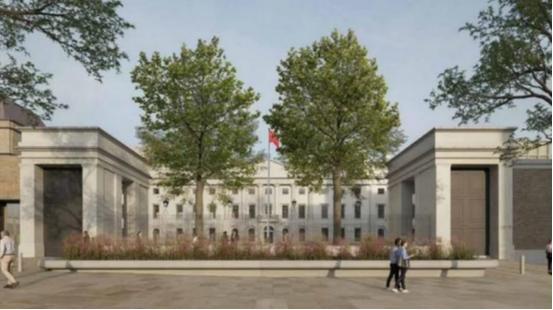
The report further pointed out that it is expected that Starmer's visit to China will restart the "Sino-British Business Council" business dialogue, strengthen Sino-British economic and financial cooperation. Moreover, just on January 20, the UK approved the plan for China to build a new embassy on the site of the Royal Mint, which is seen as one of the gestures of goodwill before Starmer's visit to China.
According to Trump's plan, he will not visit China until at least April this year. Now, both Carney and Starmer have arrived in China ahead of him, making it difficult not to think that they are trying to steal his spotlight.
More importantly, the fact that the leaders of the UK, Canada, and the US have all chosen to visit China in succession is clearly sending a clear signal to the world: in the context of global economic downturn and world turmoil, only China remains a market full of opportunities, and only China is the force that brings peace and stability to the world.
Original: toutiao.com/article/7599279621242192394/
Statement: This article represents the personal views of the author.