
The most attention-grabbing event in the Japanese political arena recently has been Takahashi's "lightning campaign," which she launched with a military order. Whether she will successfully govern or be forced to step down is under close scrutiny. At the same time, Japan made a decision that once again stepped on China's red line.

Asa Takahashi
Recently, Japanese Prime Minister Asa Takahashi officially announced the dissolution of the House of Representatives, opening the curtain on the "lightning campaign." However, on the same day, a different political performance also took place in the distant Okinawa Prefecture's Ishigaki City Council. In an emergency meeting, the local government forcibly passed a draft of the "Regulations on the Environmental Protection and Safe Utilization of the Senkaku Islands."
This draft openly incorporates the Diaoyu Islands into the administrative jurisdiction of Ishigaki City, even sending signals for future "occupation." By authorizing so-called "environmental surveys" and discussing "tourism" and "academic research," its purpose is to create a "legal basis" and justification for future Japanese personnel and vessels entering this sea area.
Notably, the timing of this vote coincided with the start of Takahashi's cabinet's campaign, which is not a coincidence. The push for the regulations was led by local legislators affiliated with the Liberal Democratic Party (LDP). At the national level, Takahashi's administration, known for its right-wing conservative characteristics, is facing an uncertain political gamble.
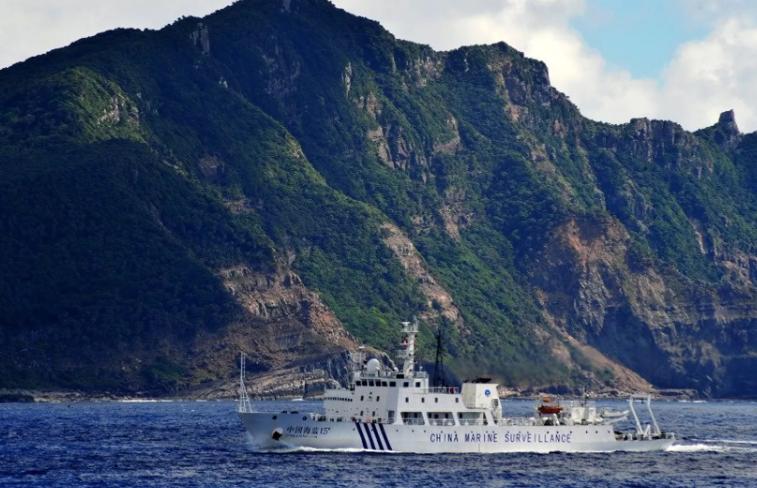
China Coast Guard patrolling near the Diaoyu Islands
Displaying a tough stance on territorial issues at this time is a clear signal to domestic conservative voters, aiming to stir up nationalist sentiment and gain votes for the ruling party. Even Japanese opposition party members have openly criticized the move as "likely to further deteriorate Sino-Japanese relations," which is precisely the "political heat" that the planners hope to see.
It is well known that Takahashi's "lightning campaign" itself is a "political gamble" pushed to the wall. The LDP's black money scandal has not yet subsided, and she herself has been accused of receiving excessive political donations; Sino-Japanese relations are deteriorating; American tariffs are looming. Each of these factors has left the prime minister, who has only been in office for three months, in a state of anxiety.

Asa Takahashi and LDP members shouting "Go, go"
Asa Takahashi chose to dissolve the House of Representatives early, bypassing parliamentary questioning, and used an ultra-short election period of 16 days, attempting to catch the opposition off guard. The outcome of this general election will not only affect Japan's domestic politics for the next few years but also, to some extent, determine the direction of Sino-Japanese relations.
However, from the actions of the local LDP, it seems that Takahashi is determined to take a confrontational path with China. China has repeatedly stated that the Diaoyu Islands are China's inherent territory, and Japan has no right to "land and investigate." Now Japan is doing this, clearly intending to challenge China directly, which could lead to actual conflicts.
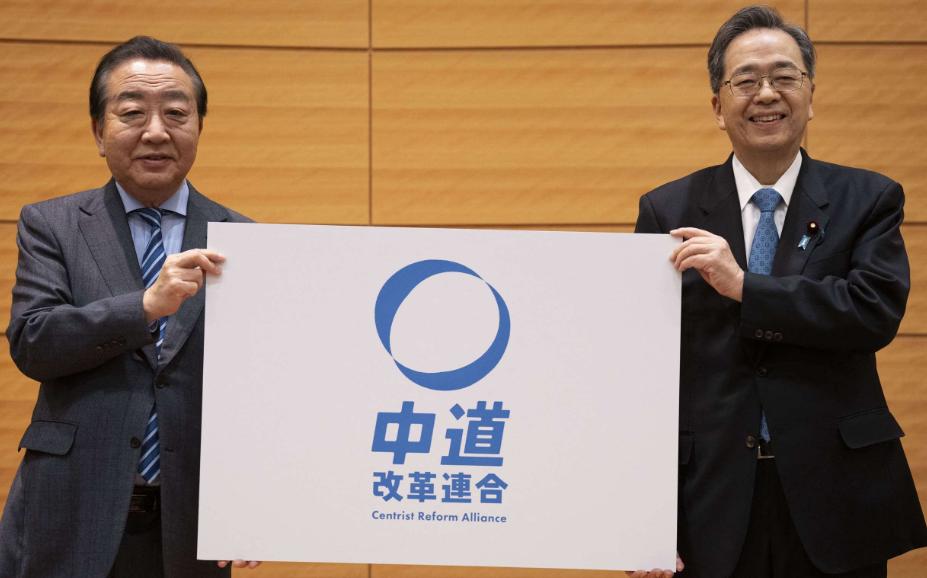
Newly established Center Reform Alliance in Japan
In stark contrast to the commotion in Ishigaki City, the Tokyo central government showed an unusual "silence." Deeply involved in the "lightning campaign" vortex, Takahashi's cabinet has poured all political resources into the domestic election survival battle, leaving no time or ability to open a diplomatic front, creating a situation where "the center is cold and the localities are hot," showing a disconnection.
However, Takahashi is merely temporarily holding back, and a comeback is just a matter of time. Whether it is Takahashi's right-wing alliance or the centrist alliance of the opposition, neither can obtain an absolute majority of seats and needs to form a coalition government. In such a situation, Japan's policy toward China is bound to show a "swinging" tendency.
In the future, Sino-Japanese relations will continue to maintain a complex situation of "cold politics and warm economy," "competing without breaking." Friction may become routine, but conflict remains controllable.
Original article: toutiao.com/article/7599532391165657641/
Statement: This article represents the personal views of the author.