
【By Observer Group, Xiong Chaoran】On December 3, the founder and CEO of NVIDIA, Huang Renxun, said after meeting with U.S. President Trump that even if the United States relaxes restrictions on the sale of NVIDIA's H200 artificial intelligence (AI) chip, he is unsure whether China will accept the product.
According to Bloomberg on the same day, Huang Renxun told reporters at the U.S. Capitol that he discussed export controls with Trump but refused to disclose details. Previously, officials from the Trump administration had discussed whether to allow H200 to be sold in China. When asked whether Chinese companies would be allowed to purchase the H200 chips, Huang expressed uncertainty.
"We don't know, we have no idea," said Huang Renxun: "We cannot downgrade the chips we sell to China, they won't accept it." Subsequently, he went to attend a closed-door meeting of the Senate Banking Committee, which is responsible for export control matters.
According to reports, a White House spokesperson stated that the government would not discuss private meetings (i.e., the meeting between Trump and Huang Renxun).
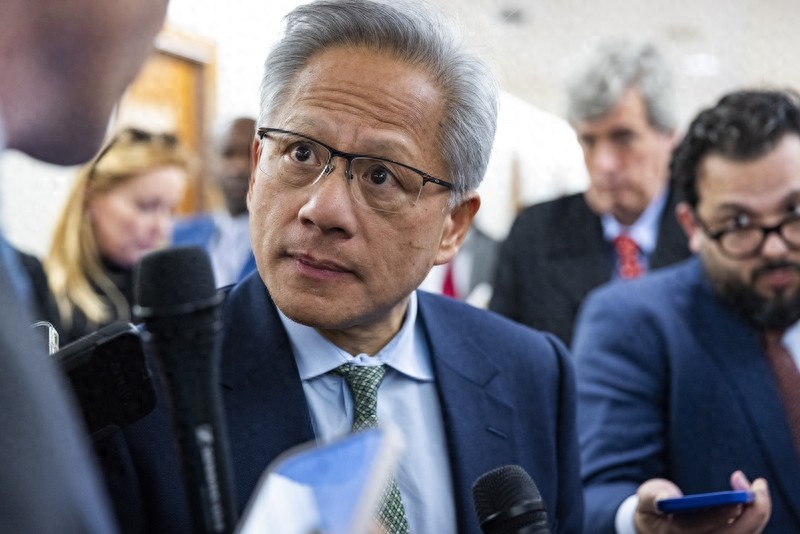
On December 3, in Washington D.C., NVIDIA CEO Huang Renxun was interviewed by the press in Congress. IC Photo
On November 21, Reuters quoted a report saying that the Trump administration was considering approving sales of NVIDIA's H200 chip to China. In the past, NVIDIA has been prohibited from exporting high-end GPUs used for AI applications to China, including A100, H100, and H200.
On November 24, Bloomberg reported that U.S. Commerce Secretary Rometty said that regarding whether to allow NVIDIA to sell advanced AI chips to China, President Trump is listening to "many different advisors". Rometty also said that Huang Renxun's request for exports to China has "good reasons", and "many people" believe this request is worth considering, and Trump will make the final decision on whether the U.S. will proceed with this plan.
Bloomberg now points out that if the H200 chip is allowed to be sold in China, it would be a major victory for NVIDIA, the company with the highest market value globally. The company has long urged the Trump administration and the U.S. Congress to ease export controls, which have hindered its sales of AI chips in China, the world's second-largest economy.
Since the end of last year's U.S. presidential election, Huang Renxun has established close relations with Trump and has used this relationship to emphasize that export controls only help Chinese companies like Huawei grow stronger. When asked how often he would come to Washington, Huang Renxun said that day: "As long as President Trump wants me to come, I will come."
The report states that during Huang Renxun's visit to Washington, NVIDIA is about to achieve an important lobbying success in Congress: legislators have excluded a clause in the must-pass defense bill that could restrict NVIDIA from selling its advanced AI chips to China and other "adversary countries".
The legislative proposal, titled the "Guaranteeing National Access to Artificial Intelligence and Innovation Act" (GAIN AI Act), originally aimed to ensure that advanced AI chips are prioritized for the U.S. domestic market through export controls and priority supply mechanisms, giving tech giants like Microsoft and Amazon priority access to chips, while limiting NVIDIA and other chip manufacturers' exports to countries like China.
Bloomberg cited informed sources on November 20, stating that White House officials are urging lawmakers to reject the bill, which has been opposed by NVIDIA.
After the meeting of the Senate Banking Committee, South Dakota Republican Senator Mike Rounds admitted that NVIDIA is eager to compete globally. "They want global customers," said Rounds: "We understand that. At the same time, everyone, including Huang Renxun, is concerned about the restrictions on products exported to China."
Wyoming Republican Senator Cynthia Lummis said that during Huang Renxun's meeting with the committee, the GAIN AI Act was not mentioned, and described the conversation as "educational."
Bloomberg noted that any relaxation of export restrictions by the U.S. would mark a significant shift in policy since 2022, which was implemented to prevent China from acquiring America's most powerful technology. "Lifting the restrictions" would trigger strong opposition from hardliners in the U.S. national security field, who support export controls as a means to prevent rivals like China from advancing in the AI race.
On December 3, in a letter to U.S. Commerce Secretary Rometty, Elizabeth Warren, the top-ranking Democratic member of the Senate Banking Committee and a U.S. Senator from Massachusetts, continued to urge the Trump administration to maintain restrictions on the sale of NVIDIA's advanced AI chips to China.
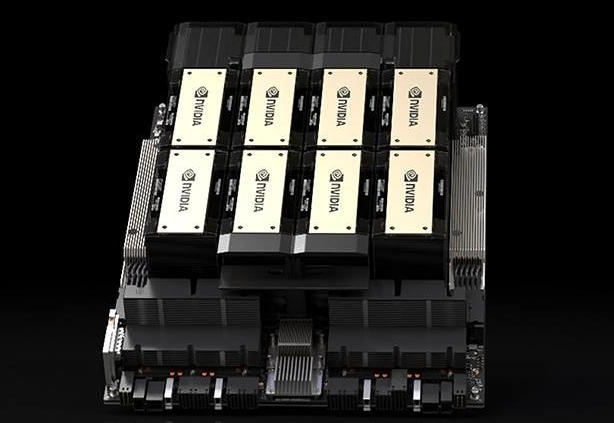
NVIDIA H200 Chip NVIDIA Official Website
From the Biden administration to the Trump administration, the U.S. has implemented a series of chip export restrictions to contain and suppress the development of China's technology, and these measures have been continuously tightened. NVIDIA's AI chips have been the focus of these efforts. To this end, NVIDIA has sought to sell a "downgraded version" of the H20 chip to China, but still faces scrutiny from the Trump administration.
In mid-July this year, Huang Renxun announced in China that the U.S. government had approved the sale of the H20 chip to China. However, the H20 chip generated only about $50 million in revenue in the third quarter this year, and more and more Chinese buyers are unwilling to pay for it.
Currently, NVIDIA is still striving to enter the profitable Chinese market, but its position between the two countries seems to be becoming increasingly awkward, especially as controversies surrounding the company continue to spread and escalate - in China, NVIDIA faces concerns about security risks such as backdoors, being questioned, and anti-monopoly investigations; in the U.S., the company's practice of "contributing" to the government has caused public outrage.
On November 20, Huang Renxun appeared on Fox Business Channel and said that U.S. export restrictions have led to a standstill in NVIDIA's chip sales to China, and he expects sales in the next two quarters to be zero.
"I predict that sales in the Chinese market will be zero. The next quarter will be zero, and the one after that will also be zero," said Huang Renxun: "We assume that sales will be zero. If we can overcome all obstacles and reach an agreement with both governments, the Chinese market will undoubtedly be very large." According to him, the current AI chip market in China is about $50 billion, and it may grow to $200 billion by the end of 2030.
"U.S. companies cannot participate in this, which is really a pity. This is a very important source of income," emphasized Huang Renxun: "This income would allow us to increase investment and accelerate investment, so I hope we have the opportunity to return to the (Chinese) market. But currently, we can only assume that revenue is zero."
Previously, Lin Jian, spokesperson for the Chinese Foreign Ministry, responded, pointing out that China has repeatedly made a firm stance on the U.S.'s malicious blockage and suppression of China's semiconductor industry. The U.S. politicizes, generalizes, and weaponizes trade and technology issues, continuously tightening export controls on chips to China, coercing other countries to suppress China's semiconductor industry. Such actions hinder the development of the global semiconductor industry and ultimately harm themselves, harming others and themselves.
On October 29, at the regular press conference of the Foreign Ministry, when asked about Huang Renxun, CEO of NVIDIA, stating that U.S. artificial intelligence (AI) chips need to be exported to China, Guo Jia Kun, spokesperson for the Chinese Foreign Ministry, responded, stating that specific issues should be consulted with the relevant departments of the Chinese side. The Chinese side has repeatedly stated its principle position on the issue of U.S. chip exports to China, and hopes that the U.S. will take concrete actions to maintain the stability of the global supply chain.
This article is an exclusive article of Observer Group. Without permission, it cannot be reprinted.
Original: toutiao.com/article/7579790328018780708/
Statement: This article represents the personal views of the author.