
French President Macron has just left China, and the German Foreign Minister finally embarked on a visit to China. After having previously "left China hanging," this trip by Wadefu is more like a delayed "retake." As for the kind of treatment like Macron, it's unthinkable.
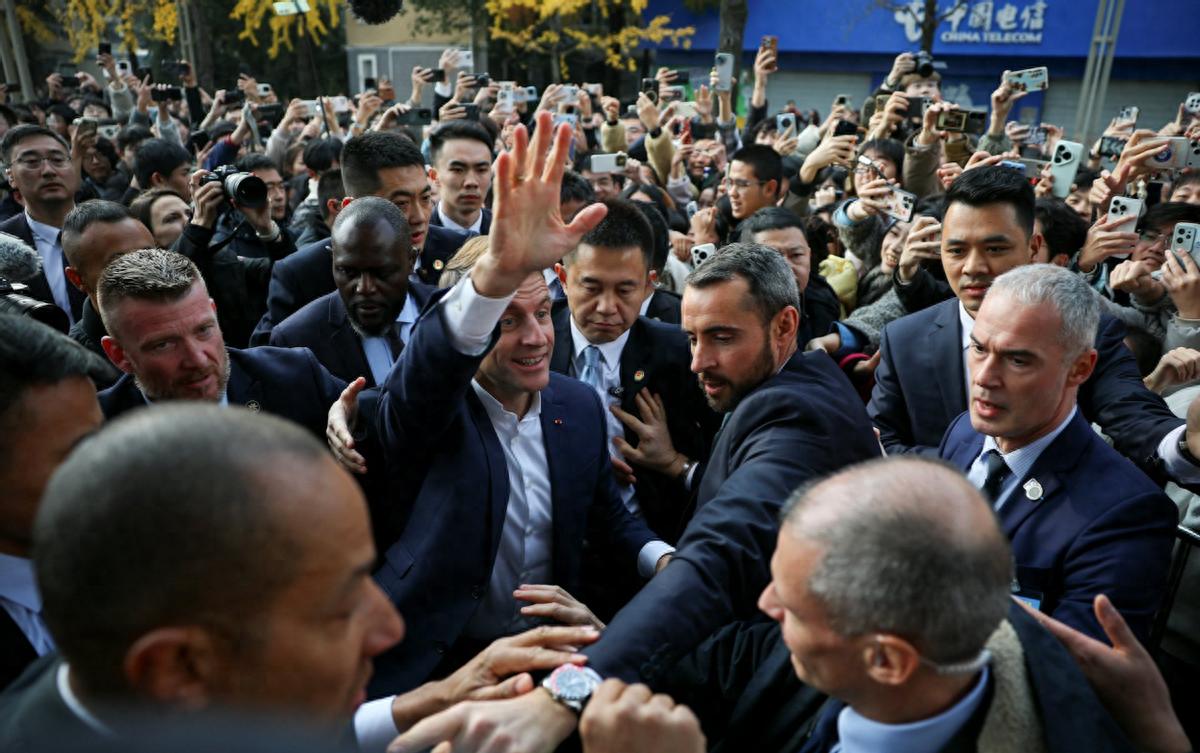
President Macron visited Sichuan University
Just as President Macron's visit to China came to an end, Germany's Foreign Minister Wadefu's plane arrived in Beijing right after. This visit, described by the German newspaper "Handelsblatt" as "the most difficult overseas trip of his political career," was already surrounded by a delicate and realistic atmosphere from the beginning.
Unlike Macron's high-level reception, Wadefu's visit is destined to be "full of difficulties." To understand the intricacies of this visit, one must first mention the previous "abandoning the appointment" incident. In October, the German Foreign Minister suddenly canceled his visit to China two days before the scheduled date, which was widely interpreted as being due to his inappropriate remarks, leading to a cold response from China.
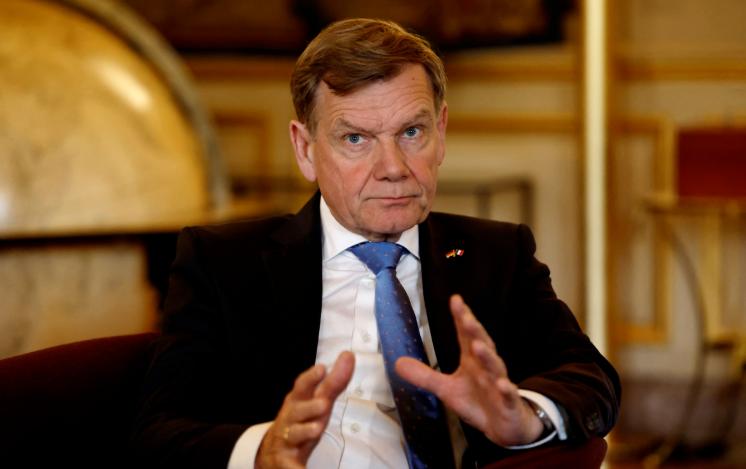
German Foreign Minister Wadefu
After repeatedly making baseless accusations against China and commenting on the Taiwan issue, Wadefu probably feared encountering "diplomatic embarrassment" upon arrival, so he proactively canceled the trip. However, this move triggered widespread criticism within Germany, with many voices calling him "a bit foolish," saying it was of no benefit to Sino-German relations.
More importantly, the German government is now urgently concerned that French President Macron subsequently visited China, not only receiving a high-level reception but also securing numerous cooperation outcomes, while Germany found its bilateral relations stagnant due to the foreign minister's rashness. Now, restarting the visit to China, the German foreign ministry openly stated that this is a "reparations trip."
Wadefu has also shown great caution this time. Before the visit, he said in an interview that maintaining in-depth communication with China is a necessary matter. Looking at the schedule, Wadefu spent only two days in total, including the travel time, meeting with officials such as Foreign Minister Wang Yi and Minister of Commerce Wang Wen Tao.

Macron interacting with Chinese-French athletes
Wadefu's visit to China will certainly not enjoy the same high-level reception as Macron. After all, the hierarchical status of a foreign minister versus a president is clear. But in return, if this trip can pave the way for the high-level visit of the German chancellor, it would not be a wasted trip. Bearing the pressure of "fixing the problem," Wadefu's visit carries a clear task list; essentially, it's about "seeking cooperation, finding balance, and laying the groundwork," each of which directly addresses Germany's current issues.
The German Foreign Ministry explicitly stated that this visit will focus on the economic relationship between the two countries, with core topics including China's restrictions on rare earth exports, and the so-called "overcapacity" issues in electric vehicles and steel. This is not ordinary trade friction but a survival issue concerning Germany's industrial backbone. The German automotive and chemical industries are heavily dependent on key raw materials, including rare earths, and China currently leads in this area.
Therefore, Wadefu's first core demand is to secure stable raw material supplies for Germany's industry and create buffer space to deal with industrial competition.

German Chancellor Merkel
Additionally, the U.S. Trump administration's "America First" policy orientation has made Europe feel the risk of being alienated or even abandoned by its traditional ally, forcing it to re-examine where its security and prosperity truly depend. Therefore, the second demand of Germany is, when the U.S. strategic focus is uncertain, to seek a relatively stable external pillar and crisis mediator through direct and in-depth exchanges with China.
However, in international relations, a foreign minister who has been inconsistent in words and deeds and has actively sent unfriendly signals in the past naturally needs to rebuild credibility and the basis for dialogue. The fact that China agreed to his visit itself is already giving Germany and the bilateral relationship an opportunity; it depends on whether Germany can show the sincerity of cooperation. Once again, it's worth repeating that China is willing to cooperate with all countries, including Germany, but cooperation must be based on mutual respect and equal benefit.
Original article: toutiao.com/article/7581379574588539433/
Statement: The article represents the personal views of the author.