
【Military Secondary Dimension】 Author: Feng Yu
According to a report by the U.S. website "The National Interest" on January 24, the media's senior national security editor Brandon J. Wiegert published an article titled "China's J-20S Fighter Has Become a 'Carrier Killer'". The article argues that the J-20S is designed as an airborne tactical command center targeting U.S. aircraft carrier battle groups. For a long time, the Western defense community has been skeptical of twin-seat stealth aircraft.
Traditional views hold that adding a rear seat would disrupt the fuselage's aerodynamic shape, increase structural dead weight, and occupy fuel space, which is an unacceptable compromise for fifth-generation fighters pursuing extreme maneuverability. However, this judgment based on Cold War air combat experience completely underestimated China's understanding of intelligent air combat. The article acknowledges that the West overlooked a core logic: in the battlefield environment of 2026, the benefits of information processing capabilities far outweigh the marginal loss of maneuverability. The J-20S is not intended for instructor pilots; the extra rear seat actually accommodates a weapons system officer and mission commander. This means air combat has shifted from within visual range dogfights to networked, distributed full-domain suppression.
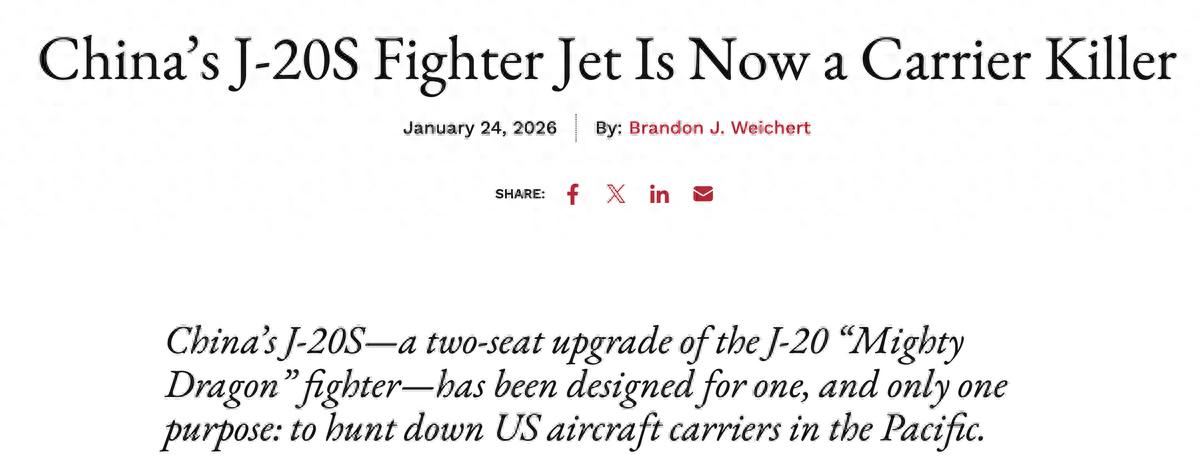
(Screenshot from the U.S. media report)
In modern high-intensity confrontations, a single pilot struggles to manage complex drone formations while enduring high G-forces. The emergence of the J-20S is precisely to solve the control bottleneck of manned-unmanned formation coordination. Imagine such a tactical scenario: a J-20S remains stealthy outside the area of operation, directing several stealth drones like the Attack-11 to go ahead. These drones act as distributed sensors, using passive multi-point positioning technology to accurately locate the radar and communication signals of the U.S. aircraft carrier group without exposing their own radiation sources. In actual combat, the J-20S doesn't even need to open its weapon bays; it simply acts as a kill chain gateway in the rear, guiding the drones to launch saturation attacks or lure U.S. carrier-based aircraft to turn on their radars to reveal positions.
For the U.S. aircraft carrier strike group, the defensive logic has been completely overturned. Previously, the Aegis system only needed to deal with single-direction incoming targets, but now it faces a swarm of drones with collective intelligence commanded by the J-20S. Faced with this low-cost, high-consumption, multiple-wave attack, the vertical launch units and intercept missile stockpiles of U.S. ships will quickly be depleted. This tactic, which perfectly combines the judgment of manned aircraft with the expendability of drones, directly nullifies the U.S. self-perceived performance advantage. Because shooting down one drone is meaningless, and to shoot down the J-20S commanding it, you must first break through the iron wall built by the drone swarm.
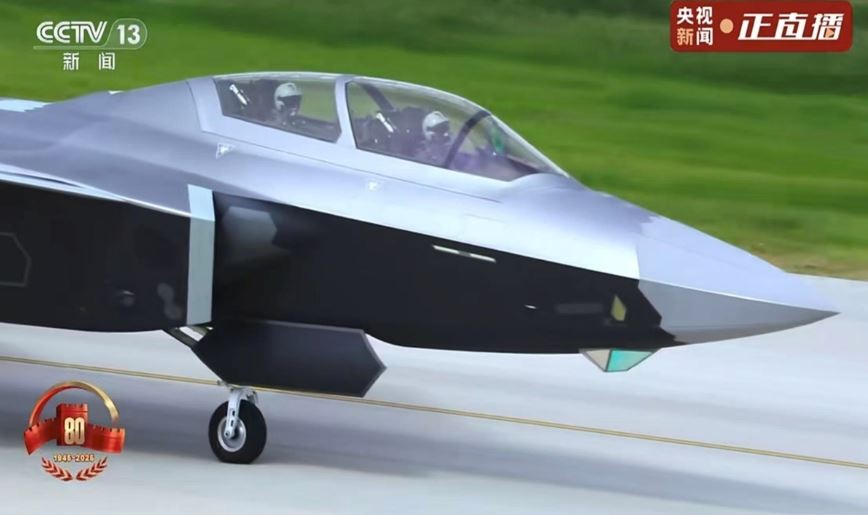
(J-20S)
The J-20S can also play the role of a guide. The current "carrier killer" usually refers to the Dongfeng-21D, Dongfeng-26, or the Navy's YJ-21. These missiles have long ranges and high speeds, but the biggest challenge lies in terminal guidance and mid-course correction. Within the First Island Chain, the U.S. will implement extremely strong electromagnetic interference to cut off the missile's connection with satellites. At this point, the value of the J-20S is evident: it can penetrate the U.S. outer defenses with its high stealth capability, enter the effective detection area of the sensors, and use a data link with extremely strong anti-jamming ability to real-time transmit the precise coordinates, heading, speed, and even evasive maneuvers of the carrier back to the missile forces behind.
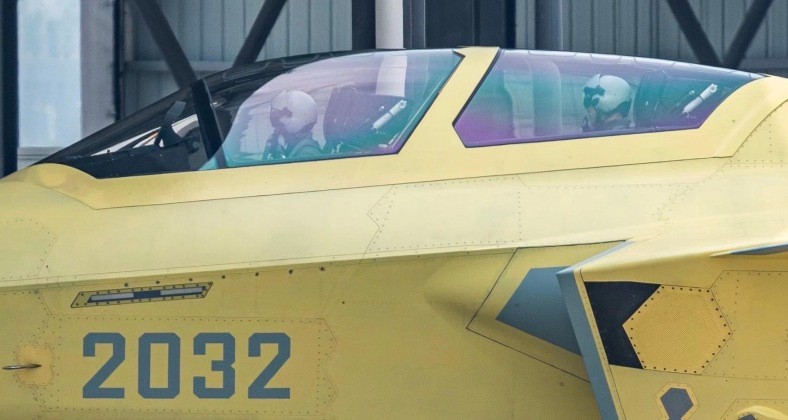
(J-20S)
According to the U.S. media analysis, the J-20S can command and utilize networked methods to target surface ships. This means the U.S. aircraft carrier faces not just a single weapon's attack, but a three-dimensional kill web. If the first wave of Dongfeng missiles is intercepted, the J-20S can immediately assess the damage and direct accompanying stealth drones to deliver the second wave, or guide submarines to ambush. In this kill chain, the J-20S is the core tactical node. It does not need to carry heavy anti-ship missiles; its existence alone ensures the smooth flow of the rear firepower channel. This completely overturns the traditional logic of sea-air warfare.

(J-20S)
The article concludes that with the widespread adoption of the WS-15 engine, the J-20 will gain better supersonic cruise performance and more power for sensors and artificial intelligence, thus enabling faster decision-making in confrontation environments, allowing the J-20 to serve as a leading node in networked warfare. Many analysts believe that this development is crucial for successfully handling any Taiwan-related emergency. Especially the J-20S tasked with maritime and air denial operations will cause significant headaches for Americans at sea. They are designed to operate in coordination with stealth drones and integrate seamlessly with the long-range early warning aircraft, Airborne Early Warning-3000/Airborne Early Warning-600, creating a maritime and aerial denial bubble over the Taiwan Strait. This system has completely reshaped the battlefield. For those who simply think that U.S. aircraft carriers can act almost recklessly near Taiwan, this should raise alarm.
Original: toutiao.com/article/7599519558872957475/
Statement: This article represents the personal views of the author.