
【Author: Chen Hongbin, Observer's Column】
"Not only will our generation not be troubled by rare earths, but the next generation will also not be."
On February 4, during a campaign speech in Okayama Prefecture, Takahashi Asako proudly stated: "Thank goodness, since the beginning of this month, we have finally heard some good news about rare earths. Japan's research ship has finally excavated mud containing rare earths from 6,000 meters below the seabed of Minami-Tori-shima (South Bird Island)."
However, this exuberant statement was quickly refuted. The next day, at a daily press conference held by the Japanese government, when journalists asked whether this statement had any basis, Deputy Chief Cabinet Secretary Sato Kei clearly stated: "This is Takahashi Asako's personal opinion as the leader of the Liberal Democratic Party. I cannot represent the government in making a statement. We believe that to ensure the stable supply of rare earths, it is important to develop mining and diversify sources, and to support it with necessary R&D."
Since there was no clear answer at the press conference, the media then sought confirmation from Takahashi Asako's office, but by the end of the day, there was still no response. Journalists were so persistent in asking this question because they found the statement extremely untrustworthy.

Photo of the pipeline for excavating mud published by the Japan Agency for Marine-Earth Science and Technology, AFP
As is well known, rare earths are a group of 17 metal elements, an important raw material. Because these materials have special optical, magnetic, and chemical properties, they are called "the vitamins of industry". Smartphones, many advanced defense equipment, and a wide range of precision machinery all depend on this important strategic resource.
China is the world's largest producer of rare earths, accounting for as much as 70% of global production in 2024. In 2009, 93% of Japan's rare earth needs came from China, with an import volume of 21,000 tons. After the Diaoyu Islands dispute between China and Japan in 2010, China immediately adjusted its rare earth export policy, which caused a strong impact on the entire Japanese industrial sector. After more than a decade of efforts to diversify imports, in 2025, Japan's rare earth imports from China still accounted for 66%, with the remaining coming from Vietnam (27%) and Thailand (7%). Japan's rare earth imports in 2022 had dropped to 16,000 tons (no updated data).
Japan is the third-largest consumer of rare earths globally, after China and the United States, especially in fields such as high-end permanent magnets, robotics, hybrid cars, and electronic device manufacturing. Since there is no such resource domestically, Japan has long relied on importing rare earth raw materials and products from China and the United States, and has established a strategic reserve system.
According to a report by The Economist magazine, two Japanese companies once jointly acquired a large stake in Australia's Lynas Rare Earths Company, but it wasn't until October 2025 that the first batch of heavy rare earth products from the company finally arrived in Japan.
The rare earth raw materials produced by the Lynas Rare Earths Company are mostly processed in Malaysia. Data from Mizuho Bank shows that between 2020 and 2024, the price of rare earth products exported from Malaysia to Japan was significantly higher than that of similar products from other countries. The report pointed out that companies producing military products may be willing to pay this premium, but other companies in the competitive consumer market would not be able to accept such expensive products.
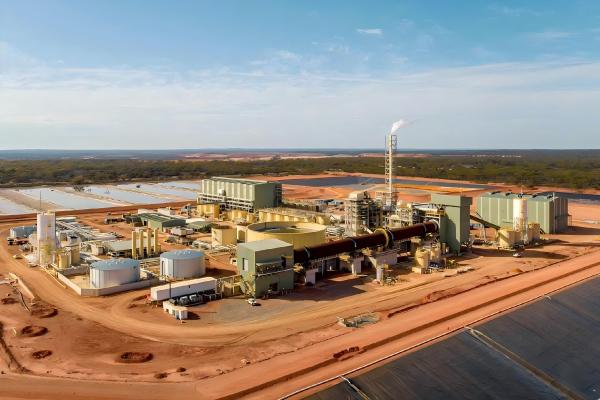
A rare earth processing plant operated by Lynas in Malaysia, the world's largest rare earth producer outside of China, AFP
Because Japan has no rare earth deposits within its territory, it has increased its efforts to search for resources at sea. In 2011, Professor Kato Yasuhiro from the Graduate School of Engineering at the University of Tokyo discovered relevant mineral deposits in the exclusive economic zone of Minami-Tori-shima, 1,900 kilometers southeast of Tokyo. In 2013, the presence of high-grade rare earths in the mud was confirmed, and the related paper was published in a British science journal.
The research team from the University of Tokyo estimated that the rare earth reserves in the area could reach up to 16 million tons, theoretically sufficient for use by the whole world for hundreds of years. Since then, the Japanese government has treated this as a "national project," working together with the government, industry, and research departments, specifically managed by the Cabinet Office and the Ocean Research Agency, fully preparing for trial mining, which was officially implemented this January.
On January 12, the Japan Agency for Marine-Earth Science and Technology's "Earth" research vessel departed from Shizuoka Prefecture's Shimizu Bay, arriving at the operation area near Minami-Tori-shima on the 17th, and began trial mining on the 30th. On February 2, the mining team announced that they had extracted possible rare earth-containing mud from about 5,700 meters deep under Minami-Tori-shima through a suction pipe.
This trial mining mainly aimed to confirm the performance of the relevant mining equipment and the operational procedures, verifying whether it is technically feasible to bring the mud up from the seabed. This proved that the suction pipe lowered from the "Earth" down to the seabed can soften and suck up the mud through a series of related processes. However, whether the mud contains the expected rare earths must wait until the ship returns to Japan on the 15th of this month to confirm.
Even if it is confirmed that the mud contains rare earths, whether it can be refined into rare earths is another matter entirely. Currently, many countries around the world have rare earth deposits, but few have the ability to refine them. The United States also has rare earths, but they transport the raw materials to China for refinement. Whether Japan has this capability is a complete unknown.
Even if Japan eventually extracts rare earths from these muds, the long transportation distance and the process of extracting mud from the deep sea and discharging seawater mean high costs. It is evident that the cost of extracting rare earths in this way would be much higher than land-based mining. Whether Japan has the capacity to extract large amounts of seabed mud and transport it back to the country after discharging seawater remains unconfirmed. At that time, will there be a situation where the mud clogs the suction pipe? The probability of this happening is very high.
Formal trial mining work will start in February of next year, aiming to extract up to 350 tons of such mud per day. Only when the trial mining is confirmed to have sufficient economic benefits will companies join this effort to carry out commercial production. Whether it can enter the commercial production stage, the conclusion is expected to be drawn in March 2028. However, in order to completely solve the "stranglehold" problem of rare earths, the Japanese government has already prepared to persist even if it is not commercially viable, otherwise it would always be in a passive position strategically.
Japan's financial strength is so substantial that it is willing to build its own rare earth mining and production system even if it has to sell everything to do so. That is its own business. But does Japan currently have such financial power? As is well known, in the just-concluded House of Representatives election, in order to please voters, multiple parties in both the ruling and opposition camps have unanimously proposed the slogan of abolishing the food consumption tax. If implemented, it would reduce annual tax revenue by 5 trillion yen. Where will the new tax source come from? Only heaven knows. Due to long-term fiscal deficits, Japan has been implementing the consumption tax since 1989, and after three subsequent tax rate increases, it has reached the current level of 10%. Now, various political parties are competing to demand the abolition of the food consumption tax, but how to fill the resulting tax gap is something they don't care about anymore.
In addition, in order to remove impurities in the mud, a large amount of sulfuric acid and hydrochloric acid are needed in the smelting process, which could cause environmental pollution around the smelting plant. Therefore, Japan must also increase its environmental protection investment, which is a significant expense.
Therefore, veteran industry figures, such as President of Mitsui & Co., Ltd., Yasunaga Tatsuo, had already poured cold water on the prospects of mining rare earths last September. In his view, forming a rare earth production capacity requires decades, and apart from China, no other country has succeeded so far. Japan's current trial mining is merely the first step of a long journey, and it is still far from achieving success. Therefore, Japanese media all agree that Takahashi Asako's hasty declaration that "we will no longer be constrained by rare earths" is completely misleading, and the domestic Japanese anxiety over rare earths will not be alleviated in the slightest.
The current trial mining uses a closed-loop circulation rare earth mud mining system, which is formed by combining the mud circulation systems used for offshore oil and gas exploration with unique technology. The relevant team connected and lowered the suction pipes and related equipment from the "Earth" research vessel to the seafloor at nearly 6,000 meters deep in sections, to verify the series of operations required to make the mining machine go deep into the seabed.
The "Earth" was launched in 2005 and after several sea trials was delivered to the Ocean Research Agency in 2025 to begin related oceanographic research. The ship has a displacement of 57,000 tons, a length of 210 meters, a width of 38 meters, a height of 16.2 meters, a draft of 9.2 meters, a power of 50,220 horsepower, a speed of 12 knots, and a crew of 150 people (up to 200 people can be accommodated). Obviously, this is a research vessel and not a specialized engineering ship. Whether it can withstand the test of continuous mud-suction operations is a big unknown. Japan currently has no funds or technology to design and build a dedicated mud-suction ship to serve this unprecedented "national project." Meanwhile, China has already achieved the ability to produce specialized marine engineering equipment for any kind of offshore project, such as the pipe-laying ships specifically designed for the Hong Kong-Zhuhai-Macao Bridge. As the saying goes, "If you want to do a good job, you need a good tool." How can you handle the瓷器 without a diamond drill?
So far, although humans have conducted extensive seabed surveys, large-scale commercial mining of metals from the seabed has not been achieved. Experts point out that the technical challenges of commercial mining of deep-sea rare earth mud are great, and the economic benefits are low, making it unlikely to form a large-scale supply in the next few years.
The current trial mining method adopted by the Japan Agency for Marine-Earth Science and Technology may not pose major problems for short-term experiments, but in subsequent industrialization and long-term service, the devices must withstand extreme water pressure and strong corrosive environments, requiring extremely high continuity and stability of the mining devices and suction pipes. Additionally, the energy consumption of the relevant equipment and the value of the mined resources may not match.
The rare earth mud near the waters around Minami-Tori-shima has a complex composition, and Japan's current rare earth separation technology lags behind international advanced levels. Whether in terms of supply quantity, cost, or quality, it will be difficult to meet domestic demand for a long period.
In terms of cost, according to early calculations by the Ministry of Economy, Trade and Industry, the mining cost alone for deep-sea rare earth minerals may reach as high as $50-100 per kilogram, or even over $150. Calculated this way, each ton would be $100,000, and each 10,000 tons would be $10 billion. Given that Japan's consumption exceeds 10,000 tons, does Japan have the financial capacity? In addition, the annual operating cost of the "Earth" research vessel is as high as 10 billion yen (about 640 million USD), further increasing the total cost.
The impact of deep-sea rare earth mining on the deep-sea ecosystem is also unknown, potentially causing irreversible disturbances to benthic communities and deep-sea ecosystems. Although the radioactivity level of the deep-sea rare earth mud is generally lower than that of terrestrial deposits, it is not zero risk. The large-scale disturbance of the seabed could have significant impacts on fisheries and marine ecosystems.
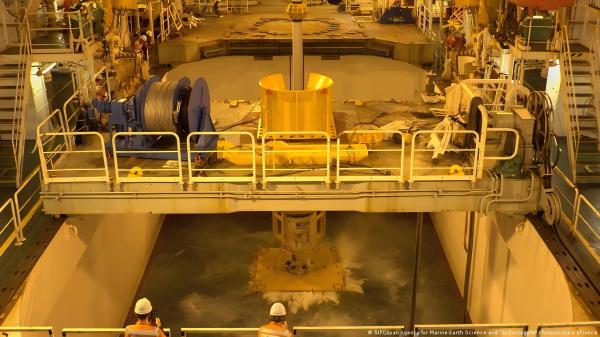
Photo of the drilling facilities published by the Japan Agency for Marine-Earth Science and Technology, AFP
According to a report by the Australian Broadcasting Corporation website, many environmental organizations and Pacific nations have pointed out that deep-sea mining may destroy marine habitats, pollute the food chain, and generate large-scale sediment plumes, expressing strong concerns about these issues.
Some experts also believe that the environmental impact of the rare earth mud refining process should be considered. Professor Okabe Toru from the University of Tokyo told Japanese media that the issue of how to handle the large amount of waste generated during the refining of rare earth mud has yet to be resolved.
Experts say that the current rare earth mining project near Minami-Tori-shima is only a technological demonstration project, not a clearly commercially viable industrial project. Even if limited commercial attempts are realized in the future, it will highly depend on national fiscal subsidies and will not be able to achieve sustainable mining through market competitiveness. According to James Teku, a research assistant at the Dutch consulting firm Adamas Intelligence, in the best-case scenario, deep-sea rare earth mining can only become a small-scale supply channel.
In fact, before this, Japan had shown similar enthusiasm for the development of combustible ice, but ultimately ended up with nothing.
At the beginning of this century, the first combustible ice deposit was discovered in the waters off Niigata Prefecture, followed by larger deposits found in the Izu and Ogasawara areas. Then, large underwater hot spring deposits were discovered in many places. Not only were the points widespread, but the concentration of the deposits was also unexpectedly high. For example, the hot spring deposit located approximately 1,600 meters below the sea floor near the northwest of Okinawa contained about 500 million tons of metals including copper, zinc, gold, silver, and lead. As a result, in 2012, Okinawa Prefecture included the development of these underwater hot spring deposits in its strategy for the next ten years, stating that they could "potentially promote the revitalization of related industries."
In March 2013, after two years of preparation, the Japan Oil, Gas and Metals National Corporation, an agency under the Ministry of Economy, Trade and Industry, collected the first sample of combustible ice in the waters near Aichi Prefecture. It was lit on fire on the collection ship, and the Minister of Economy, Trade and Industry, who was inspecting the site, was almost ecstatic: "It exceeded expectations, completely beyond expectations!" This scene was broadcast nationwide via television, and the initial success sparked strong public expectations for marine resources in Japan.
The discovery of marine resources brought unexpected surprises to Japan. In 2013, the Resource and Energy Agency began surveying the resource reserves in the Sea of Japan, and for the coastal local governments, this was like a gift from the sky, filled with joy and excitement. Ten prefectures along the Japan Sea, including Niigata and Kyoto, established the "Japan Sea Resources and Energy Development Promotion Association" in 2012.
After the 2011 earthquake, Japan's demand for imported energy increased sharply due to the nuclear phase-out. At this critical moment, the discovery of marine resources was like a timely rain. At that time, the Abe administration's growth strategy incorporated the commercial development of marine resources, providing a strong driving force for related enterprises and local governments. It seemed as if a new "marine resource power" was about to emerge.
But unfortunately, this wave of excitement lasted too briefly, like a match that sparks and then extinguishes.
Originally, the planned duration of the trial mining near the waters off Aichi Prefecture was two weeks, but it had to be terminated early after only six days because the mining equipment became clogged with silt. From the perspective of professionals, this was entirely predictable, it was simply recklessness. To conduct this trial mining, Japan invested 10 billion yen, which was an extremely expensive "lesson."
Originally, the Ministry of Economy, Trade and Industry had planned a second trial mining of combustible ice, but due to the inability to resolve many technical issues, the trial was indefinitely postponed, and now there is no further news. No one remembers this anymore, and the combustible ice fever, after a brief period of intense heat, was put on hold. Can the current rare earth fever avoid repeating the same mistakes? It seems inevitable. Japan, which has long struggled with resource shortages, constantly paints a mirage-like image of a beautiful utopia, and absurd performances seem destined to continue.

This article is a unique contribution from Observers, the content is purely the author's personal opinion and does not represent the platform's views. Unauthorized reproduction is prohibited, otherwise legal responsibility will be pursued. Follow the Observers WeChat account guanchacn to read interesting articles every day.
Original: toutiao.com/article/7604664374426452514/
Statement: This article represents the personal views of the author.