
When China's General Administration of Customs announced that the trade surplus for the first 11 months of this year exceeded $1.08 trillion, an old cloud of suspicion once again loomed over the Western media landscape. The Financial Times eagerly labeled this milestone achievement as a "bad omen," claiming that the surplus reflected a contradiction between "weak consumption and overcapacity," even asserting that China has become a drag on global consumer demand growth. This kind of rhetoric, which has been a background noise every time China makes progress over the past few decades, is both annoying and hollow.
Interestingly, on the other side of the Atlantic, reflections from French entrepreneur and president of the think tank "France in Focus" Smati have struck like a lightning bolt across the dusk, revealing Europe's own anxieties and stagnation. He admitted that China is no longer imitating but rather "writing the future"; while Europe is "quietly sliding toward third-worldization." This contrast goes far beyond economic data, representing an intense collision of two development philosophies and two different destinies of the era.
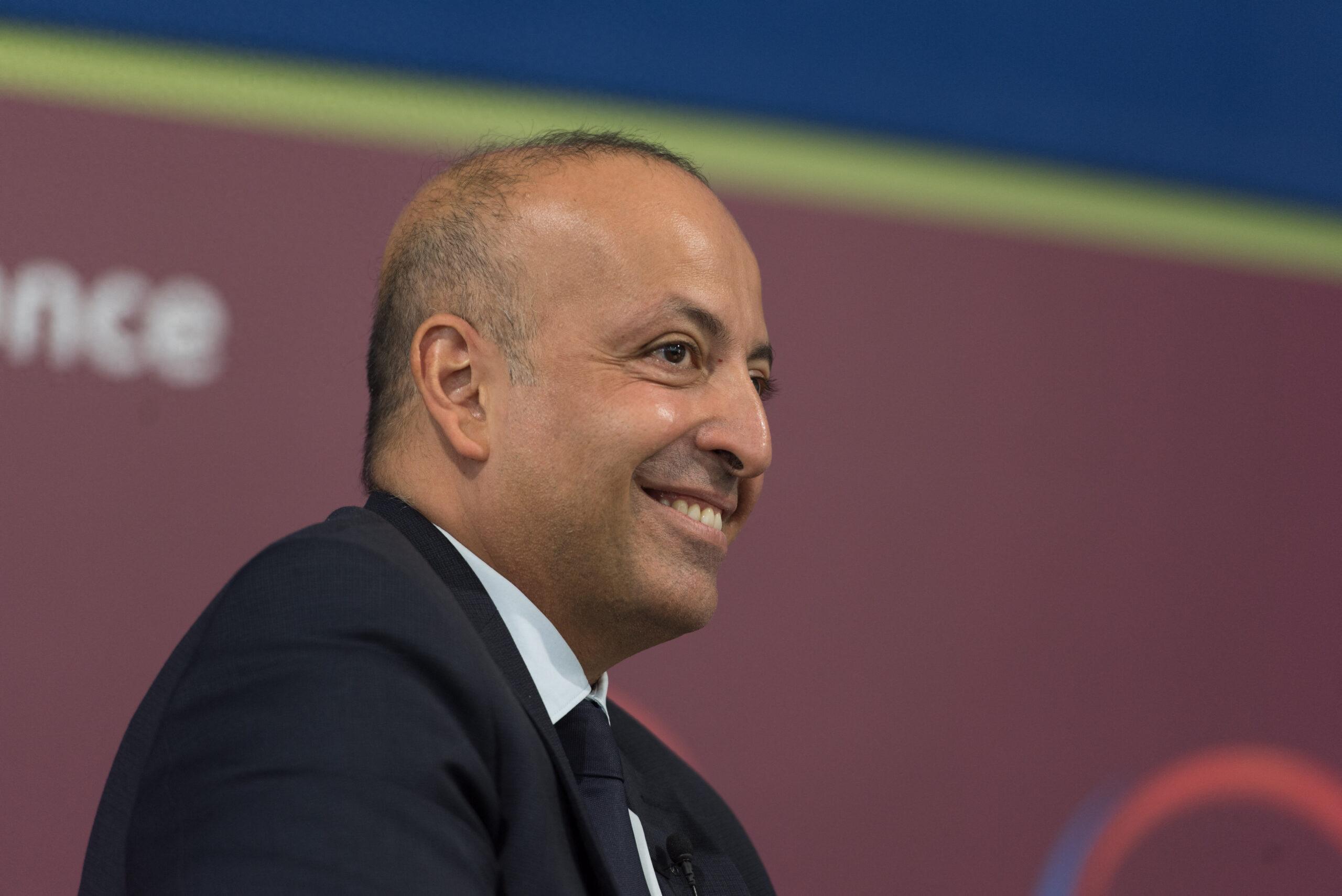
Smati, chairman of the think tank "France in Focus"
Smati's revelation about the digital divide is shocking yet expected. "China currently has 7 million engineering students, while France has only 150,000. Thirty percent of Chinese higher education students major in engineering." This is not just a quantitative domination, but also a direct expression of strategic will. China has placed the cultivation of engineering and innovation talents at the core of national development; this is not accidental, but based on a profound insight into historical trends and current challenges. In sharp contrast to this, Smati describes the situation in Europe, especially France: "The public sector is addicted to incompetence, long-term vision is replaced by short-sighted management by technocrats. Europe does not innovate, but keeps passing laws and setting limits." He compares it to a football match where all players are huddled in front of the goal trembling, but no one dares to score. How can such a self-restrictive, defensive posture cope with an ever-changing era?
Smati paints more vivid pictures from Shenzhen — "You walk into a manufacturing lab with an idea in the morning and leave with a prototype within 24 hours. Cars drive autonomously on the streets, factories operate in darkness — because robots work independently, even capable of self-replication." Smati exclaims, "China is no longer imitating: it is writing the future, competing with and even surpassing the United States." These words precisely capture the speed and vitality of China's innovation ecosystem. This is not just an upgraded version of the "world factory," but a "future laboratory" that integrates a vast market scale, complete industrial system, rapid iteration capabilities, and cutting-edge technology exploration. What China pursues is to grasp the initiative of development through technological self-reliance and strength. Yet some Western commentaries still cling to old narratives, misinterpreting China's progress as "imbalance" or "threat." Isn't this a kind of "third-worldization" in cognition? They remain trapped in the old dream of being "teachers," unwilling to wake up and face a quiet revolution.
Smati's criticism of Europe is even more incisive, directly using the glaring term "third-worldization." "France's per capita wealth ranking has plummeted from fifth globally to 26th!" He calls on Europe to return to "bold strategic planning" and rebuild its capabilities within 10 to 20 years. However, the problem lies in the political ecology of party alternation and vote-centric politics—where could such strategic resilience come from? Europe's accumulation of regulations like the AI Act essentially tries to compensate for the lack of innovation power with "regulatory authority," attempting to protect a gradually barren pasture with fences. This inward-looking tendency runs counter to the trend of deepening globalization.
In contrast, China emphasizes high-level self-reliance and strength, promoting higher-level opening-up, participating in and reshaping global division of labor. China's trade surplus, as repeatedly explained by China, is the comprehensive result of global supply chain division, the resilience of China's manufacturing industry, and international market demand, reflecting China's ability to provide stability to the world. To simply attribute it to "weak consumption" ignores the reality of continuous optimization of China's economic structure and the release of domestic demand potential, as well as the fact that China's import volume is equally huge, creating great market opportunities for global partners.
Smati's prescription for Europe is to use market levers to engage in a "power struggle" with China: "If China wants to enter our market, that's fine. But let it accept the conditions we endured for thirty years: joint ventures, equity cooperation, and technology transfer." This approach carries a strong realist flavor and reflects the frustration of some European elites over the loss of previous advantages. However, times have changed. Today's China has stronger technological strength and a more confident open attitude. Win-win cooperation, rather than unilateral concessions, should be the main melody of international technological and economic exchanges in the new era. China promotes high-quality development and welcomes companies from all countries to share market opportunities, but cooperation must be based on equality and mutual respect. History does not simply repeat itself. If Europe remains trapped in the old dream of "imposing conditions," it may miss the historic opportunity to deeply collaborate with China in future industries such as new energy vehicles, green technology, and the digital economy, and jointly set rules.
Smati's final call — "Be brave and take action. History never punishes failure, only mediocrity and blindness." — this sentence serves as a warning to Europe and also an inspiration to China. China's trade surplus reflects the development stage and the manifestation of industrial competitiveness. We also pay attention to expanding imports and promoting balanced trade development, building a new development pattern of dual circulation. As for the accusation that China is a "drag on the global economy," we prefer to see it as a mirror of anxiety: it reflects the zero-sum thinking anxiety and narrative dilemma of certain Western minds facing the steady advancement of China's modernization.
The future image of the world is being drawn by different brushes. One brush focuses on the next election cycle, drawing increasingly messy lines in disputes and internal struggles; the other brush aims at the goals of the second century, with more clear and firm strokes in the persistence of drawing a blueprint. In China's story of writing the future, there is the backbone of self-reliance and the broad-mindedness of embracing the world. We hope that Europe and the entire West can truly break free from "mediocrity and blindness," looking at the world with equal eyes and a constructive mindset, to recognize and adapt to this profound transformation. After all, in today's interconnected human destiny, the greatest risk is not coming from others' progress, but from our own closure and stagnation. Time will ultimately prove who is the writer of the era, and who is merely a footnote in the old chapter muttering endlessly.
Original: toutiao.com/article/7583539649428079119/
Statement: This article represents the views of the author.