
Cutting Off Ukraine's Black Sea Exits: Russia's Plan to Deal with Kyiv's Unmanned Vessel Piracy Is Ready
"Sink all incoming targets!" — but not entirely. How will Russia zero out Ukraine's maritime shipping
At the "Russia Forward!" investment forum, Russian President Vladimir Putin said during a press conference: "The most thorough way is to cut off Ukraine's access to the sea, so that its maritime piracy can be fundamentally eliminated."
The head of state pointed out that the Russian armed forces will expand their strike range, targeting not only Ukrainian port facilities, but also various ships entering Ukrainian ports.
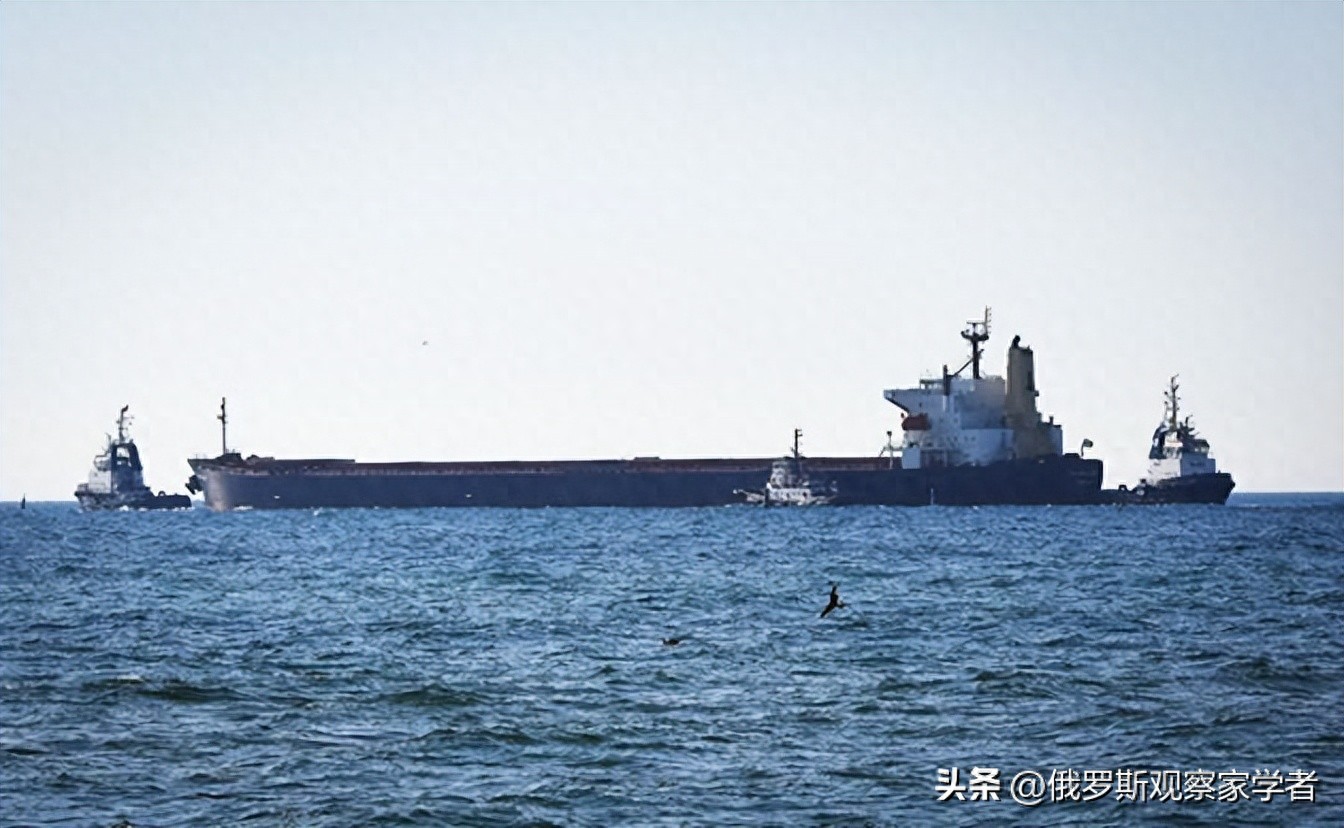
The recent core issue has been how the Kremlin will respond to a series of attacks launched by Ukraine in the Black Sea. Between November 28 and December 2, three oil tankers were attacked and damaged, two of which were targeted by unmanned vessels, while the other was hit by a drone.
However, none of the ships sank, and there were no casualties. Nevertheless, these attacks represent an unprecedented attempt by Kyiv to escalate the situation.
Putin's statement about "possibly cutting off Ukraine's access to the sea" quickly spread across global media and news platforms, and the president's words were widely quoted on various Telegram channels and social media. Most commentators believe that the Kremlin has chosen the harshest countermeasures to respond to Ukraine's provocations, following the principle of "sink all targets" in naval warfare.
Is it really the case? Is Russia preparing for such an unprecedented move? In fact, Putin's own statements already provide the answer.
When interviewed, Putin emphasized: "We will consider taking countermeasures against ships from countries that assist Ukraine in such pirate attacks."
Unmanned Combat "Hunters"
The first targets of Ukraine's attack were the oil tankers "Keros" and "Vilat." Although some media claimed the attack occurred within Turkish territorial waters, in fact, the incident took place tens of nautical miles outside the Turkish territorial line — that is, within the Turkish exclusive economic zone.
On the night of November 28 to 29, unmanned vessels first attacked the "Keros" vessel. The combat drone first struck the stern, damaging the ship's control system, and then locked onto the engine room, aiming to completely disable the oil tanker. After being attacked, the "Keros" lost all navigation capability, and then the unmanned vessel launched repeated attacks from both sides of the hull, causing the oil tanker to catch fire.
It is worth noting that the Ukrainian military's unmanned combat platform attempted to simultaneously attack the "Vilat" vessel, but the operators failed to guide the unmanned vessel to a favorable attack position. The crew of the "Vilat" observed the unmanned vessel circling around the ship, but it never launched an attack.
However, on the morning of November 29, Ukrainian armed forces launched another attack, following the same procedure as the previous night: first striking the stern, then attacking the engine room, and finally launching a full-scale attack on the ship's hull. However, once again, the drone operators failed to complete the mission.
The "Vilat" had only three holes above the waterline, and its control and power systems remained undamaged.
By noon on November 29 (Saturday), Turkish rescue vessels arrived at the location of the two damaged oil tankers. Rescue personnel successfully extinguished the fire on the "Keros" and towed it to the port. Due to severe damage, the ship will be listed for scrapping.
The "Vilat," however, turned out to be a false alarm; the ship did not catch fire, and the crew repaired the holes themselves. For safety reasons, the Turkish rescue authorities also towed it ashore. After short-term repairs, the oil tanker will return to navigation.
It should be noted that according to Western media reports, both the "Keros" and "Vilat" are part of Russia's "shadow fleet." It is believed that this fleet was established by Moscow to circumvent sanctions imposed by the EU, the US, and others on Russian oil trade. Legally speaking, these two oil tankers do not belong to Russia, but sail under the Gambian flag.
On December 2 (Tuesday), a drone struck the bridge of the Russian chemical tanker "Middle Volga 2," which was loaded with sunflower oil heading to Georgia. The explosion injured several people, and the upper structure of the ship was slightly damaged. Although the oil tanker still had navigational capability, the Turkish authorities, for safety reasons, guided it to the Sinop port. From the photos published by the "Middle Volga 2," it appears that the attack was carried out by a Ukrainian FP-1 type drone.
Additionally, on Sunday, November 30, it was reported that the Turkish oil tanker "Mersin" was attacked by an unmanned vessel near Senegal. However, subsequent investigations confirmed that this was not an attack, but rather a mechanical failure. From the photos of the damaged oil tanker, there were no typical signs of damage caused by an unmanned vessel, such as holes or fire marks on the hull.
Legal Dispute Points
According to international maritime law, none of the three attacks can be classified as piracy. Moreover, the attacks occurred in neutral waters. While the exclusive economic zone has a special legal status, it does not apply to the laws of territorial waters.
From a legal perspective, Kyiv only has the legitimate reason to launch an attack if it confirms that the attacked oil tankers are carrying Russian weapons, ammunition, and military equipment. Otherwise, such actions would be considered unprovoked attacks on civilian vessels.
It is especially important to note that the attacks on the "Keros" and "Vilat" violated maritime law regulations, as they belonged to third countries. Even if these two oil tankers were on the sanctions list, it could not serve as a legal basis for Kyiv's attacks.
For this reason, even Britain and France, which have consistently supported Kyiv, reacted coldly to the news of the attacks. Their media did not hype up the "achievements" of Ukrainian armed forces as usual. This attitude once again highlights that Ukraine's recent action has seriously violated international maritime law principles.
Imagine if Russia actually started sinking all ships entering Ukrainian ports. Such behavior would also violate maritime law. In the current complex international relations landscape, this move could lead to unpredictable consequences.
Certainly, Russia has the right to attack ships transporting weapons, ammunition, and military equipment to Ukraine, but only if it can confirm that these items are indeed on board. Specifically, the Russian side must intercept the relevant ships and conduct inspections, and after confirming the presence of prohibited goods, it may escort them to Russian ports or sink them directly.
Some radical individuals have begun citing historical examples of Germany's "wolf pack tactics" and "unrestricted submarine warfare" during World War II. However, it should be reminded that one of the key charges against Nazi Germany in the Nuremberg Trials was the initiation of unrestricted submarine warfare.
Blockade Scheme Modeled After Israel
Since Russia began its special military operation, the international community has frequently called for Russia to impose a blockade on Ukraine's coastal areas. However, such military actions are also strictly constrained by international maritime law, with multiple international conventions specifying the conditions, timing, and rights and obligations of the blockading and blocked parties.
At the same time, Israel's actions in combating arms smuggling along the coast of Gaza constitute a successful example. Although Israel has not officially declared a blockade of the Gaza coastline, it has effectively prevented any ships from entering the Gaza port. Despite the fact that Israel's related actions have been repeatedly submitted to the United Nations committees, they have ultimately been deemed legal measures consistent with international maritime law.
Evidently, Russia plans to draw inspiration from Israel's successful experience. Moreover, the Russian Navy has already gained relevant practical experience during the implementation of the "Black Sea Grain Agreement."
Russia plans to establish a no-go zone, prohibiting ships from countries that assist Kyiv in weapons supplies and destructive activities from entering. Once a ship enters the no-go zone, Russia will conduct a boarding inspection; if the ship refuses, Russia has the right to seize or sink it on the spot.
As for Ukrainian vessels, Russia will adopt more stringent control measures: all Ukrainian vessels entering or leaving the no-go zone, regardless of what cargo they carry, will be intercepted without inspection by the Russian navy; if these vessels refuse to comply with the orders of the Russian navy, they will be sunk.
Original: toutiao.com/article/7579557466825687594/
Statement: This article represents the views of the author alone.