
Again, the SLS rocket for the Artemis 2 lunar orbit mission has been held at T-5 minutes due to a liquid hydrogen leak at the interface for delivering cryogenic propellant to the core stage of the rocket. This same interface, which had leaked multiple times three years ago, has once again encountered problems. The original launch schedule planned for February 6th has been mercilessly postponed to March!
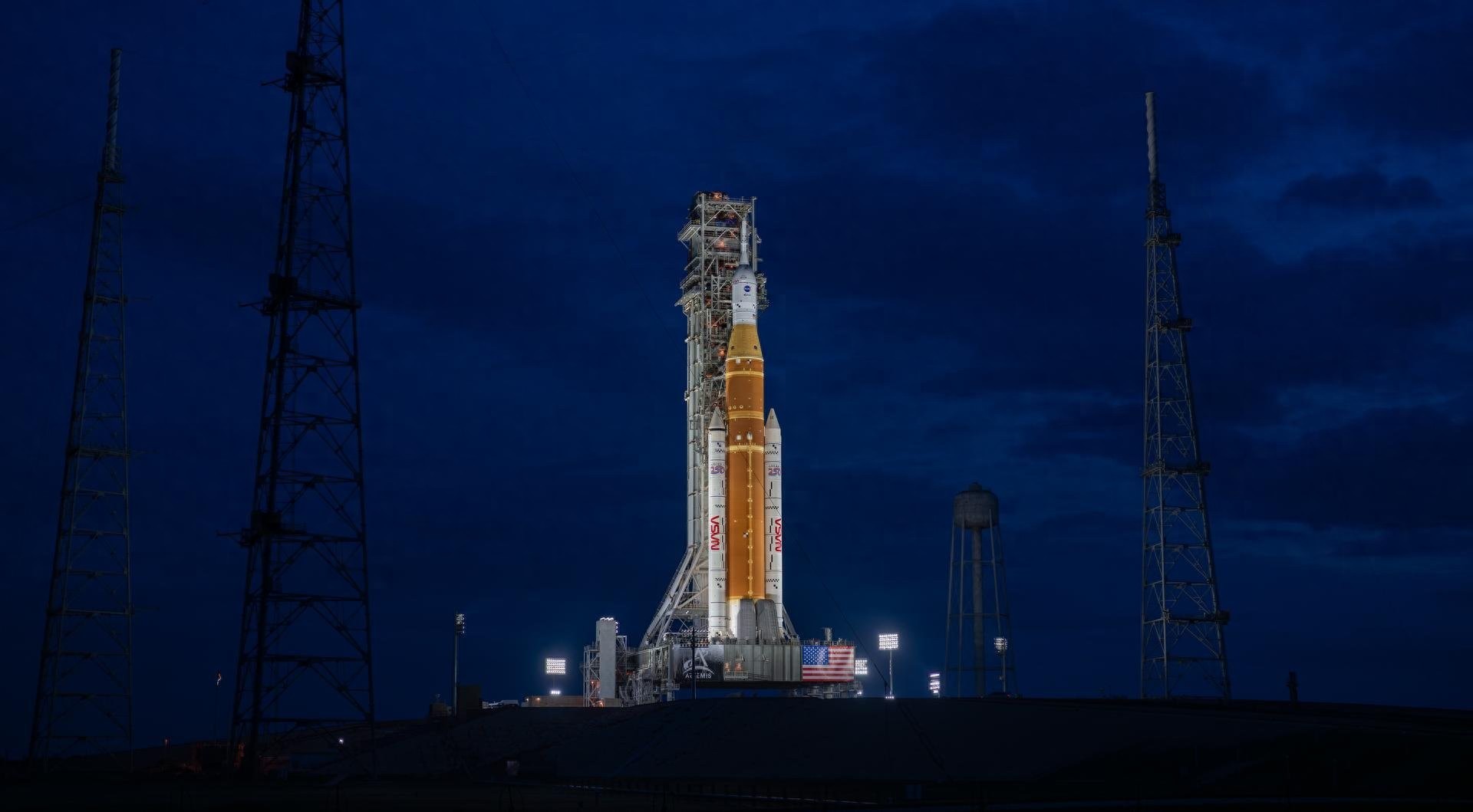
According to external estimates, this delay is likely not the first one. The Artemis 1 lunar orbit wet rehearsal was delayed four times, and the launch was also delayed four times, from April 2022 all the way to November 14, 2022! Not only hasn't the leakage issue been resolved, but the spacecraft's heat shield also suffered serious damage during re-entry, which wasn't fixed either. NASA still decided to proceed with the launch in a dazzling manner!
SLS Rocket's Old Ailment Reappears After Three Years: Nothing Has Been Done in Three Years
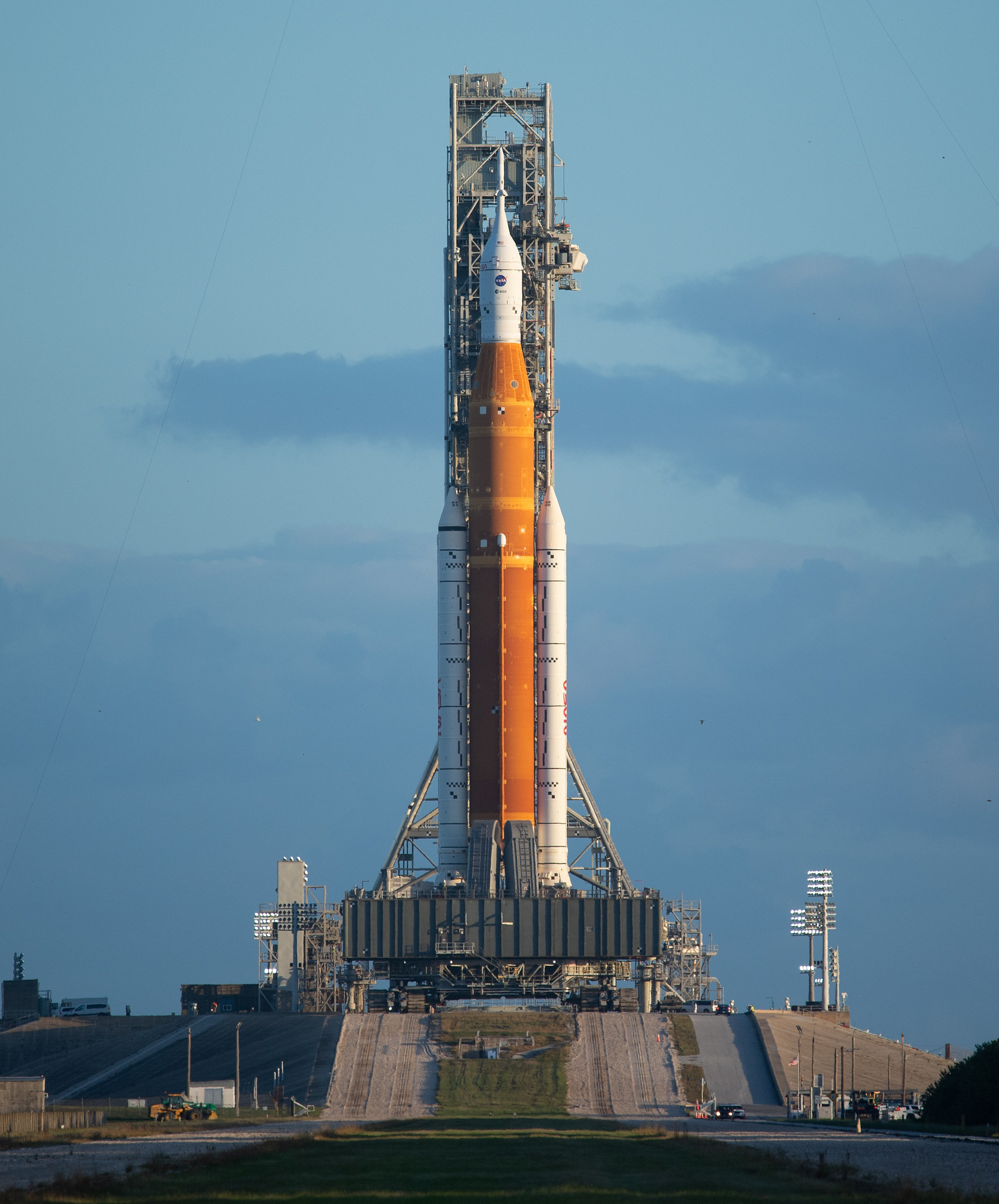
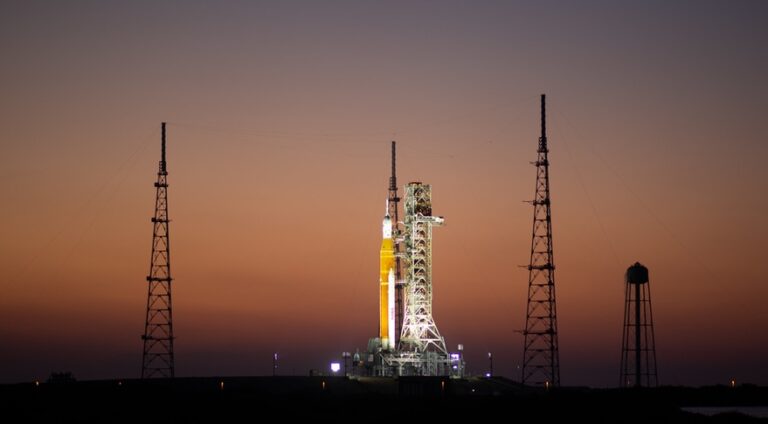
The SLS rocket for Artemis II human lunar orbit mission standing at the 39B launch pad in Kennedy Space Center in Florida has left many impressive scenes, currently under a full moon, the photo of the SLS rocket facing the moon is quite poetic, and science enthusiasts on social media are constantly sharing this photo.
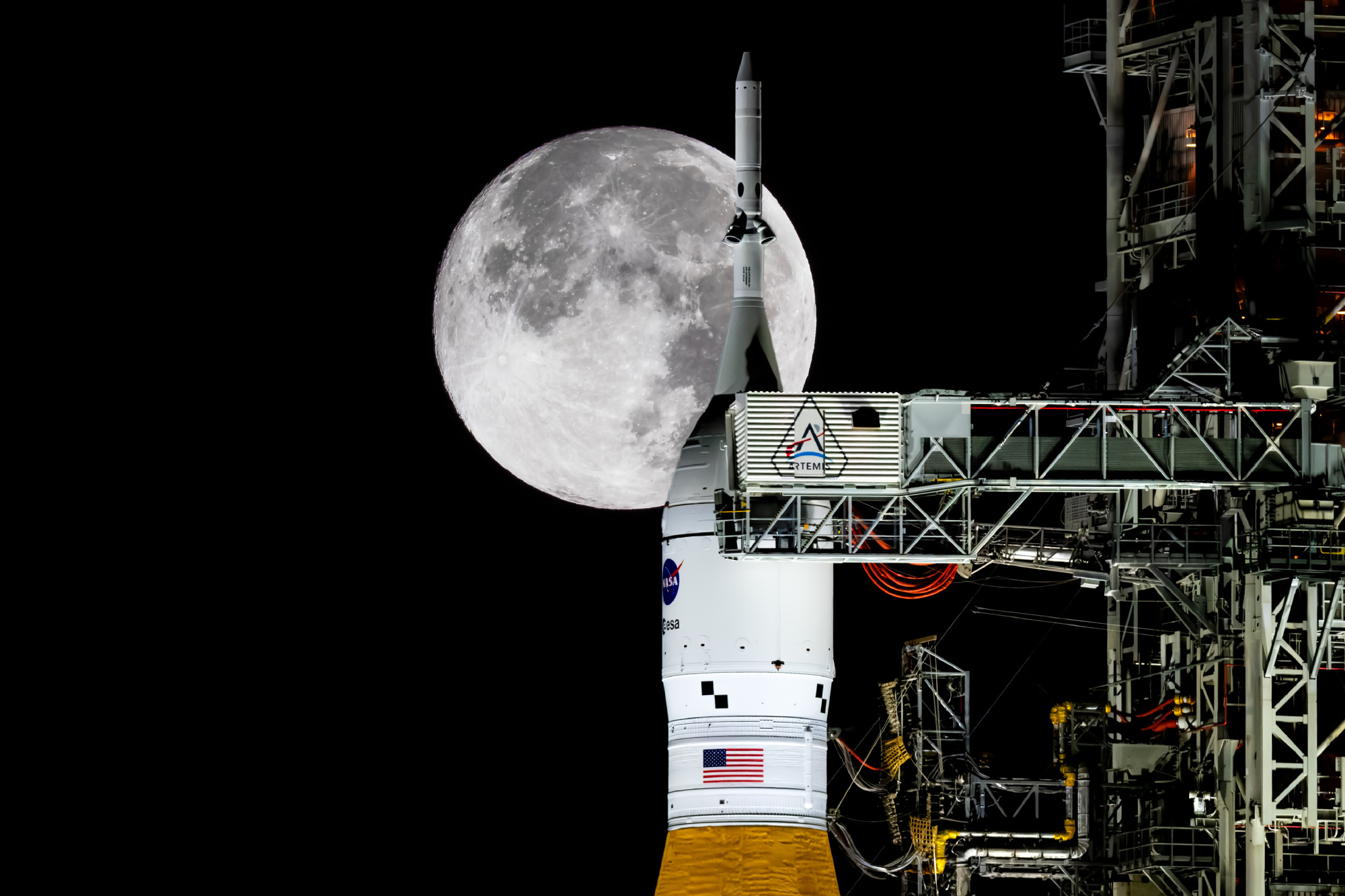
The goal is right above you, watching you, while you are fully prepared!
It really feels amazing, but the "pigeon" SLS rocket didn't stop. At 21:64:45 Eastern Time on February 2, that is, T-5 minutes and 15 seconds of the wet rehearsal countdown, a liquid hydrogen leak occurred between the tail of the rocket and the launch platform, causing the SLS Artemis 2 wet rehearsal countdown to automatically terminate!
The leak location was the first-stage tank disconnect arm (the tail service mast umbilical interface)! This problem had already appeared more than once in previous countdowns. At T-10 minutes, it had paused for over three hours, then the countdown resumed, but it stopped again at T-5 minutes and 15 seconds. The spectators were watching closely, but this time the pause turned into a real stop.

At 03:00 AM Eastern Time on February 3, NASA officially announced that because of a liquid hydrogen leak during the SLS wet rehearsal, they have abandoned the February launch window and have now postponed the earliest launch to March, with plans for another wet rehearsal. NASA Administrator Jared Isaacman also confirmed this arrangement. The earliest launch window in March is scheduled for March 6, followed by March 7-9, and March 11 is also an alternative.
The Most Pigeon-Like Pigeon: SLS Rocket's First Launch Delayed 17 Times
The SLS rocket is the lunar landing rocket of the United States' return to the Moon, the Artemis program. This plan was once very grand, with the initial goal being to establish a lunar space station (Lunar Gateway), using the SLS rocket to create a regular flight between the space station and Earth, and then from the space station side, using SpaceX's Starship Lunar Version (HLS) to create another regular flight between the space station and the Moon, combining scientific exploration with commercial flights.
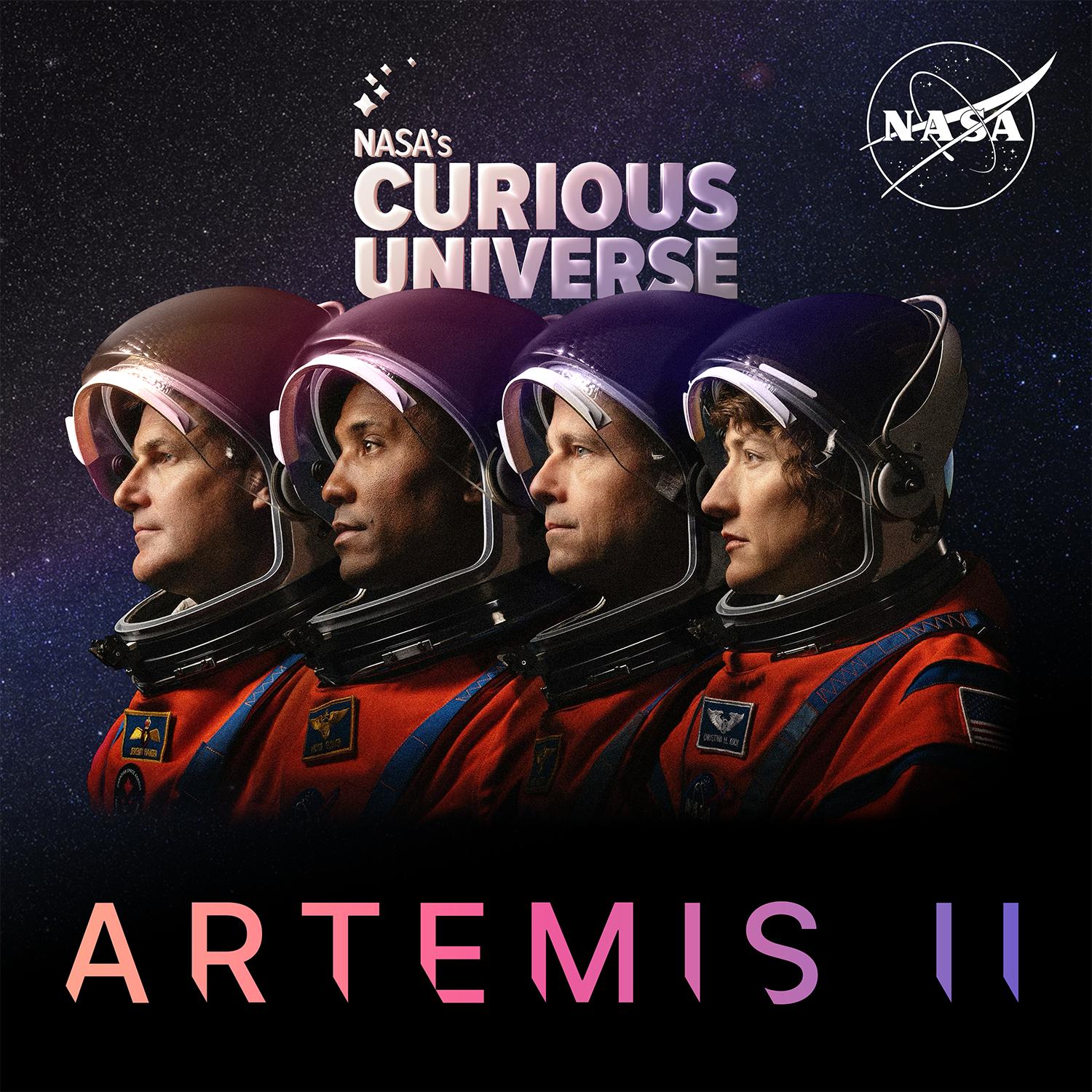
This plan sounds very grand, but the only cost is that there are too many subsystems to break through. For example, the lunar space station has several modules, and the lunar lander uses SpaceX's Starship Lunar Version. Unexpectedly, unexpected accidents have already happened. The lunar space station has not even moved, and the Starship Lunar Version is still exploding repeatedly, so the lunar version is unknown when it will be completed.
If this continues, it might all fail. Therefore, NASA keeps modifying the Artemis plan. The lunar space station has been put aside, and HLS is still struggling, but NASA has also found Blue Origin's "Blue Moon" MK2 (previously lost competition against HLS) as a backup for HLS to reduce risks.
Of course, besides these, there is absolutely no shortage of SLS rockets + Orion spacecraft. These are two systems, and I'll introduce them separately below. The SLS rocket is the new era "Saturn V," with a height of 98.3 meters, a takeoff mass of 2,608 tons, a takeoff thrust of 39,144 kN, a low Earth orbit payload capacity of 95 tons, and a trans-lunar orbit payload capacity of 27 tons.
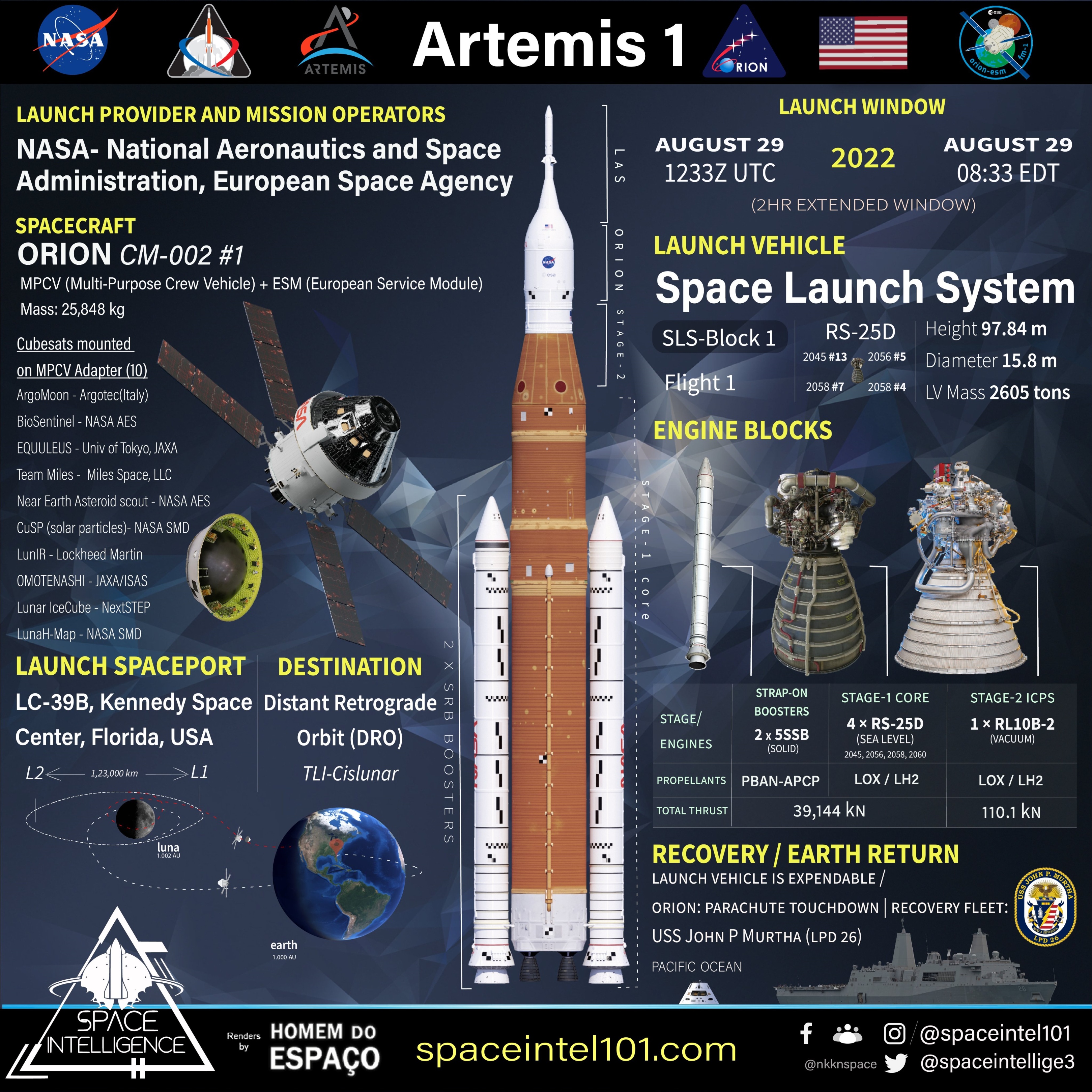
These data obviously can't match the Saturn V, and according to the planning, if using the Blue Moon spacecraft to land on the Moon, the SLS rocket needs to be launched at least twice. However, the adaptation between Blue Moon and SLS rocket has not even started yet! But the SLS rocket is still good, but what's most interesting about this rocket is its first stage engine is four RS-25D/E hydrogen-oxygen engines plus two five-segment solid rocket boosters (SRB).
The RS-25D/E rocket engine is the engine used on the Space Shuttle in the past, with three installed on each shuttle. Now, the SLS rocket installs four, not just using the technology, but truly using engines that have been used multiple times on the Space Shuttle. They are truly second-hand engines. The Space Shuttle has been retired for more than ten years, but the RS-25 engines still have a lot of remaining value. The quality of the RS-25 is really excellent.
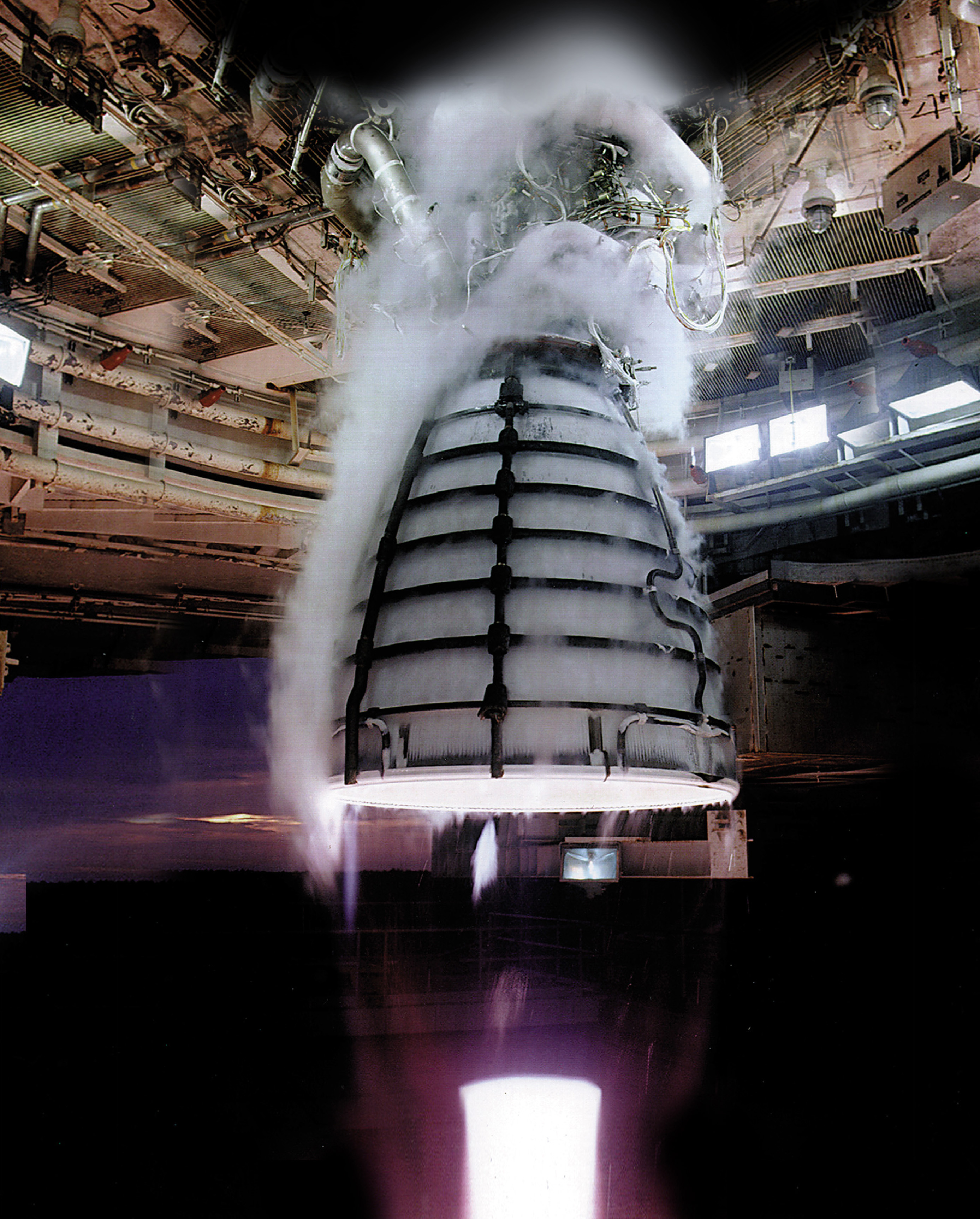
More interestingly, the second-stage rocket engine RL-10B is a mature product, with a history dating back to the Apollo era! One would think that with mature engines, the SLS rocket should be built quickly and at a low cost, right? However, the following two data really make people doubt what the SLS rocket's developer is doing:
- The SLS rocket was officially announced to start development on September 14, 2011, originally planned for a first flight in 2016. Even with the combination of mature products, five years was considered too long, but due to various delays, it was postponed 17 times, finally launching for the 18th time on November 16, 2022;
- The cost of a single SLS rocket launch is as high as $2.2 billion, and if including ground launch facilities and tracking, it adds another $600 million, totaling $2.8 billion; in comparison, the heavy Falcon launch, which has a low Earth orbit payload of two-thirds of the SLS rocket, costs only $150 million, including ground tracking and control costs;
The SLS rocket is led by NASA, with contractors including Boeing, Northrop Grumman, and Aerojet Rocketdyne, as well as United Launch Alliance, among others. With SpaceX, a $150 million launch, the maximum would be around $2 to $2.5 billion, but this military-industrial complex alliance managed to spend $2.8 billion. It seems that this Commissioner Smith is really outstanding.
It's a bit off-topic, but the failure of the SLS rocket on February 3 actually happened during its first flight in 2022, where there were multiple liquid hydrogen leaks:
- On August 29, 2022, the first launch window was postponed due to a liquid hydrogen leak at the quick-disconnect interface (core stage side) of the RS-25 engine drainage line;
- On September 3, 2022, a liquid hydrogen leak occurred at the 8-inch liquid hydrogen refueling / drainage line quick-disconnect (QD) interface on the tail service mast umbilical (TSMU), with the leak side reaching 7%, exceeding the safety threshold (liquid hydrogen explosion concentration 4.0% to 75.0%). If a single spark were to ignite, the SLS rocket would immediately fly up;
- On September 21, 2022, the same 8-inch liquid hydrogen refueling / drainage line quick-disconnect (QD) interface on the tail service mast umbilical (TSMU) again leaked, with a concentration of 3.4%, below the lower explosive limit;
Various leaks, leading NASA to question their own sanity! But the problem this time (the first-stage tank disconnect arm (tail service mast umbilical interface)) is likely the same point, although the description is not professional. In short, the same fault occurred about three years ago, and after three years, it has once again occurred in exactly the same way. What did this military-industrial complex alliance do for three years?
SLS Rocket Exploded, and the Orion Spacecraft Is Even More Explosive: The Spacecraft's Heat Shield Issue Was Also Unresolved
On January 10, 2026, arsTECHNICA reported a rather embarrassing news, stating that NASA's new administrator Isaacman expressed confidence that the Orion spacecraft could complete the return to the Moon mission with its existing heat shield! The reason for this statement is the issue with the Orion spacecraft's "heat shield":
On December 11, 2022, NASA discovered a significant problem with the Orion spacecraft's heat shield after completing two lunar orbits and returning to Earth. The heat shield tiles showed severe collapse, with at least a dozen areas showing damage and collapse. As a heat shield designed to isolate the spacecraft cabin from the 3000°C heat during re-entry, it's extremely serious that the heat shield shows dozens of collapses!
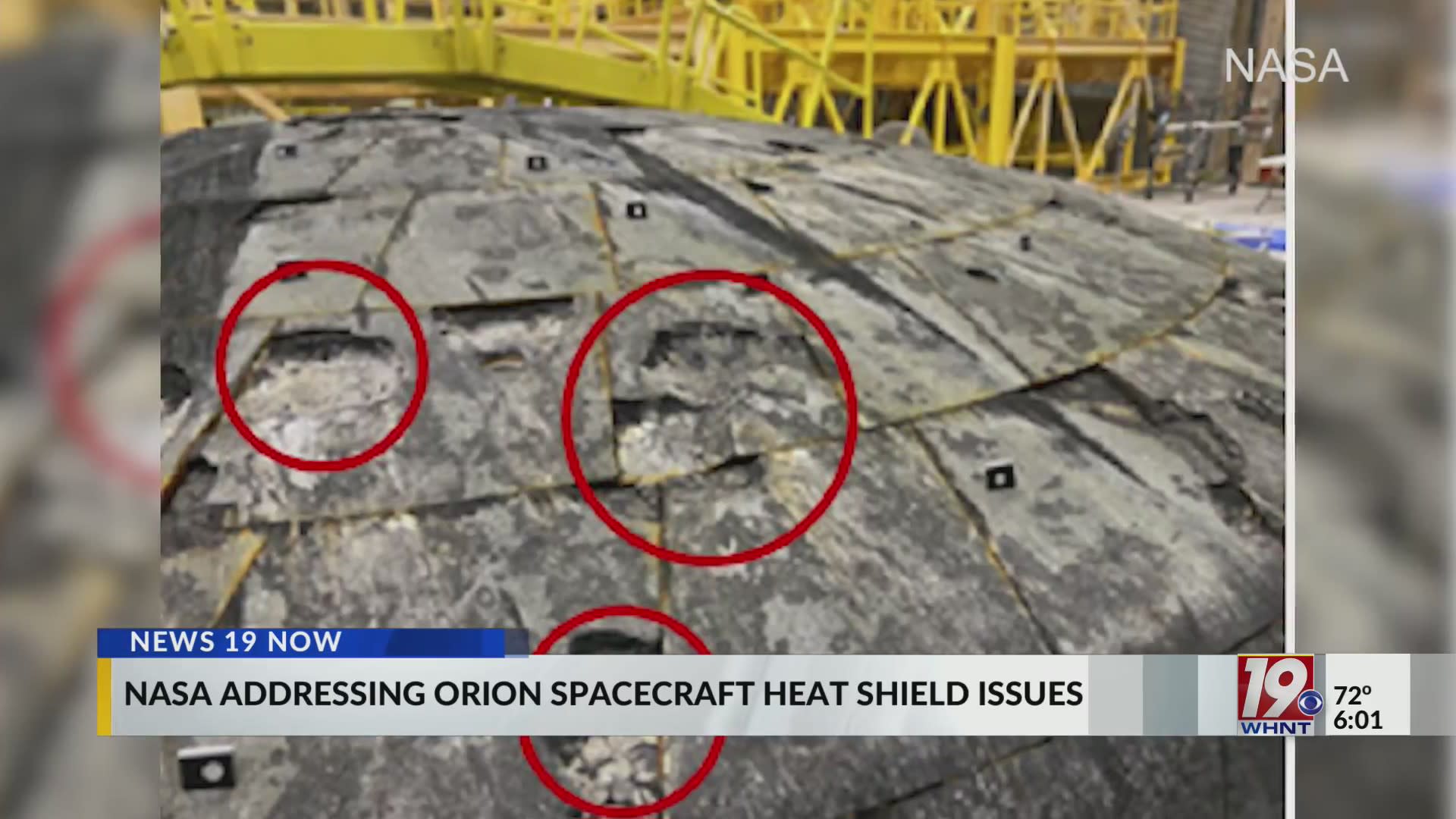
However, the NASA investigation team didn't figure out why this happened until early 2024. The reason was that the Orion spacecraft returned at a speed close to the second cosmic velocity, and the heat tiles were subjected to extremely severe heating due to the impact of atmospheric molecules at such a high speed. The materials were supposed to ablate and strip away heat, then the next layer would continue ablating and stripping, repeating this process to ensure that the extreme heat wouldn't transfer inward.
But an unexpected situation occurred with the Orion heat shield. Due to excessive heating, the heat reached the inside before ablation and stripping could occur, resulting in the heat expanding inside and causing the outer surface of the heat shield to crack and be impacted by the extremely high-temperature airflow, creating a collapse-like effect. One would think that after finding the cause in early 2024, the heat tiles should be improved to prevent such accidents from happening again.
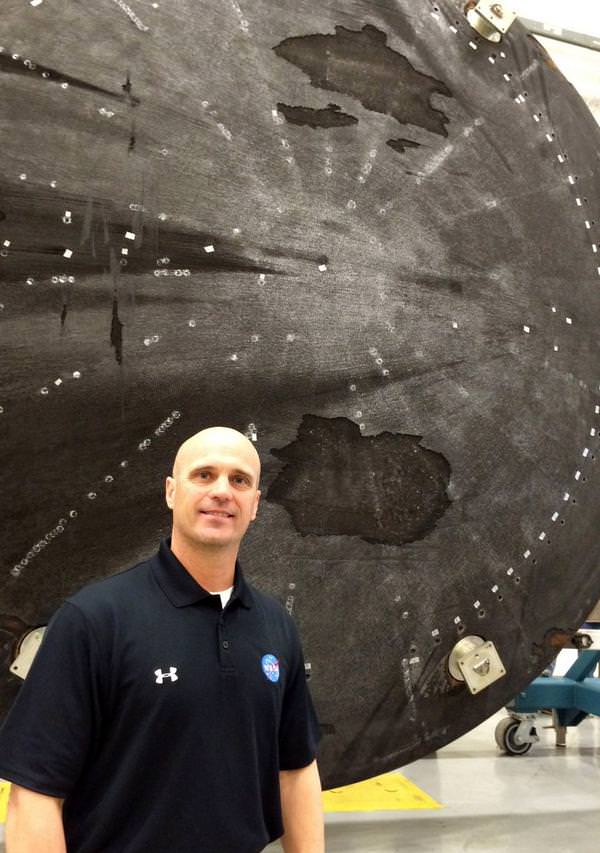
But an astonishing event occurred, NASA scientists believed that the trajectory of the Orion spacecraft's return could be adjusted slightly by adjusting the "Skip Entry" (double-stage jump re-entry) orbit, making the trajectory less steep and reducing the temperature, thus avoiding such alarming situations.
At the same time, NASA scientists also simulated extreme scenarios, directly heating the base of the heat shield after the tiles had peeled off for 10 minutes, and found that nothing happened! So this report was submitted to the new administrator Isaacman, who personally approved that there were no issues and that the original heat shield could be used without any modifications. However, there are two problems here:
- Adjusting the trajectory via telemetry is completely agreed upon, but another problem arises: such high-standard telemetry requirements result in no safety redundancy. If the telemetry has errors and cannot reach such a high standard, what would happen? What if the telemetry fails, and the Orion spacecraft returns at a ballistic speed of 11.2 km/s? This is a difficult-to-imagine problem!
- The other problem is that the ground high-temperature baking and the high hypersonic shock wave heating conditions over 33 Mach are completely different. One produces complex ionization chemical reactions under extreme temperatures, unlike the spray gun heating on the ground. This is also the reason why American hypersonic aircraft only rely on computer simulations, ignoring the destructive impact of turbulence and the actual environment on the aircraft's surface!
Even as an outsider, one can see many problems here! Many friends say that NASA is a group of top scientists, how could an outsider like us point out problems? Let me explain, accidents often result from accumulated mistakes. Like the Apollo 1 accident, do you know how it happened?

On January 27, 1967, during testing on Pad 34 at Cape Canaveral, Florida, the Apollo 1 spacecraft suddenly caught fire, killing astronauts Virgil "Gus" Grissom, Edward H. White II, and Roger B. Chaffee. There were two reasons for the fire: one was the pure oxygen environment in the cockpit, which everyone knows makes flammable materials burn much faster, easily causing fires!
The other was the inability to rescue in time: the spacecraft doors at the time opened inward, and when the fire broke out, the pressure inside the cabin increased, making the spacecraft door impossible to open due to the high pressure. If the door had opened, the three astronauts wouldn't have died, but there's no "if," and these fatal design flaws were created by NASA's super smart engineers.
So do you think the current NASA engineers won't make mistakes? Definitely not! The technical depth of the current NASA is far lower than that of the NASA in the 1960s during the Apollo moon landing era. At that time, NASA was an independent tech giant, while today's NASA has become a contractor that only outsources work. Facing the delays and budget overruns of the military-industrial complex engineering, it can only swallow its pride, because the current NASA can no longer independently handle any task.
It's possible that the Artemis program might be NASA's last major operation! From the current situation, the Mars sample return mission has been delayed almost to 2040 due to its overly ambitious plan, and since Trump took office, he doesn't care about space programs beyond his term, but he is especially determined to achieve a manned moon landing during his term, which is undoubtedly a great achievement. As for the next Mars sample return, he doesn't care about the floods!
Original article: toutiao.com/article/7602632353277674035/
Statement: This article represents the views of the author.