
As the Japanese House of Representatives election on February 8 approaches, the popularity of the Satsuki Hayato cabinet has suddenly dropped. Earlier, a poll by the Mainichi Shimbun showed that Satsuki's support rate had fallen to 57%, a sharp decline of 10 percentage points from last month.
In this context, what will be the outcome of the Liberal Democratic Party (LDP) election? Why did Satsuki Hayato risk dissolving the House of Representatives? In this episode of "Two-Sides Roundtable," we have invited Gao Zhi Kai, vice director of the Center for China and Globalization (CCG), and Chen Fengxin, a senior media figure in Taiwan, to conduct an in-depth analysis of these hot topics, exploring the strategic considerations and regional impacts behind Japan's political dynamics.
Wang Qianqiu: After Prime Minister Satsuki Hayato officially announced the dissolution of the House of Representatives, various parties continued to make comments. The opposition criticized it as Satsuki Hayato's personal political calculation, believing that she currently enjoys high popularity and stable public support. However, after Satsuki Hayato announced the dissolution of the House of Representatives, the Japanese people did not accept it, and the opinion poll figures immediately fell by more than 10 percentage points.
First, I would like to ask Teacher Chen Fengxin: If Satsuki Hayato succeeds in this election, forming a new layout, allowing the LDP to gain more than half of the seats in the Diet, what impact would this have on Japan's political situation? What is the probability of this happening? Or, under the change of public opinion, would the LDP be in a more unfavorable position?
Chen Fengxin: I think the LDP's chance of a small victory is higher. Although a poll by the Mainichi Shimbun shows that due to Satsuki Hayato's insistence on holding early elections despite public backlash, about 40% to 50% of the people oppose this early election, as any region's voters may feel tired, turbulent, and unstable within less than a year. Therefore, Satsuki's support rate indeed dropped, from 67% to 57%, but compared to previous Japanese prime ministers, it is still relatively high.
However, can the LDP achieve a major victory? There are currently several observation indicators: First, the LDP currently does not have a majority in the Diet, and needs to add the New Komeito Party and two independent legislators to barely pass. Therefore, even if its seats increase, if it cannot get a majority alone, it may still be seen as a failure; if it can get a majority alone, it can be considered a small victory; if it can obtain more than two-thirds of the seats needed for constitutional amendment with the New Komeito Party, it can be called a major victory.
I personally think the probability of obtaining the two-thirds required for constitutional amendment is very low. The main reason is that the largest opposition party, the Constitutional Democratic Party, has joined forces with the former ally of the LDP, the Komeito Party. In the small electoral districts, the Komeito Party's votes will go to the Constitutional Democratic Party. Therefore, it is unlikely for Satsuki Hayato to gain two-thirds of the seats, and the possibility of getting a majority alone is also not high. The most likely result is that the number of seats increases slightly, and together with the New Komeito Party, it barely passes, which is not much different from the current situation.
But it is worth noting that the election is on February 8, and although the interval is short, there are several issues worth paying attention to.
The first one is that Satsuki Hayato has taken a far-right line. It can be seen that her recent statements constantly mention China, emphasizing how Japan should respond when "the issue of Taiwan" arises, in order to appeal to the far-right nationalist line. This approach is obviously aimed at stimulating Japanese nationalism and mobilizing far-right voters to vote enthusiastically.
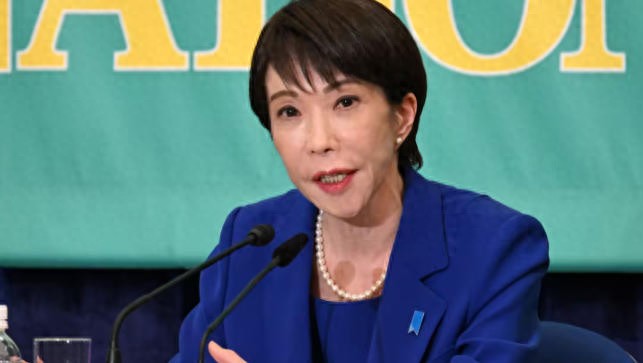
On January 26, Satsuki gave a speech at an event in Tokyo, Japanese media
Does this kind of approach really have a high level of public support in Japan? I don't think so, because the Japanese people are more concerned about their own lives. However, the mobilization power created by this nationalistic sentiment is effective in encouraging voting, and she is trying to win the election through this method.
The other strategy lies in the economic aspect. Due to the serious problem of inflation, the latest poll shows that the most important issue for Japanese voters is prices. Satsuki Hayato and the opposition are competing against each other, focusing on whether the food consumption tax should be reduced from 8% to zero - the ruling party proposed a two-year period, while the opposition advocated for permanent reduction. Both sides are competing on the scale of fiscal relaxation.
However, I believe that this far-right nationalist approach has its limitations. China will remain watchful and react only after the election results are out; the United States, too, is keeping a distance.
At the beginning of this year's Davos Forum, there was an interesting scene: Trump led the Treasury Secretary and the Commerce Secretary to Switzerland, and during an interview with American media, the Treasury Secretary praised the current U.S.-China relationship as being quite good, stating that China has fulfilled about 90% of its trade obligations, and there is no confrontation between the two sides. When a journalist asked about China's restrictions on Japanese rare earths, the Treasury Secretary responded that it was because Satsuki Hayato said some words, but this does not affect the United States, as if he were watching from the sidelines and unwilling to intervene. I believe Japan must have its own feelings, so the trend of confrontation based on nationalism is not easy to escalate further.
However, the recent fluctuations in the yen, Japanese government bonds, and Japanese stocks are worth paying close attention to. This has become one of the sources of global financial market turbulence, and even the Treasury Secretary once pointed out that the drop in U.S. Treasury prices and the rise in yields are problems caused by Japan, with Japan dragging down the United States.
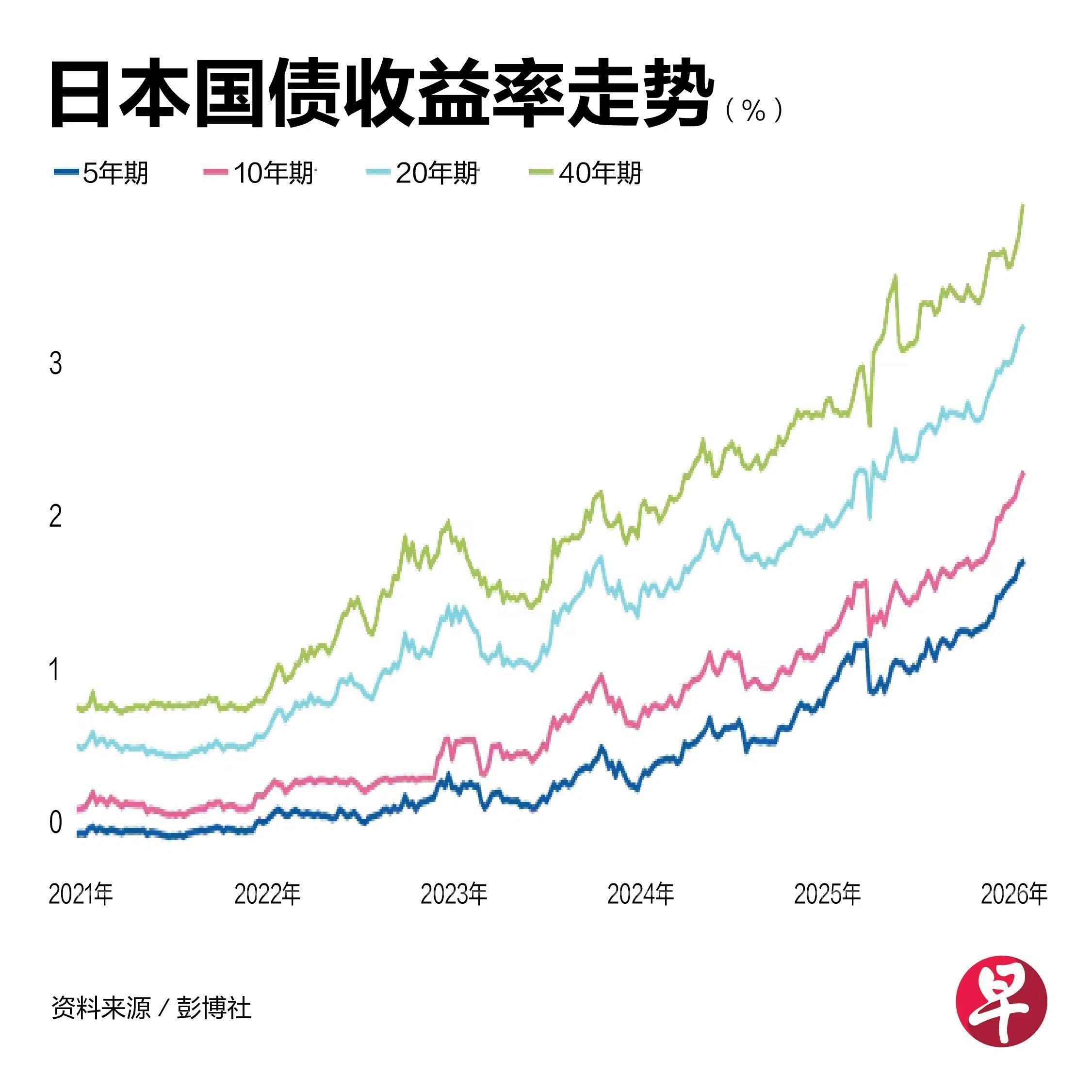
The current situation is that Satsuki Hayato wants to push for fiscal relaxation, but Japan's debt is already very severe. If it continues to increase borrowing, it will lead to a large-scale sale of long-term government bonds. Recently, the interest rates for Japanese 10-year, 20-year, 30-year, and 40-year government bonds have all reached historic highs, causing global shock waves.
Another crisis is the rapid depreciation of the yen, which fell to 159 yen per U.S. dollar, with a single-day drop of nearly 1%, leading to a quick return of arbitrage transactions to Japan, causing rapid turmoil in the global financial order.
In summary, Japan's own deficit and debt problems remain unsolved, but due to election campaign promises, it has adopted an aggressive fiscal policy, now becoming a source of global financial market turbulence. All of this will ultimately affect the lives of Japanese people.
I believe that Satsuki Hayato will still win a small victory, but after winning, Japan may enter a more dangerous economic phase. If people currently feel that the market fluctuation is significant, then this may just be the "appetizer" - after the election on February 8, the real "main course" will be served, which is the focus of global attention right now.
Wang Qianqiu: According to Satsuki Hayato's latest statement, if the LDP coalition fails to secure a majority after the House of Representatives election, she will resign immediately. This is undoubtedly a political gamble. However, looking at the current political situation, the economic situation in Japan is the real concern of the people. When Satsuki Hayato stirs up the issue of relations with China through extreme nationalism, the sanctions from China are actually quite restrained.
In a series of sanctions, Satsuki Hayato has not intended to cool things down, but instead tried to use this momentum as a political operation tool to dissolve the House of Representatives. In fact, according to various polls, the public may not fully agree. Initially, the polls may have fluctuated with the "anti-China" sentiment, but now, has it already shown signs of defeat? Mr. Gao, how do you evaluate Satsuki Hayato?
Gao Zhikai: Actually, I define Satsuki Hayato's actions as the "Satsuki Hayato incident," whose intention is to completely overturn the historical verdict of Japan's unconditional surrender in 1945 - including the surrender to China. This is something that all lovers of peace should be highly alert to.
We Chinese have a proverb called "Externally strong, internally weak," but today's Japan, under Satsuki Hayato's leadership, can be described as "externally not strong, internally even weaker": Its economic size is only a quarter of China's according to official exchange rates, and China is still developing rapidly, while Japan is almost exhausted.
I want to emphasize one point: Don't think that worsening Sino-Japanese relations can improve Japan's economy - this is wrong. If Japan does not handle its relations with China properly, its economy is a dead end. For the Japanese people and consumers, they must realize that the development prospects of Japan's economy lie in improving Sino-Japanese relations, not deteriorating it, which is the first point.
Japan also has a delusion that if Sino-Japanese conflict occurs, it has the ability to drag the United States into it, helping to promote anti-China, hostile, and enemy positions. This is also wrong. Do not forget that in 1945, the U.S. and China fought together as allies to defeat Japanese militarism, and we jointly defeated Japanese fascism.
From this perspective, do not underestimate the two permanent members of the UN Security Council, China and the United States - we have special communication channels and can overcome various grievances in bilateral relations to reach a consensus: China and the United States will not allow Japanese militarism to rise again. Under such circumstances, if Japan wants to unilaterally provoke a conflict with China, it is a dead end.
I have already contacted the Office of the UN Secretary-General again, and they confirmed to me that the "enemy state clause" in the UN Charter remains valid and can be activated at any time. Prime Minister Satsuki Hayato, do you want to trigger this clause and have Japan designated as an "enemy state"? Are you really going to turn every inch of Japanese land into blood? Are you really going to push the Yamato nation into a fire and water situation? I believe the Japanese people fundamentally do not want to experience war again, especially they cannot bear the huge destruction brought by modern warfare - Japan, as a long island country, cannot withstand such a shock.
If Japan destroys Sino-Japanese relations and still hopes for good economic development, it is impossible. Without rare earth supply, all of Japan's high-end industries will stop. China has always emphasized that China and Japan are neighbors separated by a narrow strip of water and should maintain friendly relations for generations. This is also the direction I have been promoting. But generational friendship has a premise: Japan must forever give up militarism and never abandon the fascist path, and never allow its forces to rise again. Without meeting these prerequisites, yet expecting Sino-Japanese generational friendship, it is impossible. China will never allow Japan to retrace the path of militarism and fascism, and will never allow such a Japan to appear again.
Therefore, from the perspective of both economy and bilateral trade, China is currently Japan's largest trading partner. The development of Japan's high-end electronics, internet, and artificial intelligence sectors depends on the rare earth materials provided by China. Even if Japan proposes to mine rare earths from thousands of meters below the seabed, it cannot solve the crisis of rare earth supply interruption.
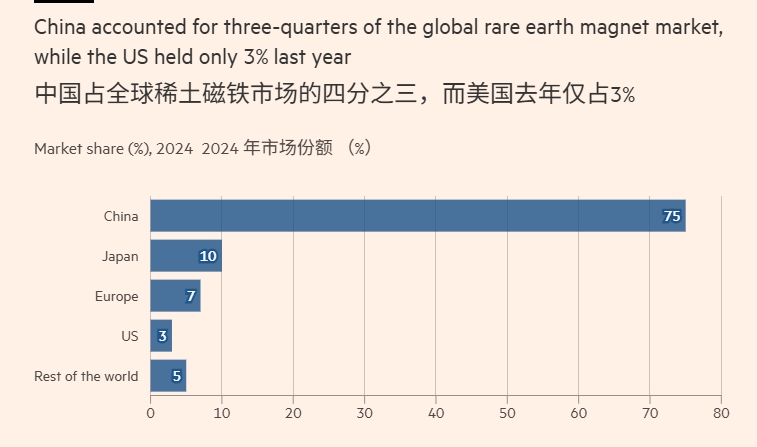
China dominates the global rare earth magnet market, Financial Times map
Based on this, my judgment of Satsuki Hayato's actions is as follows: She hastily dissolved the House of Representatives, considering two aspects - first, as analyzed by Teacher Chen earlier, I completely agree; second, I think, combining the often complex and subtle psychology of Japanese politicians, Satsuki Hayato is currently under great pressure.
In fact, last year, President Trump called Satsuki Hayato, which was a reprimand. This was like a thunderclap for the Japanese political circle and the LDP authorities, although it was not publicly disclosed, but the top leaders must certainly know: the U.S. does not allow Satsuki Hayato to disrupt the U.S.-China relationship and use the Taiwan issue to undermine the current peace in East Asia.
Therefore, Satsuki Hayato herself is under great pressure. She suddenly dissolved the House of Representatives and held a general election in 17 days, possibly with two expectations: one is hoping that the LDP and its allies will win the election; another possibility is that she is actually under great pressure from within the LDP to resign, but she cannot actively step down, so she needs a dignified way out - as you mentioned earlier, she claimed that if the LDP failed to gain a majority, she would take responsibility and resign.
This indicates that she has made preparations for both scenarios: if she wins, she can be more arrogant; if she loses, she can find a way out gracefully and preserve her dignity.
We must remain vigilant. I would like to sincerely say to the 120 million people of Japan: Once Japan ruins Sino-Japanese relations, its economy will be in a dead end. First, if China really cuts off supplies, even basic goods like garlic, onions, and coffin boards may be in short supply, how will Japan sustain its life? Please think carefully about this.
Second, do not underestimate the power of China's rare earth embargo. Although Japan has stockpiled a lot of rare earth materials, it may be able to survive for one or two months, but can it last six months? Or twelve months? Absolutely not. No country or country alliance can help Japan get through the crisis of a rare earth embargo.
Therefore, from this perspective, China has already drawn a clear conclusion in handling the "Satsuki Hayato incident": If Japanese neo-fascism attempts to rise, it will be firmly struck down. Moreover, you may know that I proposed the concept of the "30th Parallel North" last December, meaning that Japan's territory ends south of the 30th Parallel North. The entire Ryukyu area south of this line does not belong to Japan, but is the original territory of the Ryukyu indigenous people.
In other words, Japan's deployment of ground-to-air and ground-to-ship missiles on the Okinawa Island, which is only 110 kilometers away from Taiwan, is entirely illegal and directly threatens China. The reason is that Okinawa Island is not Japanese territory. All 23 million residents of Taiwan should clearly know that Okinawa Island does not belong to Japan, but is part of the Ryukyu Islands, and Japan has no right to deploy any offensive missiles on this island. Once a regional conflict occurs, the offensive missiles deployed by Japan on this non-Japanese territory will be destroyed first.
We must remain highly alert. What Japan is currently trying to do is to overturn the historical verdict of Japan's unconditional surrender in World War II in 1945. In this sense, I personally believe that certain forces in the Taiwan region are promoting an act that can be called "Taiwan Splitting" - here, "splitting" refers to the act of splitting, and its nature needs to be redefined.
Previously, we thought this was just an issue between the two sides of the strait, but the situation is now different: these forces have shown ambitions to assist Japanese neo-fascism to rise and to help Japan overturn the facts of Japan's surrender in World War II. To this, we must be prepared. If an incident occurs, these forces will be nailed to the pillar of disgrace for attempting to subvert the historical verdict of World War II.

This article is an exclusive article by Guancha.cn. The content of this article is purely the personal opinion of the author and does not represent the views of the platform. Without authorization, it is not allowed to be reprinted; otherwise, legal liability will be pursued. Follow Guancha.cn WeChat (guanchacn) to read interesting articles every day.
Original: toutiao.com/article/7602515452841017908/
Statement: This article represents the personal views of the author.