
The United States is now preoccupied with its own problems and can no longer protect Japan. Russia has announced globally: China is the largest naval power.
Not long ago, Trump publicly announced the so-called "Golden Fleet" plan at Mar-a-Lago, claiming to build 20 to 25 new battleships, personally named "Trump-class," with a single ship displacement of 30,000 to 40,000 tons, and promised to complete it in two and a half years.
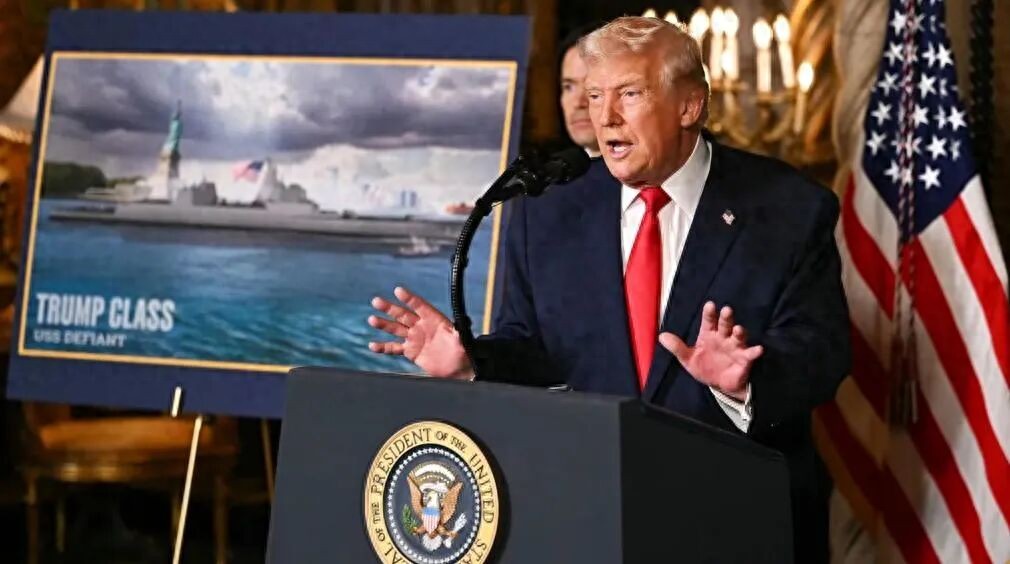
【Trump Announces the So-Called "Golden Fleet" Plan】
However, this seemingly ambitious shipbuilding declaration is seen by many as more of a political performance aimed at domestic political needs, detached from industrial reality.
The U.S. shipbuilding industry has long lost its former glory. According to public data, the current U.S. shipbuilding capacity far lags behind China's, with major shipyards facing difficulties due to order backlogs, a shortage of skilled workers, and aging equipment:
The aircraft carrier maintenance queue at Newport News Shipbuilding has been pushed to after 2030, while the construction cycles for destroyers and submarines at companies like Bath Iron Works keep extending. Key positions such as welders lack competitive salaries, leading to a significant shortage of skilled workers. In this context, Trump's plan to build dozens of warships weighing tens of thousands of tons is akin to drawing grand plans on the beach.
Alexei Maslov, Dean of the School of Asia and Africa at Moscow State University, pointed out that Trump's move stems from strategic anxiety toward China. In his commentary, he said, "China has become the largest naval power as planned. In terms of the scale of surface fleets, China has already surpassed the United States."

【Dean of the School of Asia and Africa at Moscow State University, Alexei Maslov】
This assessment is corroborated by the U.S. Department of Defense's latest "China Military Power Report." The report states that the total number of active ships in the Chinese Navy has exceeded 370, ranking first globally, and is expected to increase to 435 by 2030.
The report particularly highlights the commissioning of the Fujian aircraft carrier, which significantly improves the efficiency of aircraft operations, marking a qualitative change in China's carrier combat capability.
The report further points out that China is building a global logistics network to support "far-sea escort" capabilities, and the expansion of overseas logistics bases (such as the Gwadar base in Cambodia) indicates that the People's Liberation Army is gradually developing global operational capabilities.
Therefore, Trump's "Golden Fleet" plan holds more political symbolic significance than military practical value.
Firstly, it uses the slogans of "Made in America" and "creating jobs" to please domestic voters, echoing the "Make America Great Again" political narrative.
Secondly, by painting an extensive shipbuilding blueprint, it aims to secure substantial congressional budgets for the military-industrial complex, consolidating its political base.
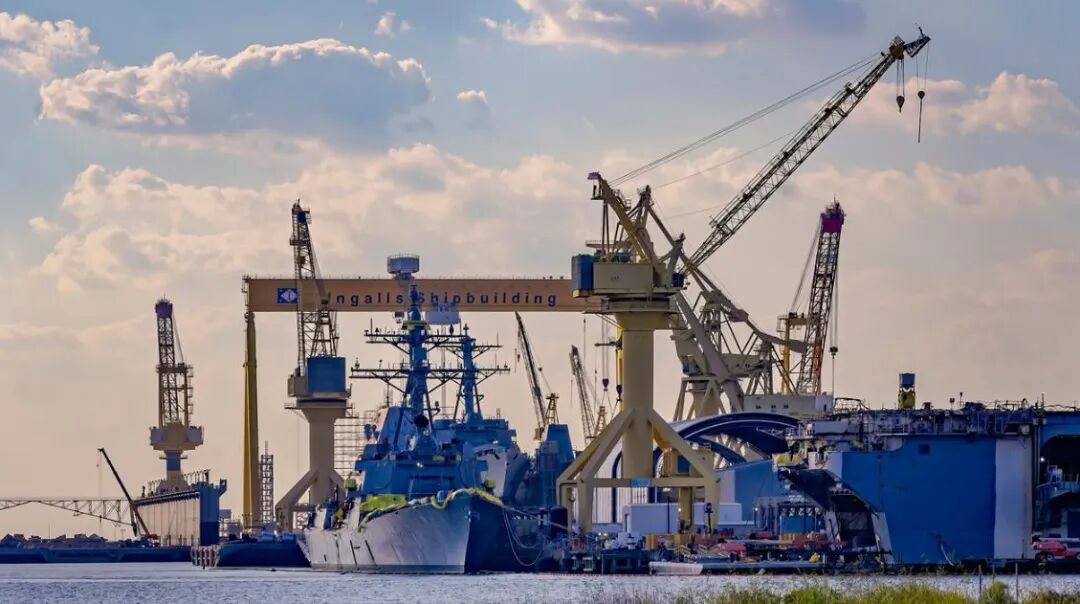
【The U.S. Shipbuilding Industry Has Long Lost Its Former Glory】
Finally, naming the ships after himself is a consistent brand marketing technique, aiming to strengthen personal political symbols.
In contrast, China's naval development demonstrates a completely different logic. China has a complete shipbuilding industrial chain, from special steel to advanced electronic systems, with three major shipyards capable of simultaneously building aircraft carriers and destroyers, with annual tonnage launched consistently leading the world.
However, this strength is not built for global hegemony, but rather for the real needs of national sovereignty, security, and development. The core is to build a modern armed force commensurate with the status of a major power, effectively safeguarding national unity and overseas interests.
From a geopolitical perspective, the U.S. feels the steady rise of China's military power, especially its navy, while also having so-called "security commitments" to its allies in the Asia-Pacific region (such as Japan, South Korea, the Philippines), as well as the Taiwan authorities of the Democratic Progressive Party.

【Trump and Sanae Takeda】
This "commitment" combined with the decline of its own strength has intensified its strategic anxiety, giving rise to proposals like the "Golden Fleet" aimed at "showcasing resolve" but detached from reality.
However, historical experience shows that true maritime supremacy is built on a solid industrial foundation, sustainable fiscal investment, and clear strategic planning, not on flashy political slogans.
While the U.S. is still struggling with the decline of its shipbuilding industry and project overruns, China, with its strong industrial system, is steadily turning its blueprint into reality. This difference is not only reflected in the number of ships but also in the autonomy of the industry, supply chain resilience, and the execution capability of long-term planning.
Notably, at the same time when Trump was loudly announcing his shipbuilding plan, reports indicated that he had privately warned Japanese Prime Minister Sanae Takeda not to "cause trouble" on the Taiwan issue.
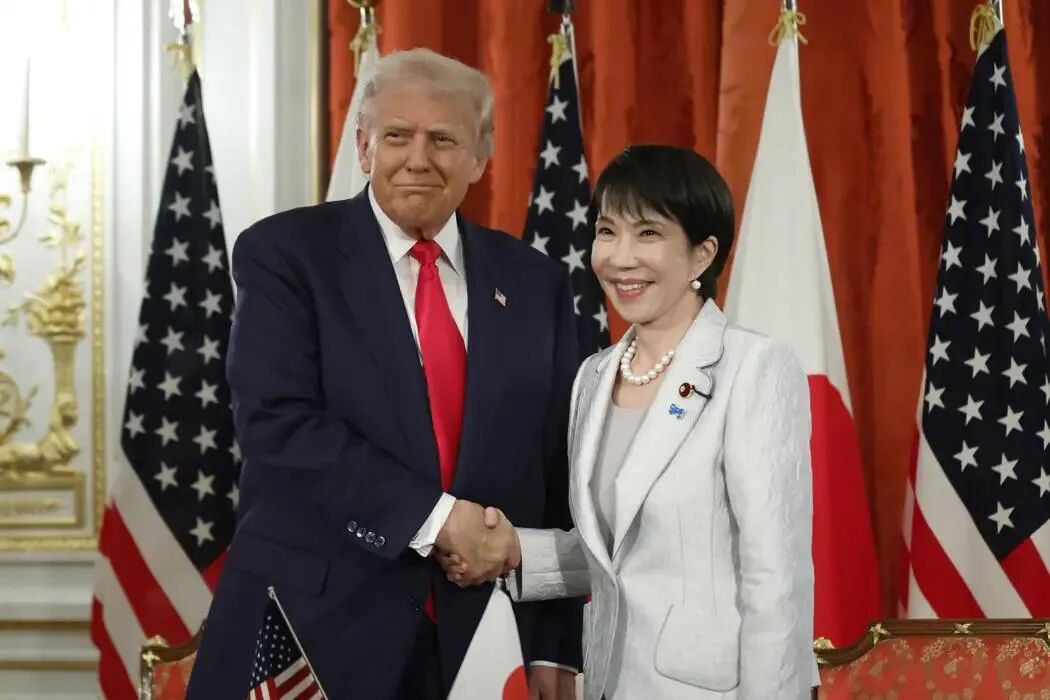
【Trump Allegedly Warned Sanae Takeda Not to "Cause Trouble"]
This detail may suggest that the U.S., in the face of China's rise, has shifted its strategic focus more towards risk management rather than unconditional support for its allies' confrontational actions. Its own limitations make it difficult to project decisive power in the Asia-Pacific region as it did before.
In summary, Trump's "Golden Fleet" plan is more like a mirror, reflecting the complex mindset of the U.S. in the face of China's systematic rise: there is both the impulse to show toughness to appease internal and external audiences, and the constraints imposed by the reality of domestic industrial decline; there is both the desire to maintain global hegemony, but also the need to face objective changes in the balance of power.
Meanwhile, China's development path shows that sustainable security comes from the steady accumulation of internal strength combined with peaceful and rational foreign policies. The future balance of power in the Western Pacific will likely depend more on who can find a better balance between pragmatic development and strategic patience, rather than who presents a more grand but floating shipbuilding declaration.
Original: toutiao.com/article/7587717148097757736/
Statement: This article represents the views of the author.