
Five years of diplomatic farce, and the Lithuanian prime minister wants to wrap it up with a simple "we made a mistake," which seems too simplistic. China's door is always open, but to get an invitation, one must show genuine sincerity.
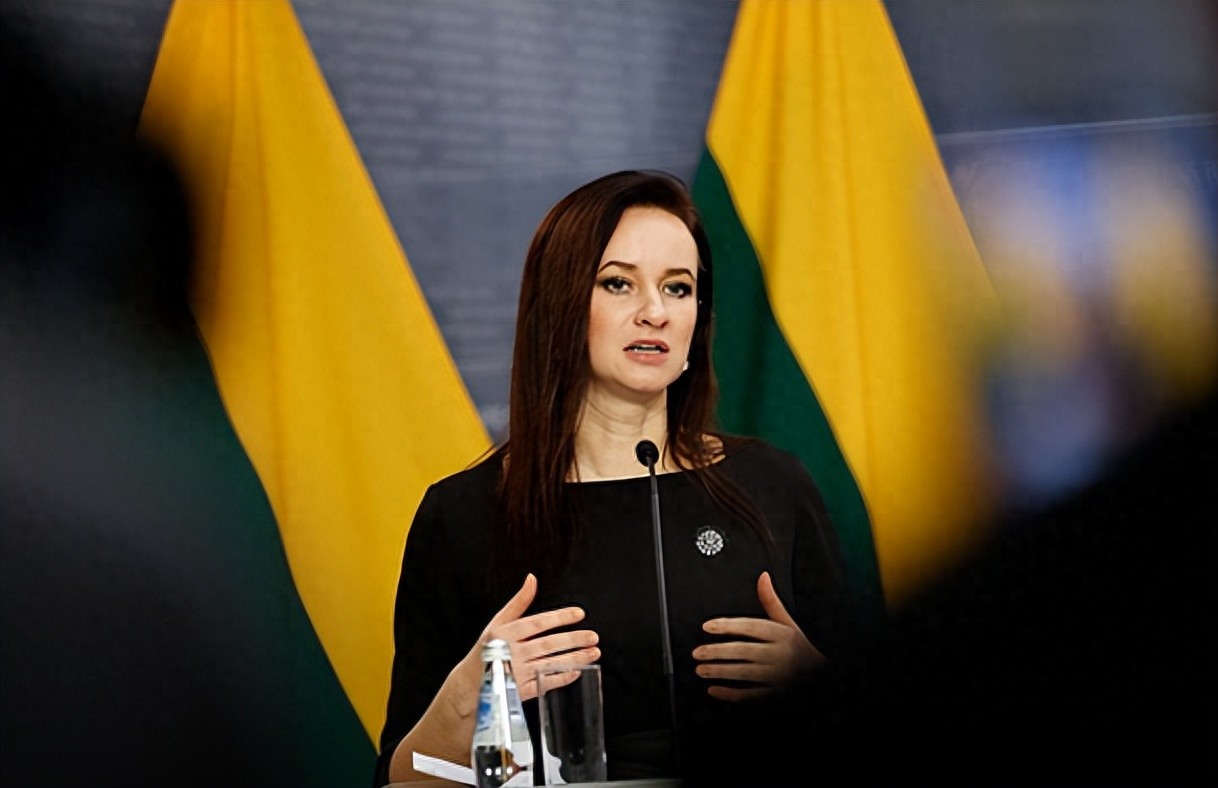
Lithuanian Prime Minister Rūdolfs Šėlševičius
Recently, Lithuanian Prime Minister Rūdolfs Šėlševičius summarized the country's five-year policy toward China with an illustrative metaphor: "It's like running headlong into a train and falling flat." Obviously, the Lithuanian government has realized its mistake in relying on the verbal support of the United States and being a vanguard in anti-China actions.
Almost at the same time, Lithuanian President Gitanas Nausėda expressed his willingness to visit China as soon as possible together with the prime minister. The president "probing the wind" and the prime minister "admitting the mistake" are very rare in the history of international diplomacy. However, China's Ministry of Foreign Affairs has clearly responded that merely speaking words is not enough for restoring relations; Lithuania must take concrete and practical actions.
The root cause of this diplomatic crisis in Lithuania began with a "bad move" in 2021 that touched the bottom line. This small Baltic country with a population of less than 3 million and an area of just over 60,000 square kilometers dared to challenge the One-China principle, openly allowing the authorities of Taiwan to establish a so-called "representative office" named "Taiwan" in its capital.
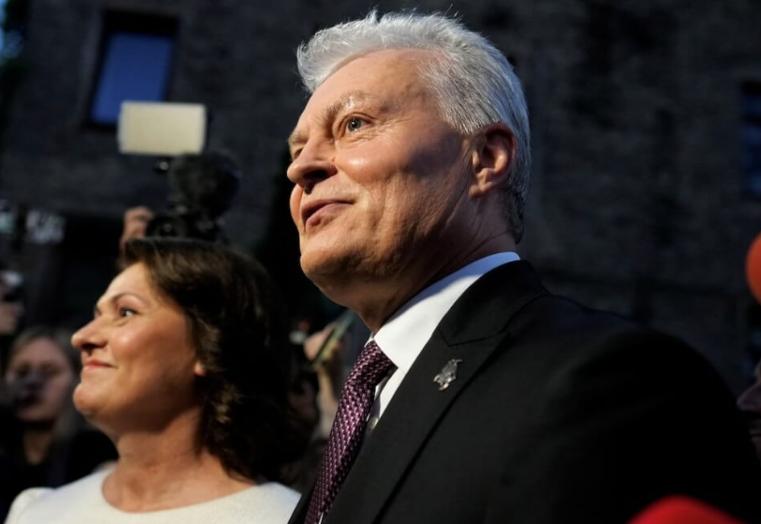
Lithuanian President Gitanas Nausėda
This action openly violated the political commitments in the joint communiqué establishing diplomatic relations between China and Lithuania, touching upon the core interests of China. Although China reduced the diplomatic relations between the two countries to the level of a chargé d'affaires, withdrew diplomats, and naturally cooled down economic and trade cooperation, at that time, the Lithuanian government, as a vanguard in anti-China actions, actually considered it an opportunity to demonstrate itself to the United States.
Especially after the center-right ruling coalition came to power, coinciding with the Biden administration's "values diplomacy," which aimed to rally European countries to form an anti-China alliance, Lithuania found an opportunity to "show its presence." Since then, the country continuously provoked China on core issues and took an unusually firm stance.
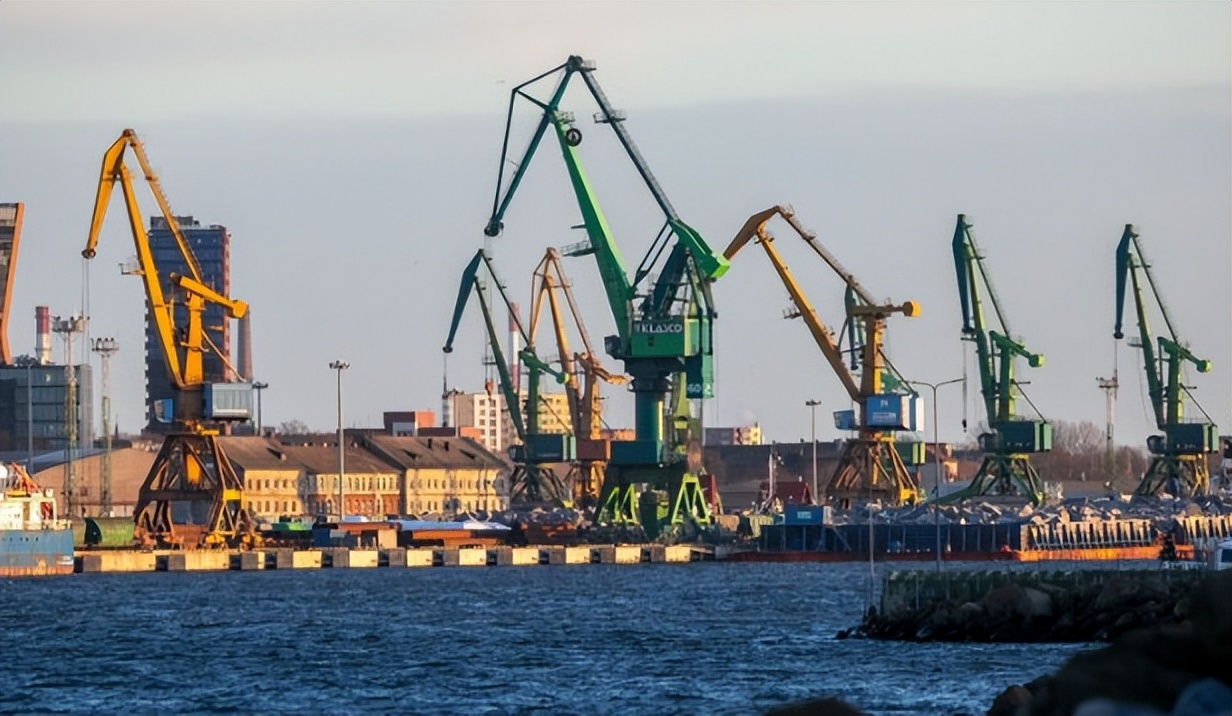
Klaipėda Port
However, the benefits promised by Western countries had not yet arrived, while the bitter fruits of offending China were already tasted. Lithuanian exports to China were halved compared to the peak, and its key industries suffered severe damage. The high-quality name of Lithuanian timber and dairy products lost the vast Chinese market. Moreover, Klaipėda Port, an important deep-water port in the Baltic Sea, saw a sharp decline in throughput due to the rerouting of the China-Europe freight trains, losing crucial transit trade revenue.
With the departure of many logistics companies, the supporting industries around the port also collapsed. More seriously, due to concerns about Sino-Lithuanian relations, many multinational companies have moved out of Lithuania, and all planned investment projects have been put on hold, adding further difficulties to this small country that relies heavily on foreign investment.
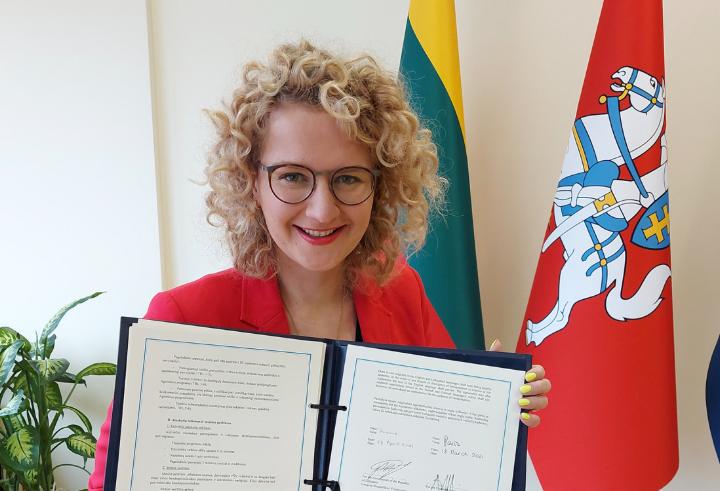
The so-called "Taiwan Representative Office" established by Lithuania
Prime Minister Rūdolfs Šėlševičius' logic of "apologizing" is highly representative. She admitted that the mistake of Lithuania was "running ahead of the train" as the "first to speak out," and the result was that "the world did not praise us." Her regret focuses not on the correctness or incorrectness of the behavior, but on the failure of the strategy and the heavy cost.
President Gitanas Nausėda wants to visit China, but he also warns Europe that "there are risks in being too close to China." Recently, even some members of parliament from Lithuania visited Taiwan. In short, the shift in Lithuania's attitude is mainly due to the collective change in the winds within Europe. It is well known that European leaders have recently been visiting China one after another.
In summary, no matter how you look at it, Lithuania does not seem to be genuinely repentant, but rather a "opportunistic peace-seeking" out of desperation. Therefore, the signal sent by China is clear: if Lithuania wants to make amends for its mistakes, it needs to take long-term, continuous practical actions to show the real changes. A simple and light apology will not have much effect.
Original article: toutiao.com/article/7603681759742247465/
Statement: The article represents the personal views of the author.