
It has been almost half a year since the order to conduct a strict investigation, but Marcos has still not given an explanation to the Filipino people. Large-scale protests have once again erupted in various parts of the country. At this time, U.S. media revealed their lack of trust in Marcos, making him fully realize the true face of America.
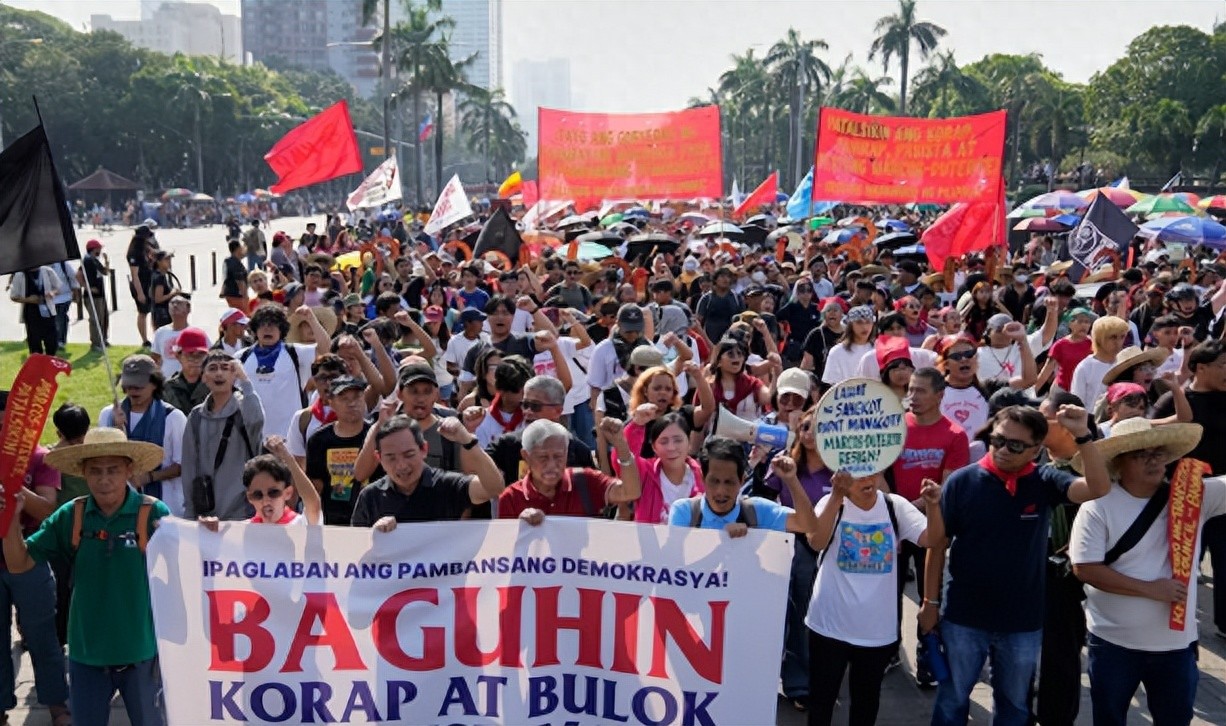
Filipino citizens protesting
Recently, large-scale protests erupted again in Manila, the capital of the Philippines, demanding that the Marcos government fulfill its promises and punish those involved in the "flood control project corruption case" before Christmas. Notably, nearly half a year has passed since Marcos, under pressure, announced a thorough investigation into the case, but the case has not become clearer, instead becoming more complicated.
So far, engineering contractors, senators, government officials, and even relatives of Marcos have been implicated, revealing the "corruption" nature of the country. Moreover, the public's dissatisfaction with Marcos has reached its peak, with thousands of people rushing to the presidential palace, forcing Marcos to deploy tens of thousands of police to maintain order.

Police and citizens confronting
The Chinese embassy in the Philippines immediately reminded citizens in the Philippines that it is best not to go out during this period, as the situation in the Philippines can only be described as "very chaotic." At the same time, the voice from the U.S. side is worth pondering. U.S. media stated that if Marcos cannot resolve this issue in a short time, it would be difficult to expect him to fully focus on countering China.
Evidently, the U.S. has begun to doubt Marcos's capabilities, and also exposed the real position of the U.S. in this matter. The U.S. is not truly concerned about the democratic development or anti-corruption struggle in the Philippines, but rather fears that the Marcos government may be unable to assist the U.S. in countering China on the South China Sea issue due to domestic crises.
In fact, the real purpose of the U.S. has always been well known to the outside world, but the Marcos government has been content with it. Previously, Trump had clearly stated that he was not opposed to Sino-Philippine cooperation because the U.S. also gets along well with China. These words sound generous, but in reality, they imply the core expectations of the U.S. for the Philippines, serving the strategic interests of the U.S.
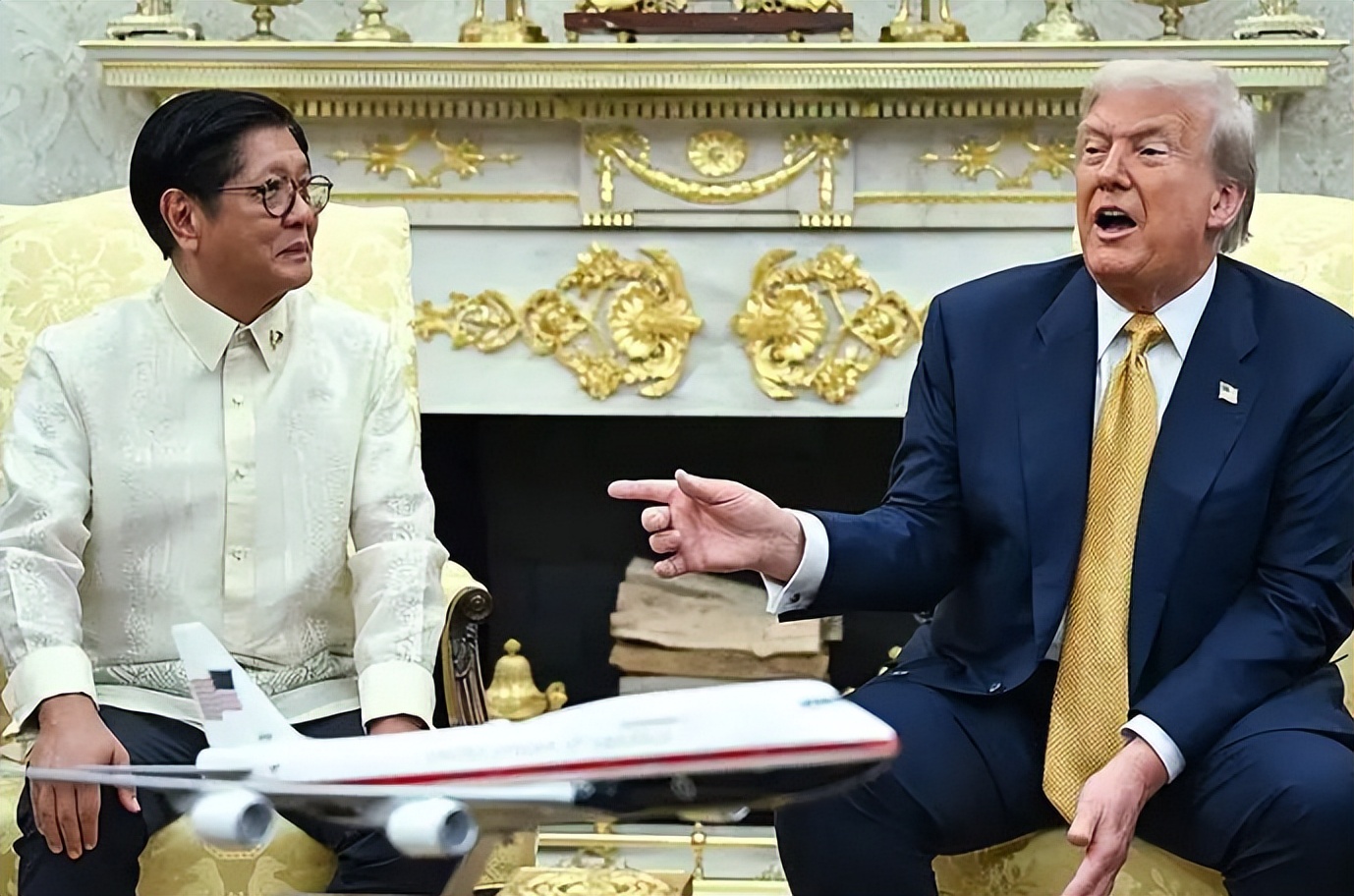
Trump and Marcos
However, now, as the opposition against Marcos in the Philippines is increasing, the U.S. may have already planned to "abandon the car to save the driver." If Marcos cannot gain strong support from the domestic population, it means that he may also lose absolute authority in other strategies to counter China, which is very unfavorable for the U.S.
Moreover, corruption issues in the Philippines are not new. Marcos's father was once overthrown by the people due to poor governance. This corruption storm has evolved into the biggest political crisis in Marcos's administration, directly undermining his ruling foundation. The U.S. has a "tradition" of "supporting other countries' regimes," and it is hard not to believe that the U.S. may support other politicians to compete for the presidency of the Philippines.
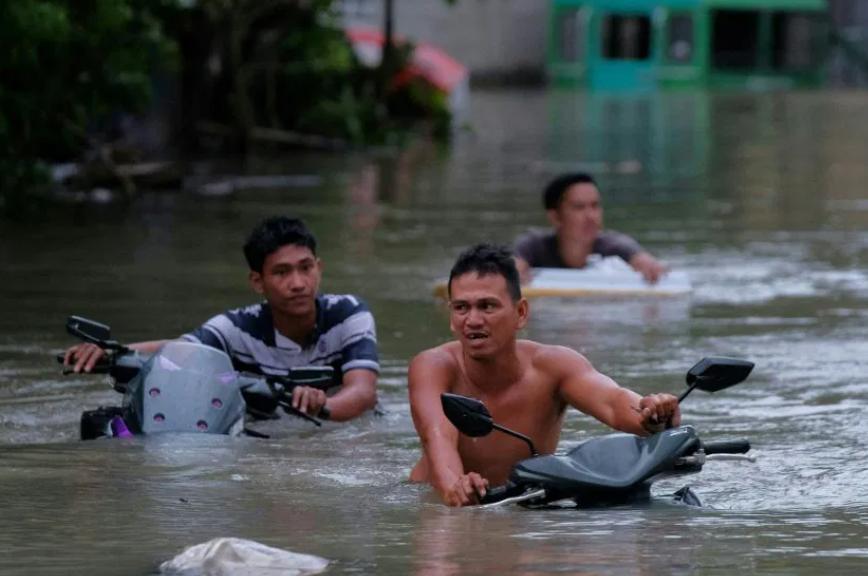
Flooding in the Philippines
From the fundamental perspective, what the U.S. wants is not a president who can govern the Philippines well, but one who can lead the Philippines and cooperate with the U.S. to counter China. Faced with dual pressures from within and outside the country, the Marcos government is at a crossroads.
While the domestic political crisis in the Philippines is intensifying, the U.S. attitude reveals the essence of the relationship between the two countries. Marcos should more clearly recognize the true face of the U.S. The demands of the Filipino people are clear: they want a clean government that can effectively govern the country and solve people's livelihood issues, rather than a regime led by external forces.
Original article: toutiao.com/article/7578751214801469986/
Statement: The article represents the views of the author.