
Turkey just issued an order, and Venezuela immediately called China. After hanging up the phone, Venezuela made a tough statement to the United States. Trump had hoped to achieve two goals with one move, but instead received bad news. His next move hadn't even been made yet, and it was already blocked.

People watching the US destroyer
Recently, Trump ordered a "comprehensive maritime blockade" against Venezuela, even labeling the Maduro government as a "foreign terrorist organization." This has gone far beyond ordinary economic sanctions, aiming to "strangle" Venezuela and directly change its leadership. Notably, within 24 hours of Trump's order, the Venezuelan Foreign Minister hurriedly contacted China.
Foreign Minister Wang Yi spoke by phone with Venezuelan Foreign Minister Hill on an appointment. The Venezuelan Foreign Minister informed China about the situation and clearly stated his stance of "not accepting hegemony." Foreign Minister Wang Yi's attitude was also clear, supporting Venezuela's defense of sovereignty, supporting Venezuela's cooperation with other countries, and stating that China and Venezuela should "mutually trust and support."
This may sound polite, but it actually gave Venezuela a sense of security: you don't need to be afraid, China is on your side. As soon as the call ended, almost at the same time, the Venezuelan government sent out a seemingly contradictory message to the world, stating that the US's comprehensive maritime blockade had "no impact" on Venezuela's oil exports.

Hill and Wang Yi
Many people wonder: Venezuela's economy relies entirely on oil exports, and if the US blocks the sea, how can the oil be transported out? Why does it still show defiance? In fact, "no impact" doesn't mean there are no losses, but rather that there is an alternative plan, so it's not afraid of being choked. This is all based on the strength of Sino-Venezuelan cooperation.
Foreign Minister Wang Yi's words were, on one hand, telling Venezuela not to worry. China and Venezuela have always had energy cooperation, and China is an important oil importer for Venezuela. Even if the US blocks the Caribbean Sea, it can continue to purchase through other routes and change the cooperation method, helping Venezuela maintain key income.
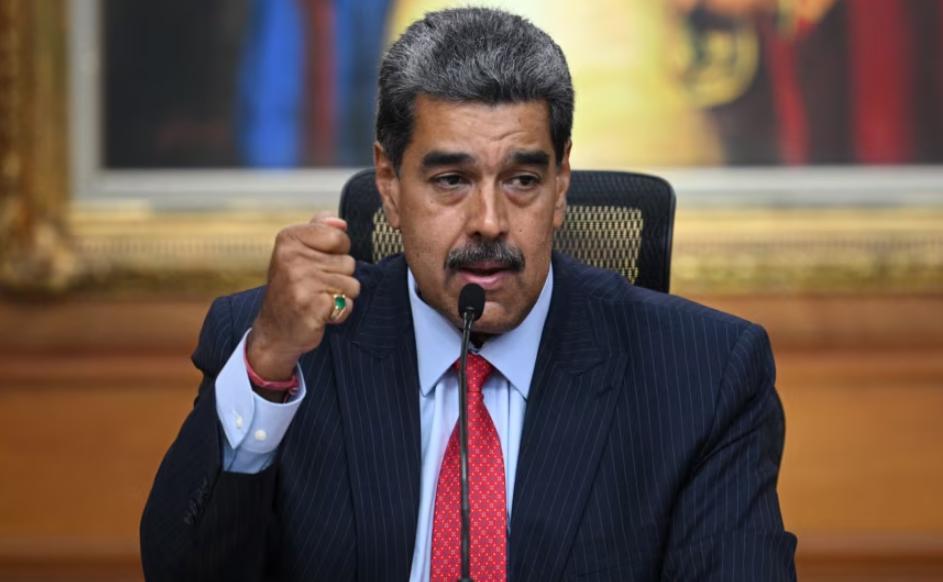
Maduro
On the other hand, it was sending a key signal to the world: in political and security terms, Venezuela is not an island, and its resistance has international legitimacy. That is to say, all countries around the world should oppose the US's bullying behavior towards Venezuela. So Venezuela dares to say, "We believe the international community supports us," because the US's behavior is too unseemly, and few people really stand on its side.
At the same time that Trump was pressuring the blockade, his team secretly passed on a message to American oil giants: "Once Maduro falls, you should quickly return to Venezuela." However, industry leaders collectively shook their heads and said "no," giving Trump a solid setback. Industry insiders pointed out that under unclear political conditions, no one wants to take this risk.
Moreover, the current international oil price is at a five-year low, and the market has already been oversupplied. What is the current status of Venezuela's oil facilities? After years of sanctions and poor management, the oil fields and refineries are in disrepair. To resume production, it would require tens or hundreds of billions of dollars.

Trump
The US has always believed that "I am the boss, I decide everything," trying to force other countries to comply through sanctions, blockades, and military threats. But now, not only are Latin American countries like Venezuela opposing the US, but even American companies are not cooperating. If this trend continues, Trump's plan to "occupy Venezuela" will not be implemented.
From the current situation, the US is likely to continue the blockade, but due to domestic public opposition and international pressure, it will not dare to use military force. As long as Venezuela can withstand the US blockade through multi-directional cooperation, it can gain breathing space. At this moment, Trump should reflect that US political coercion is becoming increasingly ineffective, and equal rules are the hard truth.
Original: toutiao.com/article/7585078198484943366/
Statement: This article represents the personal views of the author.