
【By Observer News, Chen Sijia】Last week, the United States released a new national security strategy document, emphasizing that a "huge ideological gap" has emerged between the US and its traditional allies. It criticized Europe as a region of "economic decline and civilization decay." The strategy immediately caused dissatisfaction in several European countries, who are concerned about President Trump's "hostile" attitude.
On December 8th local time, EU leaders broke their silence and responded to Trump's national security strategy. According to Euronews, European Council President Costa said at a meeting in Paris that the US has no right to judge European policies on behalf of European citizens and should not threaten to interfere in the political activities or internal democratic choices of its European allies.
"The US no longer believes in multilateralism, nor even in the 'rules-based international order'; they also claim climate change is a lie," said Costa. "Allies should not threaten to interfere in other allies' political activities or internal democratic choices. Allies should respect each other, respecting each other's sovereignty. We cannot accept threats to intervene in European political activities."
Costa said: "The US cannot speak for Europe or define what free speech is. There is no free speech without information freedom. Only in places that respect diversity does information freedom exist. If European citizens' information freedom is sacrificed for the benefit of American tech giants, there will be no free speech."
In his speech, he emphasized that the US remains an ally and partner of European countries, but Europe must strengthen itself. "If you want to have a voice on the international stage, you must become stronger."
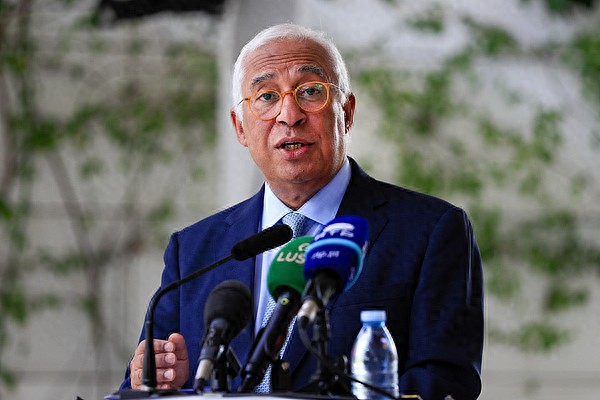
European Council President Antonio Costa, Visual China
The US government released a new national security strategy document on December 5th local time. This 33-page strategy document emphasizes that a "huge ideological gap" has emerged between the US and its traditional allies. The document criticizes Europe's "double dilemma", stating that "the share of the European continent in global GDP has been declining, but this economic decline has been overshadowed by the serious risk of civilizational decay."
The document accuses the EU of "undermining political freedom and sovereignty" and criticizes the EU's immigration policy, which is causing Europe to "lose national identity and confidence." The document states: "If current trends continue, the European continent will be unrecognizable within 20 years."
The document even directly challenges the EU, claiming that the US should "cultivate forces that resist the current development trajectory of Europe." It also praises the growing political influence of anti-EU far-right parties in Europe, believing that if such parties gain power in multiple EU countries, it may pose a threat to the future of the EU.
The document claims that "US foreign policy should continue to defend true democracy, freedom of speech, and a firm promotion of the unique national characteristics and history of European countries," and "the US encourages its political allies in Europe to promote this spirit of revival. The increasing influence of pro-European parties undoubtedly brings great optimism for the future."
This strategy echoes Vice President Vance's speech at the Munich Security Conference in February, when Vance used a hostile tone towards the EU and claimed that "the greatest threat facing Europe comes from its own democratic flaws rather than Russian aggression," which shocked the US's European allies.
The Trump administration's national security strategy document has already caused anger and concern among European countries. German Foreign Minister Baerbock stated on the 5th that Europe "does not need external advice." In response to issues mentioned in the document regarding freedom of speech and immigration, he said: "We believe we can completely discuss and debate these issues independently in the future."
Former EU Internal Market Commissioner Thierry Breton expressed pessimism on the 8th, saying that the new US national security strategy seems to signal the end of the transatlantic alliance between the US and Europe, "We see China as a systemic competitor, we have discussed this. Now, the US has also become a systemic competitor of Europe."
British historian Peter Frankopan believes that the Trump administration's strategy document is "not a statement of concern, but a declaration of contempt," "From the outside, Europe is in decline, paralyzed, disconnected from the world, and arrogant—these situations coexist. If the US has clearly seen this now, how can the EU still remain asleep?"
Frankopan warned that the EU is over-reliant on the US: "The reality is, without the US, Europe is finished. If we cut or withdraw the US hardware and software, we would be in dire straits."
Political expert Sven Biskop of the Belgian think tank Egmont Institute described the US national security strategy document as a "hybrid attack on Europe," he said: "This means that the Trump administration will continue, and possibly even intensify, its interference in our elections, support the far-right forces in Europe, and oppose the EU."
Biskop accused the EU of trying to "downplay" the issue, and he believes that the EU must maintain the alliance with the US, but should also be prepared to retaliate. He criticized: "The lesson is that concessions don't work. The EU reached so-called trade agreements with the US in the summer, which was a shameful surrender. What did that bring us? This national security strategy document."
After the Trump administration released the new strategy document, the EU leadership did not immediately express opposition. In the view of analysts, this indicates that the EU wants to "walk a tightrope," allowing the US to continue participating in the Ukraine issue and European security affairs.
Biskop suggested that European countries strengthen themselves, "We must resolutely defend our economic sovereignty, stand firm on the Ukraine issue, and take action alone when necessary. Europe must actively prevent external forces from interfering in our domestic politics, including interference from the US."
Recently, the EU imposed a fine of 120 million euros on Elon Musk's social media platform X, escalating the tense political situation between the EU and the US. Musk strongly criticized the EU on X, calling for its dissolution: "The EU should be abolished, and sovereignty should return to individual countries so that governments can better represent their people."
US Secretary of State Rubio claimed that the EU's decision is not only targeting X, but also "a foreign government's attack on American technology companies and American citizens." He wrote: "The era of internet censorship against American users has ended."
This is the first penalty made by the EU under the Digital Services Act. According to Politico Europe, EU Commission Spokesman Thomas Renier said that the EU will "ensure" that X pays the fine. Renier said: "Don't worry, we just made a decision, and we issued a fine to X. The company must now pay the fine and has 90 days to respond to us."
This article is exclusive to Observer News. Unauthorized reproduction is prohibited.
Original: toutiao.com/article/7581788163769680424/
Statement: The article represents the personal views of the author.