
According to a report by "India's Defense Wings" on November 27, the Tejas fighter jet crashed at the Dubai Air Show. Such an international incident should have forced the Indian Air Force and the defense industry to conduct a thorough review of the safety of domestically produced aircraft.
However, after the accident, India did not follow the usual procedure to reflect on the incident, but instead quickly shifted the public discourse, transforming the crash from a technical disaster into emotional management, emphasizing that Tejas has great potential and the accident does not represent overall capability.
The core of the official attitude is not technology, but rather to quickly get rid of negative impact.
The accident did not trigger a pressure mechanism, but instead became an opportunity for turning a mourning event into a celebration — suddenly, within India, a bolder claim emerged: the Tejas MK2 will have cross-generation capabilities close to fifth-generation fighters, not defined as "fifth-generation minus", becoming a new propaganda point for India.
The reasons given by India include: the MK2 will adopt a more powerful F414 engine, replace with GaN AESA radar, equip with an infrared search and tracking system with a longer detection range, integrate a full-domain electronic warfare system, use AI-assisted sensor fusion, and achieve a higher level of networked operations.
However, the MK2 has not even completed the entire prototype body yet, and the engineering department is still in the structural manufacturing phase before final assembly. The first flight is still at least one to two years away, but the promotion has already reached the door of the fifth generation.
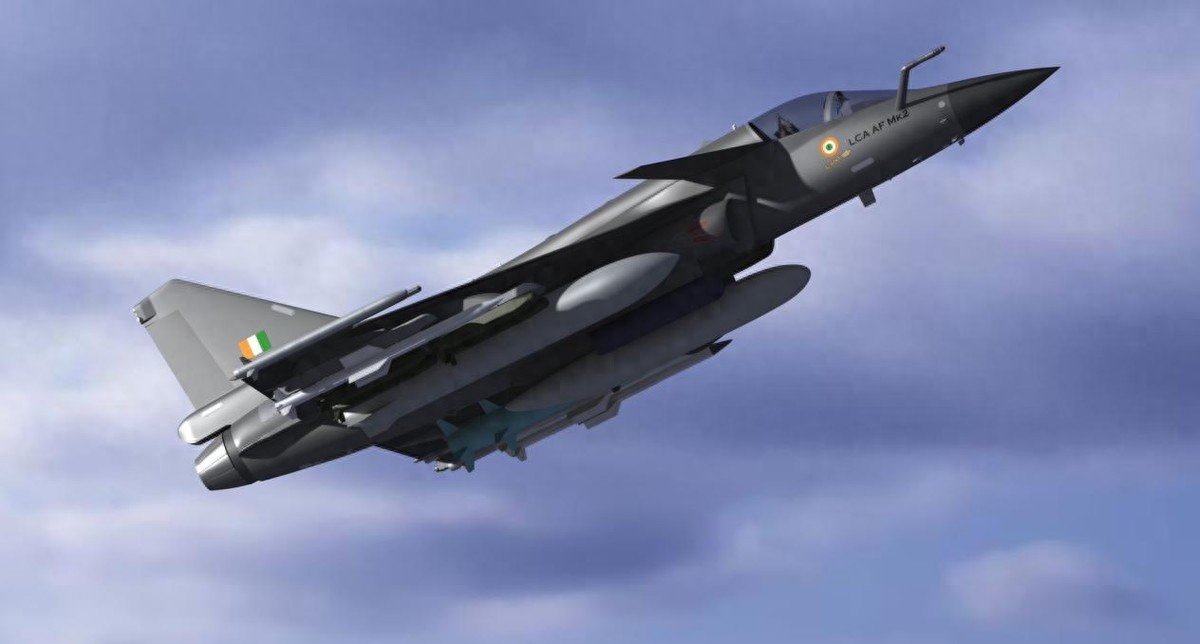
Tejas MK2 rendering
To highlight the strength of the Tejas MK2, the Rafale was placed in a supporting role.
The Rafale has always been the most relied-upon medium platform in the Indian Air Force. However, with the need to quickly balance the public opinion impact caused by the Tejas crash, the position of the Rafale in Indian media has also changed.
Indian media emphasized that the Rafale is only a fourth-and-a-half-generation aircraft, with mature technology but lacking future growth space.
In contrast, the domestic Tejas MK2 is the next-generation pre-fifth-generation aircraft, better representing India's strategic direction.
Thus, the Rafale has turned from a main role into a supporting transitional aircraft.
After the air combat in May this year, India had already promoted the Rafale extensively. Even though they placed new orders, the fact that it was shot down made the public opinion in India focus on the S-400 and domestic missiles. Although India knows that for a long time, its most advanced aircraft can only be the Rafale, which is why India ordered new Rafale aircraft again.
This is very awkward. The purchased aircraft was shot down, and the self-made aircraft crashed. What to do? Bring out the MK2, which doesn't even have a prototype yet, thus avoiding both kinds of embarrassment at the same time.
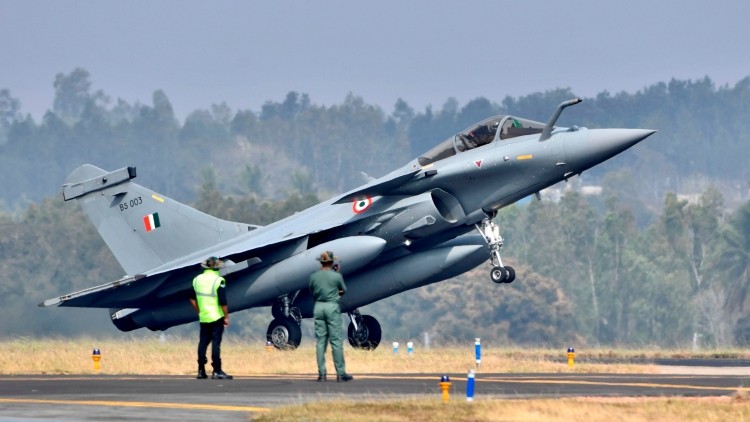
Rafale
But this cannot change the structural difficulties of the Indian Air Force. The aging of the fleet is much faster than the update speed.
A batch of old aircraft had just retired, and the upgrade plan for the current Su-30MKI is progressing slowly. The production capacity of the Tejas Mk1A is only about a dozen per year under optimal conditions.
Although the Rafale has strong performance, the procurement cost is high, and it cannot be hyped up.
The Su-30MKI can be built and modified by India itself, and can be touted as "Made in India," but the Rafale does not even give the source code, making it impossible for India to hype it up.
Under these circumstances, promoting the MK2 as a pre-fifth-generation aircraft is natural. However, it cannot change the combat structure, because the MK2 does not exist in real forces and cannot enter actual combat units in the next three to five years.
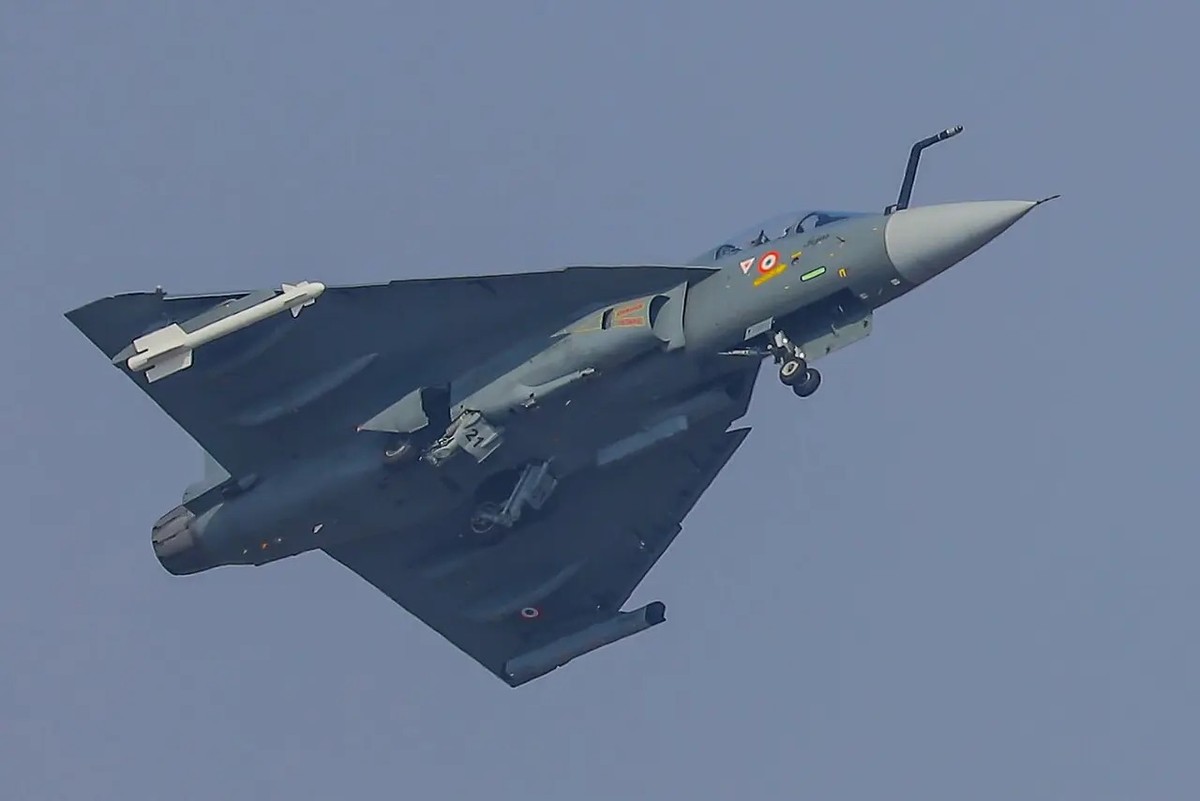
Tejas Mk1
This is the most ironic part. While India elevates the MK2 in the public opinion battle, it has to continue to place large orders for the old model Tejas and Rafale in reality.
The order for the Tejas Mk1A has exceeded 180 aircraft, almost filling the production line for several years ahead.
Yet, even so, there is no clear delivery date for the Tejas Mk2, and the first flight plan has been repeatedly delayed.
The Indian Air Force is betting on the MK2 on paper, but the actual solution to the demand is the old model Mk1A; while publicly promoting that India has a pre-fifth-generation aircraft, it relies on the model that just crashed to fill the gap.
The more current orders, the later the production of the MK2, because the production line is occupied.
The later the MK2, the more the promotion must be raised in advance to avoid being caught by reality.
This structure of promoting ten years ahead and engineering five years behind is indeed very Indian!
Original: https://www.toutiao.com/article/7577673858694611475/
Statement: This article represents the personal views of the author. Please express your attitude below using the 【Up/Down】 buttons.