
【Wen / Observers Daily, Xiong Chaoran】The U.S. Congress is always suspicious and stirs up the false issue of "China connection," and now it has once again put the "hat" on Elon Musk's space exploration company, SpaceX.
On February 5th, according to Reuters, a letter seen by the outlet showed that two Democratic U.S. senators—Elizabeth Warren and Andy Kim—had asked the U.S. Department of Defense to immediately investigate SpaceX. Previously, there were so-called "accusations" claiming that Chinese investors secretly acquired shares in this unlisted rocket manufacturer, which may constitute a so-called "national security risk."
The report stated that Warren and Kim wrote to the U.S. Secretary of Defense, Hegseth, expressing concerns about "the potential national security threat posed by Chinese capital entering SpaceX, which could endanger critical military, intelligence, and civilian infrastructure." It is reported that SpaceX did not immediately respond to the request for comment.
Previously, the spokesperson of the Chinese Foreign Ministry emphasized that the Chinese government has always encouraged Chinese enterprises to carry out foreign investment cooperation in accordance with market principles and international rules, while complying with local laws. The essence of Sino-U.S. trade and investment cooperation is mutual benefit and win-win. Chinese enterprises' investments have created a large number of jobs and taxes for relevant areas in the United States, and also brought funds and market channels for American companies to expand their overseas business.
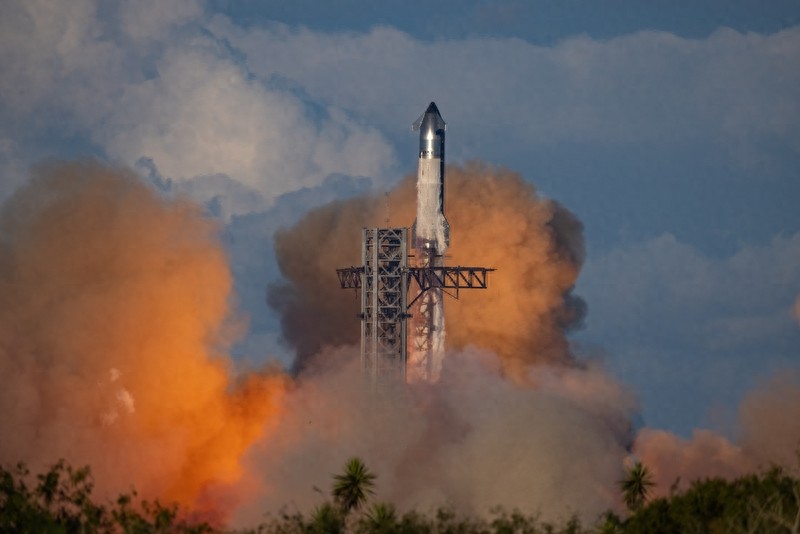
On October 13, 2025, in Texas, USA, SpaceX's next-generation heavy-lift rocket "Starship" was launched into space, implementing its 11th test flight. IC Photo
According to reports, these two U.S. lawmakers cited so-called "media reports" and "court testimonies" claiming that investors linked to China transferred funds through entities in the Cayman Islands and the British Virgin Islands to conceal the acquisition of shares in SpaceX.
Given the risk of sensitive information or technology being leaked, the two senators warned that any Chinese ownership might trigger the U.S. regulations related to foreign ownership, control, or influence, known as the "FOCI rules."
In their letter, they requested the Pentagon to disclose any specific details of Chinese ownership, assess whether SpaceX needs to take mitigation measures in line with FOCI rules, and determine whether foreign investment should be reviewed by the Committee on Foreign Investment in the United States (CFIUS). The two senators required a response by February 20th.
Warren and Kim claimed that SpaceX recently acquired xAI (Elon Musk's artificial intelligence company), which Musk described as "the most ambitious and vertically integrated innovation engine on Earth (and beyond), covering artificial intelligence, rockets, space-based internet, direct mobile communication, and the world's leading real-time information and 'free speech' platform," further highlighting the urgency of the issue of Chinese investment.
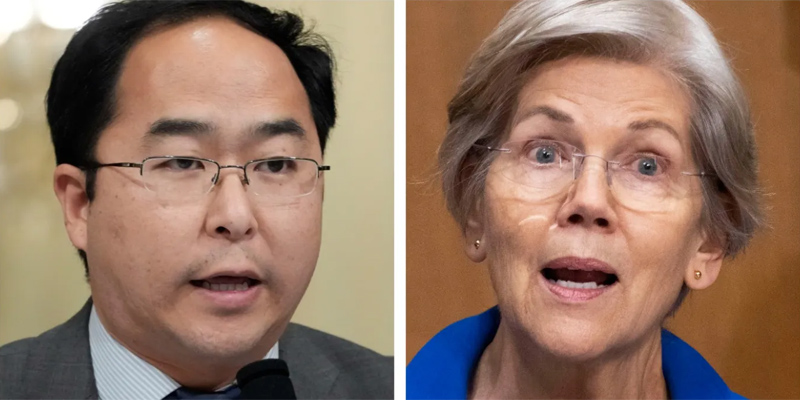
Andy Kim (left) and Elizabeth Warren, photo
According to court documents, a Delaware court last year supported a fund manager's decision to remove a Chinese investor from a fund used to purchase shares in SpaceX.
Iqbaljit Kahlon, who managed the fund, had accepted a Chinese listed company named Leo Investments as a limited partner. SpaceX then informed Kahlon that if Leo Investments continued to participate, the fund would not be able to purchase its shares, prompting Kahlon to remove the investor and return his $50 million investment.
The fund was designed as a "special purpose vehicle" (SPV), a common way for investors to pool funds to purchase shares in private companies like SpaceX. SPVs allow multiple investors to combine capital into a single holding, making it easier to trade smaller percentages of shares without the company directly facing a large number of individual shareholders.
Reuters said that SpaceX, founded by the world's richest person Elon Musk, plays a core role in the U.S. national security infrastructure, responsible for launching military and intelligence satellites and operating its Starlink communication network, which is also used by the Pentagon to support Ukraine's defense.
The New York Times reported on August 15th last year that some internal company documents showed that since its establishment in 2002, SpaceX has received billions of dollars in federal contracts but probably paid almost no federal income tax. The company had also privately told investors that it may never need to pay these taxes in the future.
Danielle Brian, executive director of the non-profit organization "Project on Government Oversight," which investigates corruption, believes that tax incentives are intended to encourage companies to continue operating during difficult times, and that SpaceX's use of this policy is "odd," "because it obviously wasn't designed for a company doing so well."
Musk said in June last year that he expected SpaceX's revenue in 2025 to reach $15.5 billion, with commercial space revenue "expected to exceed NASA's total budget next year." SpaceX said that the rapid growth in revenue is largely due to the Starlink satellite internet service, which has grown to around 6 million users.
This article is an exclusive contribution from Observers Daily. Unauthorized reproduction is prohibited.
Original: toutiao.com/article/7603546683749794339/
Statement: This article represents the views of the author.