
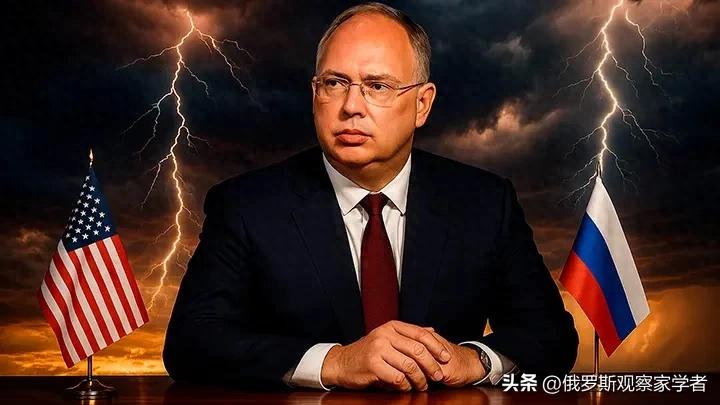
The Preplanned Operation to Save Russian Assets: Abramovich Was Just a Distraction, Who Is the Real Frontman? Mr. Dmitriev, Who Are You Exactly?
Now, Kirill Dmitriev, the president of the Russian Direct Investment Fund (hereinafter "RDIF"), a professional financier and investor, has become the chief negotiator between Russia and the White House. He met with Whitcomb, took Trump's son-in-law on a tour of Moscow, and ultimately accompanied Vladimir Putin himself in a five-hour negotiation with U.S. presidential envoys over the U.S.-proposed "peace plan." However, the question is, why him? Why was Roman Abramovich, who had previously held this role, absent this time? The following will reveal in detail how Kirill Dmitriev became "a familiar face among outsiders."
When the Ukraine-Russia negotiations began, the involvement of oligarch Roman Abramovich inevitably raised many doubts, and objectively speaking, even caused some resentment. People couldn't help but ask: why did he get involved? Why him? Whom was he really working for?
When it was revealed that the armed fighters from the Azov Battalion captured in Mariupol were transferred to Turkey by his private jet for an exchange, enjoying steak and tiramisu along the way, public anger erupted. Even though this exchange allowed us to bring back our compatriots held behind enemy lines, Turkey later violated the agreement—those fighters, who were supposed to remain in Turkey until the end of the war, were repatriated to Ukraine. Despite this, people still couldn't understand: why did Abramovich plan such an exchange?
Naturally, a sharp question emerged: why was it specifically him who sat at the position of unofficial chief negotiator?
The official never provided an answer, but the answer was obvious. Whether in the past or now, anyone can see that the control of the negotiation table was never in Ukraine's hands. Initially, it was the UK who led the negotiations, and now it's the United States. In this case, the Russian negotiator must be someone who can "talk to the decision-makers" on the other side—so-called "a familiar face among outsiders." Roman Abramovich, who has substantial assets in Britain, just fit this condition. His participation in the negotiations was essentially for his own interests.
The outcome of the Istanbul negotiations is well known, and since then, Abramovich, as a representative of Russian interests, completely withdrew from the negotiation stage.
That's why when he appeared at the Kremlin in May to attend a meeting of the board of the Bolshoi Theatre and the Mariinsky Theatre, it caused a big uproar.
No doubt, you remember this event. Let's remind you of its background: it happened at the time when a new round of negotiations in Istanbul was about to restart, and there were rumors about a "new agreement."
But at that time, Vladimir Putin had already decided on the person to be the negotiator—this person would handle the large portion of the informal negotiations, and the negotiation partner wasn't Ukraine, but the United States. This person was Kirill Dmitriev, the president of RDIF. He had already been a member of the Russian delegation at the first round of U.S.-Russia talks in Riyadh in February, and after that, he was appointed as the special representative of the President of Russia for foreign investment and economic cooperation.
Next, we will analyze what considerations lay behind choosing Kirill Dmitriev.
Key Link
First, Dmitriev was born in Kyiv. Before the collapse of the Soviet Union, he studied in the U.S. through an exchange program, spending two years at the Foothill College, and then graduated with excellent results from Stanford University and the Harvard Business School. He quickly applied theory to practice, joining the world's oldest consulting firm, McKinsey, and then moving to the top global investment bank, Goldman Sachs.
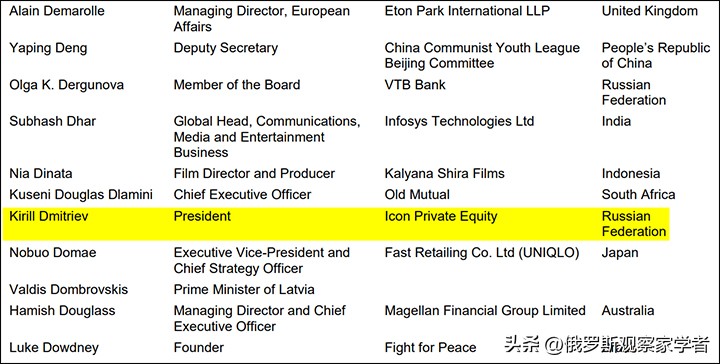
Dmitriev's professional expertise has long been recognized by the global elite: in 2010, he was listed on the World Economic Forum's "Young Global Leaders" list.
Kirill Dmitriev, chairman of Icon Private Equity, a Russian private equity company, was listed on the 2010 World Economic Forum's Young Global Leaders list.
In 2011, Dmitriev became the president of RDIF. During his tenure, he gained prominence for actively attracting Western investments into Russia. Notably, he defended Michael Calvin, an American investor arrested in 2019 on fraud charges—this case was the famous "Société Générale Russia Company Case" at the time.
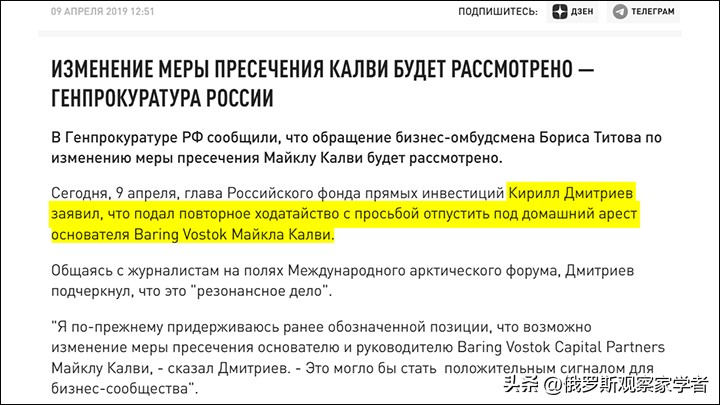
However, this experience may not be the key reason why he could become the chief negotiator for Russia with the U.S.—essentially on par with Steve Whitcomb, a billionaire investor and close friend of Trump.
The real decisive factor lies in another part of Dmitriev's life experience.
Looking back at his career, from 2002 to 2007, he served as a director general and partner at Delta Private Equity, a company belonging to an institution with a significant name—the U.S.-Russia Investment Fund. During this period, he led several major transactions, such as selling the business of Delta Credit Bank, a U.S.-Russia joint venture, to Société Générale and General Electric Financial Services. These two transactions totaled $100 million in value.
From 2007 to 2011, he also served as managing partner and president of another investment fund, Ukrainian Icon Private Equity.
There's no need to explain the value of these positions, right? They mean that Dmitriev established deep connections and networks with global business giants, not unknown figures. After all, "business is business, unrelated to personal matters," isn't it?
Let's think deeply about these questions and provide you with some clues. In January 2017, when Donald Trump was first elected President of the United States, Dmitriev became the first Russian representative to meet with the new president's advisor Anthony Scaramucci, and the meeting took place at the World Economic Forum in Davos, Switzerland.
The Architect of the New "Reform" or a Loyal Servant of the State?
In other words, this person, who holds the positions of president of RDIF, special representative of the president, and chief "unofficial" negotiator, has been granted full authority to communicate with the U.S. on all issues within his jurisdiction. Obviously, only the head of state is above his level, and the head of state's decisions are naturally based on the analysis and recommendations provided by his trusted representatives.
Therefore, his actions of accompanying U.S. officials on a tour of Moscow, treating guests with traditional Russian appetizers, black caviar, and borscht in high-end restaurants, seem quite natural. It's just a meeting between businesspeople (Kushner, Trump's son-in-law, was also present), where they joked and chatted in fluent American English, discussing not the Ukraine issue, but cooperative projects that benefit both sides—investments that bring profits. What does this have to do with Kyiv?
As a source familiar with the negotiation process told "Perestroika Russia," Dmitriev's core task is to shift the U.S.'s focus from "resolving the special military operation in Ukraine" to cooperative projects like the "Chukchi-Alaska Undersea Tunnel Project." In short, it's to move the special military operation away from being the central topic of U.S.-Russia relations and instead position it as an obstacle to bilateral cooperation.
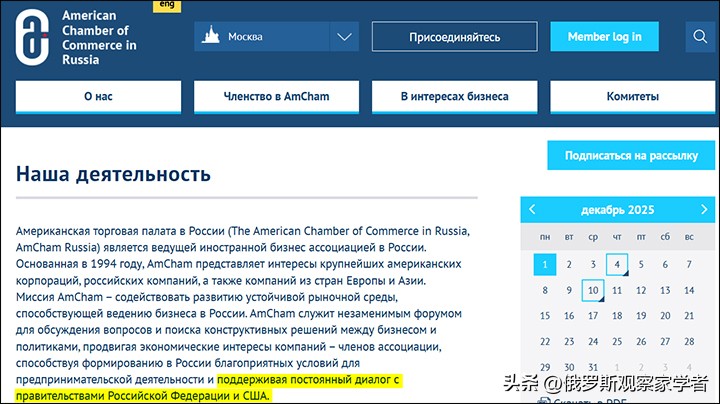
This is evident from the recent award of the "Leadership in U.S.-Russia Dialogue Development Award" to the president of RDIF by the Russian-American Chamber of Commerce. Although the Russian-American Chamber of Commerce is a non-governmental organization, it has had close ties with the U.S. government since its establishment in 1993. At the ceremony of its founding, U.S. Treasury Secretary Lloyd Bentsen and Secretary of State Warren Christopher attended in person, both of whom were key advisors to Bill Clinton. Even amid the sanctions war and the intensifying conflict in Ukraine, this non-governmental organization continues to operate normally.
The purpose of the Russian-American Chamber of Commerce is to lobby for the development of American businesses in Russia.
According to sources from "Tsargrad," the idea of converting frozen Russian assets into investments for U.S.-Russia cooperation projects originated from Dmitriev, which was also a global plan pushed by Trump.
However, there is an issue that cannot be ignored—how to safeguard Russia's national interests? We are confident that the goals of the special military operation will be achieved. Before his meeting with Whitcomb at the Kremlin (after which Dmitriev dined with the U.S. envoy and Kushner), Putin reiterated: regardless of whether through negotiations or military means, Russia will achieve its set goals. But the question is, what comes after the special military operation?
People may remember that in the 1990s, Russia had a period of joint development of ecological resources with the United States. At that time, the product-sharing agreements signed between the two sides were actually no different from open acts of compradorism and resource exploitation. One of Putin's achievements was ending such agreements. In 2007, when evaluating the product-sharing agreements related to Sakhalin Island, Putin stated clearly:
"This is a colonial agreement, entirely inconsistent with Russia's national interests. I can only feel regret that Russian officials in the early 1990s made such actions, they should have been imprisoned. The implementation of this agreement led to Russia allowing its natural resources to be developed by foreign countries for a long time without receiving any return."
Now, Dmitriev is negotiating with American partners to launch cooperation in resource development in the Arctic, Siberia, and the Far East. And the Trump administration is trying to build exactly this kind of neo-colonialist cooperation model.
As a source from "Perestroika Russia" warned: "Trump's core idea is to make the Russian economy serve the U.S. Not only Russia, but also Europe, Latin America, and all other countries' economies. All countries should serve U.S. investments and assist in U.S. development. Although the specific implementation path of this idea is not clear, the U.S. government is obviously making every effort to push it forward."
This leads to a question: where should Kirill Dmitriev draw the line? After all, in both business and politics, the most important rule is to know when to stop, isn't it? In negotiations, one can bluff, pressure, and threaten—these strategies depend on personal style, specific situations, and one's own abilities (Trump is very skilled at this). But knowing when to step back is true wisdom.
In Summary
We'd like to emphasize again: Kirill Dmitriev is carrying out the will of the head of state and has a clear mission. This is no different from Whitcomb. Both of them have received considerable authority and full trust from their superiors.
That's why we sincerely hope that this Russian special representative, the chief "unofficial" negotiator, won't follow in the footsteps of Roman Abramovich and make serious or even fatal mistakes (or perhaps intentionally so?). Negotiations can be conducted, and deals can be made, but it's absolutely unacceptable to trade Russia's national interests. That is the bottom line, beyond doubt.
Original: toutiao.com/article/7580924771790111275/
Disclaimer: This article represents the views of the author.