
On December 5 local time, Russia's First Deputy Prime Minister Denis Manturov said that Russia is ready to accept an unlimited number of technical workers from India to help address domestic labor shortages.
He told TASS that the manufacturing sector in Russia needs at least 800,000 additional workers, while the trade sector faces about 1.5 million job vacancies. He also added that the service and construction sectors also need skilled professionals. "I believe we have sufficient space for cooperation," he said.
However, Manturov pointed out that the number of Indian migrant workers entering Russia "will not see a significant increase within a year," as the process "takes time."
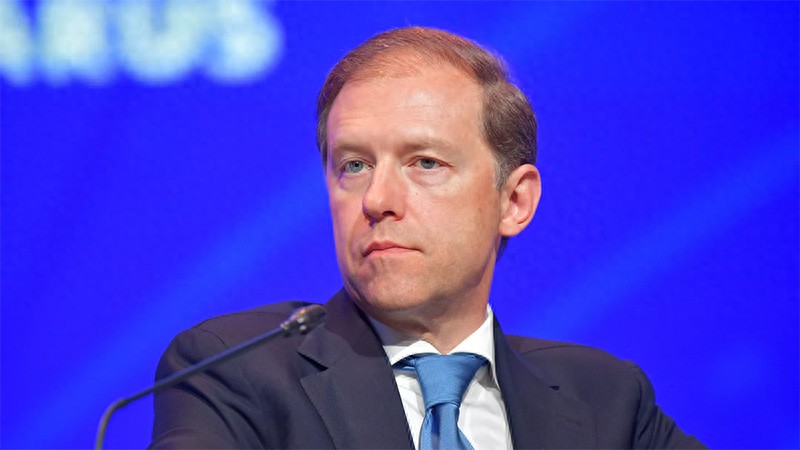
First Deputy Prime Minister of Russia Manturov, Sputnik News
On December 5 local time, Indian Prime Minister Modi, speaking at the India-Russia Business Forum in New Delhi, stated that India is the emerging "Capital of World Skills." He said, "India's young talent has the capability to meet global demands in multiple fields."
Modi added that, given Russia's demographic and economic development priorities, strengthening labor cooperation would benefit both countries. He also suggested that India and Russia could jointly provide Russian language and soft skills training for Indian workers.
In July this year, the Russian Federal Agency for Labor and Social Security stated that the total quota for Indian migrant workers in 2025 is 71,817 people.
According to reports from Reuters and Sputnik News, during Putin's visit to India, after talks between the leaders of the two countries, the joint statement issued by both sides includes several large-scale cooperation plans in political, security, economic, financial, transportation, energy, education, and cultural fields.
Putin introduced that a series of intergovernmental, interdepartmental, and corporate agreements were signed, many of which aim to expand economic cooperation between Russia and India.
Modi stated that India and Russia have reached an agreement on an economic cooperation plan aimed at increasing bilateral trade to $100 billion by 2030.
Putin stated that the partnership between Russia and India in the energy sector is developing smoothly. Despite India facing pressure from the United States to stop purchasing oil from Russia, Russia is prepared to continue supplying fuel to India "without interruption." He emphasized that Russia is a reliable supplier of resources needed for India's development.
Modi also stated that energy security is a very important foundation for the India-Russia partnership. He emphasized, "I hope that the talks with Putin will inject momentum into the economic cooperation between India and Russia."
Putin stated that as the two countries and their economies develop, the opportunities for cooperation between them are continuously expanding. Cooperation opportunities in fields such as high technology, aerospace, and artificial intelligence are frequently emerging.
Putin added, "We maintain a high level of mutual trust in military technology cooperation, and we plan to continue cooperation in all these areas."
Putin also mentioned, "I am pleased to note that our two countries have been increasingly using their own currencies in mutual settlements, and the proportion of currency settlements in business transactions has now reached 96%."
Regarding the Ukraine conflict, Modi told Putin, "India is not neutral. India has a clear position, which is to uphold peace, and we support all peace efforts, firmly supporting every initiative that promotes peace."
Putin thanked Modi for his attention and efforts regarding the resolution of the Ukraine conflict. He stated, "You provided me with an opportunity to elaborate on the situation in Ukraine, and I was able to explain the joint measures taken by us and our partners, including the United States, to promote the peaceful resolution of the crisis."
This article is an exclusive article by Observers, and it cannot be reprinted without permission.
Original: toutiao.com/article/7580942273362313747/
Statement: This article represents the personal views of the author.