
【Military Second Dimension】 Author: Lile
With the issue of the new batch of F-35s in the United States not being equipped with radar becoming more and more serious, and the AN/APG-85 gallium nitride phased array radar being delayed indefinitely, the "Military Observation" website in the United States has sadly found that "the J-20A has upgraded its gallium nitride radar again, further widening the gap between the most advanced air superiority fighters of China and the United States in terms of radar."
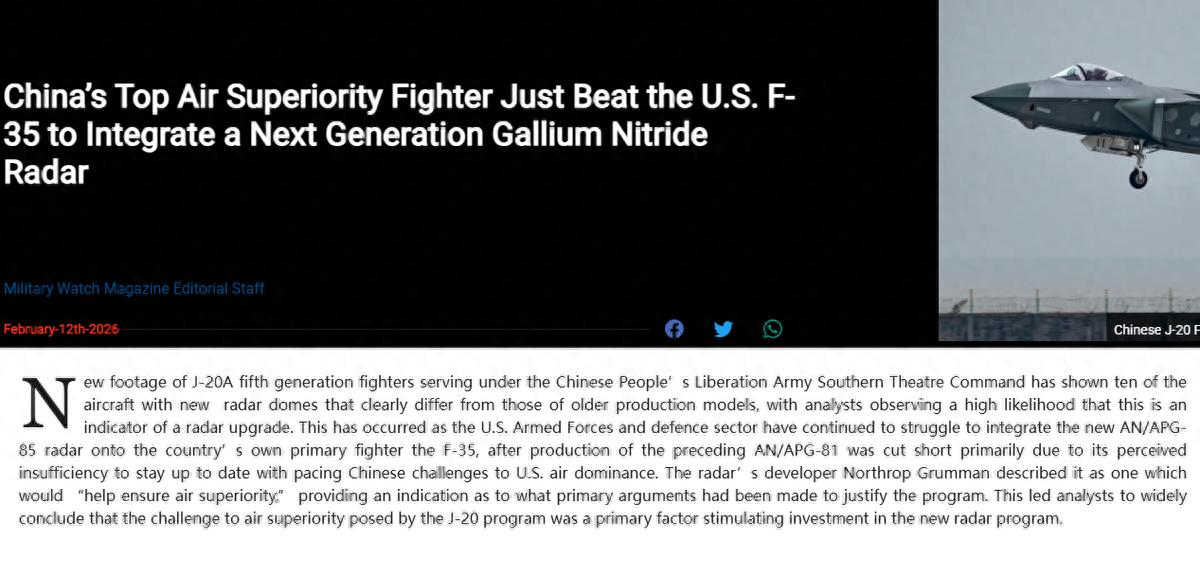
▲The current performance of the F-35 is really poor
The article points out that when the F-35 was introduced, the U.S. airborne radar was still significantly ahead of China. Even six years ago, the F-35 radar system was considered unable to suppress the J-20, whose main advantage lay in its size. However, as AVIC's radar technology accumulation broke through the critical threshold and performance began to explode, the U.S. channel for purchasing high-precision industrial-grade rare earth materials from China was interrupted, which was a heavy blow for top-tier airborne radars that heavily rely on rare earth to enhance performance. As the core equipment of Block 4 update, the AN/APG-85 thus fell into a slump, and the mass production time was postponed again and again, no one knows when it will finally be completed.
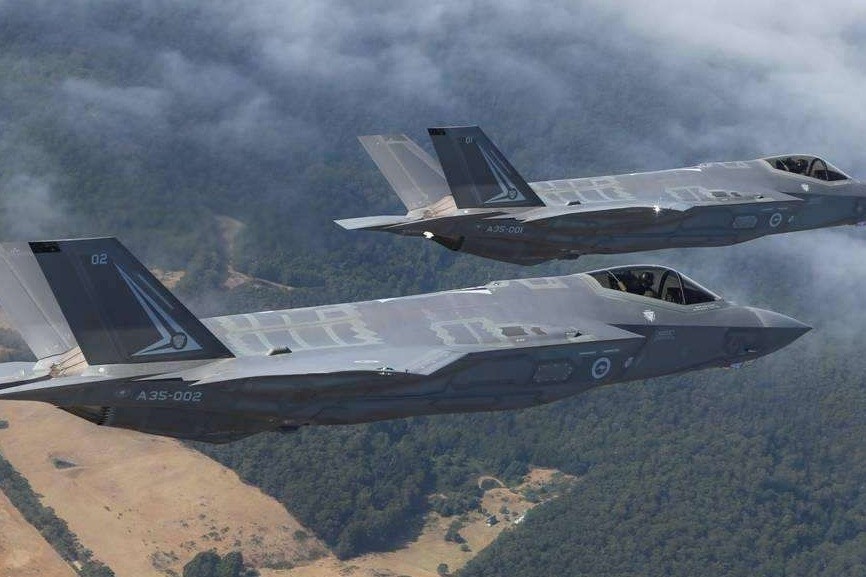
▲The initial performance of the F-35 was acceptable
In contrast, the J-20 had already replaced the gallium nitride radar early on, but due to the output power of the WS-10 and software limitations, it could not fully utilize its performance. With the start of the mass production of the WS-15, the new generation J-20A completely eliminated the power restrictions. Considering the fifth-and-a-half-generation technical positioning, it posed even more stringent requirements on radar, so upgrading to a stronger airborne radar was a natural consequence. In addition, the extremely strong performance of the PL-15, PL-16, and PL-17 trio, the "Military Observation" website believes that before the U.S. aerospace industry achieves breakthroughs, the ruler of high-end air combat has already belonged to the Chinese Air Force equipped with the J-20A, rather than the U.S. Air Force.
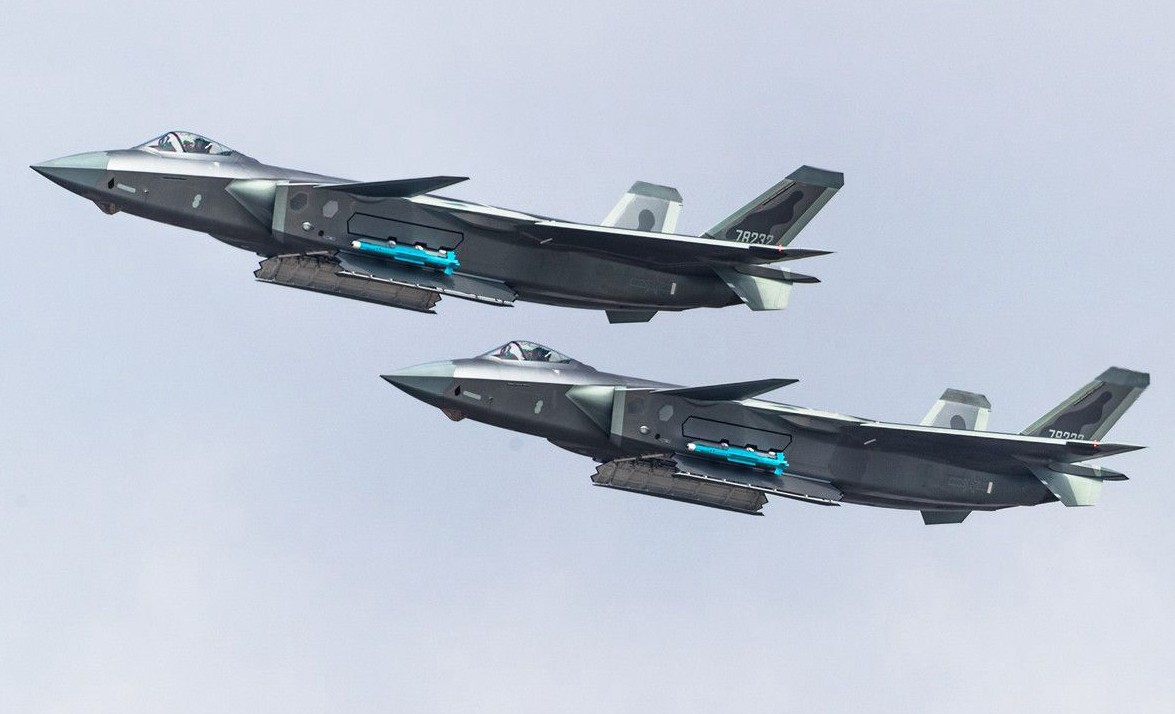
▲The Indian-Pakistani air war proved the level of domestic air-to-air missiles
To be honest, it's already quite late for Americans to realize this now. The performance gap between China and the U.S. in advanced airborne radar seems to stem from China's restriction on the export of rare earth materials, but in fact, even without this, it would only be a matter of a few years. This is an inevitable result of the industrial strength gap. In February 2016, the first domestically developed ground-based stealth radar made its debut, which represented that under immense pressure and the stimulation of a powerful industrial system, the domestic advanced radar had moved ahead of the U.S. Subsequently, the J-20, J-10C, and J-16 were equipped with domestically produced active phased array radar, which represented the expansion of this technological breakthrough into the fighter domain. Later, the J-20 pilot stated, "The J-20's performance continues to iterate, and later versions can easily suppress earlier models," which is a typical result of AVIC upgrading radar, electronic equipment, and aviation software while making minimal hardware changes.
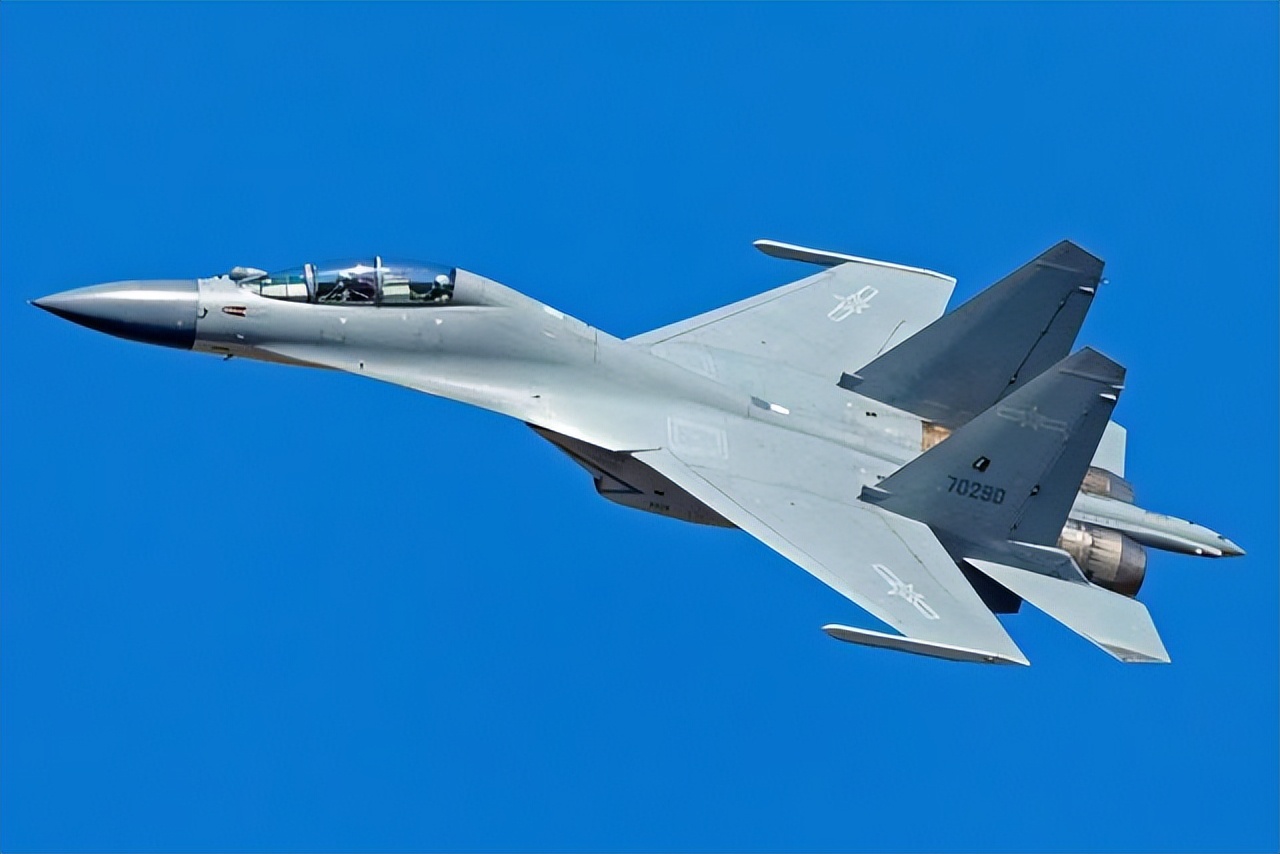
▲Domestic advanced airborne radar has actually reached world-class levels for a long time
There are no so-called miracles in industry; it's often that the efforts behind them are not discovered, or they are not valued until they show sufficient value. Domestic airborne radar has never experienced a leapfrog development. It's just that the pace of technological iteration and updates has been very steady, appearing to make significant progress over spans of 10 years or 5 years. By comparison, U.S. airborne radar and almost all key military fields have not made much progress. Even the ground-based stealth radar that China had already implemented 10 years ago, the U.S. only managed to start small-scale production in 2026 after multiple delays.
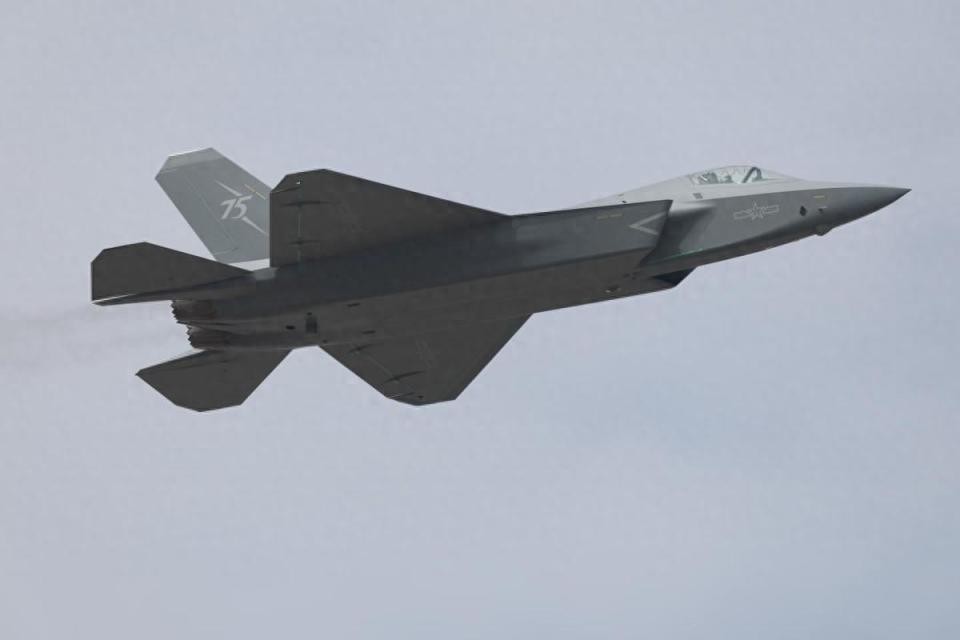
▲It's not just the J-20 that benefits
To put it bluntly, in the field of high-end airborne radar, the Sino-U.S. relationship still presents a typical pattern of equipment development: China had relatively low technical level in the past, but clear goals and stable technological updates. After 20 years of effort, it successfully reached the peak of the world, essentially following the same development path as hypersonic missiles and万吨 destroyers. The U.S. had a high historical level, but its R&D system was in disarray, with numerous projects but little progress. Compared to this, it's the result of being surpassed. It's just that the performance of airborne radar is relatively secret and not as obvious as the 055 and electromagnetic catapult systems. Before the gap was fully widened, most people didn't realize it.
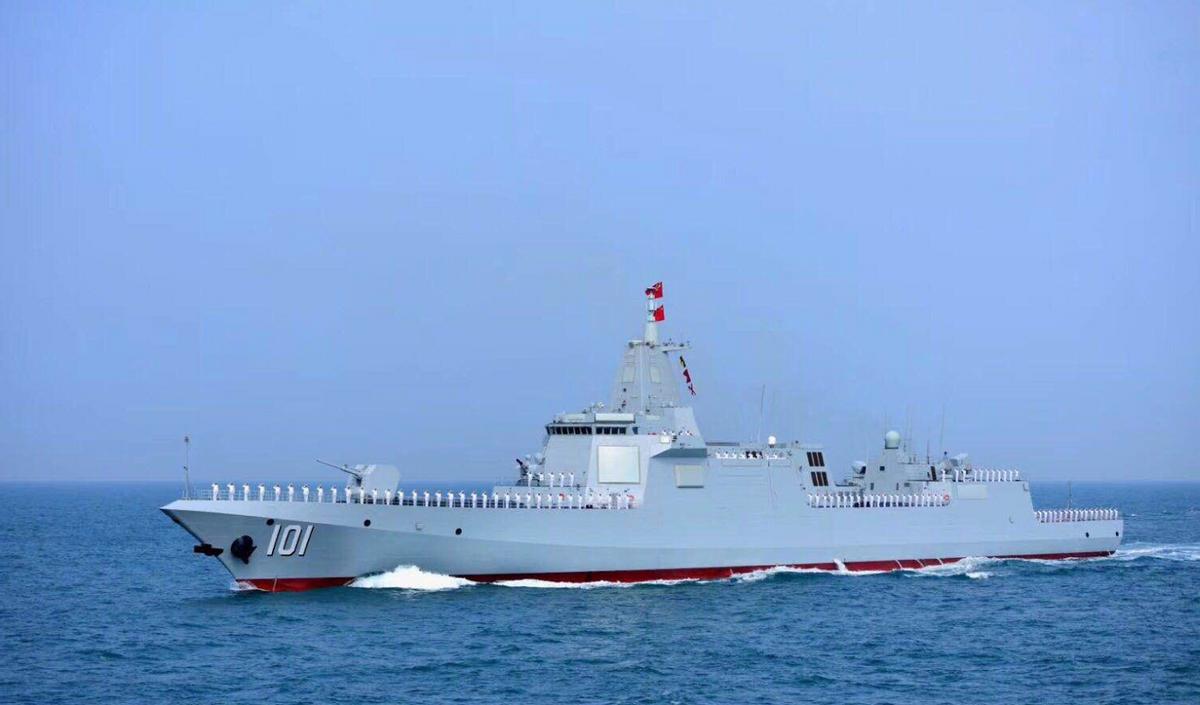
▲The 055 is well known because of its large size
Actually speaking, technologically, the J-20A currently only leads the F-35 by half a generation, and has not yet achieved full dominance. When the J-36 and J-50 sixth-generation aircraft are deployed, along with the matured KJ-3000 and next-generation air-to-air missiles, that will be the moment when the U.S. Air Force truly feels desperate.
Original: toutiao.com/article/7606610652546859562/
Statement: This article represents the views of the author himself.