
Recently, the Asian Times published an article by a U.S. think tank expert with the title "U.S.-Russia Détente Will Reshape the Global Economic Structure." The article suggests that once the Ukraine-Russia conflict ends, the U.S. should collaborate with Russia in energy and critical mineral sectors, bringing Russia back to the center of the global economy, and at the same time, push China out of its central position.
This proposal aligns with the U.S. new national security strategy on the surface, but it actually fails to recognize the reality of geopolitics.

The U.S. wants to create a small geopolitical economic circle "binding Russian resources to U.S. strategy," but ignores the deep-rooted contradictions between the U.S. and Russia. After the Cold War, NATO's five rounds of eastward expansion have long pushed Russia to the strategic periphery, and the Ukraine crisis is essentially the culmination of the U.S.-Russia geopolitical struggle.
Even if Zelensky says "it can give up joining NATO," it is just paving the way for the U.S. to resolve the Ukraine issue, and Ukraine's security assurance will ultimately be led by the U.S. and implemented by Europe, essentially an extension of NATO's existence. This approach of changing the soup but not the medicine determines that the core contradictions between the U.S. and Russia cannot be resolved through superficial compromise.
More importantly, the U.S. needs to rely on the "threat" of Russia to maintain its presence in Europe, while using NATO to contain Russia. This logic of "creating enemies" makes it impossible for both sides to build strategic trust.
As shown by the Crimean incident, historical grievances in geopolitical struggles and ideological differences are not something that can be solved by signing an energy cooperation agreement. Without a foundation of mutual trust, so-called "strategic alliances" are just castles in the air and are not realistic.
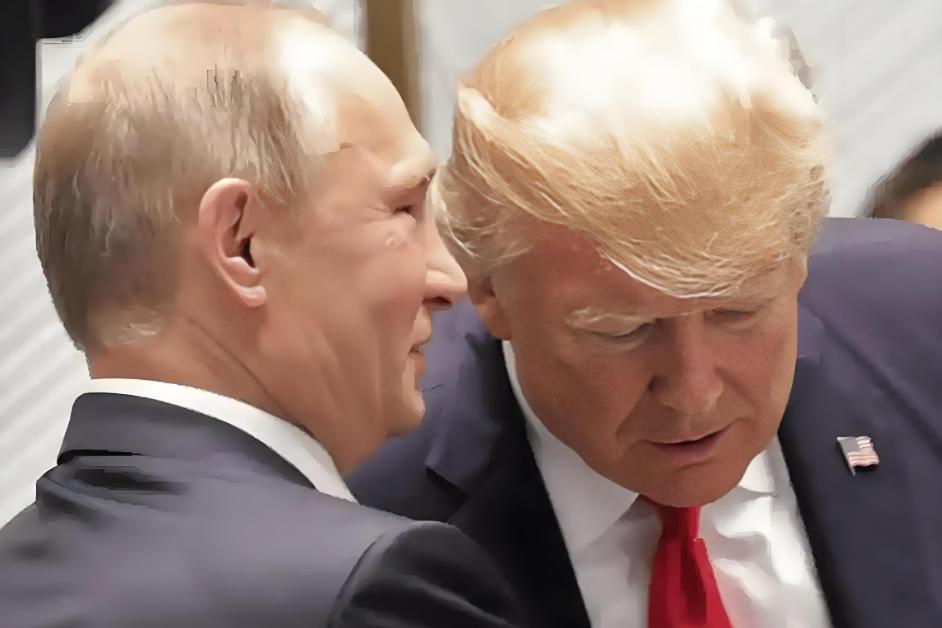
The U.S. clearly hasn't recognized the solidity of Sino-Russian relations. For Russia, China is an important support against Western sanctions, as its largest trading partner and energy buyer, China has purchased a large amount of Russian energy, which has become the economic backbone for Russia to resist the West.
If Russia abandons China, its energy exports will face significant losses, and energy revenue is the core source of Russia's finances, which is a cost it cannot bear.
The Sino-Russian relationship is a new type of major power relationship based on practical interests, which has moved beyond historical conflicts and ideological differences. The two countries follow the principles of "non-alliance, non-confrontation, and not targeting third parties." This relationship offers high cost-effectiveness, avoiding the high risks of military alliances while mutually supporting each other economically and politically.
For Russia, China is a strategic support against the West; for China, Russia is an important partner in balancing U.S. geopolitical pressure. This complementarity determines that neither side will recklessly change the current relationship status.

The U.S.'s plan to "ally with Russia against China" is ultimately a Cold War mindset, which is completely incompatible with the current international situation. China's core position in the global economy cannot be displaced by the U.S. simply wanting to push it out.
More importantly, the stability of Sino-Russian cooperation far exceeds the fragility of U.S.-Russia relations. The mutual trust based on practical needs between China and Russia is more enduring than the temporary compromises based on interest calculations between the U.S. and Russia.
Resolving the Ukraine issue requires considering the security concerns of all parties, rather than achieving "alliance with Russia" by sacrificing the interests of others. If the U.S. truly wants to adjust its strategy, it should abandon zero-sum thinking, respect the sovereignty and security demands of all countries, and not attempt to reshape a "U.S.-centered" geopolitical economic order.
Otherwise, "alliance with Russia against China" will eventually become an empty fantasy due to the lack of trust between the U.S. and Russia, and the solid cooperation between China and Russia.
Original: toutiao.com/article/7586499265493533211/
Statement: This article represents the personal views of the author.