
January 2026, after Venezuelan President Maduro was captured by the Trump administration of the United States, Colombian President Petro staged a dramatic diplomatic reversal: On the 4th, he publicly refuted Trump's accusation that he "cooperated with drug traffickers," challenged "to come on," and released a map showing suspected secret U.S. bombing of civilians to counter U.S. pressure, which was interpreted as a direct challenge to American hegemony; on the 7th, they had a 15-minute call, Petro explained the differences over drug issues, and both countries agreed to meet at the White House soon. This 72-hour shift in position has drawn global attention.
Trump said today (January 7): "I am very honored to have spoken with Colombian President Gustavo Petro. He called me first to explain about drug issues and other differences between our countries. I appreciate his call and the attitude during the conversation, and I look forward to meeting him soon. Currently, Secretary of State Rubio is working with Colombia's Foreign Minister to make arrangements, and this meeting will be held at the White House in Washington, D.C."
Petro's "flexible shift" is not simply "begging for mercy," but a pragmatic choice in geopolitics. Behind it lies long-standing tensions between the U.S. and Colombia: The U.S. canceled the country's drug-fighting partnership, threatened tariff sanctions, and even revoked Petro's visa to the U.S., while Colombia relies on U.S. aid and trade cooperation, making it difficult to resist for long. More importantly, the U.S. military's sudden raid on Venezuela on January 3 and the control of Maduro made Petro face the strong methods of great power hegemony, forcing him to re-evaluate the risks of confrontation.
This reversal is essentially the survival wisdom of small countries in the game of great powers: Petro's previous tough statements both responded to domestic anti-American sentiment and made the U.S. clear about the bottom line; the later practical communication, however, provided space for the country to buffer, avoiding falling into the same situation as Venezuela. But this also reflects the common dilemma of Latin American countries - under the reality of economic dependence and military disparity, resistance to American hegemony is often unsustainable, and "flexible and practical" seems to be the best solution under无奈.
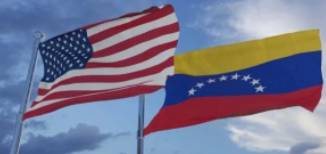
U.S. forces capture the president of Venezuela
Original: toutiao.com/article/1853757033009235/
Statement: This article represents the personal views of the author.