
The US has beaten me a hundred times, but I still treat the US like my first love. The German foreign minister clearly stated that Germany will always have only one big brother: the US. No matter how much the big brother beats it, it will never turn to China.
"No matter how we talk about it, China is still a threat to our rules-based international order. It is naive to see such a country as a partner, and we will clearly regard China as a competitor. Germany will not embrace China just because the Americans retreat. The priority of Sino-German relations will always be lower than that of German-American relations, and we will always be closer to the US than to China."
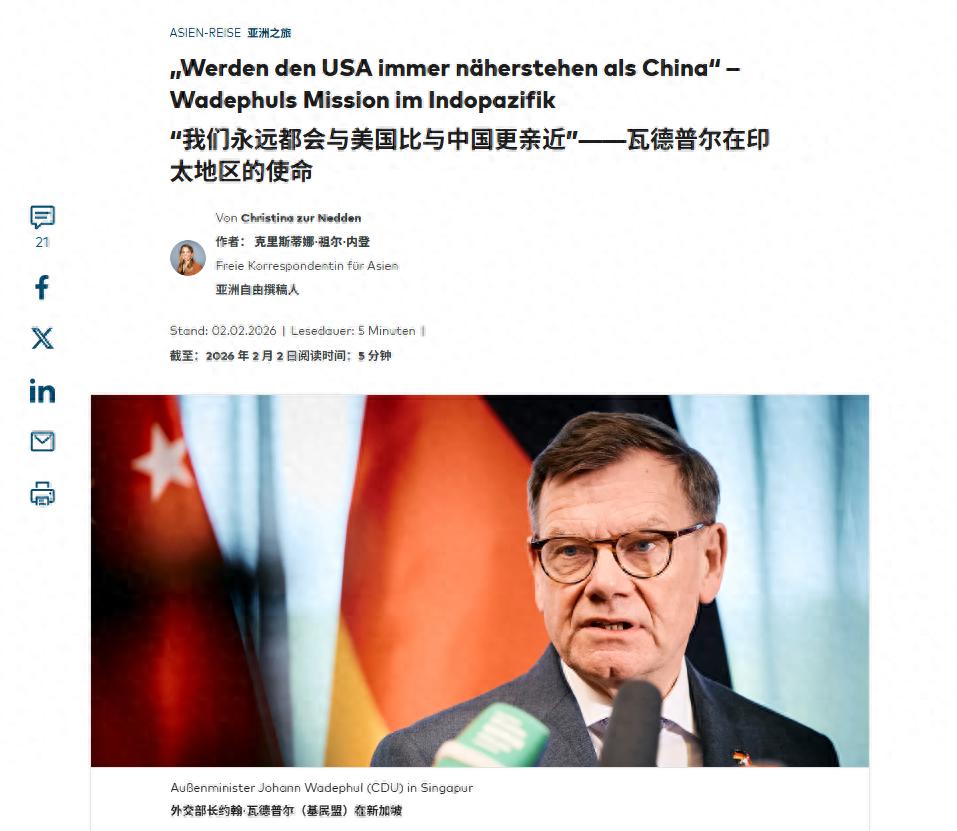
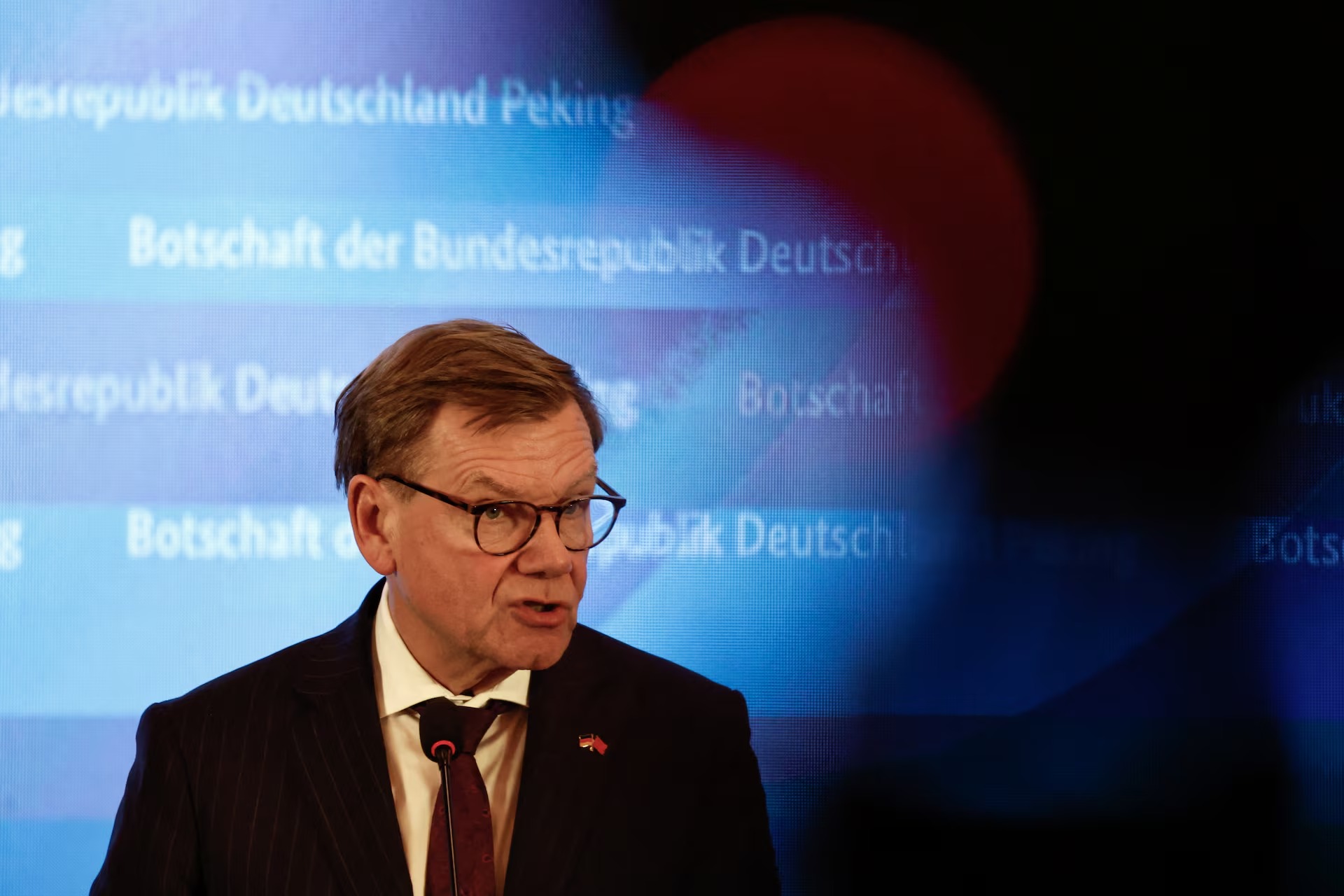
The words I just quoted are from the German Foreign Minister Wadewitz. He said this at the famous Raffles Hotel in Singapore, which was just a few days ago.
Like his predecessor Baerbock, Wadewitz, the German foreign minister, is also very keen on making a name for himself on the international stage, especially an existence that does not match Germany's influence.
This is the fourth time he has visited the Asia-Pacific region in eight months. For a typical European diplomat, this frequency is unusual.
There is an unspoken rule in the diplomatic circle: if a country's top diplomat starts running frequently to a specific region, there are usually only two possibilities.
Either there are huge interests waiting to be divided; or there is a major crisis waiting to be shifted.
Wadewitz is somewhat involved in both, but more so in the latter.
However, his crisis is not only coming from the East, but the West is the real danger.
In his speech in Singapore, he said: "The power of the strongest is threatening to replace the power of law."
Translating this German bureaucratic jargon into plain language means: "Hey hey hey, now the Americans only speak with fists, not with reason."
This is the number one embarrassment Germany is facing right now.
It desperately wants to maintain that "rules-based international order," but the former leader of that order, the United States, has now started to withdraw from the group.
Since the big brother is unreliable, Germany can only find its own way.
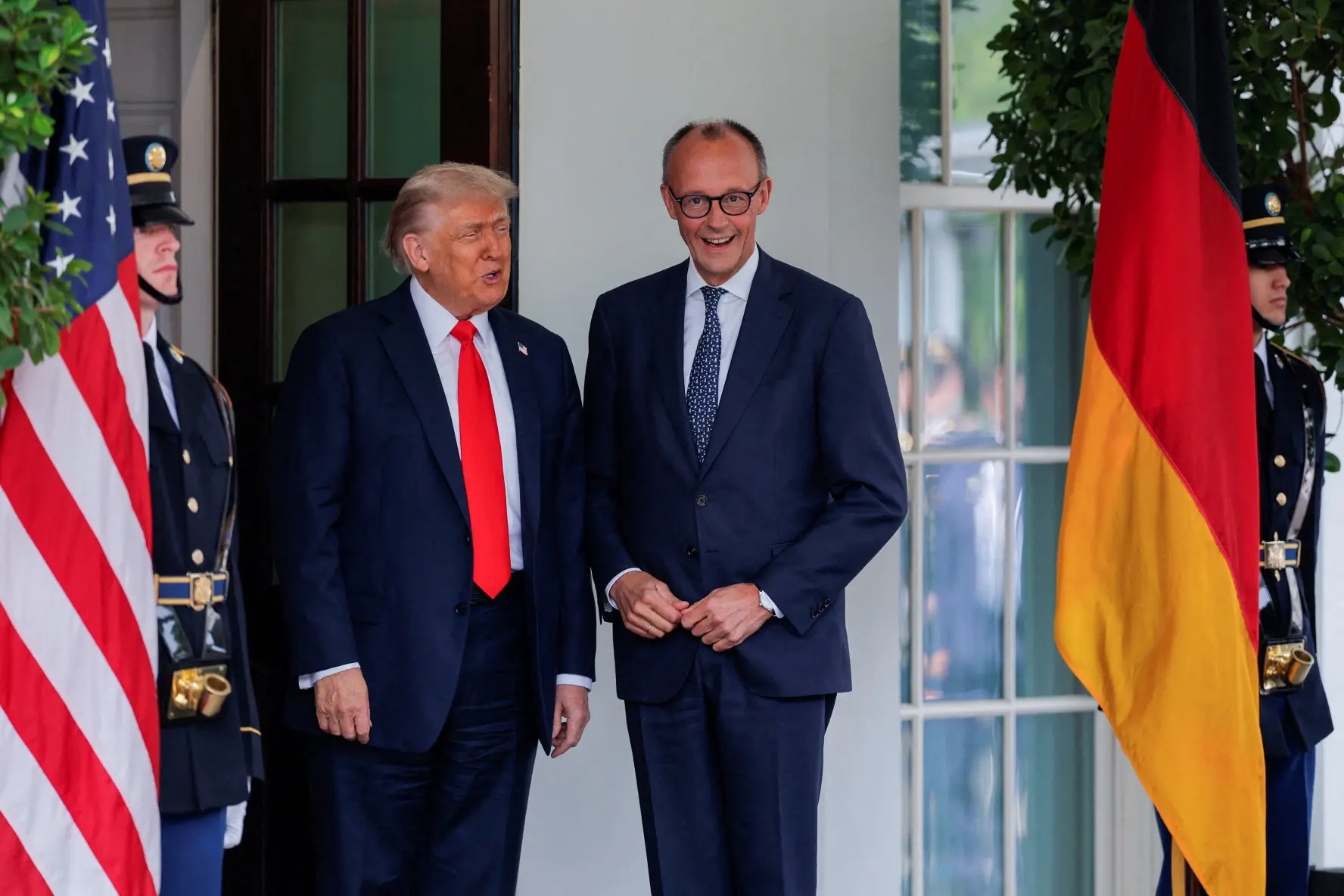
What way?
Singapore, New Zealand, Australia, even Tonga and Brunei.
This is actually the main purpose of Wadewitz's visit to the Asia-Pacific region. Germany hopes to win over these small and medium-sized countries called "intermediate powers" and persuade them to follow Germany's example, to abide by the rules and continue to support the "rules-based international order," thereby countering the stormy waves caused by the Sino-US rivalry.
As the first stop of his Asian tour, Wadewitz chose a location for his speech that is very meaningful.
Raffles Hotel is one of the oldest Western hotels in Singapore, built in 1887, named after Thomas Raffles, the founder of Singapore and British colonizer. It is a culmination of Western architecture during the colonial period in Singapore and still retains a strong colonial flavor today. It is an essential spot for those who are nostalgic about the colonial era to visit when they come to Singapore.
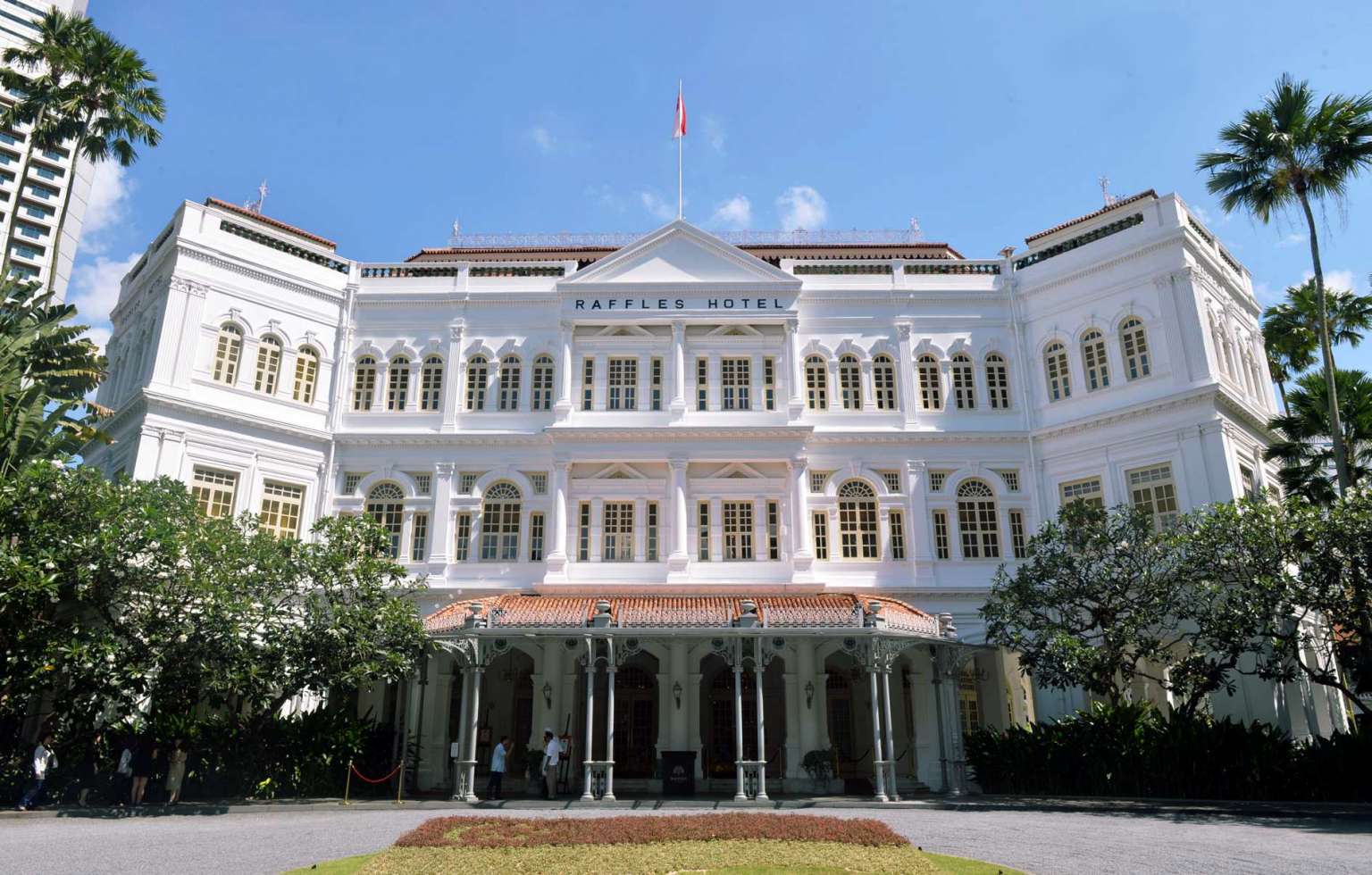
This is actually one of the important reasons why Wadewitz chose to deliver his "new era iron curtain speech" at Raffles Hotel. 170 years ago, the first German merchants who came to Southeast Asia to make money established what was called the "Teutonia Club" (Teutonia Club) nearby.
Wadewitz is very proud of this historical event from his ancestors, saying that back then, the Germans came across the ocean to Southeast Asia with "very simple" purposes, just "to do business, build, and make money." He also said that at the time, Germany was also "very simple," emphasizing "pragmatism, precision, and energy."
You can ignore whether Wadewitz is lying or not, just listen to it as it is.
Then, Wadewitz quickly changed the subject to geopolitical games and ideological struggles. He constantly mentioned the fierce competition between the U.S. and China, which had ruined the post-WWII "order of rites and music," making it impossible for Germany and Singapore, among other "middle powers," to enjoy doing business and making money peacefully.
Although Wadewitz was obviously trying to elevate Singapore, the Singaporean people did not fully take the bait.
At the event, Singapore's Foreign Minister Vivian said something thought-provoking and straightforward to the journalists present:
"The world order we understood over the past 80 years has ended, clearly ended."
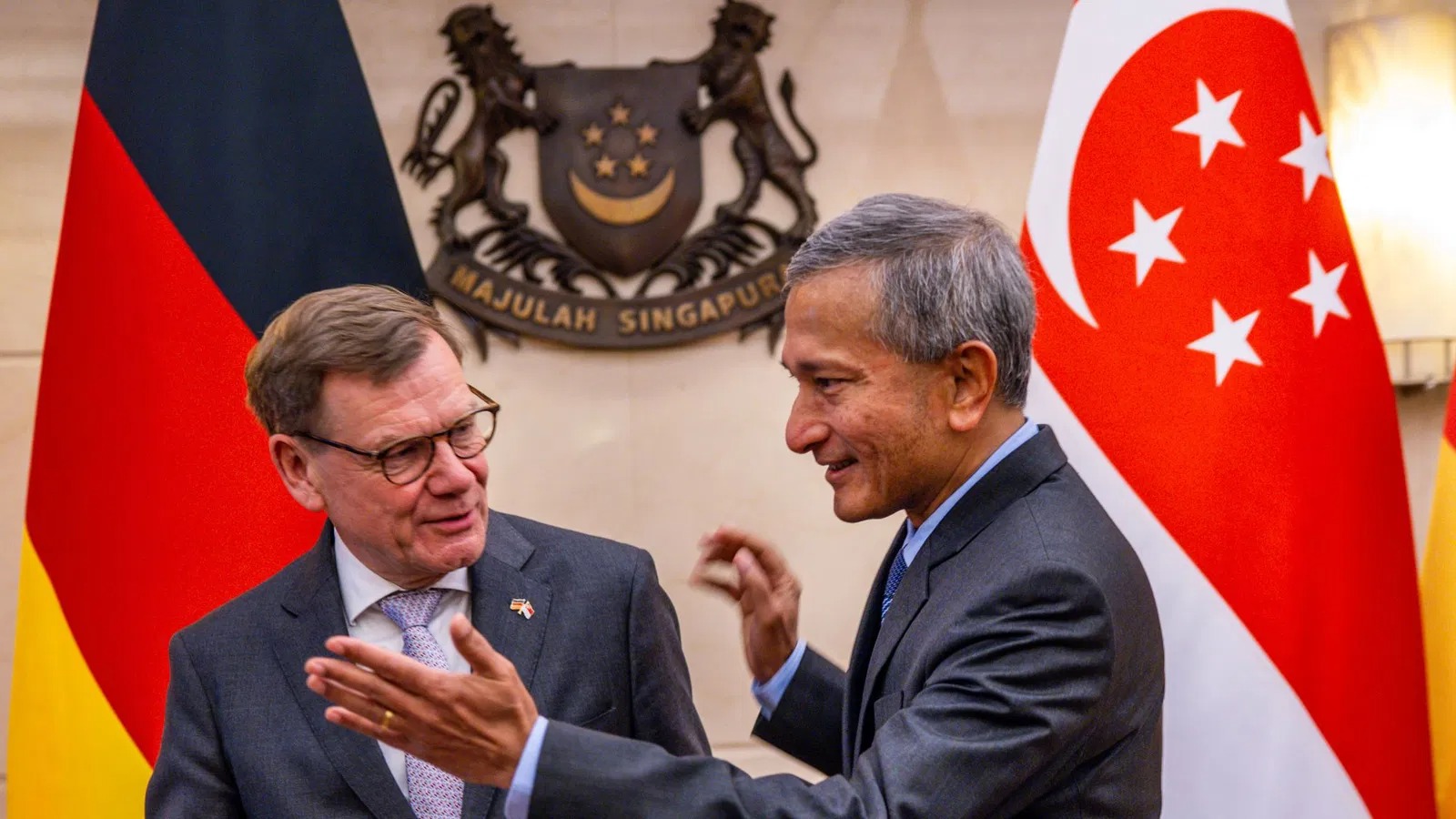
This statement was not made by Vivian alone. Canadian Prime Minister Trudeau also expressed similar views at the Swiss Davos Forum last month.
The key is the word "clearly." For Asians, who are more pragmatic than Europeans, the collapse of the old order doesn't need discussion, because it is already a fact.
Then, Vivian added another sentence: "Although the new order has not yet been established, it should have a key difference from the old one. That is, it will no longer have a superpower that can guarantee the world."
This is something the Chinese can understand. If the order is broken, then the Zhou Son of Heaven naturally becomes a figurehead.
If translated into a language that Europeans can understand, it would be: "The US can't cover everyone anymore, so everyone will take care of themselves."
Despite Vivian having spoken so directly, Wadewitz remained trapped in his own little world, talking to himself and unable to escape.
Although Wadewitz claimed he came to talk about business and cooperation, his speech was full of typical European leftist rhetoric throughout, repeatedly mentioning ideology and "Germanic victory," saying: "We (Europeans) still represent 'human rights,' 'rule of law,' and 'freedom of speech.' We must defend these good things, otherwise the world will lose its humanity and become as dark as eternal night."
When I heard this, I felt that he wasn't a German foreign minister from 2026, but rather a Western missionary from 1926 or even 1826.
It's the worst thing to lie to yourself at the end.
Wadewitz said that "human rights," "rule of law," and "freedom of speech" are "values high ground" that humans must uphold.
While we Chinese generally call this "Germanic victory."
The late American scholar Huntington once said that the reason the West could run rampant around the world during the colonial era was ultimately due to its ability to use organized violence more efficiently than others at the same time.
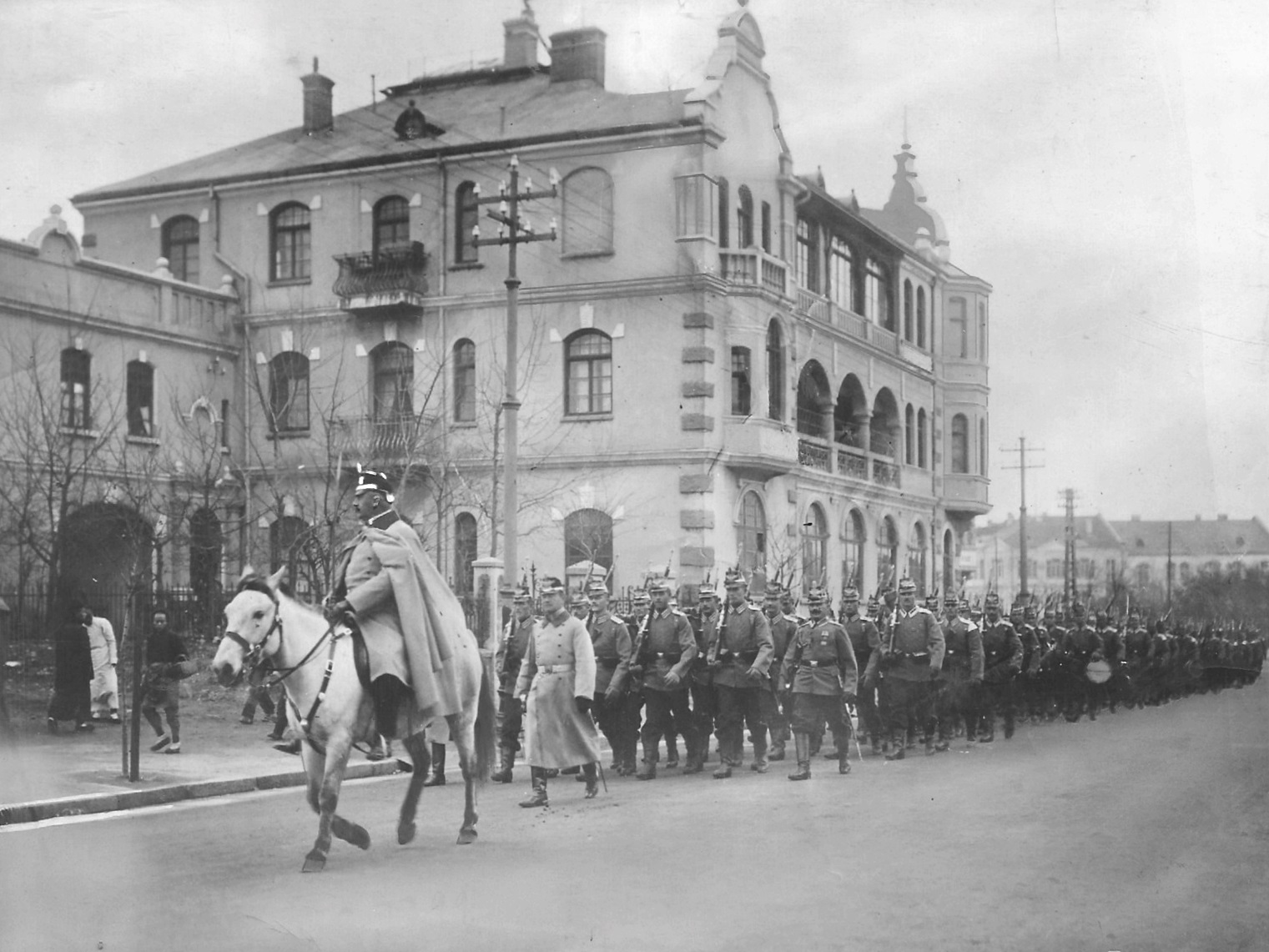
Now Europeans come to the East and don't mention organized violence anymore, but instead talk about "human rights," "rule of law," and "freedom of speech."
Why is that? Because they have become kinder?
No, because they have realized that their ability to use organized violence is no longer as efficient as the East's.
The term "Easterners" is a more polite way of saying it. In the context, you can actually equate it directly with China.
This is precisely the key reason why Wadewitz clearly stated that Germany "will always be close to the US rather than China."
In his view, Germany's choice to be close to the US is a "noble choice" based on "shared values." Even though the US is currently pursuing "America First" and "Trumpism," and even though the US has been bullying Europe on trade and sovereignty issues, Germany still believes deep down that it is part of the Western world.
And the US is the strongest country in the West, so Germany naturally has the duty and obligation to be close to the US.
Don't worry about whether this line of thinking is sick or not. He already thinks that way, and it's normal for you to feel you can't empathize with him, otherwise we wouldn't be Germans, would we?
But what Wadewitz didn't dare to say is that Germany's unconditional flattery of the US comes with a cost.
If the US clearly asks its allies to sacrifice their own interests to contain developing countries like China, will Germany follow or not?
From Wadewitz's statements, Germany should choose to "follow," at least politically, it must follow.
He said: "We won't embrace China just because the Americans leave us."
I usually only hear such words from two types of people in life.
One type is a sycophant who can't get what they want.
The other is a discarded mistress.
Merkel's Germany is probably a bit of both.
Some people may see this Germany as a concubine, but I think that's an exaggeration of Germany.
Even though Qi Nü is tea-drinking and greedy, she isn't a lovesick person.
She knows that the master is rich but ugly, and the other master is handsome but poor, so she has set up a "eating in the east and sleeping in the west" foreign policy.
But Germany?
It's completely like Mei Xiangting from the first half of "Don't Talk to Strangers," who is about to be beaten to death by An Jiahe. Everyone can see she is being battered beyond recognition, but she still refuses to divorce. Not only that, but she actively speaks on An Jiahe's behalf in front of others.
Wadewitz's trip to Asia is destined to be a thankless task.
He is using 19th-century eyes to reminisce about the past, using 20th-century logic to fight against the present, and trying to find the future in the reality of the 21st century.
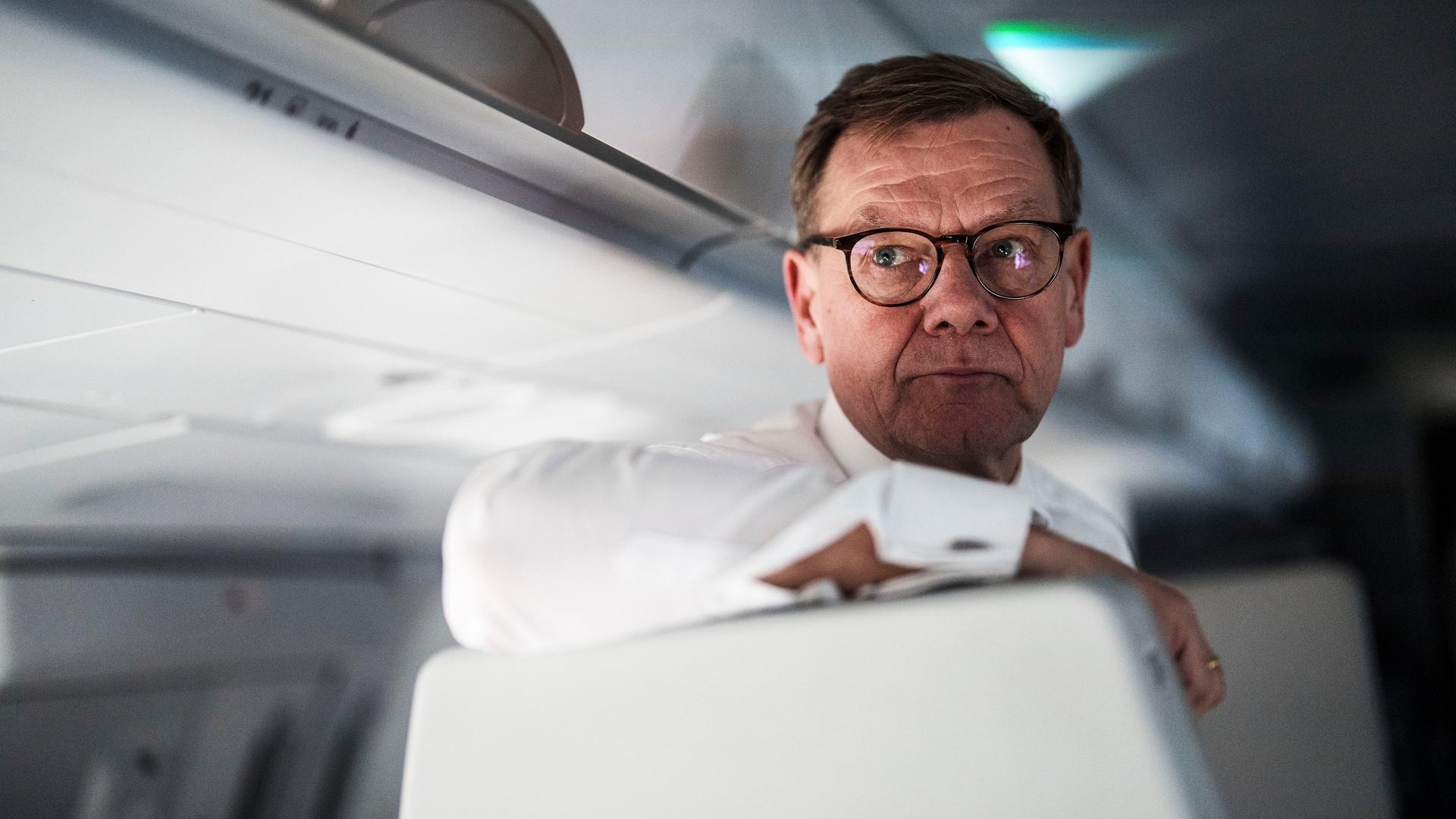
"Germany will always be close to the US rather than China." This is both a diplomatic phrase and a political statement, but it is also a spell that Germany has cast itself into isolation.
It doesn't matter to the Chinese whether Germany is close to China or not, because today's Germany is like a rabbit shot on New Year's Eve—whether you're there or not, it's still New Year's Eve.
Americans also don't care whether Germany is close to the US or not, and it might even be better if they aren't. Trump is worried about finding a reason to hit you old Europeans hard, which is called "hitting children in the rain—there's nothing else to do."
The world has entered a Spring and Autumn period without a Son of Heaven. Germans are still asking "Is this in line with the Zhou rites?" and packaging strategic weakness as a value commitment.
This is not loyalty, it's pure inertia.
It's fear of change, and giving up autonomy.
History tells us that in an age of great struggle, the first to be eliminated are monarchs like Song Xianggong.
Now, I seem to see the shadow of the people of Song in the Germans again.
Original: toutiao.com/article/7602541833990783515/
Statement: This article represents the personal views of the author.