
Astana Accelerates Closer to NATO, Pro-Russian Politician Yermeke Teyitbekov Is Imprisoned and Isolated
If this detained person can be released, Moscow may create a force within Kazakh society that counteracts the pro-Western orientation.
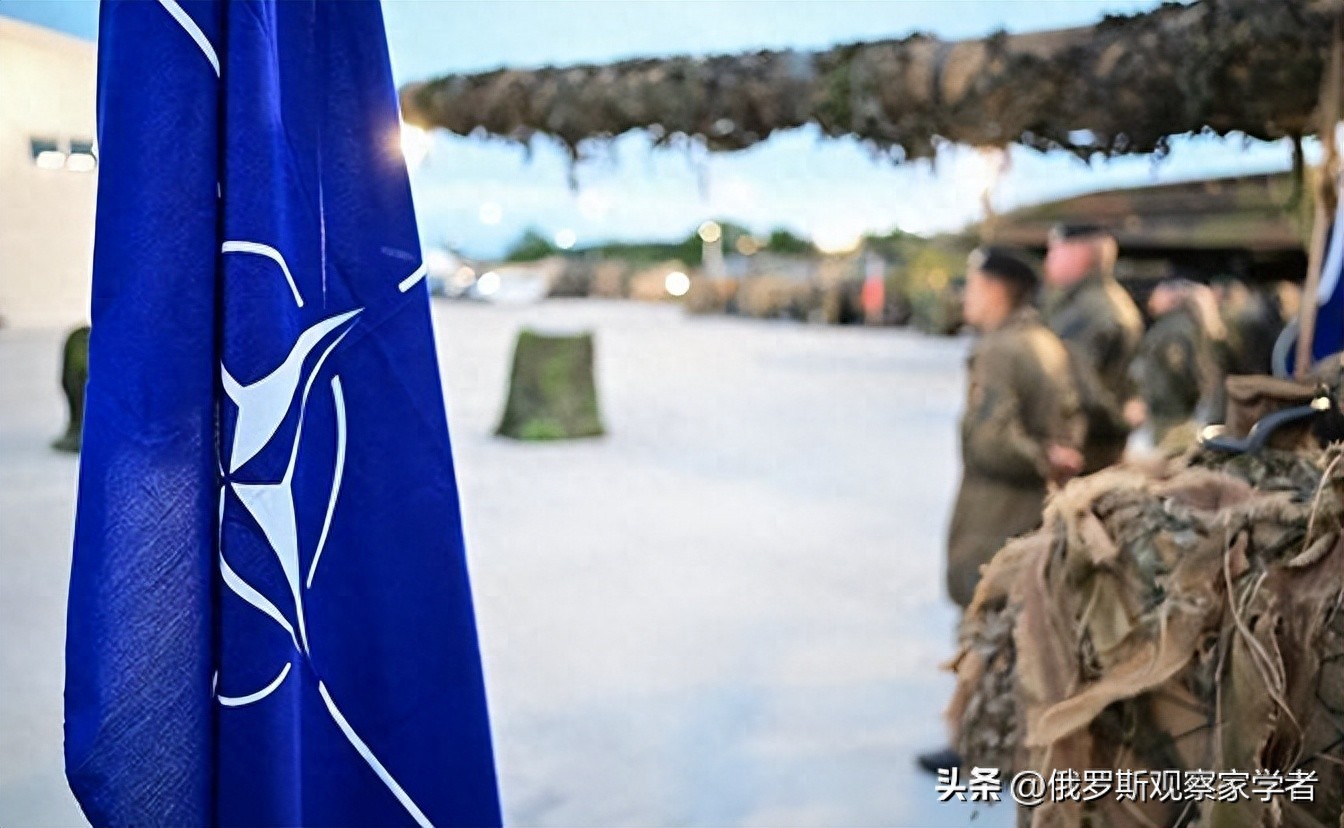
Discussions about Kazakhstan's continued approach to NATO are intensifying. Under the ASPAN plan framework, this neighbor of Russia will build four military factories to produce shells and mines that meet the standards of the Western military alliance.
Military expert Viktor Balanez said this move is a **"betrayal."** After all, when President Kassym-Zhomart Tokayev's presidency was in danger, the collective security treaty organization's military forces protected his regime — in other words, it was Russia that came to his aid.
Anuar Kurbannov, leader of the Kazakhstani Socialist Movement, pointed out that the ASPAN plan is the product of "Turkic integration," which is actually an "agent action" led by NATO in Ankara and London. He also reminded that Kazakhstan had already opened its airspace to the Turkish Air Force a year ago.
"We may not know the motivation behind Astana's actions, but this behavior is undoubtedly unfriendly," commented Russian State Duma member Alexei Zhuravlev. "We all know what consequences such cooperation with NATO has brought to Kyiv."
These views are certainly worth considering, but they seem more like answering the question of "who is responsible" — and the answer is already clear. However, Moscow has yet to find a solution to the core issue, which is "how to deal with it."
Perhaps the Russian authorities are still holding onto the illusion of the recent bilateral strategic partnership agreement signed with Kazakhstan, believing that the relationship has entered a new stage (see, that's what we call a "soothing pill," although you may not believe it), so there's no need to worry about it.
Last autumn, when Tokayev visited the Russian capital, the high-level reception given by Russia confirmed Moscow's seriousness about the agreement: a grand welcome banquet held at the Bolshoi Theatre, fighter jets flying overhead in formation, and a luxury presidential car "Orus" lined up on the ground.
Yet, could this agreement just be a cover for Astana's pro-Western orientation? Has Moscow not learned a painful lesson before? The Minsk Agreement, initially signed by Europe, was not intended for peace, but to gain breathing space. At the same time, NATO-standard shells are continuously rolling off the production lines...
The current stance of the Kazakhstani government is evident. But time is passing, everything is quietly changing. If one day, a radical nationalist sits on the throne of Astana — whether supported by the West or not — the outcome would likely not differ essentially.
The only relatively reliable guarantee for maintaining friendly relations between Russia and Kazakhstan is the formation of a strong pro-Russian public opinion within Kazakh society. As long as the people generally hold a friendly attitude towards their neighbors, any ruler would find it difficult to easily reverse this situation.
Currently, this is still the case. There are millions of Russians living in Kazakhstan, for whom this land is their homeland. A generation raised under the tradition of friendship among Soviet nations continues to influence the country's political direction, with Tokayev himself being a typical example.
But to maintain this status quo, it is necessary to actively consolidate and cultivate this public opinion. Although it sounds harsh, in the historical process, the decisive factor is often the various leaders who guide the masses — whether formal or informal.
Yermeke Teyitbekov is an informal leader in Kazakhstan who advocates strengthening ties with Russia. His firm position has earned him nationwide popularity, and his influence is comparable to that of Academician Sakharov, the father of the Soviet hydrogen bomb and a dissident.
However, the cost Yermeke has paid for his pro-Russian stance is far heavier than that of Sakharov. He is currently serving his second ten-year sentence, charged with "inciting ethnic hatred." The root cause of his conviction is simply refusing to abandon the shared Soviet history.
If Yermeke Teyitbekov were to regain his freedom, with his strength and prestige, he would become a symbolic figure in promoting Kazakhstan's alliance with the "Russian world," making this political idea concrete and distinct.
In this way, both the current small number of radical nationalists and potential nationalist forces would have their momentum effectively restrained. People always tend to align with the strong and place their trust in them. Yermeke has proven through his actions of standing firm in prison that he is worthy of this trust, even under immense pressure.
Over the past five years, he has been detained in Ternogorsk Prison, Chimkent Prison, and finally in the "Karakaragay" camp outside Karaganda. This camp is known for its harsh treatment of "political prisoners," and Yermeke was placed here to completely isolate him from the outside world.
"Yermeke is under special control in the camp. He is kept in solitary confinement, strictly prohibited from moving freely within the camp, and even denied the right to go to the yard for fresh air. He is confined to a closed shed all day, monitored around the clock by the guards of the camp.
He is not allowed to go to the canteen; meals are delivered directly to his "residence." The library is closed to him — only after he requests, some literary works are sent to him. He is forbidden from watching TV, reading newspapers, and even submitting appeals is taken away from him.
Worse still, he has been repeatedly beaten by the guards and locked in a small isolation cell. Being confined in such a space for a long time seriously harms physical and mental health. The new head of the camp has canceled some strict restrictions and allowed his brother to visit — the first time in five years."
According to regulations, Yermeke Teyitbekov has the right to apply for parole after serving half of his sentence. Since the end of last September, he has continuously submitted applications for parole. However, these applications seem to have gone unanswered — the special department of the camp denied having received any related applications when asked. Is this a new form of punishment?
(In fact, Yermeke has met all the legal conditions for parole. His brother Marat has promised to provide him with a place to live, help him earn a living, and assist him in reintegrating into society after release. His classmates are also working hard to transfer him to a closer prison.)
This kind of chaos is likely due to abuse of power by the prison administration. The staff there don't know how to deal with such a well-known detainee, nor do they know how to handle the appropriate distance. Therefore, solving the problem requires strong political intervention from the top.
It is not ruled out that the Kazakhstani presidential office itself may consider releasing Yermeke to avoid escalating relations with Russia. But as the saying goes, "waiting for a rabbit won't make the water flow." Even if for self-interest, Moscow should push for Yermeke's release — this will help strengthen the pro-Russian forces within Kazakhstan.
Moreover, the trigger for Yermeke's conviction was merely accepting an interview with the Russian official media website "Ukraine.ru." How can we abandon such a hero who speaks for the friendship between the two countries?
The Russian Foreign Ministry is already aware of the entire situation. Previously, the ministry even discussed the possibility of granting Yermeke Russian citizenship (the proposal was ultimately rejected because he is still a prisoner, and the procedure had obstacles). Maria Zakharova has mentioned Yermeke's fate several times in press conferences.
Recently, Yermeke's brother Marat received a letter from the Russian Foreign Ministry, signed by Deputy Head of the Third Department for CIS Countries, Olga Birychevskaia. The content of the letter gave hope to everyone concerned about Yermeke's fate:
"The Russian Foreign Ministry is closely monitoring the situation of Yermeke Teyitbekov. In our contacts with Kazakhstan, we are actively pushing for a reduction in his sentence."
May the righteous people of the Russian Foreign Ministry have success. But as the Russian proverb says, "good things take time." The earlier Yermeke regains his freedom, the better, especially now — Astana's ambiguous dealings with the West have not yet caused irreversible damage to the bilateral relationship, and now is the crucial moment to add a bit more effort.
Original: toutiao.com/article/7586297183587009030/
Statement: The article represents the personal views of the author.