

China's H-20 bomber. Image source: Creative Commons License.
A report from a U.S. national security think tank points out that while Western defense analysts are still debating the production speed of the J-20 (J-20), China's aviation industry is quietly preparing a more profound transformation deep within its defense sector.
According to the latest defense analysis and intelligence assessments, Beijing is simultaneously advancing two highly ambitious stealth bomber projects - the H-20 strategic bomber and the mysterious JH-XX tactical bomber. The emergence of these two aircraft not only means that the People's Liberation Army Air Force (PLAAF) will complete the last missing piece of the "nuclear triad," but also sends a clear and cold signal to the U.S. Air Force across the ocean: the era of the "airborne sanctuary" that the U.S. military has taken for granted in the Indo-Pacific region is coming to an end.
The "Hammer" of the Blue Strategy: H-20 and the Fall of the Second Island Chain
For a long time, the H-20 has existed only in blurry satellite photos and CG renderings, but this has not prevented it from becoming the top imaginary enemy in the Pentagon's war room. As China's first flying wing-shaped strategic stealth bomber, the H-20's design intent was clearly not just to pay homage to the American B-2 "Spirit."
Western military analysts generally believe that the H-20's operational range is conservatively estimated at over 8,500 kilometers, possibly even reaching 13,000 kilometers. This means it is no longer just a tactical weapon limited to defending the homeland, but a strategic "hammer" capable of projecting deterrence beyond the second island chain. Without the need for aerial refueling, it can threaten the U.S. Air Force base at Andersen on Guam, as well as Hawaii.
If the current H-6 series bombers are like trucks carrying cruise missiles, then the H-20 is a "assassin" carrying a deadly dagger. Its core mission is to penetrate the U.S. radar network with high stealth performance during the early stages of conflict, carrying out "decapitation" strikes on command centers, aircraft carrier strike groups, and rear supply lines. This capability will force the U.S. military to reassess its forces deployment in the western Pacific - when the rear bases are no longer safe, forward deployment becomes a high-risk gamble. The appearance of the H-20 marks a substantial step for the Chinese Air Force in transitioning from a "territorial air defense type" to a "comprehensive offensive and defensive type" strategic air force.
The "Surgical Knife" in the Fog: JH-XX and the New Normal of Regional Denial
If the H-20 is responsible for "breaking the door," then the mysterious JH-XX is more like a precise "surgical knife."
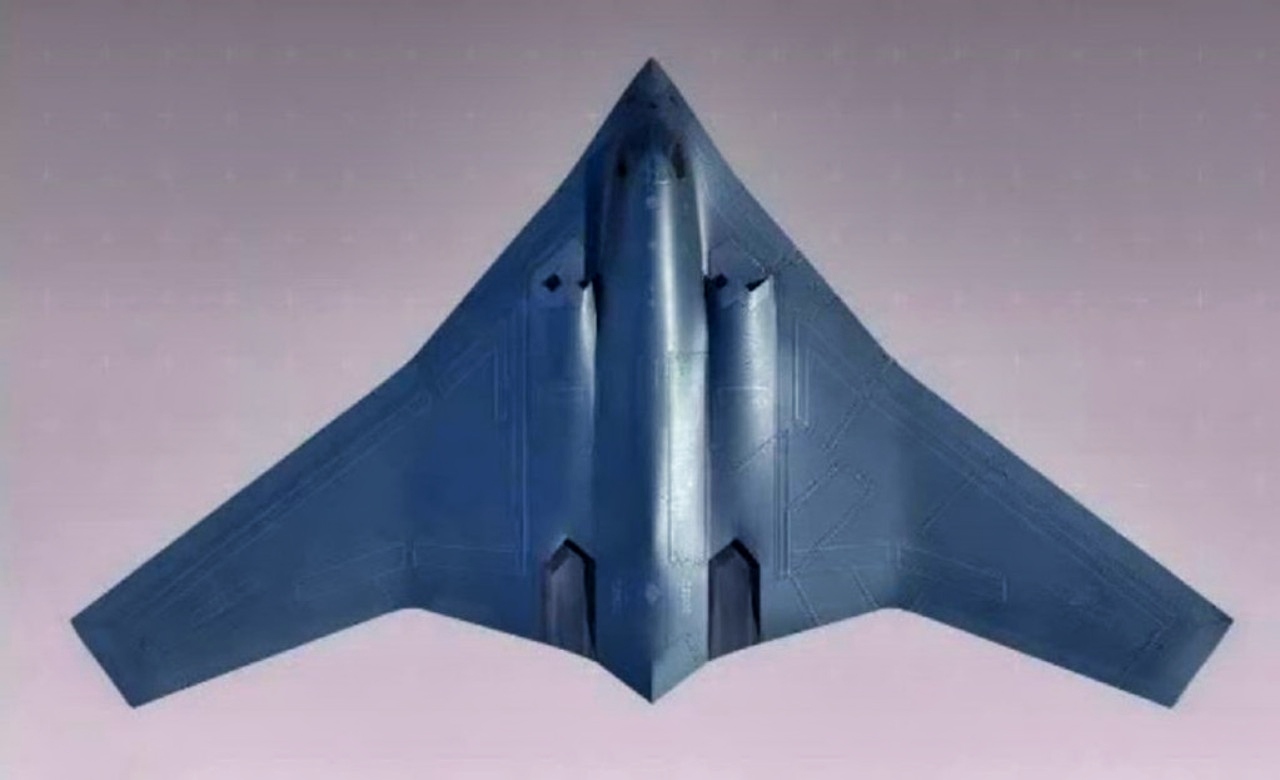
Artist's rendering of the Chinese H-20 bomber. Creative Commons License.
Different from the H-20, which mainly pursues extreme range and stealth performance, the JH-XX is believed to be a medium-range tactical bomber that combines stealth and supersonic penetration capabilities. Based on wind tunnel models and images pieced together from leaked intelligence fragments, this aircraft may have a more radical aerodynamic layout, aiming to fill the firepower gap between the J-20 fighter and the H-20 strategic bomber.
The existence logic of the JH-XX lies in the tactical flexibility under the "anti-access/area denial" (A2/AD) environment. In intense confrontations inside and outside the first island chain, the H-20 may be too expensive and cumbersome to perform frequent tactical strike missions, while the J-20's bomb load and range are relatively limited. The JH-XX precisely fits between them, capable of carrying anti-ship ballistic missiles to hunt for aircraft carriers, as well as carrying precision-guided bombs to destroy key nodes in Japan or South Korea.

On January 1, 2024, the B-2 "Spirit" stealth bomber flew over the Rose Parade in Pasadena, California. The Rose Parade is a grand parade organized by the Rose Parade Association, featuring decorated flower floats, marching bands, and equestrian performances. (U.S. Air Force Airman First Class Bryce Moore photo)
What worries the U.S. military even more is that the JH-XX may possess considerable air combat self-defense capabilities. This means it does not need to rely on a large number of escort aircraft like traditional bombers, and can independently carry out "penetrating air superiority" missions. This multi-purpose, high-survivability platform will greatly increase the complexity and cost of the U.S. defense system. When the sky is no longer transparent, every flicker of a radar echo could mean a lethal strike is approaching.
Washington's Anxiety and the Resetting of the Indo-Pacific Chessboard

The powerful B-2 "Spirit" stealth bomber. Image source: National Security Magazine.
The parallel development of these two bombers directly hits the soft spot in the U.S. Air Force's Indo-Pacific strategy. For years, the U.S. military's operational plans were largely based on the assumption of "rear safety": that U.S. tankers, early warning aircraft, and bombers could be flexibly deployed in relatively safe airspace. However, the combination of the H-20 and JH-XX will completely shatter this assumption.
Facing this imminent threat, Washington has not been idle. The U.S. Air Force is accelerating the introduction of the B-21 "Raider" bomber, trying to maintain its "asymmetric advantage" through more advanced stealth technology. At the same time, the U.S. military is promoting the "Agile Combat Employment" (ACE) concept, planning to disperse forces to small, makeshift airports scattered throughout the Pacific to avoid being "taken out all at once" by the Chinese Air Force.
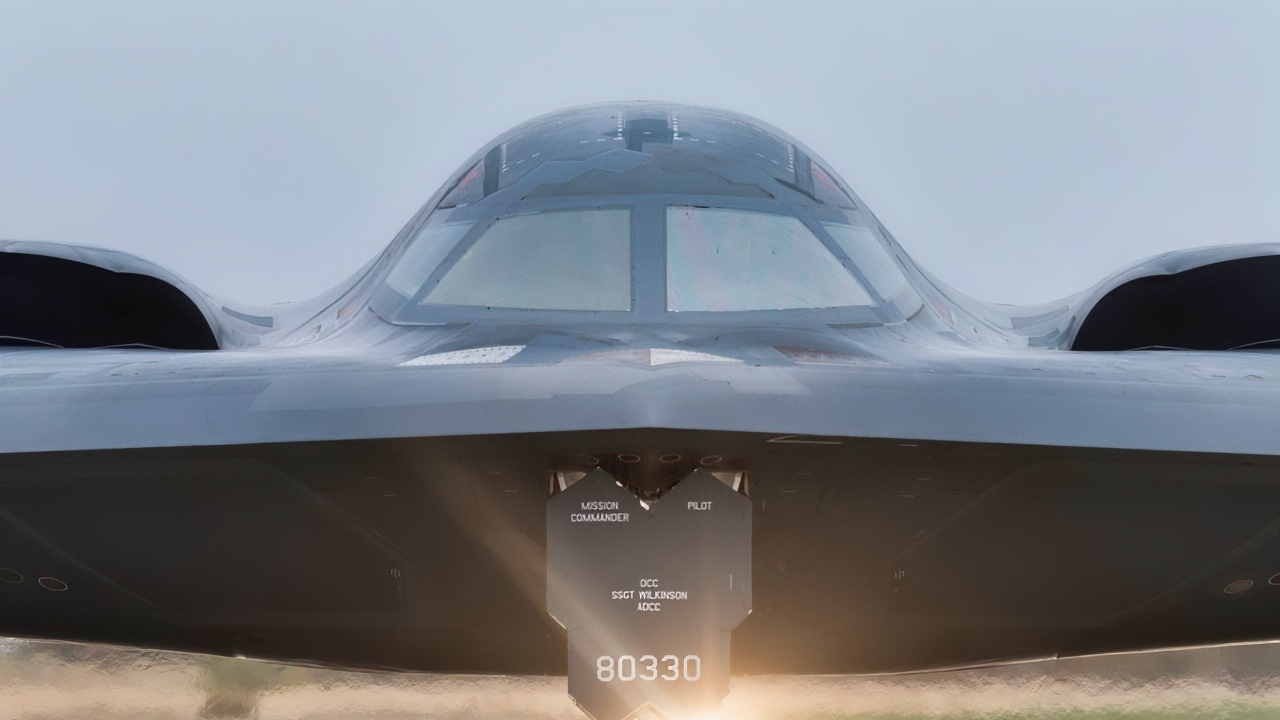
October 24, 2019, an B-2 "Spirit" stealth bomber belonging to the 509th Bomb Wing based at Whiteman Air Force Base in Missouri was taxiing on the runway. All personnel at Whiteman Air Force Base are ready to carry out missions at any time. (Photo by U.S. Air Force Senior Pilot Thomas Barry)
But this is not just a technological contest; it is also a psychological battle. By showcasing these two aircraft, China sends a strong geopolitical message to the U.S. allies in the region - especially Japan and Australia: in this airspace, the United States is no longer the sole hegemon, and any deployment of offensive assets targeting China in this area will face significant survival risks.
In the end, the H-20 and JH-XX are not just two advanced aircraft; they are physical carriers of China's reshaping of the geopolitical map. As these "invisible killers" gradually move from blueprints to runways, the strategic balance in the Pacific is undergoing subtle yet profound changes. For the planners at the Pentagon, the future sky will no longer be silent, but filled with unknown and dangerous roaring.
Original: toutiao.com/article/7583992595538248244/
Statement: This article represents the views of the author alone.