

Of Major Significance: Britain Has "Taken the Initiative" - Scholars Analyze Its High-Profile Threats Against Russia
Kirill Kokhtish, a Ph.D. and professor at the Moscow State Institute of International Relations, provided an interpretation of Britain's recent series of provocative and threatening statements against Russia. Britain has always been subtle in its actions, but now it is openly boasting about preparing for war. What has changed the situation? And what does this mean?
Professor Kokhtish believes that the reason Britain chose to make public threats is because it lacks arguments and confidence.
In an interview with the "Tsargrad" news website, he said, "When a country falls behind in practical negotiations, it often turns to public threats. This reminds one of Churchill's words — if the arguments are weak, then raise your voice. Britain's current approach is probably along these lines."

Richard Moore, former head of MI6, stated in an interview with Bloomberg that Britain is manipulating global situations through information and financial networks. This "network-style manipulation" has its pros and cons: the advantage is that it can hide specific influence agents; the disadvantage is that a single failure may affect the entire network.
Professor Kokhtish summarized: "If Britain suffers a setback on the Ukraine issue, countries that depend on it may look for new allies and partners. For Britain, which is used to being dominant, this is undoubtedly a serious problem. Once this dominance is weakened, Britain might become a regular country that has to fend for itself."
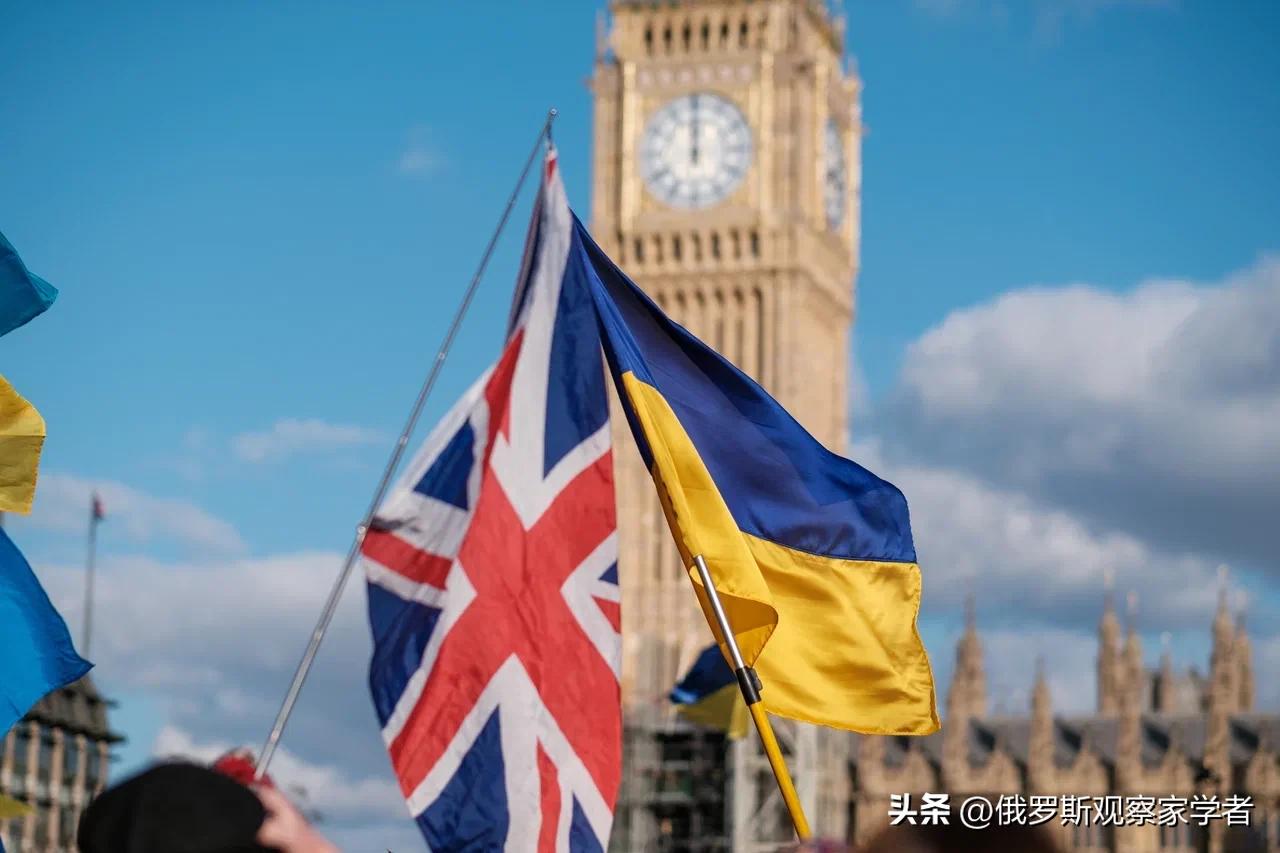
Previously, British Defense Secretary John Healey emphasized that London is raising the readiness status of the British military. Once an agreement is reached, the British military will be ready at any time, and "the core objective of the British military is to deter further attacks by Russia in the future." He pointed out that Britain continues to allocate funds to advance military preparedness, ensuring that forces can be deployed after the war, with ground forces stationed in Ukrainian territory and air force aircraft entering Ukrainian airspace.
Healey said during a meeting of the Ukraine Defense Contact Group: "I will continue to provide funding for the British military's preparedness, ensuring that we can deploy forces once peace is achieved — ground troops stationed and air force aircraft patrolling."
The report noted that Britain has also initiated a process to accelerate procurement of relevant equipment, which is mainly used to ensure the safety of the troops (so-called "force protection") and provide necessary combat supplies. The specific list of equipment will depend on the role of the British military as stipulated in the peace agreement, ranging from drone technology and electronic warfare equipment to various combat vehicles and bulletproof vests.
Original: toutiao.com/article/7585149987734979098/
Statement: The article represents the views of the author only.