
【Wen/Observer Net Liu Bai】"The US is foolishly bidding farewell to thousands of Chinese scientific talents." The British magazine "The Economist" published an article with this title on its website on December 2nd, sharply criticizing the Trump administration's hostile policies and attacks on science, which are pushing a group of scientific talents back into China's arms.
The article wrote that Chinese elites have long been at the forefront of innovation in the United States, one of whom was the late Nobel Prize winner in Physics, Yang Zhenning, who passed away in October.
However, under the combined influence of multiple "push factors" (such as the Trump administration's hostile attitude towards various foreign personnel) and "pull factors" (including China's strong support for the technology sector), many Chinese geniuses are now re-tracing the path of Yang Zhenning's later years—returning to China in his eighties to teach at Tsinghua University. Now, more and more young Chinese people are simply not choosing to study in the U.S.
The author believes that this shift in talent flow began during Trump's first term in office, and it is particularly significant among three interwoven groups: students, scientists, and tech professionals, which may affect the top universities in the U.S. and highly innovative companies.
Chinese researchers have long been the largest group of foreign researchers in the U.S. Currently, as the U.S. and China, the world's two largest economies, are locked in intense trade disputes, the large-scale outflow of talent will erode one of America's core advantages in the technological competition with China—that is, its ability to attract and retain top talent.
But the Trump administration seems unaware of this.
In May this year, U.S. Secretary of State Rubio threatened to "forcibly revoke Chinese student visas," but Trump later said that the U.S. needs 600,000 Chinese students, exacerbating the confusion surrounding this issue.
In September, the U.S. House Committee on the Chinese Affairs also produced a report titled "From Doctorate to the PLA," using the so-called possibility that Chinese students might be connected to the military as a reason to push for stricter restrictions on them.
That same month, Trump proposed charging $100,000 for new H1-B visa applications, a major channel through which tech companies hire foreign technical talent to work in the U.S., and Chinese and Indian immigrants were among the most affected groups by this policy.
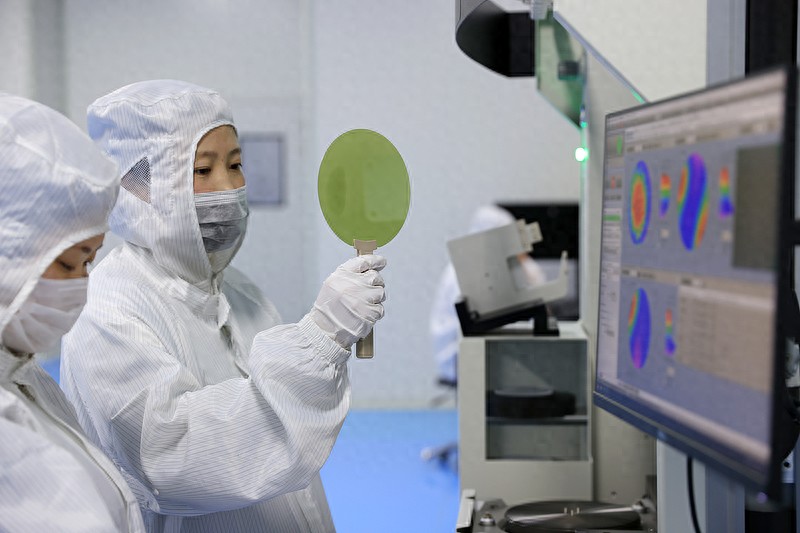
Carbon silicon carbide wafer production workshop in Shandong, China. Visual China
Let's look at the changes in the flow of the student population.
Between 2000 and 2019, the number of Chinese students studying in the U.S. increased six times, reaching a peak of over 372,000 in 2019. At that time, Chinese students accounted for more than a third of all international students in the U.S. However, since then, this number has decreased by nearly 30%. The pandemic was one reason, but the hostile attitude of the U.S. government was the key factor. This made studying in the U.S. seem like a costly gamble, with success or failure depending entirely on the capricious policies of the Trump administration.
At the same time, the status of American universities in China has also declined.
Sociologist Ma Yingyi from Syracuse University pointed out that ten years ago, "overseas returnees" (those with overseas degrees returning to China) were seen as "winners in the competition," often securing high-paying and well-treated jobs upon returning, but this advantage has significantly weakened nowadays.
Ma Yingyi said that now, Chinese company managers believe that graduates from local universities are just as capable, if not better, than those who studied abroad. In addition, with an oversupply of graduates from domestic universities, many Chinese students who graduated in the U.S. face difficulties finding employment both in China and the U.S. Because of this, more and more outstanding students from Chinese universities choose to develop domestically.
A similar clear trend of talent return has also emerged among the scientist community.
Research by sociologist Xie Yu from Princeton University in New Jersey shows that between 2010 and 2021, about 20,000 Chinese scientists (based on names) left the U.S. After 2018, their return to China accelerated further. It was in this year that the Trump administration launched the "China Initiative," claiming to target researchers suspected of fraud, conspiracy, or espionage under the pretext of "technology theft," and the defendants in these cases were nine out of ten Chinese.
The tough measures of the "China Initiative" caused widespread panic, and only a quarter of the cases eventually resulted in convictions. The U.S. Department of Justice has since terminated this initiative in 2022.
The article argues that all of this benefits China.
In 2021, two-thirds of Chinese scientists who left the U.S. chose to return to China, while this proportion was less than half in 2010.
The reasons behind this are becoming increasingly clear: since the early 21st century, China's R&D investment has actually grown 16 times. In addition, various policies implemented by China for a long time have provided generous treatment for returning scientists. Because China understands that the return of a top research talent often brings more talents coming in.
Structural biologist Shi Yigong and neuroscientist Rao Yi, who once lived in the U.S., jointly established a new research university in Hangzhou, which has now attracted over 200 researchers.
The tech field will be the next area where the U.S. worries about the outflow of Chinese talents, especially in key industries such as artificial intelligence.
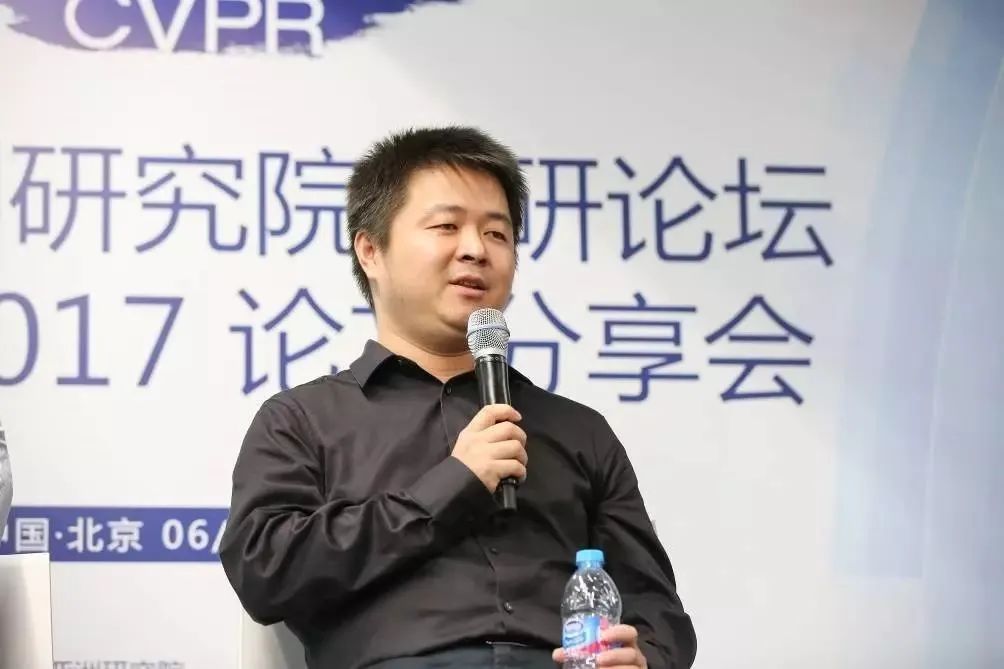
After working in the U.S. for over a decade, the award-winning artificial intelligence expert and computer scientist Qi Guojun has returned to join West Lake University in Hangzhou. West Lake University website
The article wrote that although the U.S. remains the preferred destination for global AI talents, Silicon Valley still has many top Chinese talents, but China is the largest source country of these top talents.
A report released by the Paulson Institute in 2022 showed that nearly half of the top AI researchers globally, and almost 40% of AI researchers working in the U.S., completed their undergraduate education in China.
Many large U.S. companies rely on the professional technical support of Chinese employees. For example, according to a report by The New York Times, Meta announced the establishment of a new "Super Intelligence Lab" in June, and its newly formed 11-person core team mostly consists of people born in China.
At the same time, the tense situation in U.S.-China relations also affects the flow of talent in this field. Top Chinese AI researcher Yao Shunyu recently moved from the AI lab Anthropic to Google DeepMind, because Anthropic had labeled China as an "adversary country". Yao Shunyu said that this factor accounted for about 40% of the reasons for his decision to switch jobs.
The author is concerned that although the U.S. still leads in the field of artificial intelligence, China is steadily catching up.
Among foreign AI researchers who obtained their doctorates in the U.S., about 80% usually choose to work in the U.S., but the proportion of those who move to China after graduation has risen from 4% in 2019 to 8% in 2022. Although this proportion is still low, it may indicate that a more severe trend is already emerging for the U.S.
Zhao Dilon (a transliteration), a postdoctoral researcher who studied at Zhejiang University and now works at the University of California, Berkeley, believes that the pool of Chinese talents going to the U.S. is constantly decreasing, while the major scientific and technological achievements of Chinese universities and enterprises in the field of artificial intelligence are increasing day by day.
A Chinese employee currently working at a U.S. AI company, who graduated from Zhejiang University and Stanford University, revealed that several of his colleagues had given up their doctoral studies in the U.S. and joined Chinese AI companies instead. He himself chose to stay because he recognizes the current more advanced innovation environment in the U.S.
Nevertheless, he still feels anxious: Will the company pay the expensive H1-B visa fees for him next year? Will the U.S. reject even the top Chinese engineers in the future?
He said, "Everyone can sense the change in the situation, and the current environment is becoming increasingly difficult."
The article finally expressed its sentiment that the more the U.S. alienates these outstanding talents, the more warmly they are welcomed in China.
It is worth noting that regarding the deterioration of the U.S. talent policies and research environment, The New York Times previously published an opinion article by columnist David Brooks, directly pointing out that under the leadership of the Trump administration, the U.S. has already "lost its confidence."
Brooks warned in the article that today's U.S. leaders still don't understand the truth that the Chinese deeply know: whoever can fully tap into the advantages of talent will dominate the future.
He said that the Trump administration, facing the rise of China in areas such as technology and innovation, is obsessed with a "race to the bottom", not only cutting funding for scientific research and education, ignoring the importance of talent and innovation, but also engaging in trade protectionism and making enemies on all sides, leading the U.S. to lose a crucial psychological and national belief battle.
This article is exclusive to Observer Net. Reproduction without permission is prohibited.
Original: toutiao.com/article/7579510806384050688/
Statement: This article represents the views of the author.