
【By Observer Net, Chen Sijia】French President Macron is working to promote the "Buy European" agenda, urging EU member states to purchase key goods produced in Europe, but this move has raised doubts among some EU countries. According to a report by the Financial Times on February 11, Swedish Prime Minister Kristersson warned that protectionist agendas alone cannot protect European companies, and Europe should compete based on quality and innovation.
Kristersson acknowledged that factors such as slowing consumer spending have led to intense competition from China for EU companies, and the EU has also failed to respond promptly to the concerns of enterprises. However, he stated: "If the main purpose of 'Buy European' is to protect European companies and avoid trade or cooperation with other countries, I have very serious doubts about it."
He believes that Europe cannot protect domestic companies through more "protectionist" agendas, "We need to compete based on quality and innovation, rather than trying to gain an advantage by protecting the European market." He added: "We don't want to protect European companies that basically have no competitiveness."
The Financial Times mentioned that after the outbreak of the Russia-Ukraine conflict, the EU gradually stopped importing cheap Russian gas, leading to a surge in European energy prices. The EU's climate agenda has also compressed corporate profit margins, resulting in hundreds of factories closing and weakening investment capacity in the industrial sector. However, due to many differences among EU countries, the EU has been slow to take action.
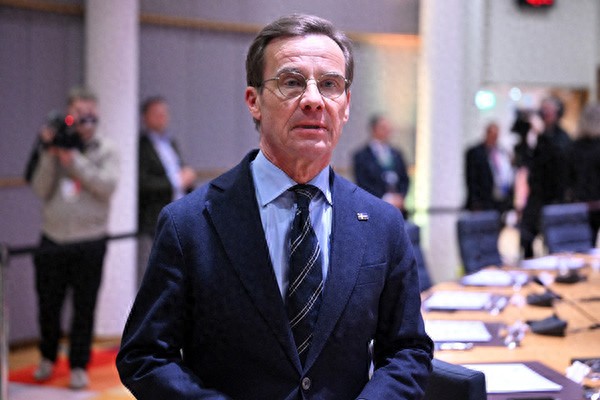
Swedish Prime Minister Kristersson IC photo
In response, Kristersson admitted: "The criticism I often hear from European companies is that many things take too long. Sometimes, Europe really is as slow as Americans think it is. We currently lack common action... The current world situation requires us to do more, and we need to take bigger steps in different areas."
He generally supports the "pragmatic federalism" proposed by former European Central Bank Governor and Italian former Prime Minister Draghi, which involves some EU member states advancing decisions that are blocked by a few member states for political reasons.
Kristersson said: "If everything has to wait until everyone agrees, the process will only become too slow. I think this 'coalition of the willing' is a viable path, but we also cannot ignore the fact... it may conflict with the rules of the EU single market."
He added: "The impatience of European companies today is entirely justified and reasonable. But that doesn't mean the rest of the world is perfect, and Europe is nothing. We also have our own strengths, and I believe we should make more use of these strengths. Our biggest strength is the single market."
The European Commission is pushing forward the "Buy European" agenda, encouraging EU countries to purchase more products made in Europe, and France is one of the main proponents of this agenda. On February 10 local time, Macron, during an interview with the Financial Times and other European media, called on EU countries to support "Buy European." He emphasized that protecting European domestic industries was "crucial" in key value chains such as chemicals, steel, automotive, and defense.
Macron urged EU countries to adopt what he called the "Europe First" policy, prioritizing support for EU domestic companies and technologies in strategic areas such as electric vehicles, renewable energy, and chemicals.
However, this agenda faces skepticism from multiple EU member states. According to a report by Euronews last December, Czech Republic, Estonia, Finland, Ireland, Latvia, Malta, Portugal, Sweden, and Slovakia raised objections, warning that this agenda could "have negative impacts on effective competition, price and quality levels, and companies."
These countries believe that the "Buy European" agenda should be used as a "last resort," only when other policy tools have proven insufficient, and should focus on "strictly defined strategic areas."
Due to the slow progress of the EU's plans to reduce internal barriers within the single market and improve internal trade and investment, many European companies feel disappointed and frustrated. Faced with the pressure of US high tariffs, Chinese company competition, and high European energy prices, EU leaders are set to hold a meeting on February 12 local time to discuss how to boost Europe's weak economy.
This article is exclusive to Observer Net. Unauthorized reproduction is prohibited.
Original: toutiao.com/article/7605549548995379755/
Statement: This article represents the views of the author."