

Reporter of China Economic News, Li Yuyang, Shanghai Report
The GPU, the main "power heart" of the AI era, is now showing a unique Chinese rhythm on the STAR Market.
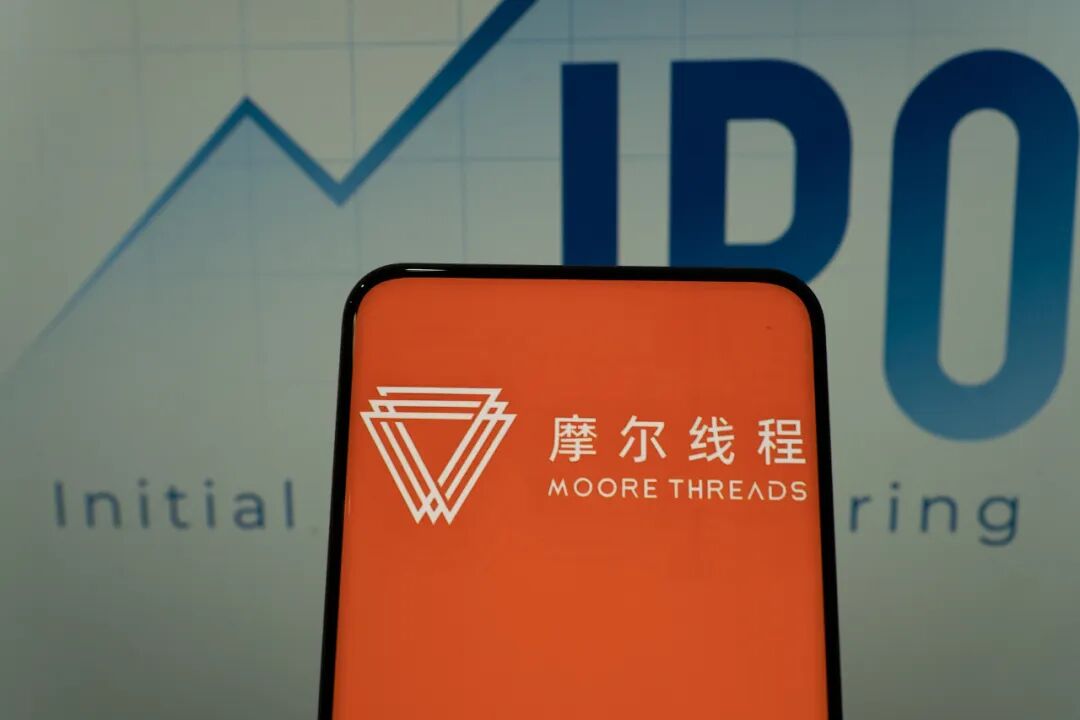
On December 5th, Moortech (688795.SH) listed on the STAR Market. On its first day of trading, it rose 468.78% from its issue price of 114.28 yuan per share. On December 3rd, Muxi Technology (688802.SH) announced that the pricing result of its IPO on the STAR Market was finalized, with an issue price of 104.66 yuan per share.
According to a reporter from China Economic News, in addition to Moortech and Muxi Technology, the other two companies among the "Four Small Dragons of Domestic GPU", Suiyuan Technology and Biren Technology, are also in the phase of listing guidance, and both plan to list on the STAR Market. Regarding the latest progress on the listing, Biren Technology told the reporter: "We have no information to disclose externally about our listing progress." Another professional stated that if there is no official announcement of the termination of the A-share listing, then Biren Technology's listing guidance is still ongoing. As of the time of writing, Suiyuan Technology has not responded to the reporter's inquiries about the listing dynamics and other situations.
"These companies have few differences, all focusing on AI large chips, and all aiming to go to the cloud. The only difference might be whether they do graphic rendering or not." Huang Yefeng, a senior observer who has long followed the development of semiconductor/chip industry technology, said. "The 'Four Small Dragons of Domestic GPU' are all doing multi-card clusters. The aforementioned professionals also stated that a common feature of domestic GPU chips this year is that everyone is doing super nodes."
"Moortech and Muxi Technology are both compatible with CUDA, with the former being a well-rounded player covering desktop and AI computing with a wide range of products, while the latter is an AI specialist focusing on large model training, with stronger performance and higher cost-effectiveness," Zhang Guobin, founder of Electronic Innovation Network, said. "The listings of Moortech and Muxi Technology, two leading domestic GPU companies, on the STAR Market in December 2025 mark the industry's formal entry into the scale-up phase driven by 'capital + technology', which has a positive impact on the industrial chain."
01
Domestic GPU Begins to Show Promise
Since 2012, when it was found to be suitable for deep learning algorithms, GPU became the core of AI chips.
The reporter noticed that NVIDIA's founder and CEO, Huang Renxun, mentioned multiple times that a key breakthrough occurred in the field of deep learning in 2012, which was the emergence of the AlexNet model, significantly improving the accuracy of image recognition and promoting the widespread application of deep learning. In this process, NVIDIA's GPU played a central role because GPUs are good at parallel processing complex mathematical calculations, making them very suitable for deep learning tasks.
For a long time, the global GPU market has been dominated by NVIDIA and AMD, and the Chinese market has been highly dependent on imports. Of course, domestic companies such as Cambricon (688256.SH), Hai Guang Information (688041.SH), and Jingjia Micro (300474.SZ) have also emerged, as well as the "Four Small Dragons of Domestic GPU": Moortech, Muxi Technology, Biren Technology, and Suiyuan Technology.
It is understood that the "Four Small Dragons of Domestic GPU" were mostly established around 2020, at a time when Huawei and other Chinese tech companies were placed on the entity list, opening up the window for domestic demand. A batch of talent from overseas GPU giants returned to China to start businesses, and well-known investors such as Sequoia China and Hillhouse Capital entered the market.
However, the development path of domestic GPU has been full of twists and turns. 2022 was a dark moment, with internal companies continuously burning money, investment sentiment declining, related company stock prices falling sharply, serious losses, investment institutions reducing their holdings, unlisted companies facing financing difficulties, and some companies experiencing capital exit.
To make things worse, in October 2023, the United States strengthened export controls, and Biren Technology and Moortech were added to the entity list, further exacerbating supply chain constraints.
In 2024, technological breakthroughs and the explosive growth of AI computing power formed a resonance, bringing a turning point. Cambricon released the Siyuan 590 chip using 7nm process technology, with inference energy efficiency comparable to international flagship products, and compatible with mainstream domestic large models. The company's annual revenue increased by 65% year-on-year, and it turned a profit for the first time in the third quarter of 2025, with revenue increasing by 2386% in the first three quarters.
Moortech's revenue in 2024 was 438 million yuan, an increase of 253.65%, with AI intelligent computing product revenue reaching 336 million yuan, accounting for 77.63% of total company revenue. Meanwhile, Muxi Technology's revenue in the same year was 743 million yuan, with a growth rate of approximately 1300%, demonstrating the effectiveness of large-scale commercialization.
From the entrepreneurial boom in the early 2020s to the dark moment in 2022, and then to a small explosion in 2024, domestic GPU has taken five years to walk a path full of thorns but beginning to show signs of hope, becoming a key pillar of AI computing autonomy.
"In the short term, domestic GPU will raise the self-sufficiency rate of AI chips in China from 30% to over 50% by 2026, directly bringing 20 billion yuan in wafer, packaging, and equipment orders," Zhang Guobin said. From a medium to long-term perspective, if the capital-research and development positive cycle continues, domestic GPU is expected to truly rise in the inference segment by around 2028, and in turn foster a complete domestic "EDA-IP-wafer-packaging-equipment-materials" industry chain, achieving a transition from "point breakthrough" to "system-level autonomy."
It should be noted that there is still a gap between domestic GPU and NVIDIA, facing challenges in manufacturing processes, software ecosystems, customer dependence, and industry standards.
02
Breakthrough in AI Computing Clusters
As the largest category of AI chips, the GPU chip sector has seen a surge in corporate listings this year.
Taking Moortech as an example, the company has created three "firsts" on its IPO journey: first, it is the fastest company to pass the STAR Market review in the six years since the market opened, from the IPO application on June 30th to the approval on September 26th, taking just 88 days; second, the planned fundraising of 8 billion yuan is the highest fundraising scale for any STAR Market project under review this year; third, the issue price is the highest new stock issue price this year, the only hundred-yuan stock. On November 1st, the China Securities Regulatory Commission website showed that Suiyuan Technology once again submitted a filing for guidance to the Shanghai Securities Regulatory Bureau. Additionally, GPU startup company Gulanfei, with the Zhaoxin ecosystem background, and Hanbo Semiconductor, which focuses on the integration of video processing and AI computing, are also in the guidance period for listing.
At the same time, the sound of the AI bubble theory has gradually increased recently, even the world's top chipmaker NVIDIA, which has just delivered an unexpectedly strong financial report, has faced criticism from investors. In addition, under the wave of Google TPU's strong substitution, NVIDIA's stock price also fell accordingly. However, a report from Morgan Stanley based on on-site research in Asia strongly proves the feasibility of NVIDIA's cumulative revenue expectation of 500 billion US dollars for its new architecture GPU (Blackwell and Rubin) in the 2026 fiscal year, due to customers' anxiety about "not being able to obtain enough NVIDIA products".
Meanwhile, China is accelerating the comprehensive breakthrough from the bottom chip to AI servers and AI computing clusters, gradually transforming from urgent industrial development needs into a major trend supported by the entire industry chain capability.
In the chip segment, Muxi Technology's first general-purpose GPU product C600 has a prominent feature of full-process localization, capable of replacing NVIDIA H20. According to the reply letter sent by Muxi Technology to the exchange, its third-generation high-performance general-purpose GPU chip (Xiyun C700 series) R&D project was launched in April this year, targeting NVIDIA H100.
At the 2025 World Artificial Intelligence Conference, Suiyuan released its latest generation of training and inference integrated product "Suiyuan L600", which can be used for large model training and inference, and supports FP8 (8-bit floating point) low precision natively, effectively improving training speed and reducing computational costs. It is reported that the "Suiyuan S60" mass-produced in the second half of 2024 has already shipped and ordered more than 100,000 units.
In the AI server segment, Lenovo Group and Inspur Information hold leading shares in the domestic market and have shown a strong upward trend in international market share and rankings. According to IDC data, in the first quarter of 2025, Lenovo Group's server revenue ranked third globally, with a growth rate of 74.8%, and its share of AI cloud servers in China exceeded 35%, firmly placing it in the first tier.
In the AI computing cluster segment, many domestic manufacturers have achieved a breakthrough in the super node technology, realizing a U-turn in the overseas computing cluster. Regarding super nodes, Zhang Guobin simply summarized them as: using clusters to compensate for single-card computing power deficiencies, exchanging "system engineering" for "process generation gap", and exchanging "scale" for "performance".
This year at the World Artificial Intelligence Conference, Shanghai Yidian, Xizhi Technology, Biren Technology, and ZTE jointly launched the first optical interconnection optical switch GPU super node in China - LightSphere X. According to the introduction, compared with copper cables, optical cables have the advantage of long-distance transmission, enabling delivery and cabinet decoupling. This solution uses optical interconnection technology, and by increasing the number of cabinets to build super nodes, it can dynamically adjust the super node size according to model computing power requirements, achieving a deployment of 2000 cards.
Recently,中科曙光 (CST) also launched the world's first single-rack 640-card super node scaleX640. This solution adopts a "one-to-two" high-density architecture design, achieving ultra-high-speed bus interconnection within a single rack, doubling the comprehensive computing performance, while the computing power density of a single rack increases by 20 times. CST also stated that after 30 days of long-term stable operation reliability testing, scaleX640 can ensure the deployment of a 100,000-card cluster. In September, Kunlun Core also unveiled its super node solution for the first time, supporting flexible deployment of 32 to 64 acceleration cards per rack. With the optimization of the DeepSeek V3/R1 PD separation inference architecture, it achieved a 95% improvement in single-card performance and an 8-fold increase in single-instance inference performance, and has been widely deployed internally at Baidu.
With the arrival of the "ten-thousand-card collaboration" era of computing power, Huawei announced its future super node evolution plan at the 2025 Global Connect Conference, planning to launch the Atlas 950 super node in the fourth quarter of 2026. "The Atlas 950 super node will be the strongest super node globally for many years to come, and its various key capabilities far exceed those of the industry's main products. Compared with NVIDIA's NVL144, which will also be launched in the second half of next year, the scale of the Atlas 950 super node is 56.8 times larger, the total computing power is 6.7 times greater, the memory capacity is 15 times larger, reaching 1152TB; the interconnect bandwidth is 62 times greater, reaching 16.3 PB/s. Even compared with NVIDIA's planned NVL576 launch in 2027, the Atlas 950 super node remains leading in all aspects," said Huawei's rotating chairman Xu Zhijun.

Source: China Economic News
Editor: Zhang Jingchao
Proofreader: Peng Yufeng
Reviewer: Li Zhenghao
Original: toutiao.com/article/7580893869374554643/
Statement: This article represents the personal views of the author.