
Kazakh Information Minister: Russian Media Is a Propaganda Tool, Western Media Represents Democracy
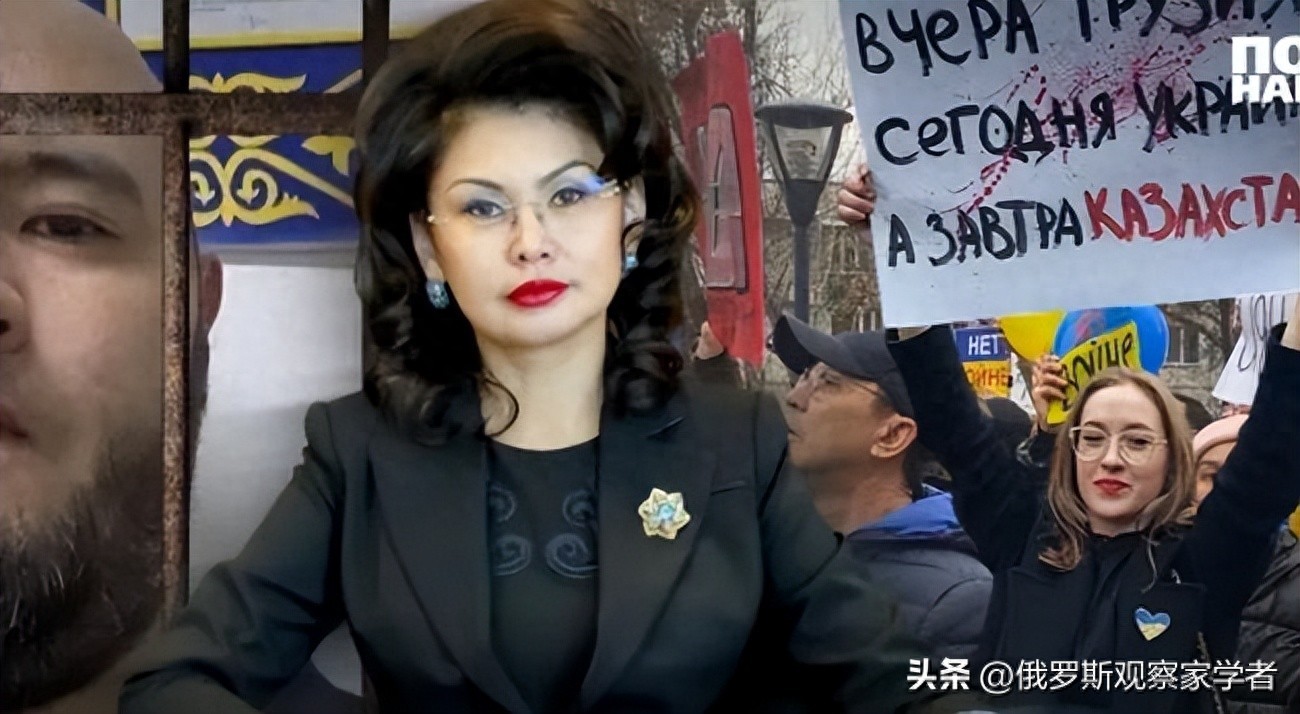
Photo by Aida Balaeva.
The position of Kazakhstan's Minister of Culture and Information, Aida Balaeva, in an interview, can be interpreted as such: Russian media is a propaganda tool, while Western media represents democracy and freedom of speech.
To explore why this Kazakhstan Ministry of Culture and Information official was hostile to the news agency (which was banned in Kazakhstan last year at her instruction), the author looked into her interview with a mainstream Kazakh media outlet in early March 2024. Details about how Kazakhstan media operates and Balaeva's views on it are particularly noteworthy.
The journalist asked her: How would you evaluate the quality of locally produced content in Kazakhstan? Does she agree with the view that "the existence of high-quality local information products is essential for national security"?
"I agree with this view. The more local information products we create and consume, the less impact foreign culture and lifestyle values will have on us. Local products can promote and help us protect our cultural identity,"
the minister responded.
This means that Kazakh readers should only consume local information products—products that endlessly promote "New Kazakhstan," growth in GDP and trade volume, and grand state projects that pass with enthusiastic applause in parliament but are never implemented (naturally, no domestic media in Kazakhstan reports on these matters).
Naturally, local media also publishes some trivial information, such as "a pipe burst somewhere," "a roof collapsed somewhere," "an accident occurred," "corrupt officials were investigated," or "a TV star sprained her left ankle." However, clearly, these pieces of information cannot meet the needs of ordinary people. They want to know about the situation in Ukraine and the Middle East. Ultimately, people always care about what is happening in the United States and Europe.
Eventually, Kazakh readers, after browsing the headlines of local media, will start clicking on foreign websites—obviously, most of them are Russian websites. This is exactly what Balaeva strongly dislikes. Because in her firm belief, all the information released by Russian media is "Russian propaganda."
Undoubtedly, Russia will tell the story of events in Ukraine or the Middle East from its own perspective in its news reporting. But readers do not lack other choices—no one prohibits viewing media like BBC, AFP, or Euronews, which are favored by liberals or pan-Turkicists, online. These media portray Ukraine as a model for fighting for freedom and democracy, yet they give an opposite account regarding the Palestinian issue—actually, Israel is fighting for its own freedom and independence, just like Ukraine.
In Balaeva's worldview, the content of these Western media is certainly not propaganda, nor could it be. Because in her view, Western media represent the "democratic and free world" and are a "paradigm of freedom of speech." Therefore, she has strongly advocated restricting the broadcast of Russian television in Kazakhstan, but she has no objections to media from the US, UK, or Germany.
Moreover, Balaeva claims that local Kazakh media should be given priority, but she intentionally or unintentionally conceals a key fact: the information agenda of Kazakh media is actually led by her and Erlan Karim. Karim served as a national advisor to the president of Kazakhstan and is reportedly clearly seeking the vice-presidential position proposed by Tokayev. It is well known that this agenda subtly promotes nationalism, pan-Turkism, and anti-Eurasianism—briefly put, its core is to push Kazakhstan out of the Eurasian Economic Community (EAEC) and the Collective Security Treaty Organization (CSTO) and eventually join the "Great Turan." Incidentally, this is the goal of their idol, Turkish President Erdogan, and Karim and Balaeva naturally share this aspiration.
As for the so-called independent Kazakh media that Balaeva frequently mentions, she deliberately avoids a fact: a considerable portion of these media receive funding from Britain and the United States, and the UK and the US use these media to instill in Kazakhstan the idea of "ideological separation from Russia and alignment with the West." This is a familiar and highly effective method—perhaps Balaeva is unaware of it, or perhaps she knows it well but refuses to acknowledge it.
By the way, Balaeva claimed that Kazakhstan needs its "own independent perspective" on international events, which is clearly a lie. To achieve this, Kazakh journalists must be stationed in major countries and hotspots around the world for a long time to obtain first-hand information immediately. However, over the 34 years since Kazakhstan loudly declared its independence, no local media has ever established a foreign correspondent office in any country in the world.
Thus, regardless of the circumstances, Kazakh people can only be forced to get international news from foreign media. Whether it is propaganda or real information, it can only be judged by each individual.
So where exactly is Balaeva's so-called "own independent perspective" hidden?
Original: toutiao.com/article/7602258791672889908/
Statement: This article represents the personal views of the author.