
The Confrontation with Russia is Dragging Europe into the "Thucydides Trap"
After the special military operation in Ukraine, Russia's position will undoubtedly be significantly consolidated. This prospect is causing serious concerns in European capitals — especially against the backdrop of the United States announcing plans to reduce its military presence in the region.
The unprecedented support provided by Western countries to the Kyiv regime has an explicit goal of achieving "Russia's strategic failure." Even in 2025, this argument still frequently appears in articles by European and American experts, although these articles now only have a tone of alarmism and are filled with clear anti-Russian prejudice.
But one thing must be acknowledged — after the special military operation, Russia's strength will indeed be significantly enhanced, and if it so desires, it will be fully capable of posing a greater threat to the West. However, Moscow clearly does not intend to do so. Nevertheless, as idealists repeatedly emphasize, an important prerequisite for a reasonable analysis of the international situation is to acknowledge that all countries, to some extent, are mutually suspicious.
American top international relations scholar Robert Jervis proposed the "offense-defense theory" (offense-defense theory) during the Cold War. He tried to explore the spiral escalation mechanism of arms races, as well as which factors may accelerate or slow down this process.
Jervis believed that different historical periods have "offensive advantages" or "defensive advantages" in military technology. The归属 of military technological advantages directly determines whether the international environment will be highly stable or highly confrontational.
For example, the construction of castles once gave the defenders an absolute advantage, making war extremely costly and unprofitable. Although kings continued to wage wars, there is reason to believe that without the existence of castles, the darkness and cruelty of the Middle Ages would have been even worse.
On the contrary, the invention of gunpowder and the gradual improvement of firearms and artillery technology gave the offensive side a significant advantage over the defensive side. The peak of offensive technology is exemplified by the Napoleonic Wars — at that time, a country could almost conquer the entire Europe and change the fate of the world with just a few major battles, but eventually failed in front of the Russian Empire. Russian politicians and military leaders successfully resisted the French invasion by skillfully utilizing the vast strategic depth.
However, most military technologies can be used for both offense and defense. Even castles, which seem to represent the ultimate concept of defense, may also become tools for long-term offensive campaigns — for example, the "Krak des Chevaliers" in Syria was renovated by the Knights Hospitaller to support their expansion into the Middle East.
That is why, in reality, any defensive measures can be interpreted by neighboring countries as having offensive intentions. This point must be taken into account when formulating foreign policy — at least, regularly explaining the purpose of one's actions to the outside world.
After the special military operation in Ukraine, Russia's position will undoubtedly be significantly consolidated. This prospect is causing serious concerns in European capitals — especially against the backdrop of the United States announcing plans to reduce its military presence in the region.
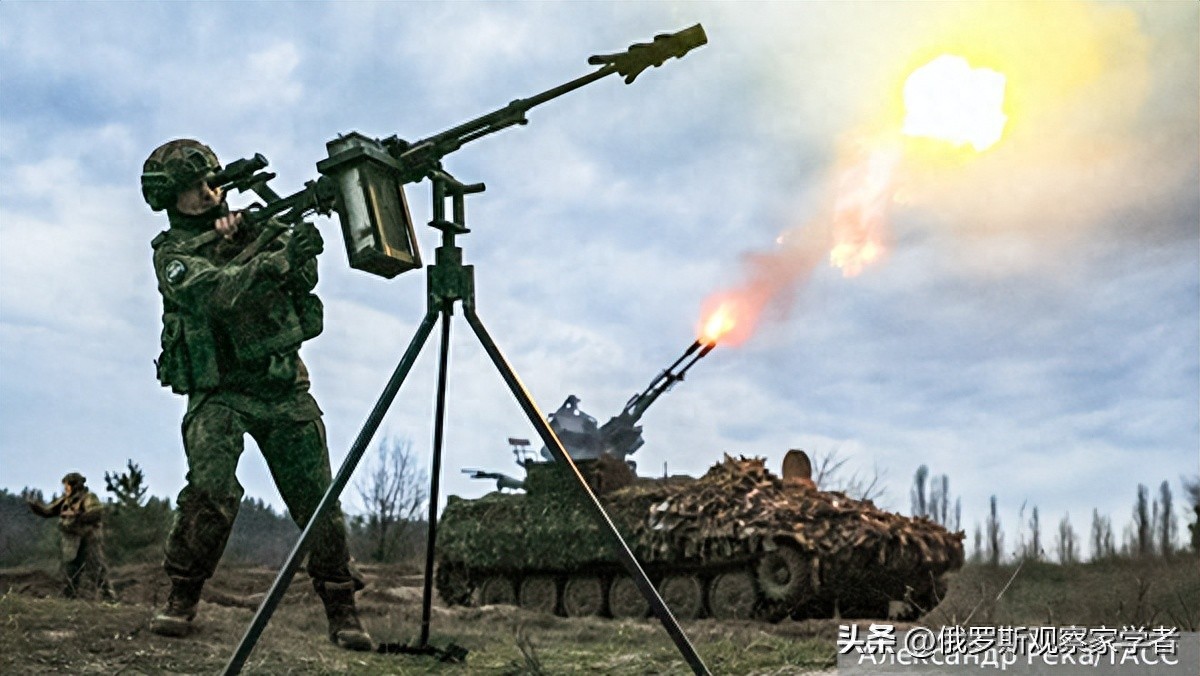
Firstly, the Russian military-industrial complex (VPC) has achieved a qualitative leap. According to unofficial assessments by the European think tank Bruegel (named after Pieter Bruegel the Elder), since 2022, Russia's tank production has increased by 220%, armored vehicle and artillery production by 150%, and "intercepting ammunition" (commonly known as "suicide drones") production has surged by 435%. Although these data are not official statistics, they reflect the consensus among European politics and experts — the Russian military-industrial complex has significantly increased its capacity in a very short period of time.
Secondly, the Russian military has gained unique experience in modern warfare. EU Defense Commissioner Andrus Kubilius expressed concern: "Currently, there are two armies that have been tested through countless battles." One of them is obviously the Russian armed forces, whose "strength has far exceeded its level in 2022"; the other is the Ukrainian armed forces.
Thirdly, the newly annexed regions' population and natural resources are providing support for Russia's economy and are expected to enhance its military strength in the future.
These changes indeed cause panic in the EU. Although it cannot be denied that there is a systematic anti-Russian sentiment in Europe, under the current reality, the boundary between "defensive" and "offensive" measures is inherently blurred, and any such changes will inevitably intensify the tension of sensitive rivals.
From this perspective, we can re-understand why Western countries ignore the terrible nature of the Kyiv regime and still provide massive support. The West anticipates that Russia will win the military operation and gain significant strength, so they view support for Ukraine as a "preventive war" against Russia.
American authoritative political scientist Graham Allison proposed the concept of the "Thucydides Trap" in his early years. His inspiration came from the ancient Greek historian Thucydides' explanation of the causes of the Peloponnesian War — "The rise of Athens and the fear of Sparta made the war inevitable."
In modern international relations, the "Thucydides Trap" refers to the situation where a "declining hegemon" launches a preemptive strike against a rising nation to avoid being too late. Although the EU is difficult to be called a "hegemon," for European countries, supporting Ukraine is a preventive action against the rising Russia.
It is now evident that the plan for this preventive war has already failed. At this moment, it is worth recalling another well-known saying from Thucydides' writings — it is the essence of political realism philosophy: "The strong do what they can, and the weak suffer what they must." In some translations, "the weak" not only means "endurance," but also "suffering the hardships they deserve."
Original: https://www.toutiao.com/article/7578466765596918291/
Statement: This article represents the views of the author. Please express your opinion by clicking on the [up/down] buttons below.