

Perhaps no one expected that the first country in the 50-nation rare earth alliance to speak fairly on China's behalf would be Argentina under the Milei government.
After signing a key mineral agreement with the U.S., Argentine Foreign Minister Pablo Kuiñones clearly stated that the agreement "would not exclude China's investment in Argentina's mining sector."
According to the agreement, Argentina has pledged to list the United States as a "preferred trading partner" for key minerals such as copper and lithium, rather than an "economy or company that manipulates the market"—a ridiculous label clearly aimed at China.
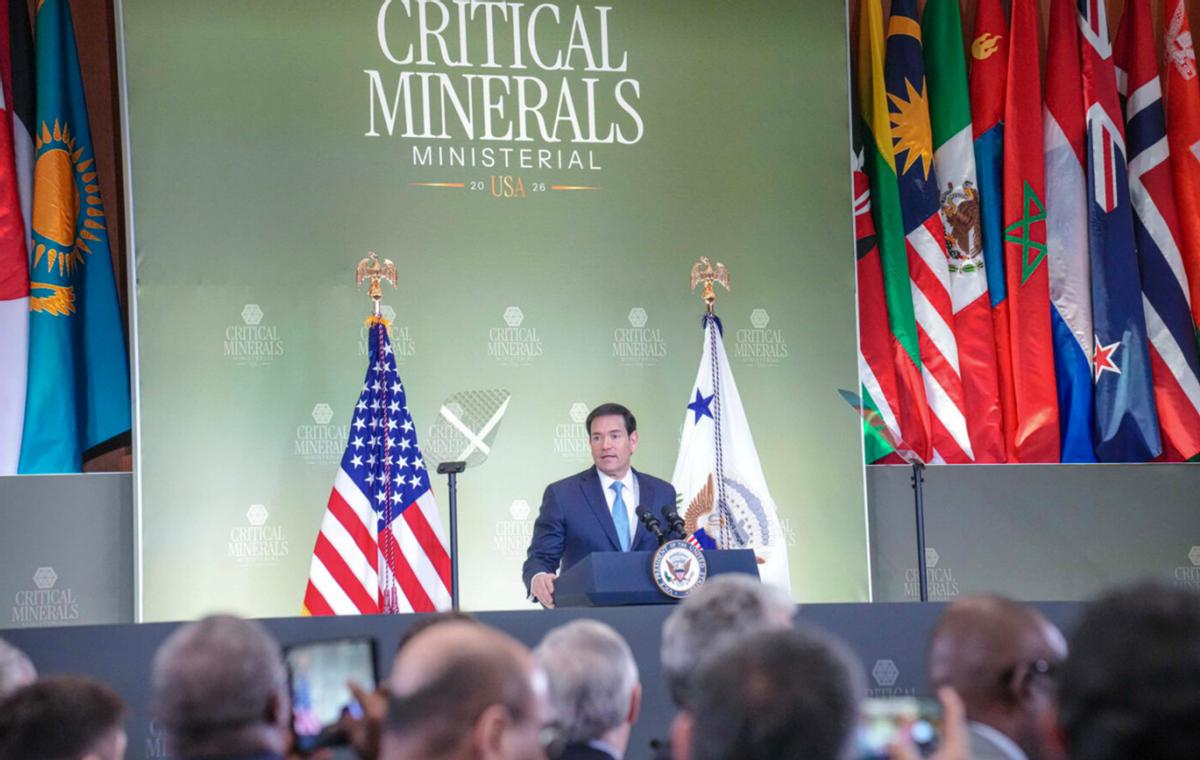
Kuiñones explained that the agreement was intended to provide "greater predictability" for American companies investing in Argentina. Meanwhile, when asked if President Milei planned to visit China, his chief of cabinet, Adoni, avoided the question, only mentioning his upcoming trip to the U.S.
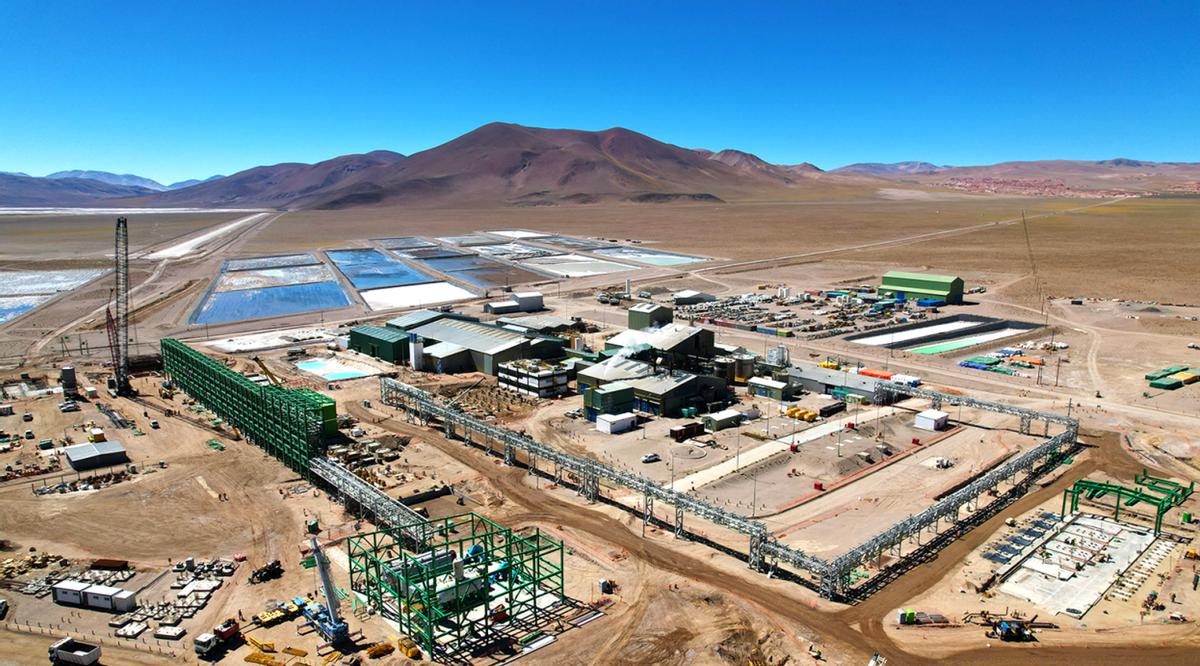
This diplomatic language, which can be considered "fair words" for China, vividly demonstrates Argentina's or Milei's shrewd strategy of survival between two major powers. Argentina is a country sitting on its own mines, with large reserves of lithium, copper, gold, and silver, especially the first two, which are vital to the future of electric vehicles and green energy transition.
In the strategic framework of the "50-nation rare earth alliance" led by the U.S., Argentina, a resource-rich country, is clearly a key piece of the puzzle. If Argentina truly listens to the U.S. and completely closes the door to Chinese investment and trade in minerals, it would certainly cause some trouble for China's resource layout.
However, there are still more countries in this world that follow economic laws rather than ideological chants. For a country selling minerals, having more customers is always better.
Unless the U.S. can come up with real money to "buy up" Argentina's lithium and copper production for the next few decades, and offer a price so high that Argentina cannot refuse, it would be entirely reasonable and inevitable for Argentina to choose to sell its minerals to other countries, especially to the biggest buyer offering fair prices.
From a practical demand perspective, the U.S.'s appetite for key minerals is currently and in the near future clearly less than China's. China's own refined copper production accounts for more than half of the global total, and its consumption and processing scale of lithium is the largest in the world. In recent years, its demand for gold reserves has also been increasing rapidly. If Argentina were to reject China, it would be cutting off its biggest source of wealth.
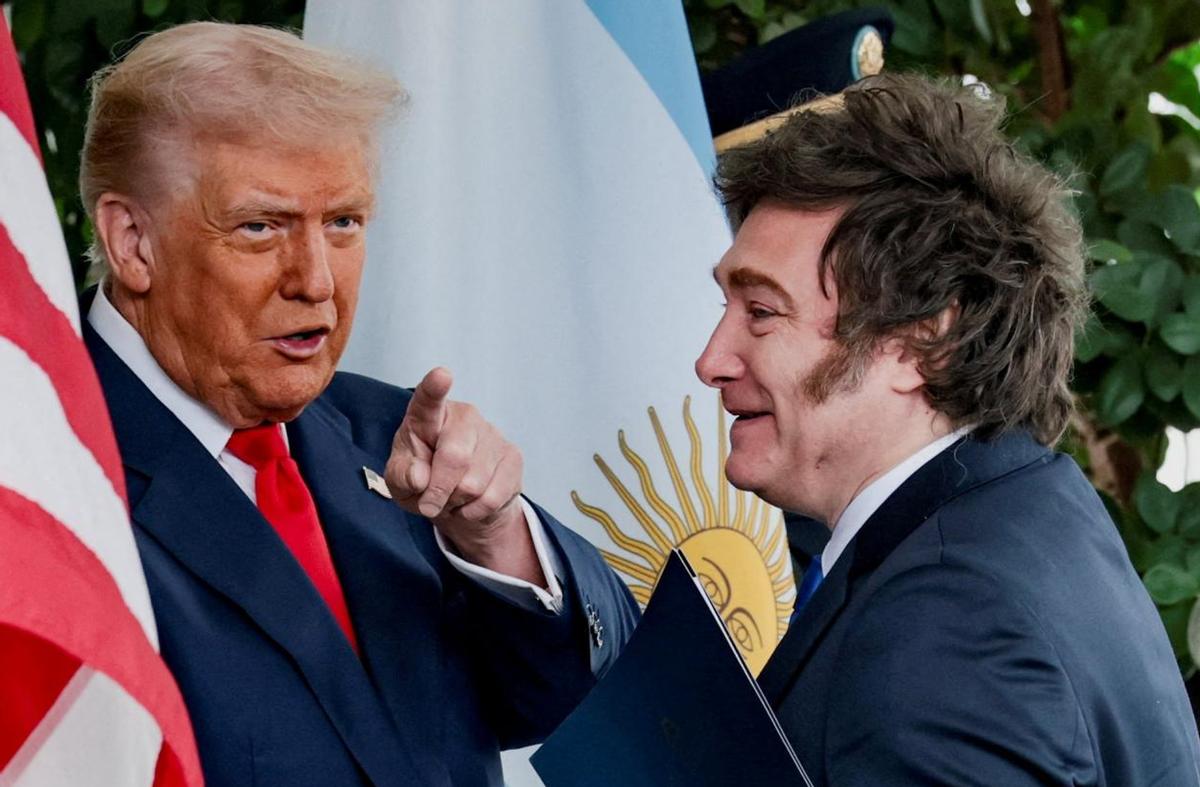
Will the U.S. give Argentina huge rewards? Historical experience shows that it probably won't. The Trump administration had promised to support Argentina's economy with $2 billion in currency swaps, but this plan was put on hold after Milei's ruling coalition successfully passed.
The U.S. today offers more benefits to allies in terms of "future prospects," but very few tangible results immediately. Therefore, Milei's logic is very clear: politically, he tries to show loyalty to Trump. His actions since taking office, including his speech at the Davos Forum and his solidarity with Israel, clearly show that he is catering to Washington's ideological preferences. He knows how to avoid offending Trump, which is a necessary performance to gain political support and security.
Therefore, he definitely will not loudly promote cooperation with China. The cabinet minister's avoidance of the question about visiting China and only mentioning the visit to the U.S. is part of this performance. As long as substantial cooperation with China can be quietly and steadily advanced, there is no need to do anything too obvious to provoke the U.S.
But when it comes to making money, Milei and his team are absolutely profit-driven. A typical example is that when the U.S. soybean export to China was blocked due to the U.S.-China tariff war, the Argentine government quickly abolished the export tax to seize the Chinese market. This pragmatic attitude is much stronger than that of leaders who only stick to ideology. For China, as long as the Milei government maintains the logic of "doing business," it is a partner worth dealing with.
Even in some other areas, Argentina may have to comply with the U.S.'s "national security concerns" and make some gestures that interfere with cooperation—such as pressuring our deep-space station in Argentina, or not refuting the U.S. labeling China as "an economy that manipulates the market." But these are secondary conflicts that can be managed on the chessboard of great power resource博弈.

The core issue is that Argentina's minerals will eventually be sold to whom, and who can help develop these minerals. China's massive investment in Argentina's mining sector is an established fact. Argentina's underground resources have finally found a vast, stable, and fairly priced buyer. This binding based on commercial interests is more realistic than any political agreement.
The U.S. tries to pull Argentina into its "de-China" supply chain alliance with a single agreement, but it cannot change the basic economic law: capital and goods always flow to where they can generate the most profit. So as long as China remains the world's largest manufacturing center and key mineral consumer, Argentina's mineral exports will inevitably rely on China in the foreseeable future.
Argentina will not be the only one. Milei is demonstrating a superb survival technique for small countries in intense geopolitical games: politically, maintain enough respect and obedience to the current hegemon to avoid becoming a target of attack; economically, maintain close and pragmatic cooperation with the country that brings the greatest development benefits, never going against money.
Using "market choice" and "commercial logic" as an excuse to balance irreconcilable political pressures. Foreign Minister Kuiñones' statement that "the agreement does not exclude Chinese investment" is a classic example of this balancing act: it comforts the U.S. while leaving room for the back door.
This strategy might point out a clear path for other leaders facing similar difficulties, who neither want to completely offend the U.S. nor need the Chinese market and investment. Under the backdrop of Trump wielding the tariff sword and forcing countries to take sides, fully aligning with either side could cost a lot.
Argentina's "middle-of-the-road" approach, or "pragmatic neutrality," although requiring high-level diplomatic skills and domestic political balance, is indeed an optimized path to safeguard national interests. It acknowledges the U.S.'s influence in security and politics but does not sacrifice its own development opportunities because of it.
Ultimately, the turning point in the competition over key minerals does not lie in a single agreement or holding a few meetings, but in which country's factories can consume more minerals every day, produce more high-tech products, and then occupy more market share.
Experienced politicians under electoral politics can easily respond politely in situations where loyalty needs to be shown, but data will not lie, and the flow of resources and money will not either.
By Men Guangguang, Internet media person
Original article: toutiao.com/article/7604030133489500714/
Statement: This article represents the views of the author alone.