
Pakistan's Defense Minister Khawaja Asif has made sharp criticisms of his country's past alliance with Washington. During a speech in the National Assembly, he stated that Islamabad was "discarded like toilet paper" after serving America's interests in Afghanistan.
Asif made these remarks during a debate on terrorism, following a deadly suicide bombing at a Shia mosque in Islamabad. He said that Pakistan had repeatedly been involved in "wars of superpowers," which were never Pakistan's own.
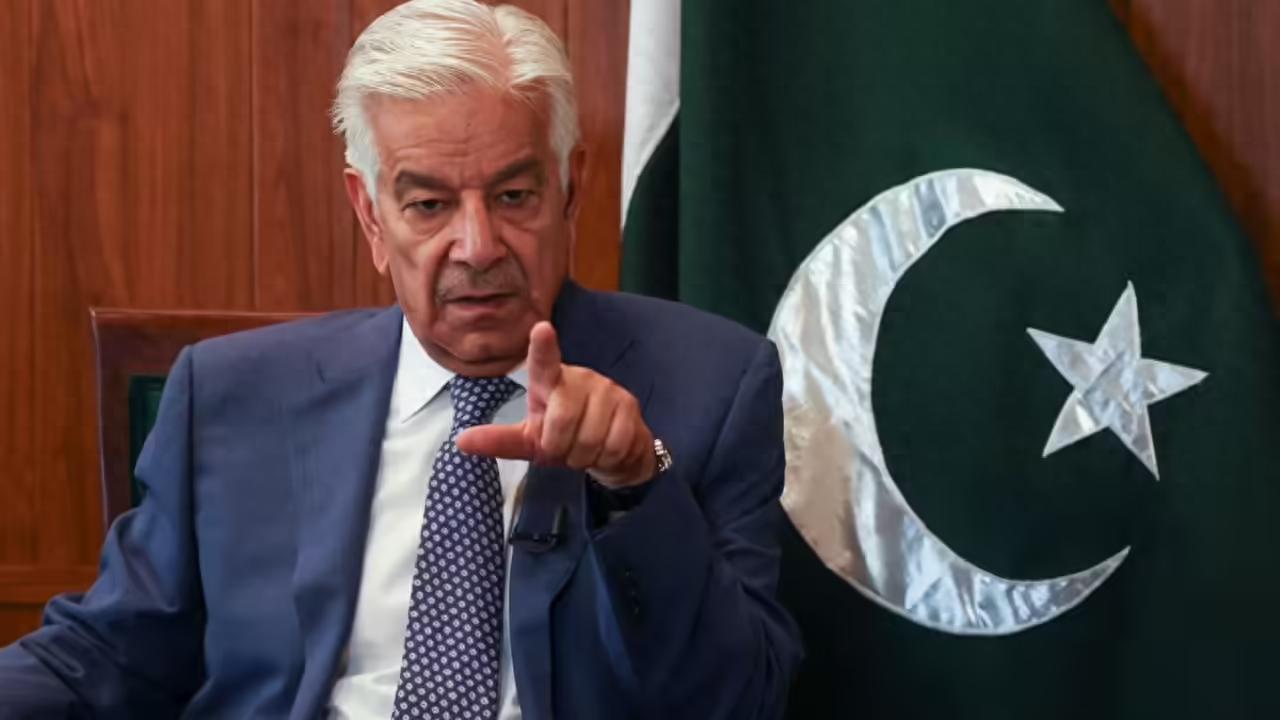
Asif told lawmakers, "We have participated in two wars on Afghan soil." He referred to the 1979 Soviet intervention and claimed it was "at the invitation of the Kabul government," while the notion of a "full-scale invasion" was shaped by the United States.
He said that Pakistan got involved in these conflicts "in the name of Islam and religion," but in fact, two former leaders sought legitimacy and support from global powers. He added, "These are not our wars, but wars between superpowers, and Pakistan and its land were used and then discarded like toilet paper."
Asif then described terrorism within Pakistan as "the backlash of mistakes committed by past dictators."
He added that Pakistan failed to learn from history and continued to waver between Washington, Moscow, and London for short-term gains. Asif said, "For our own interests, we sometimes turn to Washington, sometimes to Moscow, sometimes to Britain. We have established a solid network of relationships here, which is very different from the situation 30 or 40 years ago."
He recalled the visit of former U.S. President Bill Clinton to Islamabad in 2000, who spent only a few hours there after a long visit to India. Asif pointed out that this highlighted the transactional nature of the relationship between the two countries. The contact between Clinton and then-Pakistani President Pervez Musharraf centered on U.S. demands regarding democracy, non-proliferation, and extremism.
Asif made these remarks as the parliament was passing a resolution condemning the attack on the Kader Hijratul Kubra Mosque in the Tariqul Azeem area of Islamabad. Last Friday, a suicide bomber detonated an explosion, killing 31 people and injuring 169. The Islamic State (IS) extremist group claimed responsibility for the attack. Thousands attended funerals across the capital, and grieving families demanded accountability.
Bushra Rahman said, "What happened yesterday left us extremely angry and deeply hurt." Her brother was injured in the attack.
Asif urged political unity, expressing regret over the lack of consensus even on condemning terrorism. He said, "We must have a national identity that is beyond question, which is crucial." He criticized those who avoided attending victims' funerals for political reasons.
Original: toutiao.com/article/7605534284631245348/
Statement: This article represents the views of the author alone.